 Preview
 Send
Send Share
Share
 Details

 Download
 Similars
 X-Ray
X-Ray Diaporama
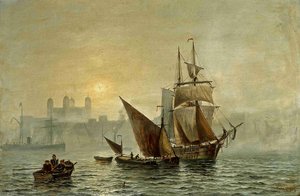
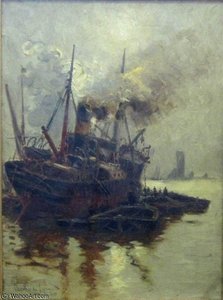
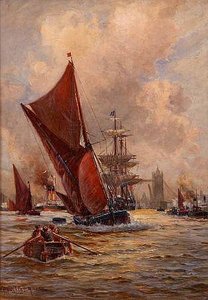
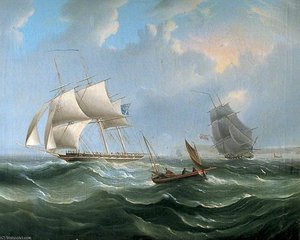
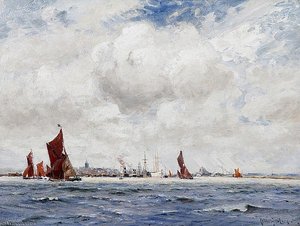
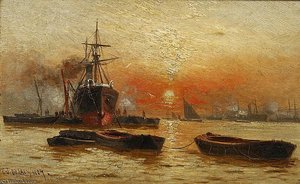
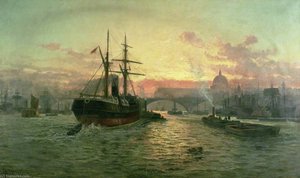
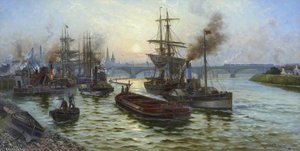
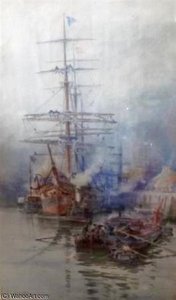
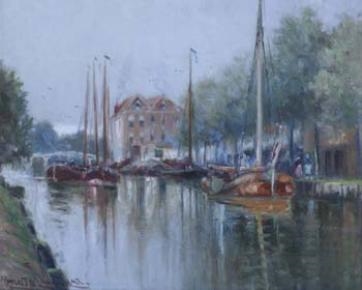
Thames Scene With Various Shipping
 Read More
Hand Made Oil Reproduction
Hand-painted oil on canvas in your size and frame, made to order by our artists. ( Buy Print Buy Image)




































Pick from our preset sizes that match the artwork's original proportions.

You may enter your own dimensions to fit a specific frame or space. If your selected size does not match the original image's proportions, we will either crop the artwork or extend the painting with additional hand-painted elements. A digital mockup will be sent for your approval before production begins.
Please note that the on-screen preview does not reflect the actual cropping or extension. Only the mockup will accurately show the final composition.
While custom sizes are available, we recommend selecting a dimension from the predefined list to preserve the original proportions.
After order, ArtsDot.com team will email client for instructions and provide a mockup preview
Worldwide Delivery () in 3/4 weeks instead of standard 5 weeks. (17 August). No compromise on quality.

Free Worldwide Express Shipping

High-Quality Linen Canvas

Full Shipping Insurance

Customs Tax Refund Guarantee

True Color Matching Guarantee

60-Day Return Policy (Defects Only)

100% Money-Back Guarantee

Bulk Discount Offer
 Glass option is only available in size under 110 CM

Thames Scene With Various Shipping
Reproduction Medium
Reproduction Size
-


Total Price
$ 263
Related Artworks





Artist Biography
A Life Painted in Maritime Light: The World of Charles John de Lacy
Charles John de Lacy, born in Sunderland in 1856 and passing away in Epsom, Surrey, in 1929, occupies a fascinating, if often overlooked, position within the landscape of British art. While not achieving the household name recognition of some contemporaries, his dedication to capturing the drama of the sea – particularly its intersection with naval power and technological advancement – established him as one of the foremost marine artists of his era. De Lacy’s story is one of quiet mastery, a life spent meticulously documenting an age defined by maritime ambition and shifting global dynamics. His early years in Sunderland, a bustling port city, undoubtedly instilled within him a deep appreciation for the sea and its vessels; however, a relocation to London with his family by 1870 broadened his artistic horizons and provided access to formal training at The National Gallery. This grounding in classical technique would prove crucial as he developed a style uniquely suited to portraying both the grandeur and the gritty reality of naval life.Naval Commissions and Artistic Development
De Lacy’s career flourished through a combination of artistic talent and strategic professional relationships. He became particularly sought after by W. G. Armstrong Whitworth, the renowned Elswick shipbuilders, who regularly commissioned him to document their latest creations. This association wasn't merely about recording vessels; it was about celebrating British engineering prowess and projecting an image of naval dominance on the world stage. His paintings weren’t simply depictions of ships, they were statements of national pride. This consistent work provided financial stability but also shaped his artistic focus. He excelled at capturing the intricate details of warships – the complex rigging, the gleaming steel hulls, the purposeful lines that spoke to speed and power. Beyond these commissions, De Lacy exhibited regularly at the Royal Academy from 1889 onwards, gaining recognition within the established art world. His work also found a wider audience through illustrations in prominent publications like The Illustrated London News, further cementing his reputation as a skilled visual storyteller. He worked with watercolors, oils and etchings, demonstrating versatility across mediums.Style and Influences: Echoes of Romanticism and Realism
De Lacy’s artistic style is characterized by an elegant blend of realism and romantic sensibility. While his depictions of ships are meticulously accurate – a testament to his close working relationship with the shipbuilders – he imbues them with a dramatic flair reminiscent of earlier masters like J.M.W. Turner and Francis Danby. He wasn’t simply interested in technical precision; he sought to capture the atmosphere, the mood, the sheer power of the sea and the vessels that navigated it. The influence of Romanticism is evident in his use of light and shadow, creating a sense of drama and awe. However, unlike some of the more overtly emotional Romantic painters, De Lacy maintains a degree of restraint, grounding his work in observable reality. His paintings are not about idealized visions; they are about capturing moments in time – a ship battling stormy seas, a fleet maneuvering for position, the quiet dignity of a vessel at anchor. This balance between realism and romanticism is what gives his work its enduring appeal.A Legacy Preserved: Museums and Modern Recognition
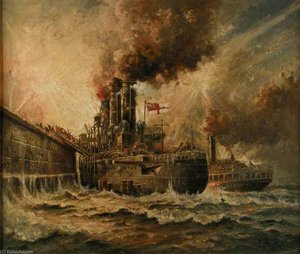
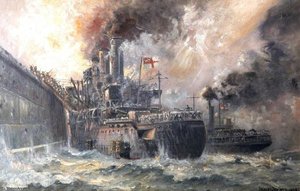
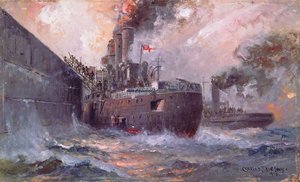
Though perhaps not as widely celebrated during his lifetime as some of his peers, Charles John de Lacy’s contributions to British art are increasingly recognized today. His paintings can be found in several prominent museums, including the National Maritime Museum and Tyne & Wear Archives & Museums, ensuring that his work continues to inspire and inform future generations. The inclusion of his pieces within these collections speaks to their historical significance – they offer a valuable visual record of a pivotal era in naval history and British industrial innovation. Furthermore, resources like Art UK and online encyclopedias such as Wikipedia are helping to bring his art and life story to a wider audience. His detailed depictions of vessels like the HMS Vindictive, immortalized during the Zeebrugge Raid, serve not only as artistic achievements but also as important historical documents. The ongoing research into his life and work promises to further illuminate the career of this talented and dedicated marine artist.Rediscovering a Master of Maritime Art
Charles John de Lacy’s art offers more than just beautiful depictions of ships; it provides a window into a bygone era, a time when Britain ruled the waves and naval power shaped global events. His ability to combine technical skill with artistic sensitivity allowed him to create works that are both visually stunning and historically significant. As interest in maritime history and 19th-century art continues to grow, De Lacy’s paintings are poised to receive the recognition they deserve. He stands as a testament to the enduring power of art to capture not only what we see but also how we feel about the world around us – a world forever bound to the rhythm and majesty of the sea.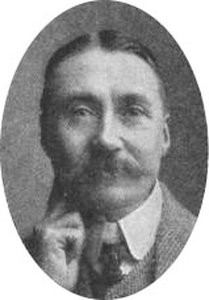
Charles John de Lacy
1860 - 1936 , United Kingdom
Quick Facts
- Artistic Movement Or Style: Impressionism, Romanticism
- Artists Who Influenced This Artist:
- Francis Danby
- John Constable Reeve
- Emily Mary Osborn
- Date Of Birth: 1860
- Date Of Death: 1936
- Full Name: Charles John de Lacy
- Nationality: British
- Notable Artworks:
- The Deluge
- Salisbury Cathedral
- The Governess
- Thames, Long Reach
- Place Of Birth: Sunderland, UK