

 Preview
 Send
Send Share
Share
 Details

 Download
 Similars
 X-Ray
X-Ray Diaporama
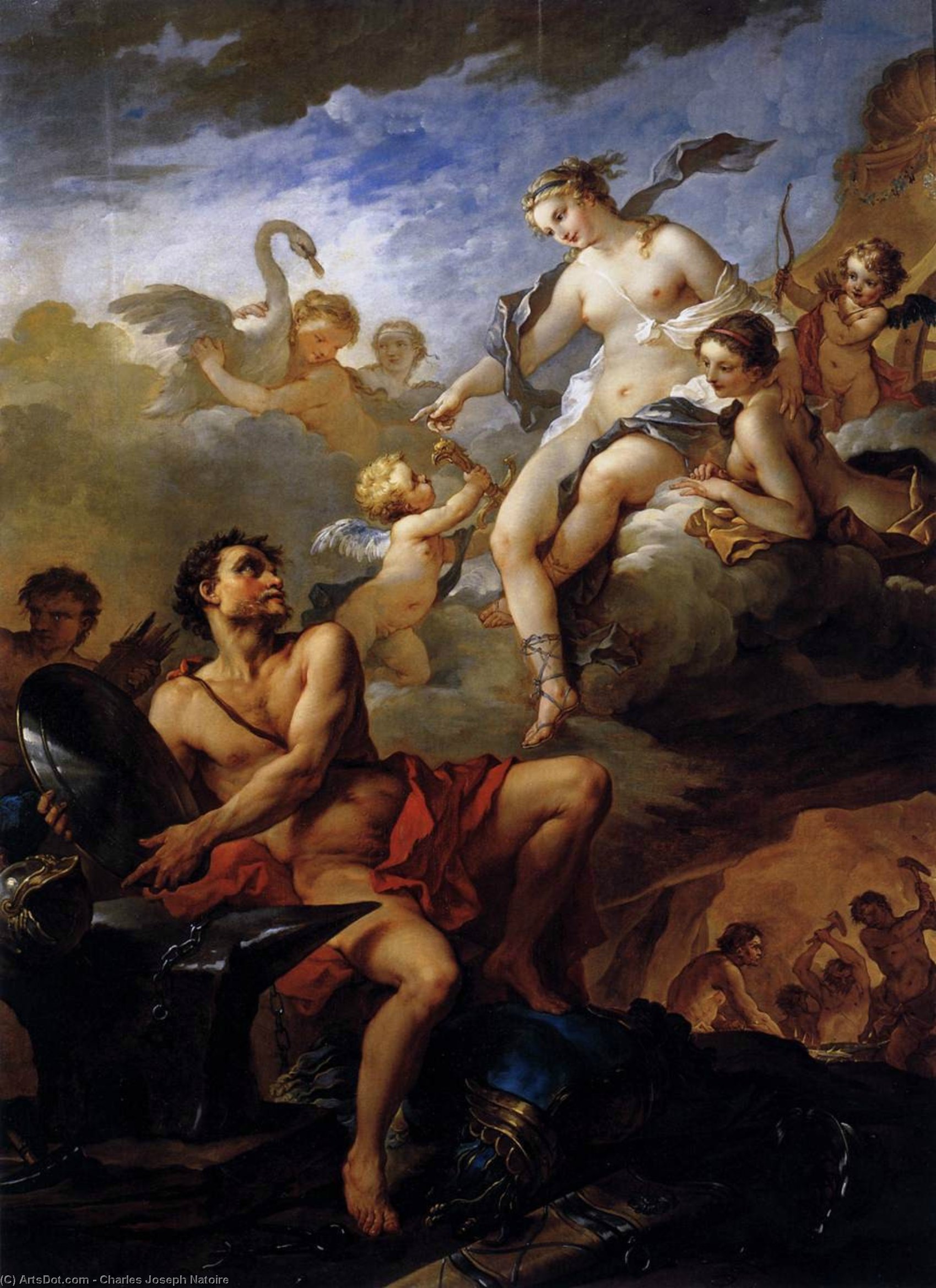
Venus Demanding Arms from Vulcan for Aeneas
 Acrylic On Canvas
- WallArt
- Late Rococo
 194.0 x 140.0 cm
 Musée Fabre
 Read More
Purchase a high-resolution, enhanced digital image, far superior to the online preview.
Each file is meticulously prepared by our in-house specialists using advanced tools and expert manual retouching. We ensure every image has exceptional clarity, precise color accuracy, and fine detail.
The final file is delivered via email within 72 hours, optimized for immediate use in professional, editorial, and print environments. This is the same quality trusted by top-tier design studios, publishers, and galleries.
Digital Image
Download a high-resolution file for personal display, printing, and creative projects. ( Buy Print Buy Hand Made Painting)
Included in Every Digital Image Order
Expert Digital Delivery, Guaranteed
When you choose ArtsDot.com, you're not just getting an image - you're receiving a professionally enhanced digital artwork, crafted with precision and backed by a satisfaction guarantee. Here's everything that comes with your order, automatically:

Fast Email Delivery
Your high-resolution digital image file will be emailed to you within 72 hours of ordering - ready for immediate use.

AI-Enhanced Digital File
Your artwork is professionally optimized using advanced AI tools and manual editing, ensuring maximum detail, clarity, and color accuracy.

Free Lifetime Re-Delivery
Accidentally deleted or lost your file? No worries - we'll resend it to you anytime, free of charge.

No Import Fees - Ever
Enjoy your artwork instantly with zero customs, duties, or delivery fees - digital downloads are always tax-free.

Color Accuracy Guarantee
We ensure your digital image reflects the original colors as closely as possible using professional tools and color management.

60-Day Satisfaction Guarantee
If you're not satisfied with your digital image, we'll revise it or refund 100% within 60 days - no questions asked.

100% Money-Back Guarantee
Not satisfied? Get a full refund within 60 days of receiving your digital file - no questions asked.

Bulk Order Discounts
Buy 3 images, save 10% - Buy 5, save 15% - Buy 10+, save 20%. Great for creative projects, galleries, and agencies.
Collectible Description
A Moment of Mythological Drama Captured in Rococo Elegance
The painting “Venus Demanding Arms from Vulcan for Aeneas” by Charles-Joseph Natoire offers a captivating glimpse into the artistic sensibilities of late Baroque and early Rococo France—a period defined by an embrace of ornamentation, illusionistic artistry, and a fascination with classical ideals. Executed around 1750, this monumental canvas (194 x 140 cm) resides within the choir apse of Sant’Agostino in Gubbio, Umbria, serving as one of twenty-five scenes depicting Augustine's life cycle—a project commissioned by Ottaviano Nelli and reflecting a significant shift away from austere religious iconography toward a more humanist vision.The Narrative Landscape: Augustine's Arrival in Carthage
This particular scene portrays Augustine’s arrival in Carthage, marking a pivotal juncture in his spiritual journey. The composition is characteristic of Natoire’s Rococo style—immediately recognizable by its asymmetrical balance and delicate pastel palette—designed to create an immersive experience for the viewer. Venus dominates the central space, positioned with her arms outstretched as if reaching for Vulcan, representing divine intervention in human affairs. Her gaze directs attention toward Aeneas, symbolizing Roman virtue and resilience amidst adversity – a deliberate allusion to Virgil’s *Aeneid*, which served as inspiration for artists of the time. The inclusion of angelic figures above Venus underscores the sanctity of the depicted event and reinforces the overarching theme of divine grace guiding Augustine's path.Technique and Artistic Flourish: Natoire’s Rococo Mastery
Natoire’s meticulous technique exemplifies the hallmarks of Rococo painting. He skillfully employs sfumato—a blurring effect achieved through subtle gradations of tone—to soften contours and imbue the scene with an ethereal luminescence. The artist's masterful brushwork contributes to a sense of movement and dynamism, capturing the immediacy of Augustine’s arrival. Furthermore, Natoire utilizes illusionistic perspective to heighten the depth of the composition, transporting the viewer into the imagined landscape of Carthage. Attention to detail extends beyond mere representation; every element—from the folds of Venus' drapery to the expressions on the faces of the figures—is rendered with exquisite precision.Symbolism and Historical Context: Humanism Ascendant
The painting’s symbolism resonates deeply within its historical context. Augustine’s life story was undergoing a profound transformation during Natoire’s time, mirroring broader humanist trends that championed reason and observation alongside faith. The depiction of Venus—a goddess associated with beauty, fertility, and divine love—represents the burgeoning interest in classical mythology as a counterpoint to medieval religious dogma. Vulcan, god of fire and craftsmanship, symbolizes divine power and artistic creation – aligning perfectly with Natoire’s own vocation as a painter. This artwork embodies the spirit of its era: an aspiration for elegance, intellectual curiosity, and a harmonious blend of spiritual contemplation and aesthetic appreciation.Emotional Resonance: Capturing Divine Grace
Ultimately, “Venus Demanding Arms from Vulcan for Aeneas” transcends mere visual representation; it communicates profound emotional resonance. The painting evokes feelings of serenity, wonder, and reverence—reflecting the humanist conviction that beauty could inspire moral virtue. Natoire’s masterful artistry captures a moment of pivotal significance in Augustine's life narrative – a testament to the enduring power of art to illuminate faith and elevate the human spirit. It remains an exceptional example of Rococo painting, inviting contemplation on themes of divine providence and the transformative potential of artistic expression.Related Artworks
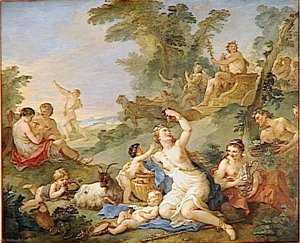
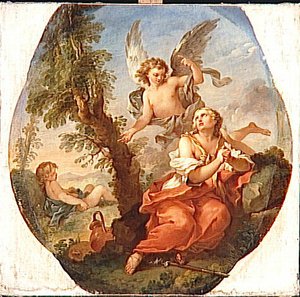
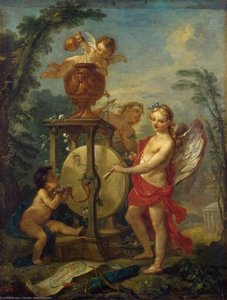
Artist Biography
The Elegance of Rococo: The Life and Legacy of Charles-Joseph Natoire
Charles-Joseph Natoire (1700–1777) stands as a pivotal figure in the artistic landscape of late Baroque and early Rococo France, embodying the refined sensibilities of his era. Born in Nîmes, Provence, he possessed an innate talent nurtured by his father’s sculptural training—a formative influence that instilled in him a meticulous attention to detail and a profound understanding of form. This foundation was further polished through instruction from François Lemoyne, arguably the foremost painter of Louis XV's court. This dual mentorship cemented Natoire’s stylistic trajectory toward the opulent aesthetic championed by Rococo, characterized by asymmetrical compositions, delicate pastel hues, and an obsession with illusionistic effects designed to captivate the viewer’s gaze.
Natoire’s formative years were marked by a dedication to mastering drawing techniques—a cornerstone of artistic training during his time—under Lemoyne's tutelage at the Académie royale de peinture et de sculpture in Paris. This rigorous discipline instilled within him an unwavering commitment to accuracy and observation, skills that would prove invaluable throughout his prolific career. Beyond formal instruction, Natoire’s exposure to humanist scholarship fostered a deep appreciation for classical ideals, informing his artistic vision and contributing to his masterful rendering of mythological subjects—a genre particularly favored by the Rococo movement.
Mastery of Myth and Tapestry
Natoire achieved considerable renown during his lifetime thanks to commissions from influential patrons and institutions. His most celebrated achievement remains the series of paintings depicting Psyche for Germain Boffrand’s oval salon in the Hôtel de Soubise, Paris—a monumental undertaking that showcased Natoire's unparalleled ability to synthesize classical grandeur with Rococo dynamism. In these works, the boundaries between reality and myth blur, as light and color dance across the canvas to create a dreamlike atmosphere of ethereal beauty.
Beyond the confines of oil on canvas, Natoire left an indelible mark on the decorative arts through his extraordinary contributions to tapestry design. His ability to translate complex narratives into intricate textile patterns allowed his vision to permeate the very fabric of French aristocratic life. Notable achievements in this medium include:
- The Don Quixote Series: A masterful translation of literary drama into woven splendor, showcasing his narrative prowess.
- Allegorical Compositions: Works such as Allegorie demonstrate his skill in utilizing classical figures to convey profound symbolic themes through delicate textures and intricate details.
- La Peinture: A stunning depiction of cherubic artists that reflects the influence of the French Academy, blending innocence with technical sophistication.
Historical Significance and the Roman Legacy
The trajectory of Natoire's career was not merely confined to the salons of Paris; his influence extended across Europe through his prestigious appointment as the Director of the French Academy in Rome. This role allowed him to bridge the gap between the classical heritage of Italy and the burgeoning Rococo spirit of France, ensuring that the principles of classical antiquity continued to inform contemporary French art. His time in Rome solidified his reputation as a scholar-painter, capable of interpreting the weight of history through a lens of modern elegance.
As the 18th century progressed, Natoire’s work served as a bridge between the heavy, dramatic shadows of the Baroque and the light, airy whimsy of the Rococo. His legacy is found in the way he utilized soft palettes and fluid lines to evoke emotion, leaving behind a body of work that remains a testament to the grace and sophistication of the French Enlightenment. Through his paintings, tapestries, and leadership, Charles-Joseph Natoire ensured that the delicate beauty of the Rococo era would be etched permanently into the annals of art history.
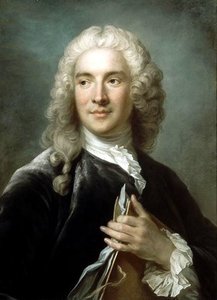
Charles-Joseph Natoire
1700 - 1777 , France
Quick Facts
- Artistic Movement Or Style: Rococo
- Artists Or Movements Influenced By This Artist: ['Baroque']
- Artists Who Influenced This Artist: ['François Lemoyne']
- Date Of Birth: 1700
- Full Name: Charles-Joseph Natoire
- Nationality: French
- Notable Artworks:
- Italian Fall Landscape with Monte Porzio
- Offering to Pan
- Place Of Birth: Nimes, France

