

 Preview
 Send
Send Share
Share
 Details

 Download
 Similars
 X-Ray
X-Ray Diaporama
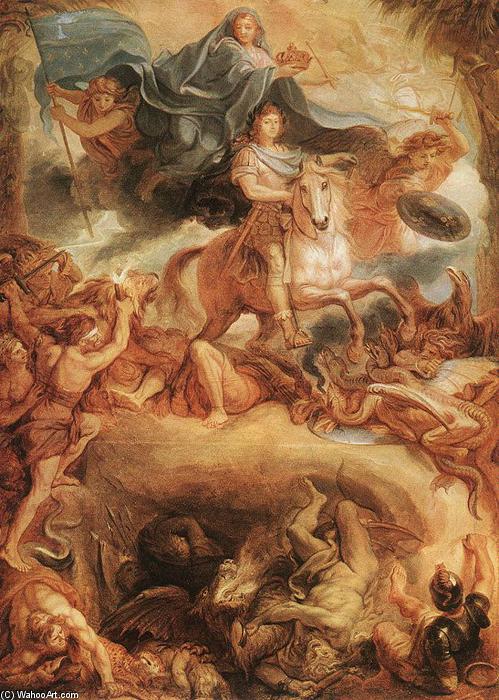
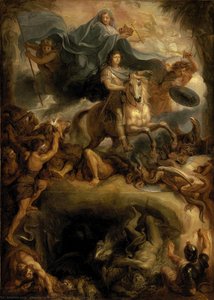
Apotheose of Louis XIV


 Read More
Purchase a high-resolution, enhanced digital image, far superior to the online preview.
Each file is meticulously prepared by our in-house specialists using advanced tools and expert manual retouching. We ensure every image has exceptional clarity, precise color accuracy, and fine detail.
The final file is delivered via email within 72 hours, optimized for immediate use in professional, editorial, and print environments. This is the same quality trusted by top-tier design studios, publishers, and galleries.
Digital Image
Download a high-resolution file for personal display, printing, and creative projects. ( Buy Print Buy Hand Made Painting)
Included in Every Digital Image Order
Expert Digital Delivery, Guaranteed
When you choose ArtsDot.com, you're not just getting an image - you're receiving a professionally enhanced digital artwork, crafted with precision and backed by a satisfaction guarantee. Here's everything that comes with your order, automatically:

Fast Email Delivery
Your high-resolution digital image file will be emailed to you within 72 hours of ordering - ready for immediate use.

AI-Enhanced Digital File
Your artwork is professionally optimized using advanced AI tools and manual editing, ensuring maximum detail, clarity, and color accuracy.

Free Lifetime Re-Delivery
Accidentally deleted or lost your file? No worries - we'll resend it to you anytime, free of charge.

No Import Fees - Ever
Enjoy your artwork instantly with zero customs, duties, or delivery fees - digital downloads are always tax-free.

Color Accuracy Guarantee
We ensure your digital image reflects the original colors as closely as possible using professional tools and color management.

60-Day Satisfaction Guarantee
If you're not satisfied with your digital image, we'll revise it or refund 100% within 60 days - no questions asked.

100% Money-Back Guarantee
Not satisfied? Get a full refund within 60 days of receiving your digital file - no questions asked.

Bulk Order Discounts
Buy 3 images, save 10% - Buy 5, save 15% - Buy 10+, save 20%. Great for creative projects, galleries, and agencies.
Collectible Description
The Apotheosis of Louis XIV: A Baroque Triumph of Power and Divine Right
Charles Le Brun’s “Apotheose of Louis XIV,” painted in 1677, isn't merely a portrait; it’s a meticulously crafted declaration of royal authority, a visual embodiment of the Sun King’s absolute power. Commissioned during a pivotal moment in French history – following the scandalous arrest of his predecessor, Nicolas Fouquet – this monumental work served as both a celebration of Louis XIV and a strategic assertion of the monarchy's legitimacy. Le Brun, already a favored court painter, was tasked with creating an image that transcended simple representation, aiming instead to elevate the king to a position of divine status within the grand narrative of French history.
The painting depicts Louis XIV seated upon a colossal throne, not in a traditional military setting, but amidst a fantastical landscape teeming with allegorical figures. He is flanked by his queen, Anne of Austria, and their children, each rendered with exquisite detail and imbued with symbolic meaning. To the left, Mars, god of war, bestows upon Louis XIV a laurel wreath – a potent symbol of victory and imperial glory. On the right, Neptune, ruler of the seas, offers him a trident, representing his dominion over France’s maritime power. The entire scene is bathed in rich, opulent colors—deep reds, golds, and blues—characteristic of the Baroque style, creating an atmosphere of dramatic intensity and regal splendor.
A Masterclass in Baroque Technique
Le Brun's mastery of technique is immediately apparent in “Apotheose of Louis XIV.” He employed a complex layering of glazes – thin, translucent layers of paint applied over dried underpaintings—to achieve an astonishing level of luminosity and depth. This technique, known as *sfumato*, creates a hazy, atmospheric effect that softens the forms and imbues the scene with a sense of ethereal beauty. The meticulous rendering of fabrics, jewels, and armor demonstrates Le Brun’s unparalleled skill in capturing texture and detail. Notably, he utilized a pyramidal composition, drawing the viewer's eye directly to Louis XIV at the apex, reinforcing his central importance within the artwork.
The painting also showcases Le Brun’s innovative approach to perspective. He skillfully manipulated space and depth to create an illusion of vastness, suggesting that Louis XIV’s power extends far beyond the confines of the royal court. The use of aerial perspective—where distant objects appear paler and less distinct—further enhances this effect, transporting the viewer into a world of grandeur and majesty.
Symbolism and Royal Propaganda
Beyond its technical brilliance, “Apotheose of Louis XIV” is laden with symbolism designed to reinforce the king’s divine right to rule. The allegorical figures surrounding Louis XIV are not merely decorative; they represent key aspects of his reign – military strength, maritime dominance, and the prosperity of France. The inclusion of the royal family underscores the importance of lineage and succession, solidifying the legitimacy of the monarchy. Furthermore, the painting’s scale—a monumental canvas measuring approximately 10 feet by 13 feet—served to impress upon viewers the sheer magnitude of Louis XIV's power and influence.
Considering the context of Fouquet’s downfall, the commission itself was a deliberate act of propaganda. Le Brun sought to erase any lingering doubts about the king’s competence and legitimacy, presenting him as an almost god-like figure presiding over a flourishing empire. The painting served as a powerful visual statement—a declaration that Louis XIV was not merely a ruler but a divinely appointed sovereign destined to guide France into an era of unprecedented glory.
A Legacy of Grandeur
“Apotheose of Louis XIV” remains a testament to Charles Le Brun’s artistic genius and his pivotal role in shaping the visual language of the French Baroque. It is a masterpiece that continues to captivate viewers with its dramatic intensity, exquisite detail, and profound symbolism. Reproductions of this iconic work offer an opportunity to experience the grandeur of Louis XIV's reign and appreciate the enduring legacy of one of France’s greatest artists. Its rich colors and dynamic composition make it a striking addition to any interior space, evoking a sense of power, majesty, and timeless elegance.
Related Artworks


Artist Biography
Early Life and Training
- Born: Paris, France (1619)
- Baptised: 24 February 1619
- Died: 12 February 1690 Paris, Kingdom of France
- Charles Le Brun displayed artistic talent from a young age. At the age of eleven, he entered the studio of Simon Vouet under the patronage of Chancellor Séguier.
- He further studied with François Perrier and received early commissions from Cardinal Richelieu, demonstrating considerable skill even at fifteen.
- A pivotal period in his development was a four-year stay in Rome (1642-1646), where he worked under the guidance of Nicolas Poussin. This experience profoundly shaped his artistic style and theoretical understanding of art.
- During this time, Le Brun studied ancient Roman sculpture and copied works by Raphael, absorbing influences from both classical antiquity and contemporary Italian masters.
Artistic Development and Style
- Upon returning to Paris in 1646, Le Brun quickly gained recognition and patronage. His early style reflected the influence of Vouet and Poussin, but he gradually developed a more personal approach.
- Le Brun's artistic evolution involved moving away from strict adherence to classical models towards a more dynamic and expressive Baroque style.
- He became known for his grand historical paintings, portraiture, and decorative work, often characterized by dramatic compositions, rich colors, and meticulous detail.
- A significant series of works depicting the history of Alexander the Great showcased his ability to combine historical narrative with artistic grandeur.
Major Achievements and Royal Service
- Le Brun's career reached its peak during the reign of Louis XIV, who appointed him First Painter to the King in 1664. This position granted him immense influence over French art.
- He played a crucial role in decorating the Palace of Versailles, creating iconic works such as the Ambassadors’ Staircase, the Hall of Mirrors, and the Peace and War Rooms. These projects cemented his reputation as a master decorator and designer.
- Le Brun was also responsible for designing many statues in the gardens of Versailles, demonstrating his versatility across various artistic disciplines.
- He founded the Académie Royale de Peinture et de Sculpture (Royal Academy of Painting and Sculpture) in 1648, solidifying his position as a leader within the French art world. He served as its director for many years.
Legacy and Historical Significance
- Charles Le Brun's influence on French art was profound. His work helped define the Baroque style in France and established him as one of the most important artists of his time.
- As a theorist, he emphasized the importance of intellectual engagement over mere visual appeal, shaping artistic education for generations to come.
- His decorative schemes at Versailles set a standard for royal palaces throughout Europe.
- Le Brun's legacy extends beyond his individual works; he played a vital role in establishing and promoting French art on an international stage.

Charles Le Brun
1619 - 1690 , France
Quick Facts
- Artistic Movement Or Style: Baroque
- Artists Who Influenced This Artist:
- Nicolas Poussin
- Simon Vouet
- Date Of Birth: February 24, 1619
- Date Of Death: February 12, 1690
- Full Name: Charles Le Brun
- Nationality: French
- Notable Artworks:
- Ambassadors’ Staircase
- Hall of Mirrors
- Peace and War Rooms
- Place Of Birth: Paris, France

