

 Send
Send Share
Share
 Details

 Download
 Similars
 Diaporama
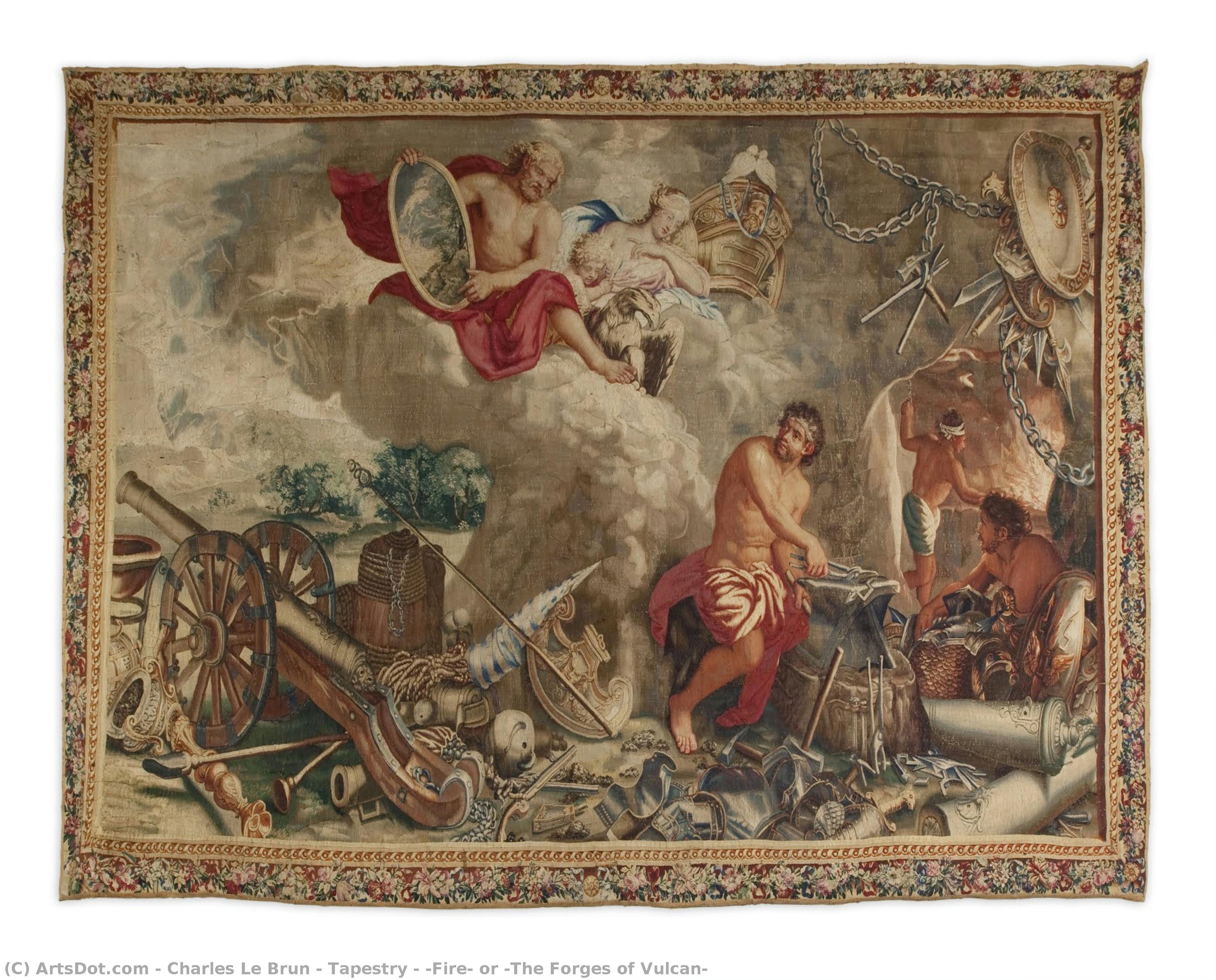
Tapestry - “Fire” or “The Forges of Vulcan”


 Read More
Purchase a high-resolution, enhanced digital image, far superior to the online preview.
Each file is meticulously prepared by our in-house specialists using advanced tools and expert manual retouching. We ensure every image has exceptional clarity, precise color accuracy, and fine detail.
The final file is delivered via email within 72 hours, optimized for immediate use in professional, editorial, and print environments. This is the same quality trusted by top-tier design studios, publishers, and galleries.
Digital Image
Download a high-resolution file for personal display, printing, and creative projects. ( Buy Print Buy Hand Made Painting)
Included in Every Digital Image Order
Expert Digital Delivery, Guaranteed
When you choose ArtsDot.com, you're not just getting an image - you're receiving a professionally enhanced digital artwork, crafted with precision and backed by a satisfaction guarantee. Here's everything that comes with your order, automatically:

Fast Email Delivery
Your high-resolution digital image file will be emailed to you within 72 hours of ordering - ready for immediate use.

AI-Enhanced Digital File
Your artwork is professionally optimized using advanced AI tools and manual editing, ensuring maximum detail, clarity, and color accuracy.

Free Lifetime Re-Delivery
Accidentally deleted or lost your file? No worries - we'll resend it to you anytime, free of charge.

No Import Fees - Ever
Enjoy your artwork instantly with zero customs, duties, or delivery fees - digital downloads are always tax-free.

Color Accuracy Guarantee
We ensure your digital image reflects the original colors as closely as possible using professional tools and color management.

60-Day Satisfaction Guarantee
If you're not satisfied with your digital image, we'll revise it or refund 100% within 60 days - no questions asked.

100% Money-Back Guarantee
Not satisfied? Get a full refund within 60 days of receiving your digital file - no questions asked.

Bulk Order Discounts
Buy 3 images, save 10% - Buy 5, save 15% - Buy 10+, save 20%. Great for creative projects, galleries, and agencies.
Collectible Description
A Symphony of Flame and Myth: The Forges of Vulcan
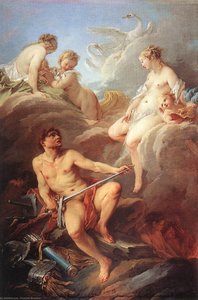
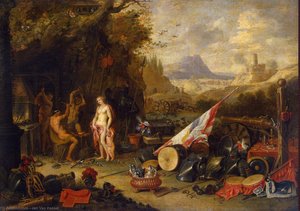
In the grand tradition of Baroque storytelling, the tapestry titled “Fire”, also known as “The Forges of Vulcan,” serves as a breathtaking window into the mythological heart of the seventeenth century. This intricate work captures the divine industry of Vulcan, the Roman god of fire and craftsmanship, weaving together a narrative that is as much about the heat of creation as it is about the complexity of human and celestial interaction. The scene unfolds with a dramatic intensity, where the boundaries between the mortal and the divine blur amidst the glowing embers of the forge. As one gazes upon this masterpiece, the eye is immediately drawn to the rhythmic movement of figures—men and angels intertwined in a choreographed dance of labor and grace. There is a palpable sense of purpose in every gesture, from the careful handling of ceremonial bowls to the focused attention of those tending to the elemental fires.
Symbolism and the Architecture of Emotion
Beyond its visual splendor, the tapestry is a profound meditation on the duality of existence. The presence of skulls—one nestled in the lower shadows and another peering from the upper reaches—introduces a haunting layer of symbolism, contrasting the creative vitality of Vulcan’s forge with the inevitability of mortality. This juxtaposition creates a tension that is deeply moving, suggesting that all creation is inextricably linked to the cycle of life and death. For the discerning collector or interior designer, this piece offers more than mere decoration; it provides an intellectual anchor for a room. The interplay of light and shadow, combined with the symbolic weight of objects like the chair and the ritualistic vessels, lends a sense of lived-in history and philosophical depth to any space.
Integrating a high-quality reproduction of such a monumental work into a contemporary or classical interior allows for a dialogue between eras. It brings an atmosphere of scholarly prestige and dramatic flair, making it an ideal centerpiece for those who wish to surround themselves with art that speaks of legacy, myth, and the enduring power of human imagination. To possess this piece is to hold a fragment of the Baroque soul, inviting guests to lose themselves in its intricate tales of fire, fate, and the divine.
Related Artworks

Artist Biography
Early Life and Training
- Born: Paris, France (1619)
- Baptised: 24 February 1619
- Died: 12 February 1690 Paris, Kingdom of France
- Charles Le Brun displayed artistic talent from a young age. At the age of eleven, he entered the studio of Simon Vouet under the patronage of Chancellor Séguier.
- He further studied with François Perrier and received early commissions from Cardinal Richelieu, demonstrating considerable skill even at fifteen.
- A pivotal period in his development was a four-year stay in Rome (1642-1646), where he worked under the guidance of Nicolas Poussin. This experience profoundly shaped his artistic style and theoretical understanding of art.
- During this time, Le Brun studied ancient Roman sculpture and copied works by Raphael, absorbing influences from both classical antiquity and contemporary Italian masters.
Artistic Development and Style
- Upon returning to Paris in 1646, Le Brun quickly gained recognition and patronage. His early style reflected the influence of Vouet and Poussin, but he gradually developed a more personal approach.
- Le Brun's artistic evolution involved moving away from strict adherence to classical models towards a more dynamic and expressive Baroque style.
- He became known for his grand historical paintings, portraiture, and decorative work, often characterized by dramatic compositions, rich colors, and meticulous detail.
- A significant series of works depicting the history of Alexander the Great showcased his ability to combine historical narrative with artistic grandeur.
Major Achievements and Royal Service
- Le Brun's career reached its peak during the reign of Louis XIV, who appointed him First Painter to the King in 1664. This position granted him immense influence over French art.
- He played a crucial role in decorating the Palace of Versailles, creating iconic works such as the Ambassadors’ Staircase, the Hall of Mirrors, and the Peace and War Rooms. These projects cemented his reputation as a master decorator and designer.
- Le Brun was also responsible for designing many statues in the gardens of Versailles, demonstrating his versatility across various artistic disciplines.
- He founded the Académie Royale de Peinture et de Sculpture (Royal Academy of Painting and Sculpture) in 1648, solidifying his position as a leader within the French art world. He served as its director for many years.
Legacy and Historical Significance
- Charles Le Brun's influence on French art was profound. His work helped define the Baroque style in France and established him as one of the most important artists of his time.
- As a theorist, he emphasized the importance of intellectual engagement over mere visual appeal, shaping artistic education for generations to come.
- His decorative schemes at Versailles set a standard for royal palaces throughout Europe.
- Le Brun's legacy extends beyond his individual works; he played a vital role in establishing and promoting French art on an international stage.

Charles Le Brun
1619 - 1690 , France
Quick Facts
- Artistic Movement Or Style: Baroque
- Artists Who Influenced This Artist:
- Nicolas Poussin
- Simon Vouet
- Date Of Birth: February 24, 1619
- Date Of Death: February 12, 1690
- Full Name: Charles Le Brun
- Nationality: French
- Notable Artworks:
- Ambassadors’ Staircase
- Hall of Mirrors
- Peace and War Rooms
- Place Of Birth: Paris, France

