 Preview
 Send
Send Share
Share
 Details

 Download
 Similars
 X-Ray
X-Ray Diaporama
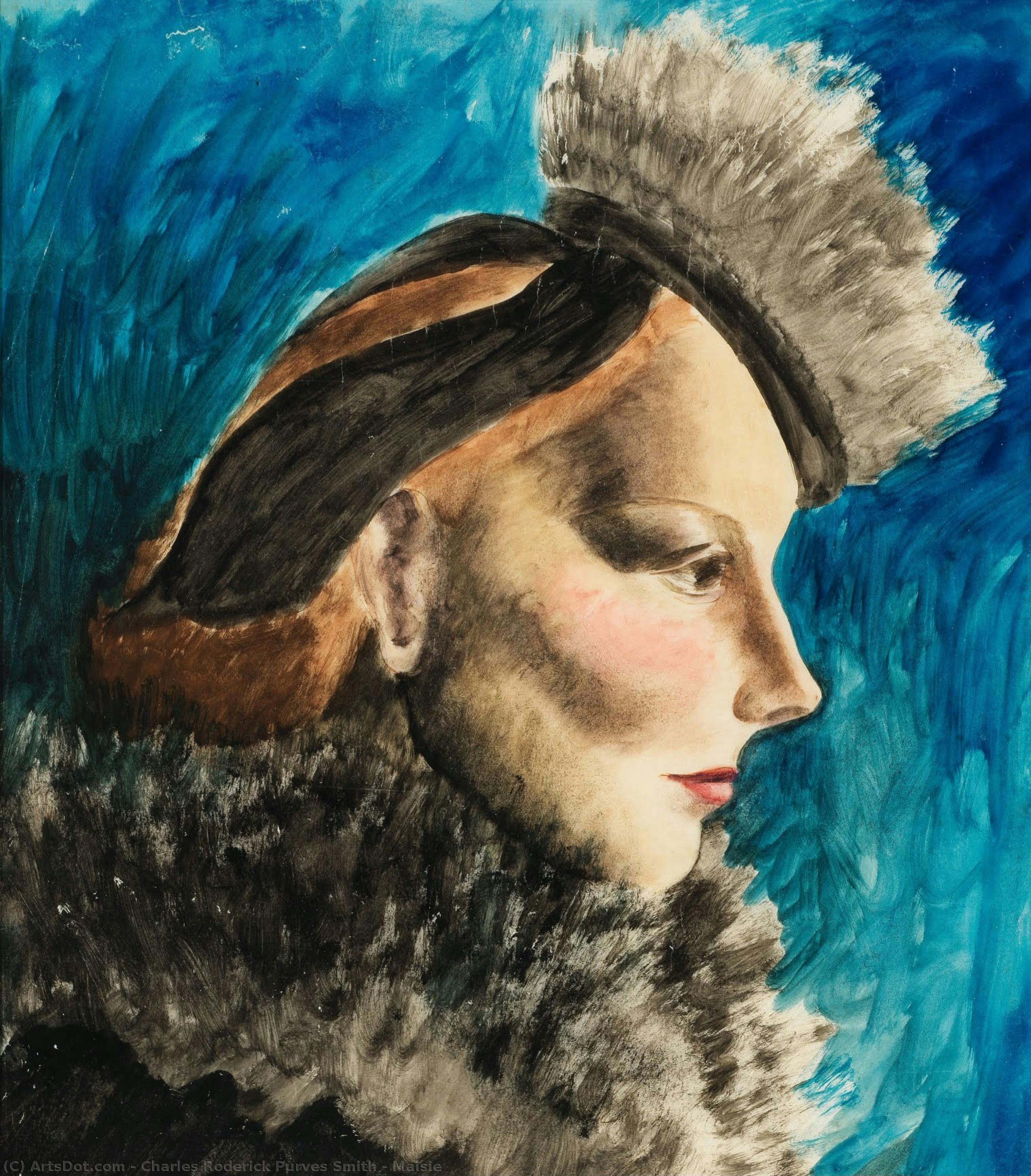
Maisie
 Gouache
- WallArt
 1938
1938- Modern
 78.0 x 72.0 cm
 National Portrait Gallery
 Read More
Hand Made Oil Reproduction
Hand-painted oil on canvas in your size and frame, made to order by our artists. ( Buy Print Buy Image)




P118B $10

P118H $10

P118W $10

P438Z $10

P508JH $12

P508YH $12

P805H $10

P805Z $10

P919BZ $10

P919G $10

P919XJ $10

P959ZH $10

P968JZ $12

W106C $8

W218G $10

W218JH $8

W218Y $10

W307PJ $10

W316G $10

W316PJ $8

W316Y $10

W398PJ $8

W4111J $10

W500HY $15

W500JH $15

W692G $12

W849H $8

W940BG $15

W953PJ $8




Pick from our preset sizes that match the artwork's original proportions.

You may enter your own dimensions to fit a specific frame or space. If your selected size does not match the original image's proportions, we will either crop the artwork or extend the painting with additional hand-painted elements. A digital mockup will be sent for your approval before production begins.
Please note that the on-screen preview does not reflect the actual cropping or extension. Only the mockup will accurately show the final composition.
While custom sizes are available, we recommend selecting a dimension from the predefined list to preserve the original proportions.
After order, ArtsDot.com team will email client for instructions and provide a mockup preview
Worldwide Delivery () in 3/4 weeks instead of standard 5 weeks. (17 August). No compromise on quality.

Free Worldwide Express Shipping

High-Quality Linen Canvas

Full Shipping Insurance

Customs Tax Refund Guarantee

True Color Matching Guarantee

60-Day Return Policy (Defects Only)

100% Money-Back Guarantee

Bulk Discount Offer
 Glass option is only available in size under 110 CM

Maisie
Reproduction Medium
Reproduction Size
-


Total Price
$ 263
Related Artworks
Artist Biography
A Pioneer of Australian Modernism: The Enigmatic World of Charles Purves Smith
Charles Roderick Purves Smith, often known as Peter Purves Smith, remains a compelling yet somewhat elusive figure in the landscape of Australian art. Born in East Melbourne on March 26, 1912, his life was tragically cut short in 1949, leaving behind a small but powerfully resonant body of work that continues to captivate and intrigue. His lineage traced back to Scottish roots – his grandfather, Thomas Smith, emigrated from Scotland in the mid-19th century – instilled a sense of connection to both heritage and the burgeoning Australian identity he would so uniquely portray. Purves Smith’s artistic journey was one marked by intellectual curiosity, stylistic experimentation, and a profound engagement with the tumultuous events of his time. He wasn't merely documenting Australia; he was interpreting it through a distinctly modern lens, infused with surrealist undertones and a haunting sense of psychological depth.Formative Years and Artistic Influences
Purves Smith’s education laid the foundation for his artistic development. After attending Geelong Grammar School, he sought formal training first at the Grosvenor School of Modern Art in London under Iain Macnab, and later with George Bell in Melbourne. These experiences were pivotal, exposing him to diverse artistic currents that would shape his aesthetic vision. He absorbed influences from a wide spectrum of artists – the elegant distortions of Amedeo Modigliani, the evocative landscapes of Paul Nash, the naive charm of Henri Rousseau, and the unsettling dreamscapes of Maurice Utrillo all left their mark. Crucially, he also engaged with the burgeoning Surrealist movement, an influence that would become increasingly prominent in his work. This confluence of styles wasn’t simply imitation; Purves Smith synthesized these elements into a uniquely personal language, one characterized by elongated figures, flattened perspectives, and a pervasive sense of unease. He was among the first Australian artists to directly engage with Surrealism, bringing its psychological intensity to bear on distinctly Australian subjects.A Unique Vision: Key Works and Artistic Contributions
Purves Smith’s artistic output, though relatively small due to his untimely death, is remarkably diverse and consistently compelling. Kangaroo Hunt (1938), perhaps his most celebrated work, exemplifies his ability to transform a quintessentially Australian scene into a modern masterpiece. Acquired by the Museum of Modern Art in New York, it showcases not just the animal itself but also a sense of primal energy and the complex relationship between humans and the natural world. The Nazis, Nuremberg (1938), demonstrates his engagement with global political events, offering a stark and unsettling commentary on the rise of fascism. Early Morning in Paris (1939)Sassafras (1948), his final oil painting, reveal a deepening sense of introspection and a haunting premonition of mortality. He didn’t shy away from challenging subject matter, often exploring themes of isolation, anxiety, and the darker aspects of human nature. His paintings weren't merely representations; they were psychological explorations rendered in vivid color and unsettling compositions.War, Illness, and a Lasting Legacy
The outbreak of World War II dramatically altered Purves Smith’s trajectory. He enlisted in the British Army in 1940, serving with distinction in West Africa and Burma. The horrors he witnessed during the war profoundly impacted his psyche and found their way into his art. He contracted tuberculosis while on service, a debilitating illness that would ultimately claim his life. Returning to Australia in 1946, he married Maisie Newbold, with Russell Drysdale serving as best man – a testament to the close artistic camaraderie of the time. Despite his declining health, Purves Smith continued to paint with fervor, producing some of his most powerful and emotionally charged works during these final years. Though his career was tragically brief, his influence on Australian modernism is undeniable. Russell Drysdale, in particular, extended and developed many of the stylistic elements pioneered by Purves Smith – the elongated figures, the surrealist undertones, and the exploration of the psychological landscape of Australia. He left an indelible mark, paving the way for future generations of artists to explore the complexities of Australian identity and experience through a modern lens. His work continues to resonate today, reminding us of the power of art to confront difficult truths and illuminate the hidden depths of the human condition.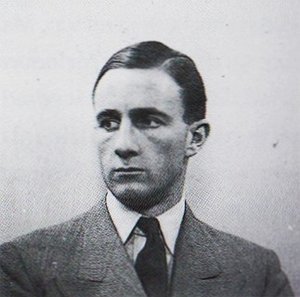
Charles Roderick Purves Smith
1912 - 1949 , Australia
Quick Facts
- Artistic Movement Or Style: Modernism, Surrealism
- Artists Or Movements Influenced By This Artist: ['Russell Drysdale']
- Artists Who Influenced This Artist:
- Modigliani
- Paul Nash
- Henri Rousseau
- Maurice Utrillo
- Date Of Birth: March 26, 1912
- Date Of Death: July 23, 1949
- Full Name: Charles Roderick Purves Smith
- Nationality: Australian
- Notable Artworks:
- Kangaroo Hunt
- The Nazis, Nuremberg
- Early Morning in Paris
- Sassafras
- Place Of Birth: East Melbourne, Australia
Related Articles
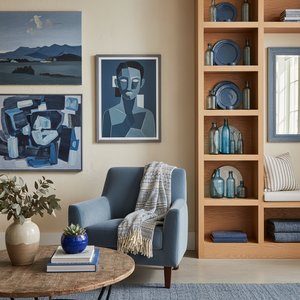
Slate Blue Masterpieces: 10 Iconic Paintings & Timeless Home Decor Ideas
Immerse yourself in the captivating world of slate blue! Explore 10 iconic paintings by Monet, Van Gogh & Renoir. Discover their stories, techniques & find museum-quality art reproductions for your home at .
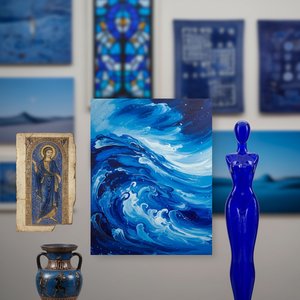
The Allure of Azure: Exploring the Symbolic & Aesthetic Depths of Blue in Art History
Explore the rich history of blue in art! Discover its symbolism, from ancient pigments to modern masterpieces by Kandinsky & Seurat. Uncover the psychological impact and cultural meanings behind this captivating hue.
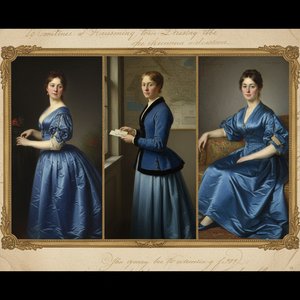
Azure Visions: Exploring Representations of the Blue Dress in Western Art History
Explore the rich history of the blue dress in Western art! Discover its symbolism, from Renaissance masterpieces to modern interpretations by artists like Martin & Schiele. Uncover cultural meanings and artistic techniques.
Henri Matisse's Masterpieces: Explore 25 Iconic Paintings & Art Decor Ideas
Journey through Henri Matisse's 25 most iconic paintings! Explore Fauvism, vibrant colors & the stories behind masterpieces like 'The Dance'. Find museum-quality art reproductions and curated decor ideas to elevate your space. Discover all masterpieces on ArtsDot.com.
Pablo Picasso's Masterpieces: Explore 25 Iconic Artworks for Your Home | ArtsDot
Journey through Pablo Picasso's 25 most iconic artworks! Explore Cubism, the Blue Period & masterpieces like Guernica. Find museum-quality reproductions and elevate your home decor with ArtsDot.com. Discover all masterpieces on ArtsDot.com.