 Preview
 Send
Send Share
Share
 Details

 Download
 Similars
 X-Ray
X-Ray Diaporama
 Stats
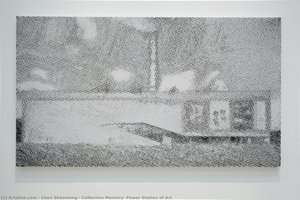
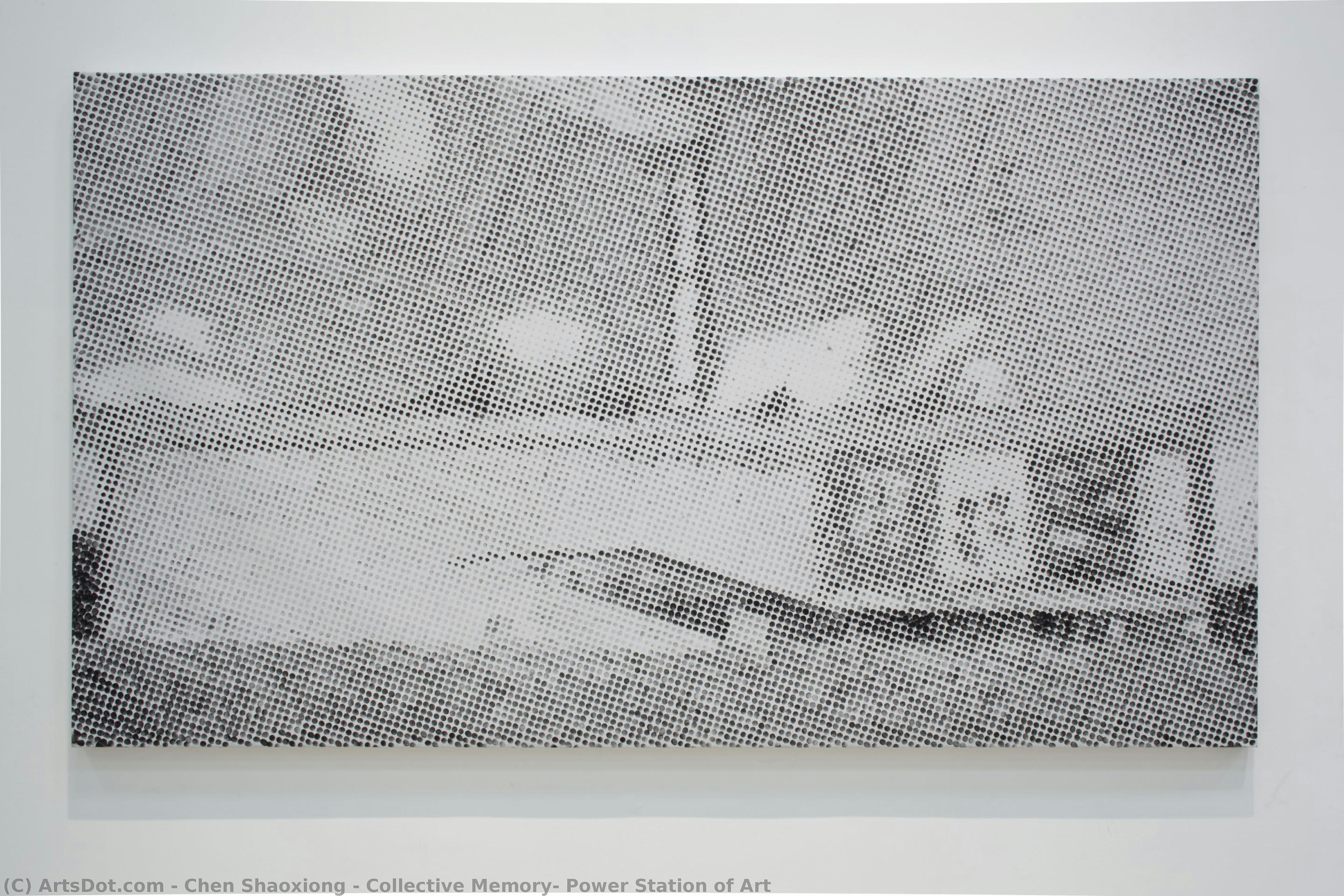
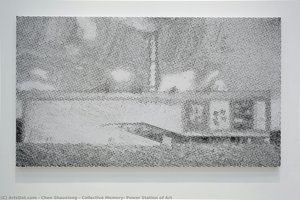
StatsCollective Memory: Power Station of Art
 2016
2016 170.0 x 303.0 cm
 Power Station of Art
 Read More
Hand Made Oil Reproduction
Hand-painted oil on canvas in your size and frame, made to order by our artists. ( Switch to Print Switch to Digital Image)




































Pick from our preset sizes that match the artwork's original proportions.

You may enter your own dimensions to fit a specific frame or space. If your selected size does not match the original image's proportions, we will either crop the artwork or extend the painting with additional hand-painted elements. A digital mockup will be sent for your approval before production begins.
Please note that the on-screen preview does not reflect the actual cropping or extension. Only the mockup will accurately show the final composition.
While custom sizes are available, we recommend selecting a dimension from the predefined list to preserve the original proportions.
After order, ArtsDot.com team will email client for instructions and provide a mockup preview
Worldwide Delivery () in 3/4 weeks instead of standard 5 weeks. (9 September). No compromise on quality.

Free Worldwide Express Shipping

High-Quality Linen Canvas

Full Shipping Insurance

Customs Tax Refund Guarantee

True Color Matching Guarantee

100-Day Return Policy (Defects Only)

100% Money-Back Guarantee

Bulk Discount Offer
 Glass option is only available in size under 110 CM

Collective Memory: Power Station of Art
Reproduction Medium
Reproduction Size
-


Total Price
$ 263
Related Artworks






Artist Biography
The Alchemist of Ink and Motion: The Life of Chen Shaoxiong
In the vast, shifting landscape of contemporary Chinese art, few figures have navigated the delicate boundary between ancient tradition and modern fragmentation as masterfully as Chen Shaoxiong. Born in 1962 in the historic region of Leshan, Sichuan Province, Chen emerged from a generation of creators profoundly shaped by the seismic political and socio-economic transformations of late twentieth-century China. His journey began with a rigorous foundation in classical techniques, graduating from the Guangzhou Fine Art Academy in 1984 where he trained deeply in the nuances of Chinese ink. This early mastery of the brush would later serve as the essential heartbeat for his more radical, experimental explorations into multimedia and installation.
As the 1990s dawned, Chen became a central protagonist in the burgeoning conceptual art scene of Guangzhou. Alongside visionaries like Lin Yilin and Liang Juhui, he co-founded the legendary Big Tail Elephant Group. This collective was more than just an artistic movement; it was a laboratory for challenging conventional boundaries and exploring the raw, unpolished realities of a society in flux. Through this collaborative spirit, Chen began to move beyond the static canvas, integrating photography, collage, and eventually, the moving image into a singular, cohesive language that sought to capture the ephemeral nature of memory and identity.
A Dialogue Between History and the Moving Image
The true brilliance of Chen Shaoxiong lies in his ability to use the tools of the future to interrogate the ghosts of the past. While many contemporary artists turned toward purely digital or westernized aesthetics, Chen remained tethered to the soulful, meditative qualities of ink painting. However, he did not treat ink as a relic of a bygone era, but rather as a living medium capable of interacting with video and sound. His work often functions as a profound interrogation of authenticity, influenced by the philosophical inquiries of thinkers such as Heidegger and Derrida, as he sought to understand how history is constructed, erased, and reimagined.
This preoccupation with the malleability of truth is perhaps most poignantly expressed in his monumental project, Ink History (2010). In this work, Chen visually chronicles the turbulent trajectory of China from the fall of the Qing dynasty to the dawn of the twenty-first century. By meticulously recreating historical photographs—ranging from the presence of the Japanese military to the iconic moments of Mao Zedong announcing the People's Republic—using the delicate medium of ink, he creates a haunting tension between the permanence of the image and the fragility of the memory. His art becomes a space where the personal and the collective collide, forcing the viewer to confront the ways in which historical narratives are often distorted or deliberately deleted.
Legacy of a Multi-Dimensional Visionary
Throughout his career, Chen Shaoxiong’s evolution was marked by an increasing complexity of form. He transitioned from the experimental provocations of his early years toward more expansive, immersive installations that demand a sensory engagement from the spectator. His ability to weave together disparate elements—the tactile grain of paper, the fluid stroke of a brush, and the flickering light of a video projection—allowed him to create environments that felt both deeply rooted in Chinese heritage and strikingly modern. He did not merely present art; he constructed temporal landscapes where the viewer could wander through layers of time.
Though his life was tragically cut short in 2016, Chen’s impact on the global stage remains indelible. His significance resides in his refusal to choose between the old and the new, instead finding a way to make them breathe together. He stands as a pivotal figure who bridged the gap between the traditional ink masters and the digital avant-garde, leaving behind a body of work that continues to challenge our perceptions of what it means to remember, to represent, and to exist within the flow of history.
chen shaoxiong
1962 - 2016 , China
Quick Facts
- Artistic Movement Or Style: Contemporary Chinese Art
- Date Of Death: 2016
- Full Name: Chen Shaoxiong
- Nationality: Chinese
- Notable Artworks:
- Ink History
- Ink Media
- Place Of Birth: Beijing, China