

 Preview
 Send
Send Share
Share
 Details

 Download
 Similars
 X-Ray
X-Ray Diaporama
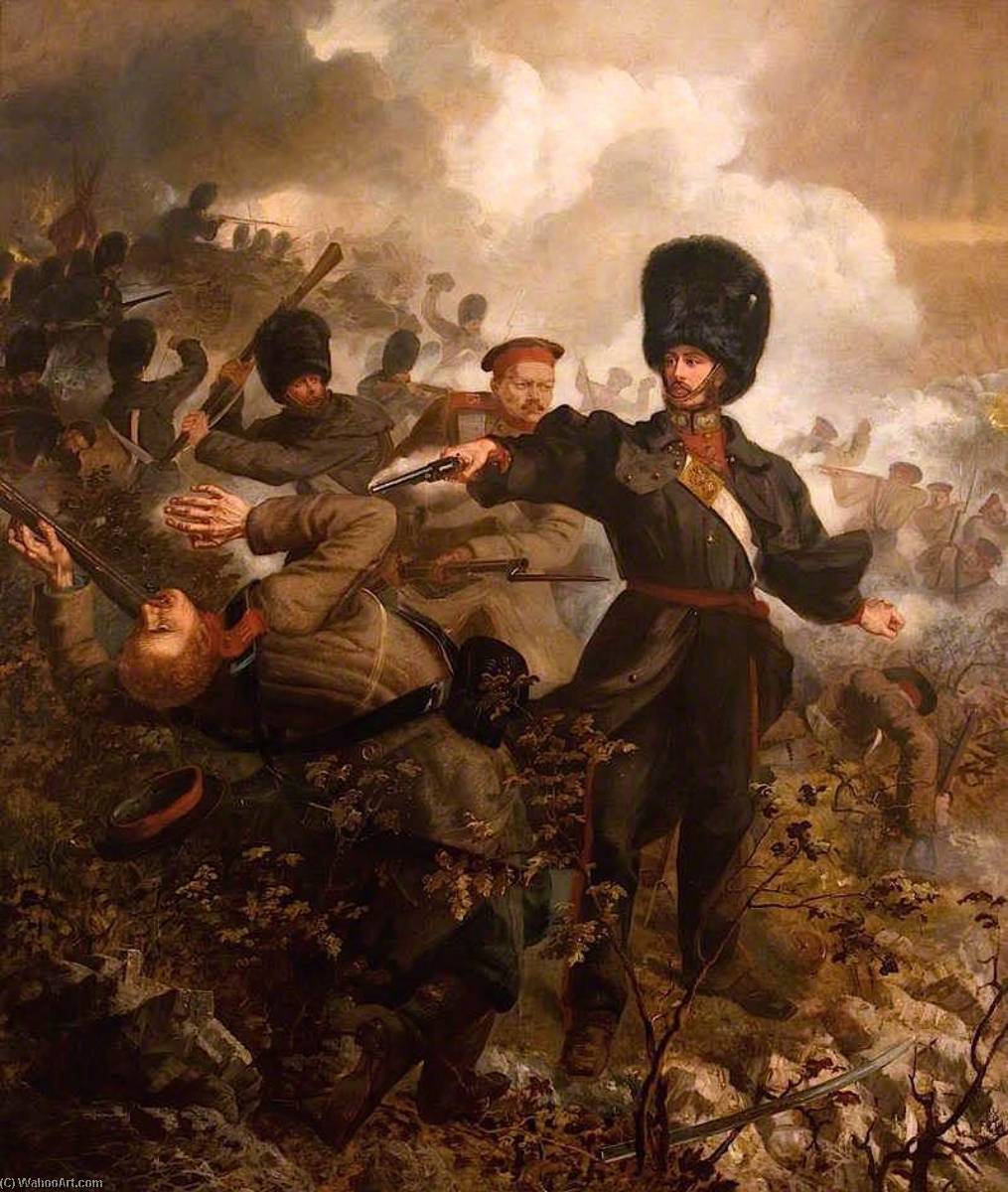
Lieutenant Colonel Sir Charles Russell at the Battle of Inkermann, 5 November 1854
 Oil
Oil- WallArt
- Realism
 1869
1869- 19th Century
 195.0 x 173.0 cm
 Ministry of Defence
 Read More
Purchase a high-resolution, enhanced digital image, far superior to the online preview.
Each file is meticulously prepared by our in-house specialists using advanced tools and expert manual retouching. We ensure every image has exceptional clarity, precise color accuracy, and fine detail.
The final file is delivered via email within 72 hours, optimized for immediate use in professional, editorial, and print environments. This is the same quality trusted by top-tier design studios, publishers, and galleries.
Digital Image
Download a high-resolution file for personal display, printing, and creative projects. ( Buy Print Buy Hand Made Painting)
Included in Every Digital Image Order
Expert Digital Delivery, Guaranteed
When you choose ArtsDot.com, you're not just getting an image - you're receiving a professionally enhanced digital artwork, crafted with precision and backed by a satisfaction guarantee. Here's everything that comes with your order, automatically:

Fast Email Delivery
Your high-resolution digital image file will be emailed to you within 72 hours of ordering - ready for immediate use.

AI-Enhanced Digital File
Your artwork is professionally optimized using advanced AI tools and manual editing, ensuring maximum detail, clarity, and color accuracy.

Free Lifetime Re-Delivery
Accidentally deleted or lost your file? No worries - we'll resend it to you anytime, free of charge.

No Import Fees - Ever
Enjoy your artwork instantly with zero customs, duties, or delivery fees - digital downloads are always tax-free.

Color Accuracy Guarantee
We ensure your digital image reflects the original colors as closely as possible using professional tools and color management.

60-Day Satisfaction Guarantee
If you're not satisfied with your digital image, we'll revise it or refund 100% within 60 days - no questions asked.

100% Money-Back Guarantee
Not satisfied? Get a full refund within 60 days of receiving your digital file - no questions asked.

Bulk Order Discounts
Buy 3 images, save 10% - Buy 5, save 15% - Buy 10+, save 20%. Great for creative projects, galleries, and agencies.
Collectible Description
A Moment Frozen in Valor: The Chaos of Inkermann
In the grand tapestry of Victorian military art, few works capture the visceral, smoke-filled intensity of combat as profoundly as Chevalier Louis William Desanges’ masterpiece, Lieutenant Colonel Sir Charles Russell at the Battle of Inkermann, 5 November 1854. This sweeping canvas serves as more than a mere historical record; it is an immersive window into the Crimean War, specifically the harrowing "Soldiers' Battle" of Inkermann. Desanges masterfully places the viewer directly into the fray, where the air feels heavy with the scent of gunpowder and the desperate cries of men caught in the thick of the struggle. The composition centers on the commanding presence of Sir Charles Russell, whose resolute stance amidst the swirling chaos embodies the very essence of British fortitude during one of the nineteenth century's most grueling conflicts.
The painting breathes with a sense of kinetic energy, achieved through Desanges’ expert command of movement and light. As the eye wanders across the 195 x 173 cm expanse, one encounters a landscape of fragmented action: the glint of a raised sword on the periphery, the grim determination in a soldier's gaze, and the pointed barrel of a rifle directed toward an unseen adversary. The artist utilizes a dramatic, almost theatrical technique to highlight the pivotal moments of the engagement, ensuring that every figure—from the high-ranking officer to the weary infantryman—contributes to the overarching narrative of duty and sacrifice. This is not a sanitized view of war, but a textured, layered depiction where the interplay of shadow and light mimics the unpredictable nature of the battlefield itself.
The Artistry of History and Heroism
Beyond its technical prowess, the work is deeply rooted in the cultural zeitgeist of the 1860s. Desanges, a painter celebrated for his portraits of Victoria Cross recipients, possessed a unique ability to imbue historical scenes with a sense of personal honor. In this piece, the symbolism of the uniform and the weaponry serves to elevate the subject from a mere participant in battle to a symbol of imperial resilience. For the discerning collector or interior designer, this painting offers a profound sense of gravitas. It is a piece that demands attention, acting as a powerful focal point in a room characterized by classical elegance or traditional study aesthetics.
Integrating a high-quality reproduction of such a significant work into a curated space allows for a dialogue between the past and the present. The rich, earthy tones and the dramatic chiaroscuro inherent in Desanges’ style provide an unparalleled depth that complements fine wood furnishings, leather textures, and muted color palettes. To possess this image is to hold a fragment of history—a tribute to the courage of the individual amidst the overwhelming tide of war. It remains an evocative choice for those who seek to surround themselves with art that tells a story of profound human emotion, strength, and the enduring legacy of heroism.
Related Artworks
Artist Biography
Chevalier Louis William Desanges: A Portraitist of Victorian Valor
Louis William Desanges, born in Bexley, Kent, in 1822, was a British artist whose legacy rests primarily on his evocative and historically significant military portraits. His life, intertwined with the grand narratives of the Victorian era, saw him evolve from depicting historical scenes to becoming a celebrated painter of Victoria Cross recipients – a testament to his skill and an intimate reflection of Britain’s imperial ambitions. Desanges' work offers a fascinating glimpse into the values and ideals of 19th-century England, particularly its reverence for courage, duty, and military prowess.Early Life and Artistic Training
Desanges’ lineage held a subtle yet influential connection to European aristocracy; his great-grandfather had settled in England eighty years prior, granting him the title of “Chevalier,” a mark that subtly informed his artistic approach – one characterized by meticulous detail and an appreciation for formal presentation. Initially, Desanges' artistic pursuits centered on historical subjects, drawing inspiration from classical art and the burgeoning Romantic movement. He spent formative years traveling through France and Italy, absorbing the techniques and aesthetics of these influential artistic centers. This early exposure undoubtedly shaped his understanding of composition, light, and shadow – elements he would later master in his portraits. Returning to London in 1845, he began exhibiting at the Royal Academy between 1846 and 1887, showcasing a diverse range of works including battle scenes like the Battle of Inkermann (though sadly now lost), demonstrating an early ambition and willingness to tackle large-scale historical commissions.The Rise of the Victoria Cross Portraits
A pivotal moment in Desanges’ career arrived through his association with Lord Wantage, a nobleman who had earned the Victoria Cross at the Battle of Alma. Recognizing the public's fascination with military heroism and the desire to commemorate these acts of bravery, Lord Wantage conceived an ambitious project: a series of portraits depicting all recipients of the Victoria Cross. Desanges was commissioned to undertake this monumental task, a commitment that consumed much of his artistic energy for several years. The process involved extensive research, meticulous sketching from life, and a deep understanding of military uniforms and equipment. He didn’t merely paint likenesses; he sought to capture the character and spirit of each individual soldier, conveying their courage, determination, and sacrifice. The resulting paintings were exhibited at the Crystal Palace in 1862 and later at the Egyptian Gallery in Piccadilly, becoming immensely popular and cementing Desanges' reputation as a portraitist of distinction.Technique and Style
Desanges’ style is characterized by its realism and attention to detail. He employed a meticulous approach to rendering fabrics, uniforms, and weaponry, striving for an almost photographic accuracy. His portraits are often imbued with a sense of dignity and solemnity, reflecting the gravity of the subjects' achievements. While influenced by academic traditions, Desanges’ work possesses a subtle warmth and expressiveness that elevates it beyond mere technical proficiency. He skillfully used light and shadow to create depth and volume, drawing the viewer's eye to key features and conveying a sense of presence. His depictions of military scenes, such as “Fighting in the Ashantee Forest,” demonstrate his ability to capture the dynamism and chaos of battle, albeit with a controlled and formal aesthetic.Legacy and Significance
Louis William Desanges died in 1905, leaving behind a significant body of work that continues to fascinate art historians and enthusiasts alike. His Victoria Cross portraits stand as a remarkable tribute to British military heroism and a valuable historical record. The dispersal of these paintings after Lord Wantage’s death underscores their cultural importance, with many now residing in regimental collections across the United Kingdom. Desanges' work offers not only aesthetic pleasure but also a window into the social and political context of Victorian Britain – an era defined by imperial expansion, military prowess, and a fervent belief in national identity. His legacy endures as a testament to the power of art to commemorate history and celebrate human courage.
chevalier louis william desanges
1822 - 1887 , United Kingdom
Quick Facts
- Artistic Movement Or Style: Historical portraits
- Date Of Birth: 1822, Bexley, UK
- Date Of Death: 1887
- Full Name: Chevalier Louis William Desanges
- Nationality: British
- Notable Artworks: ['The Earl of Derby']
- Place Of Birth: Bexley, United Kingdom

