 Preview
 Send
Send Share
Share
 Details

 Download
 Similars
 X-Ray
X-Ray Diaporama
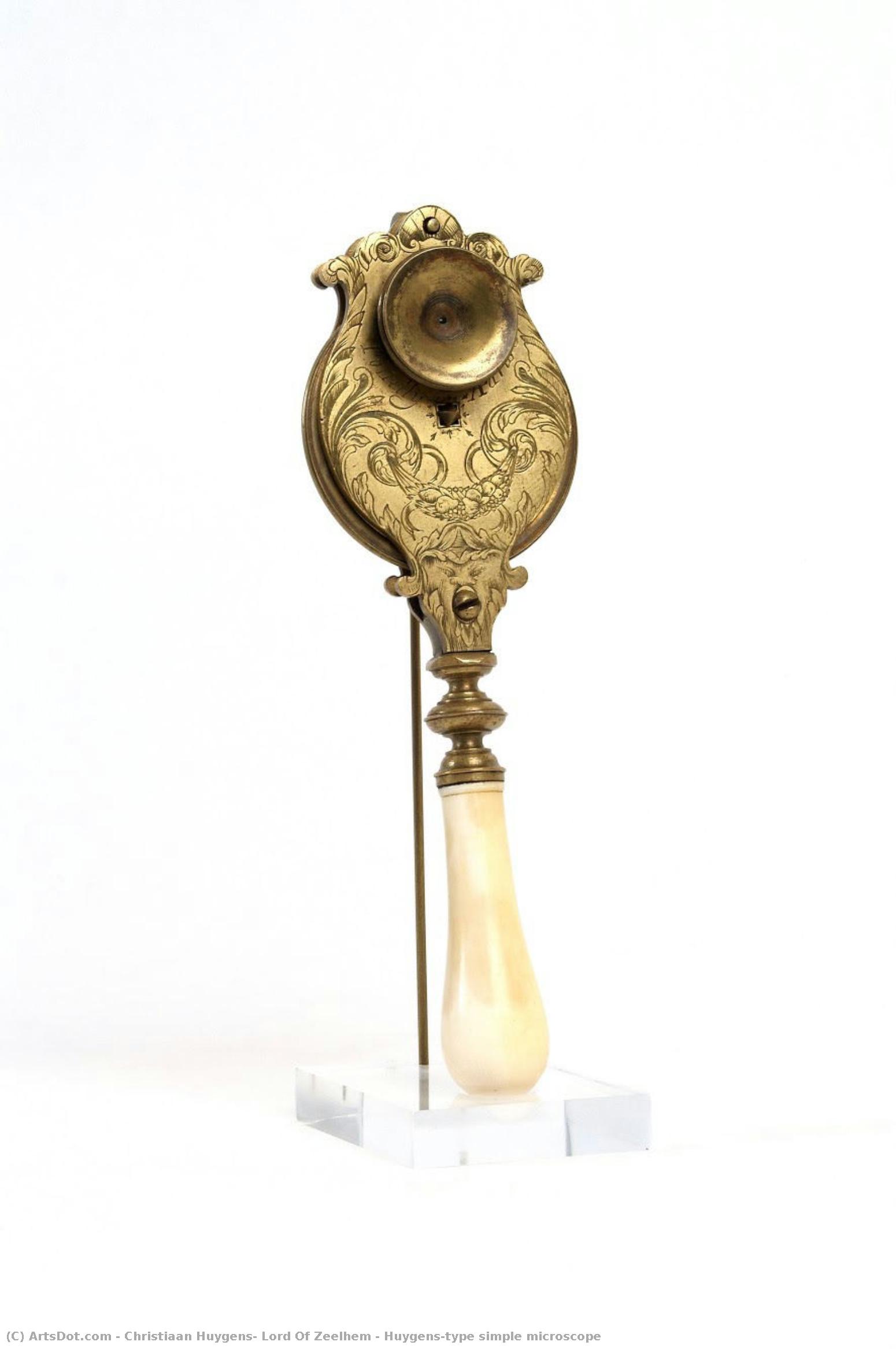
Huygens-type simple microscope


 Read More
Giclée / Art Print
Museum-quality giclée or canvas print with fast production and flexible finish options. ( Buy Hand Made Painting Buy Image)




































Pick from our preset sizes that match the artwork's original proportions.

You may enter your own dimensions to fit a specific frame or space. If your selected size does not match the original image's proportions, we will either crop the artwork or extend the image with a mirrored or solid-fill edge. A digital mockup will be sent for your approval before production begins.
Please note that the on-screen preview does not reflect the actual cropping or extension. Only the mockup will accurately show the final composition.
While custom sizes are available, we recommend selecting a dimension from the predefined list to preserve the original proportions.
Worldwide Delivery () in 2 weeks instead of standard 4/5 weeks. (30 August)

Free Worldwide Express Shipping

High-Quality Linen Canvas

Full Shipping Insurance

Customs Tax Refund Guarantee

True Color Matching Guarantee

60-Day Return Policy (Defects Only)

100% Money-Back Guarantee

Bulk Discount Offer
 Glass option is only available in size under 110 CM

Huygens-type simple microscope
Giclée / Art Print
Reproduction Size
-


Total Price
$ 63
Related Artworks




Artist Biography
Christiaan Huygens: A Life of Scientific Innovation
Christiaan Huygens (1629-1695), Lord of Zeelhem, was a Dutch polymath – a true Renaissance figure of the 17th century. He excelled as a mathematician, physicist, astronomer, engineer, and inventor, playing a pivotal role in the Scientific Revolution.
Early Life and Education
Born on April 14, 1629, in The Hague, Netherlands, Huygens came from a prominent and intellectually stimulating family. His father, Constantijn Huygens, was a poet, diplomat, and secretary to three Dutch stadtholders. This environment fostered Christiaan’s early interest in intellectual pursuits.
Huygens received a comprehensive education, initially tutored privately before studying law and mathematics at the University of Leiden (1645-1647) and later at the College of Orange in Breda.
Scientific Contributions: A Broad Spectrum
- Optics & Light: Huygens is renowned for his wave theory of light, detailed in his Traité de la lumière (1690). Though initially overshadowed by Newton’s corpuscular theory, it was later validated and expanded upon by scientists like Fresnel. The Huygens–Fresnel principle remains a cornerstone of modern optics.
- Mechanics: He made significant contributions to mechanics, including the laws of elastic collision (described in De motu corporum ex percussione) and the formula for centrifugal force (derived geometrically in De vi centrifuga).
- Astronomy: Huygens’s astronomical observations led to the discovery of Titan, Saturn's largest moon. He also correctly explained Saturn’s rings as a flat ring system.
- Horology: Perhaps his most practical invention was the pendulum clock (1657), which dramatically improved timekeeping accuracy for nearly three centuries. His research on pendular motion is documented in Horologium oscillatorium (1673).
Artistic and Engineering Pursuits
Beyond his theoretical work, Huygens was a skilled engineer and inventor. He dedicated considerable effort to improving telescope designs, developing the Huygenian eyepiece to reduce chromatic aberration.
He also ground lenses with his brother Constantijn, building refracting telescopes for astronomical observation.
Influences and Legacy
Huygens was influenced by the work of earlier scientists like Galileo Galilei and René Descartes. He built upon their foundations while forging new paths in scientific inquiry.
His influence extended to later generations of physicists, particularly through his wave theory of light which paved the way for modern understanding of electromagnetic radiation. His mathematical approach to physical problems set a precedent for future scientists.
Major Achievements
- Development of the Wave Theory of Light
- Invention of the Pendulum Clock
- Discovery of Titan, Saturn’s largest moon
- Formulation of laws governing elastic collisions and centrifugal force
- Improvements to telescope design (Huygenian eyepiece)
Historical Significance
Christiaan Huygens stands as a towering figure of the Scientific Revolution. His work exemplified the era's emphasis on observation, experimentation, and mathematical reasoning. He demonstrated the power of applying mathematics to understand and explain natural phenomena.
Huygens’s legacy continues to inspire scientists today, solidifying his place as one of history’s most important thinkers and innovators. He died in The Hague on July 8, 1695, leaving behind a wealth of scientific knowledge that profoundly shaped our understanding of the universe.
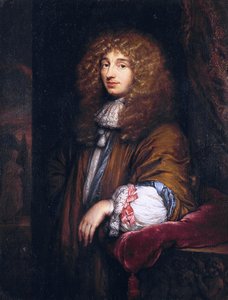
christiaan huygens, lord of zeelhem
1629 - 1695 , Netherlands
Quick Facts
- Birth Date: 1629-04-14
- Birth Place: The Hague, Netherlands
- Death Date: 1695-07-08
- Influenced:
- Augustin-Jean Fresnel
- Jacob Bernoulli
- Movement: Scientific Revolution
- Name: Christiaan Huygens, Lord of Zeelhem
- Nationality: Dutch
- Notable Works:
- Traité de la lumière
- Horologium oscillatorium
- De vi centrifuga
- De motu corporum ex percussione