

 Send
Send Share
Share
 Details

 Download
 Similars
 Diaporama
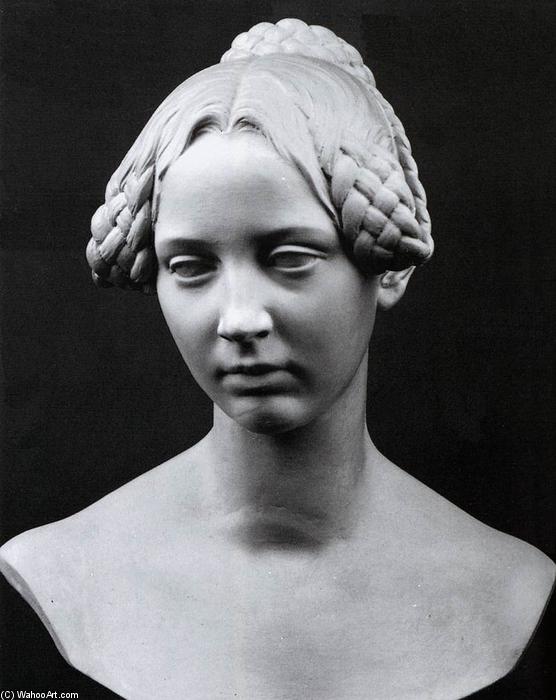
Princess Léontine von Radziwill


 Read More
Purchase a high-resolution, enhanced digital image, far superior to the online preview.
Each file is meticulously prepared by our in-house specialists using advanced tools and expert manual retouching. We ensure every image has exceptional clarity, precise color accuracy, and fine detail.
The final file is delivered via email within 72 hours, optimized for immediate use in professional, editorial, and print environments. This is the same quality trusted by top-tier design studios, publishers, and galleries.
Digital Image
Download a high-resolution file for personal display, printing, and creative projects. ( Buy Print Buy Hand Made Painting)
Included in Every Digital Image Order
Expert Digital Delivery, Guaranteed
When you choose ArtsDot.com, you're not just getting an image - you're receiving a professionally enhanced digital artwork, crafted with precision and backed by a satisfaction guarantee. Here's everything that comes with your order, automatically:

Fast Email Delivery
Your high-resolution digital image file will be emailed to you within 72 hours of ordering - ready for immediate use.

AI-Enhanced Digital File
Your artwork is professionally optimized using advanced AI tools and manual editing, ensuring maximum detail, clarity, and color accuracy.

Free Lifetime Re-Delivery
Accidentally deleted or lost your file? No worries - we'll resend it to you anytime, free of charge.

No Import Fees - Ever
Enjoy your artwork instantly with zero customs, duties, or delivery fees - digital downloads are always tax-free.

Color Accuracy Guarantee
We ensure your digital image reflects the original colors as closely as possible using professional tools and color management.

60-Day Satisfaction Guarantee
If you're not satisfied with your digital image, we'll revise it or refund 100% within 60 days - no questions asked.

100% Money-Back Guarantee
Not satisfied? Get a full refund within 60 days of receiving your digital file - no questions asked.

Bulk Order Discounts
Buy 3 images, save 10% - Buy 5, save 15% - Buy 10+, save 20%. Great for creative projects, galleries, and agencies.
Collectible Description
Princess Léontine von Radziwill: A Portrait of Quiet Majesty
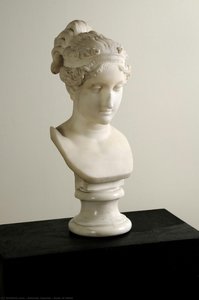
The photograph before us presents not merely an image, but a carefully constructed echo of a bygone era – a bust sculpture titled “Princess Léontine von Radziwill” by the esteemed Christian Daniel Rauch. Completed in 1836, this work transcends its material form, offering a glimpse into the personality and bearing of a woman who navigated the complexities of European aristocracy with grace and dignity. Rauch’s masterful execution captures more than just physical likeness; he has imbued the sculpture with an atmosphere of contemplative serenity, inviting us to contemplate the life and character of Princess Léontine herself. The piece stands as a testament to Rauch's skill in translating three-dimensional form into a compelling two-dimensional representation, utilizing the subtle nuances of light and shadow to create a remarkably lifelike effect.The Sculptor’s Vision: Christian Daniel Rauch and Neoclassical Portraiture
Christian Daniel Rauch (1777-1857) stands as a towering figure in 19th-century German sculpture, widely considered the founder of the Berlin school of sculpture. His work is deeply rooted in the neoclassical tradition, drawing inspiration from the idealized forms and balanced compositions of ancient Greece and Rome. Rauch’s approach was characterized by an emphasis on historical accuracy combined with a profound understanding of human anatomy and expression. He wasn't simply replicating appearances; he sought to capture the essence of his subjects – their character, their bearing, and their place within the grand narrative of history. The “Princess Léontine” bust exemplifies this philosophy perfectly, showcasing Rauch’s ability to imbue a static form with a sense of dynamic presence. Notably, Rauch's work was heavily influenced by Queen Louise of Prussia, whose portrait he created in marble, establishing him as a leading sculptor for the Prussian court and solidifying his reputation.A Study in Form and Texture: Technical Details
Rauch’s technique is immediately apparent in the meticulous detail of the sculpture's surface. The smooth, polished finish suggests the use of marble or perhaps even a high-quality plaster, carefully sculpted to mimic the texture of skin, hair, and fabric. The intricate braiding that frames Princess Léontine’s head is rendered with astonishing precision, each strand meticulously shaped to create a sense of movement and volume. Subtle lines delineate the contours of her face – the delicate curve of her cheekbones, the subtle indentation of her brow, the gentle slope of her lips. These details are not merely decorative; they contribute significantly to the sculpture’s overall realism and emotional impact. The lighting in the photograph itself subtly emphasizes these textures, highlighting the artist's commitment to capturing every nuance of the material.Symbolism and Emotional Resonance: A Portrait of Dignified Reflection
Beyond its technical brilliance, “Princess Léontine von Radziwill” is rich in symbolic meaning. The princess’s slightly downward gaze conveys a sense of quiet contemplation, suggesting an inner life filled with thought and reflection. Her expression is serene, almost melancholic, hinting at the burdens and responsibilities inherent in her position as a member of European royalty. The choice to depict her in profile – a common convention in portraiture – further emphasizes her dignified bearing and reinforces her status as a figure of authority and grace. It’s important to note that Princess Léontine was known for her patronage of the arts, and her image embodies a certain elegance and sophistication associated with the era. The sculpture speaks not just of a woman's appearance but also of her character—a quiet strength and an appreciation for beauty.A Legacy in Reproduction: Bringing Rauch’s Masterpiece to Life
Today, “Princess Léontine von Radziwill” is meticulously reproduced through hand-painted techniques, preserving the artist's original vision while offering a stunning addition to any collection or interior space. The careful attention to detail—the nuanced rendering of texture, the subtle play of light and shadow—ensures that these reproductions capture the essence of Rauch’s masterpiece, allowing viewers to experience its beauty and emotional resonance firsthand. The work stands as a reminder of the enduring power of sculpture to transport us across time and connect us with the lives and legacies of those who came before.Related Artworks
Artist Biography
Early Life and Artistic Foundations
Christian Daniel Rauch, born January 2, 1777, in the small principality of Waldeck within the Holy Roman Empire, emerged from humble beginnings that initially seemed to preclude a life dedicated to art. His father’s position at the court of Prince Frederick II of Hesse offered a degree of stability but limited resources for formal artistic training. This early constraint, however, fostered a resourceful spirit in young Rauch, compelling him to seek opportunities and refine his skills through diligent self-improvement. He began an apprenticeship with Friedrich Valentin, the court sculptor of Arolsen, in 1790, laying the groundwork for his future mastery of sculptural techniques. This foundational period was followed by further training as an assistant to Johann Christian Ruhl at the Kassel court in 1795. Life took a difficult turn with family losses in 1796 and 1797, prompting a move to Berlin where Rauch faced considerable hardship. To support himself while pursuing his artistic ambitions, he worked as a groom in the king’s household—a testament to his unwavering dedication. It was during this challenging time that he came under the influential guidance of Johann Gottfried Schadow, a prominent German sculptor who recognized and nurtured Rauch's burgeoning talent.The Roman Interlude: Shaping a Neoclassical Vision
A turning point arrived in 1804 when Queen Louise of Prussia acknowledged Rauch’s exceptional ability and facilitated his studies at the Prussian Academy of Art. This recognition paved the way for an even more transformative experience—a period of study in Rome, generously supported by Count Sandrecky. Rome proved to be a crucible for Rauch's artistic development. He immersed himself in the rich heritage of Italian Renaissance and neoclassical art, absorbing the ideals of clarity, balance, and idealized form that would come to define his style. The city also provided an invaluable network of intellectual companionship. He befriended influential figures such as Wilhelm von Humboldt, Antonio Canova, and Bertel Thorvaldsen, engaging in stimulating discussions and benefiting from their artistic insights. During this fertile period, Rauch produced a series of notable works, including bas-reliefs depicting mythological scenes like “Hippolytus and Phaedra” and “Mars and Venus wounded by Diomede,” alongside marble busts of prominent individuals such as the poet Zacharias Werner and painter Raphael Mengs. These early Roman creations demonstrate his growing technical skill and his commitment to the neoclassical aesthetic, foreshadowing the masterpieces that would follow.Monumental Commissions and Rising Prominence
Rauch’s breakthrough moment arrived with the commission to create a monument for Queen Louise of Prussia in 1811. The resulting statue, portraying the queen in a serene, sleeping pose, resonated deeply with the public and established Rauch as a sculptor of exceptional sensitivity and skill. Initially placed in Charlottenburg, the monument was later replicated at Sanssouci Park in Potsdam, solidifying his reputation throughout Europe. This success propelled him to become the primary sculptor entrusted with creating public monuments for Prussia—a role he embraced with unwavering dedication. Over the following decades, Rauch produced a prolific body of work, including statues honoring Büllow, Yorck, and Scharnhorst in Berlin; Blücher in Breslau; Maximilian in Munich; Francke in Halle; Dürer in Nuremberg; Luther in Wittenberg; and Grand Duke Paul Frederick in Schwerin. By 1824, he had completed seventy marble busts, including twenty of colossal size, showcasing his mastery of portraiture and monumental sculpture. His contribution to the National Monument for the Liberation Wars on the Kreuzberg near Berlin, with its twelve imposing iron statues, further cemented his position as a leading figure in German art. The group “Faith, Hope and Charity,” created in the 1830s and gifted to his hometown of Arolsen, exemplifies his ability to imbue religious themes with grace and emotional depth.The Equestrian Monument to Frederick the Great: A Lasting Legacy
Christian Daniel Rauch’s most celebrated achievement—and arguably the pinnacle of his career—was the colossal equestrian monument to King Frederick II of Prussia (Frederick the Great) in Berlin. Begun in 1830 with Karl Friedrich Schinkel as the architect, this ambitious project demanded years of meticulous planning and execution. Inaugurated in May 1851, the monument is widely considered a masterpiece of modern sculpture—a powerful symbol of Prussian strength and enlightenment. The sheer scale of the work, combined with Rauch’s masterful depiction of both horse and rider, captivated audiences and cemented his position as Germany's foremost sculptor. Even in his later years, Rauch continued to receive significant commissions, including statues of Immanuel Kant for Königsberg and Albrecht Thaer for Berlin. He received numerous honors from princes across Europe and was elected a member of academies throughout the continent, becoming an associated member of the Royal Institute of the Netherlands in 1837. Christian Daniel Rauch died in Dresden on December 3, 1857, leaving behind a legacy that continues to inspire awe and admiration. He founded the Berlin school of sculpture and played a pivotal role in establishing neoclassical sculpture as the dominant style in Germany during the 19th century—a testament to his artistic vision, technical skill, and enduring influence.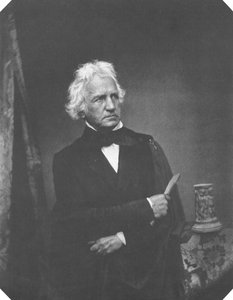
Christian Daniel Rauch
1777 - 1857 , Germany
Quick Facts
- Artistic Movement Or Style: Neoclassical
- Artists Or Movements Influenced By This Artist: ['Berlin school of sculpture']
- Artists Who Influenced This Artist:
- Johann Gottfried Schadow
- Antonio Canova
- Bertel Thorvaldsen
- Date Of Birth: January 2, 1777
- Date Of Death: December 3, 1857
- Full Name: Christian Daniel Rauch
- Nationality: German
- Notable Artworks:
- Queen Louise monument
- Faith, Hope & Charity
- Frederick the Great statue
- Place Of Birth: Arolsen, Germany

