 Preview
 Send
Send Share
Share
 Details

 Download
 Similars
 X-Ray
X-Ray Diaporama
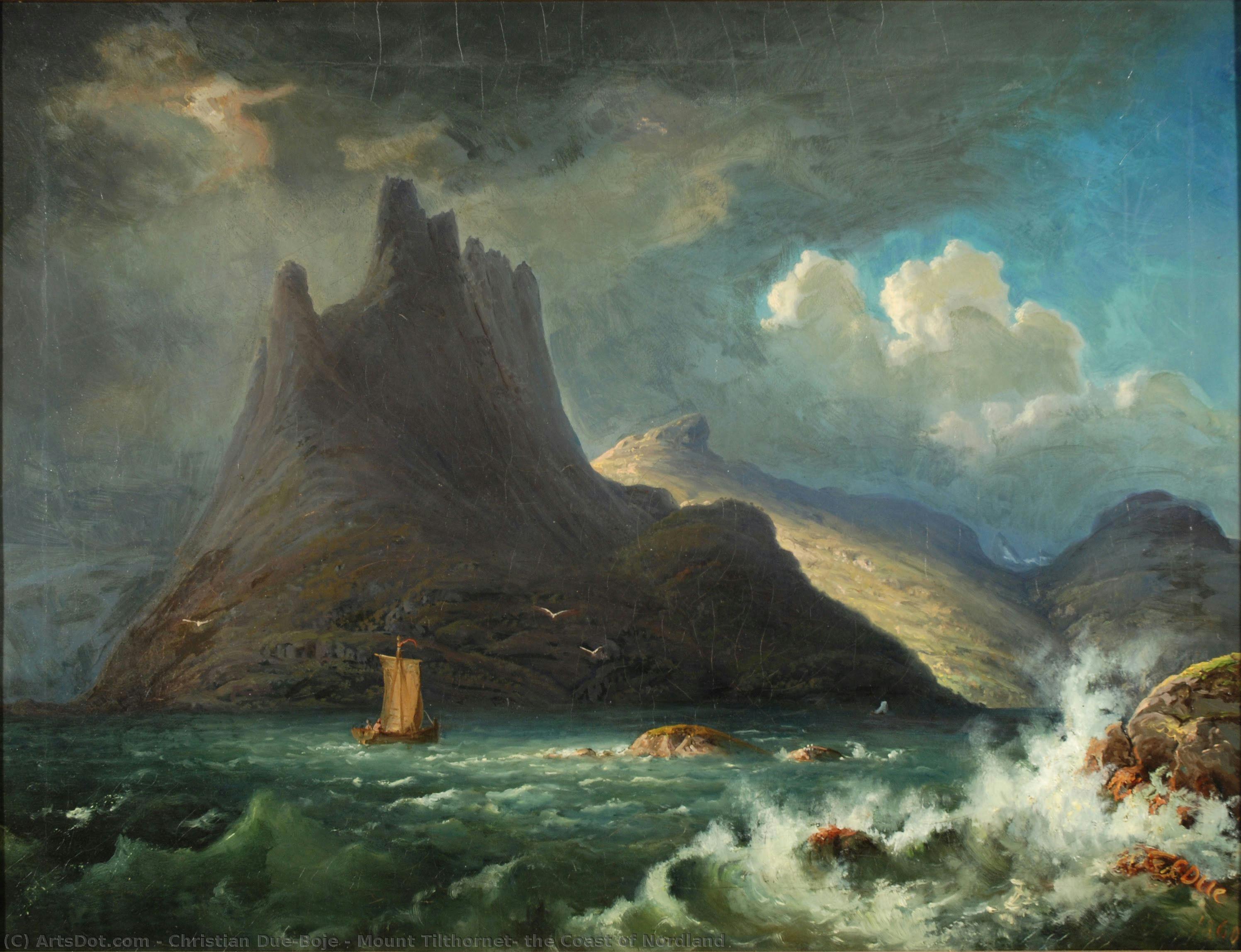
Mount Tilthornet, the Coast of Nordland
 1860
1860 50.0 x 66.0 cm
 Nordnorsk Kunstmuseum
 Read More
Hand Made Oil Reproduction
Hand-painted oil on canvas in your size and frame, made to order by our artists. ( Buy Print Buy Image)




































Pick from our preset sizes that match the artwork's original proportions.

You may enter your own dimensions to fit a specific frame or space. If your selected size does not match the original image's proportions, we will either crop the artwork or extend the painting with additional hand-painted elements. A digital mockup will be sent for your approval before production begins.
Please note that the on-screen preview does not reflect the actual cropping or extension. Only the mockup will accurately show the final composition.
While custom sizes are available, we recommend selecting a dimension from the predefined list to preserve the original proportions.
After order, ArtsDot.com team will email client for instructions and provide a mockup preview
Worldwide Delivery () in 3/4 weeks instead of standard 5 weeks. (2 September). No compromise on quality.

Free Worldwide Express Shipping

High-Quality Linen Canvas

Full Shipping Insurance

Customs Tax Refund Guarantee

True Color Matching Guarantee

60-Day Return Policy (Defects Only)

100% Money-Back Guarantee

Bulk Discount Offer
 Glass option is only available in size under 110 CM

Mount Tilthornet, the Coast of Nordland
Reproduction Medium
Reproduction Size
-


Total Price
$ 263
Related Artworks








Artist Biography
John McKinstry: A Cornish Landscape Painter Forged in the Sixties
Born in Hertfordshire, England, in 1966, John McKinstry’s artistic journey began to take shape amidst the vibrant cultural shifts of the late 20th century. While his early life unfolded within the familiar landscapes of the British Midlands, a pivotal move to Cornwall in later years would profoundly influence his work, imbuing it with the rugged beauty and elemental spirit of the southwest peninsula. McKinstry’s artistic development is inextricably linked to the broader artistic currents of the 1960s – an era marked by experimentation, social upheaval, and a burgeoning interest in capturing the essence of place.
The decade that witnessed his birth was one of dramatic transformation within the art world. Abstract Expressionism dominated the early years, followed by Pop Art’s challenge to traditional notions of artistic value. Simultaneously, artists were increasingly drawn to representational painting, seeking new ways to convey emotion and experience through landscape. McKinstry's work reflects this duality – a grounding in observation and technique tempered by a desire to communicate something deeper than mere visual accuracy. The influence of the ‘New Landscape’ movement, which emerged in the late 1960s and early 1970s, is evident in his careful attention to light, color, and texture, as well as his exploration of the relationship between man and nature.
Early influences on McKinstry likely included the Romantic painters – Turner’s atmospheric landscapes and Constable’s meticulous depictions of rural England. However, he also demonstrates an awareness of contemporary artists working in landscape, such as David Nash and Richard Long, who similarly sought to engage with the natural world in a direct and often minimalist way. His work is not simply about replicating scenery; it's about capturing a mood, a feeling, a sense of being present within a specific place.
The “Born Wild” Concept and Material Innovation
A defining element of McKinstry’s artistic practice is the concept of "Born Wild," introduced in 2004. This idea posits that primal instincts – our fundamental human impulses – are not inherently negative, but rather contain a powerful potential for positive expression. It's a surprisingly philosophical underpinning to his work, suggesting an exploration of the subconscious and the inherent beauty within instinctual behavior.
What distinguishes McKinstry’s approach is his innovative use of materials. He doesn’t rely on traditional oil paints or brushes; instead, he employs a diverse range of contemporary media – resin, aluminum, marble, stone, and bronze – to create textured surfaces that evoke the ruggedness and dynamism of the Cornish coastline. The choice of material isn't arbitrary; each element contributes to the overall effect, adding layers of meaning and complexity. For example, the reflective quality of aluminum can mimic the shimmering surface of the sea, while the solidity of stone speaks to the enduring strength of the land.
This experimentation with materials is a direct response to the changing landscape of contemporary art. McKinstry rejects the notion that art must be confined to traditional mediums and embraces new technologies and techniques to achieve his artistic vision. His work can be seen as a dialogue between tradition and innovation, drawing on established artistic principles while pushing the boundaries of what’s possible.
Recognition and Exhibitions
Since its inception in 2004, McKinstry's "Born Wild" concept has garnered significant recognition within the art world. His pieces have been exhibited in over 90 galleries worldwide, including prestigious venues such as FIAC (Foire Internationale d’Art Contemporain) in Paris. In 2015, he achieved a remarkable milestone when Art Price ranked him as the number one best-selling French contemporary sculptor, solidifying his position as a leading figure in the international art market.
This success is not merely a reflection of commercial appeal; it’s a testament to the power and resonance of McKinstry's work. His pieces have been acquired by private collectors and public institutions alike, demonstrating their enduring value and significance. The consistent recognition from Art Price, particularly his ranking as the top-selling French sculptor in 2015, underscores the growing appreciation for his unique artistic vision.
A Cornish Voice: Landscape and Identity
Moving to Cornwall has undoubtedly shaped McKinstry’s artistic identity. The dramatic coastline, wild moorland, and ancient stone formations of this region provide a constant source of inspiration. His paintings are not simply depictions of scenery; they're explorations of the relationship between man and nature, reflecting on themes of isolation, resilience, and the enduring power of the landscape.
Furthermore, McKinstry’s work can be interpreted as a commentary on the changing face of Cornwall itself. The region has experienced significant tourism growth in recent decades, leading to environmental pressures and social changes. His paintings offer a poignant reflection on this complex interplay between tradition and modernity, capturing both the beauty and vulnerability of this unique corner of England. His art serves as a visual meditation on place – not just its physical appearance, but also its history, culture, and spirit.
Conclusion: A Contemporary Master
John McKinstry’s artistic journey is one of constant evolution and experimentation. From his early beginnings in Hertfordshire to his current base in Cornwall, he has consistently pushed the boundaries of landscape painting while remaining deeply rooted in traditional techniques and principles. His innovative use of materials, coupled with his profound engagement with themes of human nature and place, has established him as a significant contemporary artist. As he continues to explore the relationship between instinct and expression, McKinstry’s work promises to resonate with audiences for years to come.
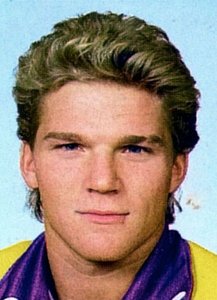
christian due-boje
1966 - , Sweden
Quick Facts
- Artistic Movement Or Style: Landscape artist
- Date Of Birth: 1966
- Full Name: John McKinstry
- Nationality: British
- Notable Artworks: ['Various landscapes']
- Place Of Birth: Hertfordshire, UK