 Preview
 Send
Send Share
Share
 Details

 Download
 Similars
 X-Ray
X-Ray Diaporama
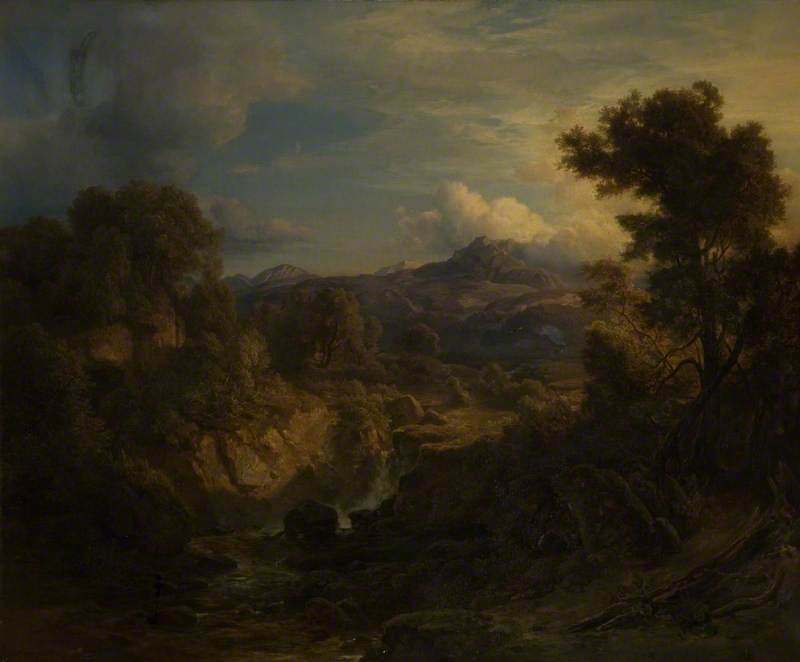
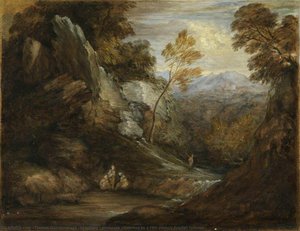
Landscape with Mountains and Waterfall
 1832
1832 114.0 x 154.0 cm
 County Hall
 Read More
Hand Made Oil Reproduction
Hand-painted oil on canvas in your size and frame, made to order by our artists. ( Buy Print Buy Image)




































Pick from our preset sizes that match the artwork's original proportions.

You may enter your own dimensions to fit a specific frame or space. If your selected size does not match the original image's proportions, we will either crop the artwork or extend the painting with additional hand-painted elements. A digital mockup will be sent for your approval before production begins.
Please note that the on-screen preview does not reflect the actual cropping or extension. Only the mockup will accurately show the final composition.
While custom sizes are available, we recommend selecting a dimension from the predefined list to preserve the original proportions.
After order, ArtsDot.com team will email client for instructions and provide a mockup preview
Worldwide Delivery () in 3/4 weeks instead of standard 5 weeks. (22 August). No compromise on quality.

Free Worldwide Express Shipping

High-Quality Linen Canvas

Full Shipping Insurance

Customs Tax Refund Guarantee

True Color Matching Guarantee

60-Day Return Policy (Defects Only)

100% Money-Back Guarantee

Bulk Discount Offer
 Glass option is only available in size under 110 CM

Landscape with Mountains and Waterfall
Reproduction Medium
Reproduction Size
-


Total Price
$ 263
Related Artworks









Artist Biography
A Pioneer of Realism: Exploring the Landscape of Christian Ernst Bernhard Morgenstern
Christian Ernst Bernhard Morgenstern, a name perhaps less familiar than some of his contemporaries, stands as a pivotal figure in the development of German landscape painting during the early 19th century. Born in Hamburg in 1805 and tragically passing away in Munich in 1867, Morgenstern’s work represents a crucial bridge between the romanticized visions of earlier generations and the burgeoning realism that would dominate the art world for decades to come. He wasn't merely a painter; he was an explorer of light, atmosphere, and the profound solitude of nature – qualities that resonate powerfully even today.
Morgenstern’s early life was shaped by circumstance and a relentless pursuit of artistic training. His father, Johann Heinrich Morgenstern, was a miniature portraitist, providing a foundation in meticulous observation and detail. However, his father's untimely death thrust young Christian into the care of Cornelius Suhr, a prominent panorama printer, where he spent formative years immersed in the techniques of graphic reproduction. This early exposure to visual representation, particularly the vast scale of panoramas, undoubtedly influenced his later approach to landscape – a tendency towards expansive vistas and an interest in capturing the grandeur of the natural world. His travels with Suhr through Germany, Russia, Sweden, and Norway were not simply vacations; they were intensive studies in topography, light, and color, laying the groundwork for his distinctive style.
Crucially, Morgenstern’s artistic journey was guided by a network of influential mentors. He studied under Siegfried Bendixen in Hamburg, absorbing the principles of academic painting, before moving to Copenhagen to refine his skills at the Royal Danish Academy. It was in Munich, however, that he truly found his voice and established himself as a leading figure in the realist movement. Here, he collaborated with artists like Friedrich Wasmann, Johan Christian Dahl, and Adolph Menzel – all pioneers pushing against the conventions of the time. This association wasn’t merely collaborative; it fostered a dynamic exchange of ideas and techniques, contributing significantly to the development of Munich's burgeoning artistic scene.
The Language of Light and Atmosphere
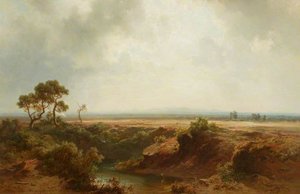
Morgenstern’s paintings are characterized by an extraordinary sensitivity to light and atmosphere. He eschewed the dramatic, idealized landscapes favored by earlier Romantic painters, opting instead for a more subtle and nuanced approach. His scenes often depict remote mountain ranges, alpine meadows, and serene lakes – locations that he visited repeatedly throughout his life, meticulously documenting their ever-changing moods. He wasn’t interested in rendering a single, definitive image of a place; rather, he sought to capture the *feeling* of a location—the way light filtered through clouds, the subtle shifts in color with the passing hours, and the sense of isolation and tranquility that these landscapes evoked.
His technique was remarkably precise. Morgenstern employed a meticulous layering of thin washes of paint, building up textures and gradations of tone to create an illusion of depth and atmosphere. He paid close attention to detail, capturing the subtle variations in foliage, rock formations, and water surfaces. Yet, this precision never felt rigid or contrived; it served to enhance his overall vision rather than dominate it. He was deeply influenced by the Dutch Masters, particularly Jacob van Ruisdael, whose use of light and atmospheric perspective he admired immensely.
A Traveler’s Eye: Influences and Travels
Morgenstern's artistic development was inextricably linked to his extensive travels throughout Europe. He wasn’t simply a painter who happened to visit these locations; he actively sought them out, immersing himself in their landscapes and cultures. His journeys to Bavaria, the Alps, Alsace, Venice, Trieste, and Heligoland provided him with an unparalleled wealth of visual material and informed his understanding of light, color, and composition. These excursions weren’t just for artistic inspiration; they were also a means of escape from the constraints of urban life and a way to connect with the natural world.
His patron, Carl Friedrich von Rumohr, played a significant role in facilitating these travels, providing Morgenstern with lodging and access to privileged locations. Rumohr’s estate in Holstein became a seasonal retreat for the artist, offering him a space to work undisturbed and to engage with the beauty of the Danish countryside. This patronage allowed Morgenstern to pursue his artistic ambitions without the pressures of commercial demands, fostering a period of intense creativity and experimentation.
Legacy and Historical Significance
Despite not achieving widespread fame during his lifetime, Christian Ernst Bernhard Morgenstern’s influence on German landscape painting is undeniable. He was one of the first German artists to embrace open-air painting – *plein air*—a technique that would become increasingly popular in the decades following his death. His emphasis on observation, atmospheric perspective, and a nuanced understanding of light paved the way for later generations of realist painters, including Friedrich and Anselm Kiefer.
His work is now recognized as a key example of early German realism, offering a valuable insight into the artistic sensibilities of 19th-century Europe. The collection of his paintings held by institutions like the Fitzwilliam Museum in Cambridge and the Thyssen-Bornemisza Museum in Madrid provides a compelling testament to his skill, vision, and enduring legacy as a pioneer of landscape painting.
christian ernst bernhard morgenstern
1805 - 1867
Quick Facts
- Artistic Movement Or Style: Early Realism
- Artists Or Movements Influenced By This Artist:
- Adolph Friedrich Vollmer
- Johann Christian Dahl
- Artists Who Influenced This Artist:
- Siegfried Bendixen
- Carl Friedrich von Rumohr
- Date Of Birth: September 29, 1805
- Date Of Death: February 27, 1867
- Full Name: Christian Ernst Bernhard Morgenstern
- Nationality: German
- Notable Artworks:
- Landscape with Mountains
- Alpine Landscape
- Bavarian Highlands
- Place Of Birth: Hamburg, Germany