

 Preview
 Send
Send Share
Share
 Details

 Download
 Similars
 X-Ray
X-Ray Diaporama
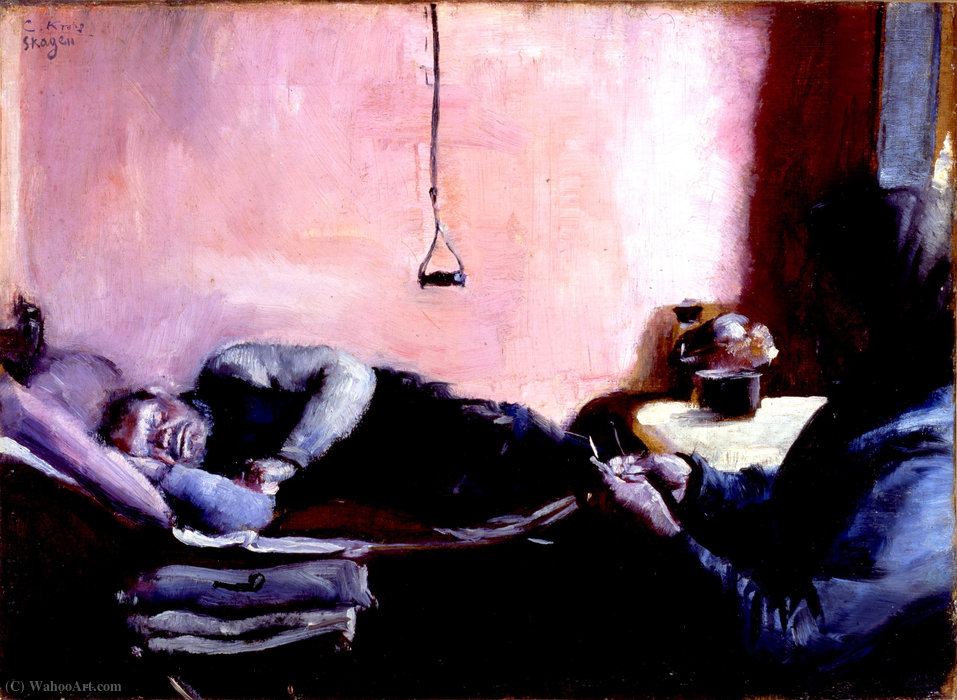
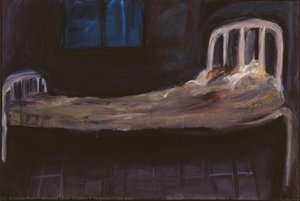
Niels Gaihede's afternoon nap

 Read More
Purchase a high-resolution, enhanced digital image, far superior to the online preview.
Each file is meticulously prepared by our in-house specialists using advanced tools and expert manual retouching. We ensure every image has exceptional clarity, precise color accuracy, and fine detail.
The final file is delivered via email within 72 hours, optimized for immediate use in professional, editorial, and print environments. This is the same quality trusted by top-tier design studios, publishers, and galleries.
Digital Image
Download a high-resolution file for personal display, printing, and creative projects. ( Buy Print Buy Hand Made Painting)
Included in Every Digital Image Order
Expert Digital Delivery, Guaranteed
When you choose ArtsDot.com, you're not just getting an image - you're receiving a professionally enhanced digital artwork, crafted with precision and backed by a satisfaction guarantee. Here's everything that comes with your order, automatically:

Fast Email Delivery
Your high-resolution digital image file will be emailed to you within 72 hours of ordering - ready for immediate use.

AI-Enhanced Digital File
Your artwork is professionally optimized using advanced AI tools and manual editing, ensuring maximum detail, clarity, and color accuracy.

Free Lifetime Re-Delivery
Accidentally deleted or lost your file? No worries - we'll resend it to you anytime, free of charge.

No Import Fees - Ever
Enjoy your artwork instantly with zero customs, duties, or delivery fees - digital downloads are always tax-free.

Color Accuracy Guarantee
We ensure your digital image reflects the original colors as closely as possible using professional tools and color management.

60-Day Satisfaction Guarantee
If you're not satisfied with your digital image, we'll revise it or refund 100% within 60 days - no questions asked.

100% Money-Back Guarantee
Not satisfied? Get a full refund within 60 days of receiving your digital file - no questions asked.

Bulk Order Discounts
Buy 3 images, save 10% - Buy 5, save 15% - Buy 10+, save 20%. Great for creative projects, galleries, and agencies.
Collectible Description
A Study in Despair: Christian Krohg’s ‘Niels Gaihede's Afternoon Nap’
Christian Krohg’s *Niels Gaihede's Afternoon Nap* is a profoundly moving and unsettling work, representative of the Symbolist movement’s exploration of psychological states and existential themes. Painted sometime in the late 19th century – a period marked by societal shifts and anxieties – this oil on canvas depicts a man lying prone upon a bed, enveloped in an atmosphere of quiet desperation. The painting isn't merely a representation of physical rest; it is a visual articulation of profound sadness, vulnerability, and perhaps even a contemplation of mortality.Style & Technique: Naturalism Infused with Symbolist Emotion
Krohg was a leading figure in Norwegian Naturalism, but *Niels Gaihede's Afternoon Nap* transcends strict adherence to the style, leaning heavily into Symbolist expression. While rooted in realistic depiction – evident in the rendering of the body and bedding – the painting employs dramatic lighting and a restricted color palette (dominated by shades of pink, blue, and grey) to evoke an emotional response rather than simply record visual reality. Visible brushstrokes and a layering of colors build both form and texture, creating a sense of roughness that mirrors the subject’s inner turmoil. The composition is deliberately claustrophobic; the shallow depth of field and the looming pink wall contribute to a feeling of being trapped, mirroring the psychological state of the figure. The loose, gestural lines further amplify this emotional intensity.Symbolism & Interpretation: A Portrait of Isolation
The symbolism within *Niels Gaihede's Afternoon Nap* is potent and open to interpretation. The prone position of the figure immediately suggests vulnerability and powerlessness. While not explicitly depicted, the implied presence of a hanging device has led many to interpret the work as addressing themes of suicide or despair.- The darkness surrounding the figure
- the stillness of the scene
- and the muted color palette
Historical Context & Legacy
Christian Krohg (1852-1925) was a multifaceted artist – painter, author, and journalist – who played a significant role in the development of modern art in Norway. He moved between Naturalism and Symbolism throughout his career, always with an eye towards capturing the complexities of human experience. *Niels Gaihede's Afternoon Nap* stands as a powerful example of his ability to blend realistic technique with profound emotional depth. Today, Krohg’s work is held in prominent collections, including the Private Collection in Oslo, and continues to resonate with viewers seeking art that confronts difficult truths about the human condition. This painting offers not only aesthetic beauty but also a compelling invitation for quiet contemplation on themes of life, death, and the search for meaning.Related Artworks
Artist Biography
A Norwegian Voice of Naturalism
Christian Krohg, born in Oslo on August 13, 1852, stands as a pivotal figure in the transition from Romanticism to Naturalism within Norwegian art. His lineage was steeped in public service—his father, Georg Anton Krohg, a respected lawyer and statesman, and descending from Christian Krohg, a former government minister. Yet, young Christian’s path diverged towards artistic expression, initially shadowed by familial expectations of a legal career. He dutifully studied law at the University of Oslo from 1869 to 1873, but his heart lay elsewhere, drawn to the burgeoning world of painting and visual storytelling. This internal conflict between duty and passion would subtly inform much of his later work, imbuing it with a sense of realism grounded in observation of societal complexities. Formal artistic training began under Hans Gude at the Baden School of Art in Karlsruhe, laying a foundation in technique before venturing to Paris in 1881-1882. It was within the Parisian art scene that Krohg fully embraced the tenets of Realism, absorbing its focus on depicting everyday life with unflinching honesty and social awareness.Bridging Romantic Echoes and Naturalistic Truths
Krohg’s artistic style wasn't a sudden break from the past but rather an evolution. Early works retained hints of Romantic sensibility, yet quickly gravitated towards a more direct engagement with the realities surrounding him. He didn’t shy away from portraying the less glamorous aspects of life—scenes of daily toil, poverty, and social marginalization became recurring motifs in his oeuvre. Sovende mor med barn (Sleeping Mother with Child) (1883), exemplifies this shift; while tender in its depiction of maternal affection, it lacks the idealized sweetness often found in earlier Romantic portrayals of motherhood. Similarly, Håret flettes (The Hair is Being Braided) (1882) and Trett (Tired) (1885) capture moments of quiet intimacy but are rendered with a stark realism that emphasizes the weariness and hardship inherent in everyday existence. However, it was his masterpiece, Albertine i politilægens venteværelse (Albertine at the Police Doctor's Waiting Room) (1885-87), that truly cemented his reputation as a socially conscious artist. This work, born from both artistic vision and journalistic investigation, tackled the taboo subject of prostitution with unprecedented frankness, sparking considerable controversy and solidifying Krohg’s commitment to using art as a vehicle for social commentary. The painting was intrinsically linked to a novel he wrote on the same topic, further amplifying its impact and challenging societal norms. Albertine wasn't merely a depiction of a marginalized woman; it was an indictment of the societal structures that led to her situation, presented with a raw emotional power rarely seen in contemporary art.Beyond the Canvas: Journalism, Education, and Influence
Krohg’s creative output extended far beyond painting. He possessed a keen intellect and a passion for engaging with contemporary issues, leading him to journalism. In 1886, he founded the bohemian journal Impressionisten, providing a platform for progressive artistic and literary voices. Later, from 1890 to 1910, he worked as a journalist for the Oslo newspaper Verdens Gang, becoming renowned for his insightful and remarkably empathetic portrait interviews. This journalistic work honed his observational skills and deepened his understanding of human nature, qualities that undoubtedly enriched his artistic practice. His commitment to fostering artistic talent led him to accept a professorship and directorship at the Norwegian Academy of Arts (Statens Kunstakademi) in 1909, a position he held until his death in 1925. During this time, he played a crucial role in shaping the next generation of Norwegian artists. He was an early champion of Edvard Munch, offering encouragement and support during the younger artist’s formative years, and also exerted influence on Anna and Michael Ancher, prominent figures within the Skagen painters' colony. His pedagogical approach emphasized observation, honesty, and a willingness to confront difficult subjects—principles that resonated deeply with his students.A Lasting Legacy: Social Commentary and Artistic Transition
Christian Krohg’s significance lies not only in his individual artistic achievements but also in his role as a catalyst for change within Norwegian art. He was instrumental in steering the nation’s artistic landscape away from Romantic idealism towards a more grounded, socially engaged Naturalism. His willingness to confront difficult subjects and portray marginalized communities with dignity challenged conventional norms and sparked important conversations about societal issues. His works continue to be exhibited at prestigious institutions such as the National Museum of Art, Architecture and Design in Oslo and Skagens Museum in Denmark. The enduring accessibility of his art through platforms ensures that his legacy reaches a global audience. He remains a vital figure for understanding the development of modern Norwegian art and its engagement with social realism.- Key Themes: Social injustice, everyday life, psychological realism.
- Influences: Gustave Courbet, Édouard Manet, Hans Gude, Henrik Ibsen.
- Notable Works: Albertine at the Police Doctor's Waiting Room, Sleeping Mother with Child, The Hair is Being Braided.
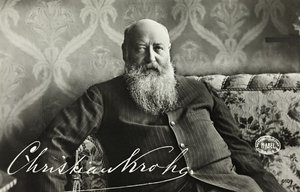
Christian Krohg
1852 - 1925 , Norway
Quick Facts
- Artistic Movement Or Style: Naturalism, Realism
- Artists Or Movements Influenced By This Artist:
- Edvard Munch
- Skagen painters
- Artists Who Influenced This Artist:
- Hans Gude
- Edouard Manet
- Date Of Birth: 1852-08-13
- Date Of Death: 1925
- Full Name: Christian Krohg
- Nationality: Norwegian
- Notable Artworks:
- Albertine
- Sleeping Mother
- The Hair is Braided
- Place Of Birth: Oslo, Norway

