 Preview
 Send
Send Share
Share
 Details

 Download
 Similars
 X-Ray
X-Ray Diaporama
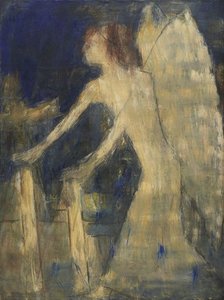
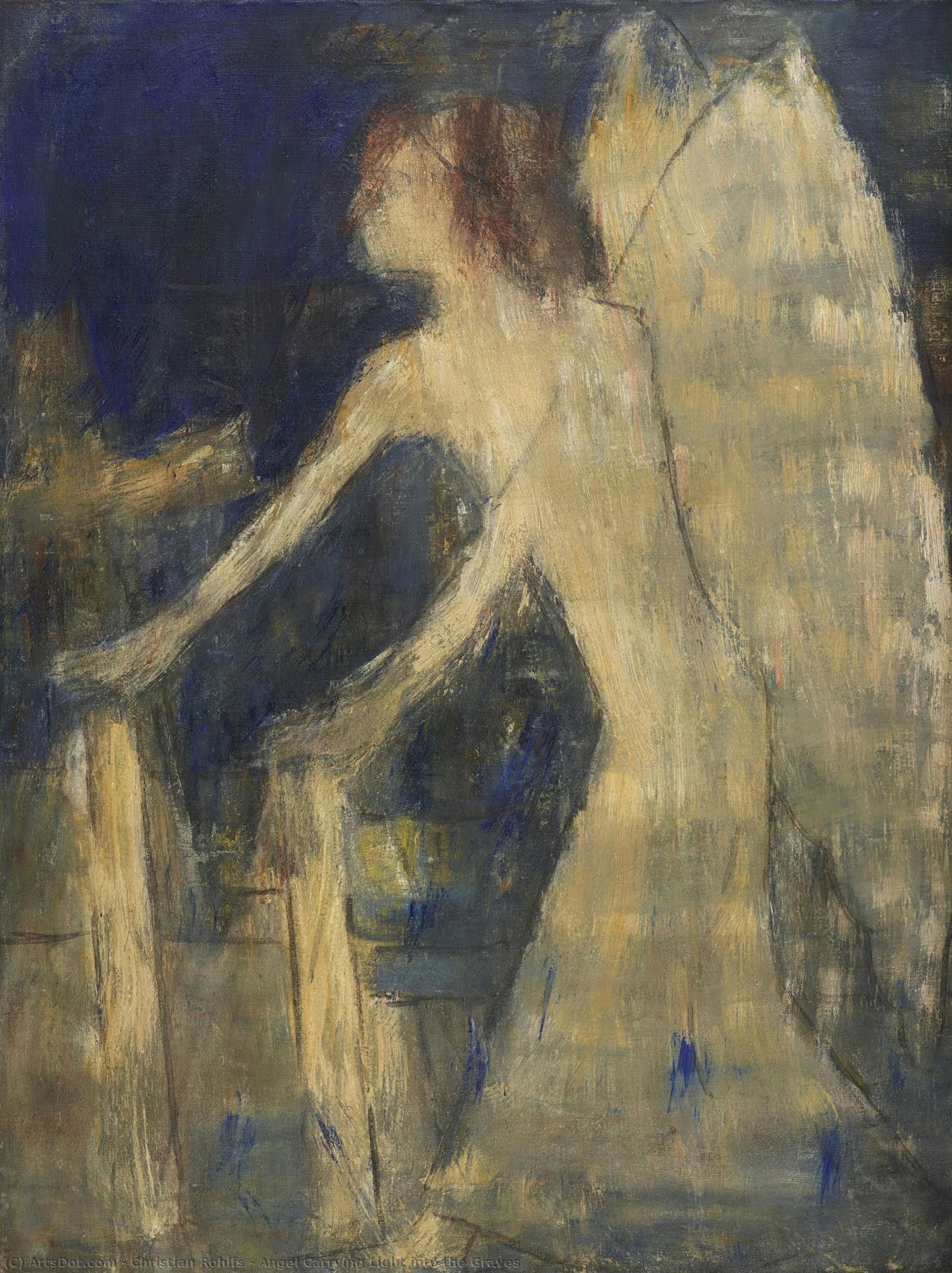
Angel Carrying Light into the Graves


 Read More
Hand Made Oil Reproduction
Hand-painted oil on canvas in your size and frame, made to order by our artists. ( Buy Print Buy Image)




P118B $10

P118H $10

P118W $10

P438Z $10

P508JH $12

P508YH $12

P805H $10

P805Z $10

P919BZ $10

P919G $10

P919XJ $10

P959ZH $10

P968JZ $12

W106C $8

W218G $10

W218JH $8

W218Y $10

W307PJ $10

W316G $10

W316PJ $8

W316Y $10

W398PJ $8

W4111J $10

W500HY $15

W500JH $15

W692G $12

W849H $8

W940BG $15

W953PJ $8




Pick from our preset sizes that match the artwork's original proportions.

You may enter your own dimensions to fit a specific frame or space. If your selected size does not match the original image's proportions, we will either crop the artwork or extend the painting with additional hand-painted elements. A digital mockup will be sent for your approval before production begins.
Please note that the on-screen preview does not reflect the actual cropping or extension. Only the mockup will accurately show the final composition.
While custom sizes are available, we recommend selecting a dimension from the predefined list to preserve the original proportions.
After order, ArtsDot.com team will email client for instructions and provide a mockup preview
Worldwide Delivery () in 3/4 weeks instead of standard 5 weeks. (16 August). No compromise on quality.

Free Worldwide Express Shipping

High-Quality Linen Canvas

Full Shipping Insurance

Customs Tax Refund Guarantee

True Color Matching Guarantee

60-Day Return Policy (Defects Only)

100% Money-Back Guarantee

Bulk Discount Offer
 Glass option is only available in size under 110 CM

Angel Carrying Light into the Graves
Reproduction Medium
Reproduction Size
-


Total Price
$ 263
Artwork Description
Angel Carrying Light Into The Graves - A Meditation on Loss and Hope
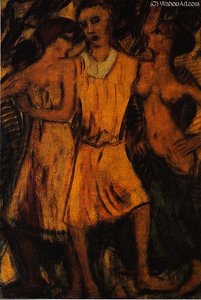
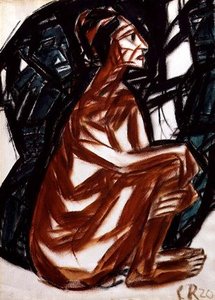
Christian Rohlfs’ “Angel Carrying Light Into The Graves” isn't merely a painting; it’s an embodiment of profound emotion rendered in oil paint on canvas. Created around 1925, this artwork transcends simple visual representation, delving into themes of sorrow, contemplation, and ultimately, the enduring promise of spiritual solace—a hallmark of Post-Impressionism infused with subtle Symbolist influences.The Artist’s Journey: From Adversity to Expression
Christian Rohlfs' artistic trajectory began not in privilege or acclaim but in hardship. Following a debilitating leg amputation at age twenty-five due to illness, painting became his refuge—a vital outlet for confronting loss and redefining his existence. Initially trained at Weimar Academy, he embarked on an exploratory stylistic voyage encompassing academic traditions alongside the burgeoning currents of Impressionism and Post-Impressionism, demonstrating an unwavering dedication to discovering his distinctive artistic voice before settling into a singular style. This formative experience undeniably shaped his approach to artmaking, prioritizing emotional resonance over strict adherence to realism.A Visual Symphony: Composition and Technique
The painting’s composition is dominated by a solitary female figure positioned slightly off-center—a deliberate choice that draws the viewer's gaze inwards, fostering introspection. The dark, muted blue background serves as a stark counterpoint to the pale hues of her dress and skin, amplifying the sense of melancholy inherent in the scene. Loose brushstrokes characterize Rohlfs’ technique, creating a textured surface that conveys movement and emotion—a characteristic feature of Post-Impressionism where capturing fleeting impressions is paramount. Impasto – thick layers of paint – are particularly prominent around the folds of her clothing and highlights on her face, adding depth and dimensionality to the artwork. Perspective is flattened, aligning with Impressionistic conventions, prioritizing emotional impact over meticulous accuracy.Symbolic Resonance: Wings and Light
The inclusion of wings—a recurring motif in Symbolist art—suggests an angelic presence, hinting at spirituality and vulnerability. These wings aren’t simply decorative; they symbolize hope amidst darkness, representing the possibility of transcendence and divine compassion. Simultaneously, the depiction of light carrying into graves embodies a powerful metaphor for illuminating sorrow and offering solace to those grieving loss. The artist skillfully utilizes tonal variations and atmospheric perspective—the receding blue background emphasizing depth—to heighten the painting’s emotional intensity.Concluding Thoughts: An Echo of Eternity
“Angel Carrying Light Into The Graves” isn't just an aesthetically pleasing image; it’s a poignant meditation on mortality and faith. Rohlfs’ masterful technique—characterized by loose brushstrokes, textural impasto, and evocative color palettes—captures the essence of human experience with remarkable sensitivity. It stands as a testament to the transformative power of art to confront difficult emotions and communicate profound spiritual truths—a timeless masterpiece that continues to resonate with viewers today.Related Artworks
Artist Biography
A Life Forged in Expression: The Journey of Christian Rohlfs
Christian Rohlfs, a pivotal figure in the landscape of German Expressionism, wasn’t drawn to art through privilege or early encouragement, but rather through adversity and an enduring need for self-expression. Born in 1849 in Gross Niendorf, Germany, his path was irrevocably altered at age twenty-five when illness necessitated the amputation of his leg. This profound physical challenge became a catalyst, directing him toward painting as a sanctuary, a means to grapple with loss and redefine his existence. Initially trained at the Weimar Academy, Rohlfs embarked on a stylistic exploration that spanned academic traditions, the nuances of naturalism, the fleeting impressions of Impressionism, and the burgeoning possibilities of Post-Impressionism—a testament to his restless artistic spirit before he discovered his unique voice.The Hagen Years: A Crucible of Modernity
A turning point arrived in 1901 with Rohlfs’s relocation to Hagen, an invitation extended by the discerning art collector Karl Ernst Osthaus. This move proved transformative, immersing him in a rich environment brimming with modern and primitive art. The collection assembled by Osthaus included groundbreaking works by Monet, Cézanne, Gauguin, and Van Gogh—artists who were challenging conventional artistic boundaries. This exposure, coupled with encounters with fellow artists like Edvard Munch and Emil Nolde, ignited within Rohlfs a shift toward Expressionism. He began to embrace bold color palettes, distorted forms, and emotionally charged themes, moving away from representational accuracy towards an exploration of inner experience. The atmosphere in Hagen, fostered by Osthaus’s vision, was one of intellectual ferment and artistic experimentation, providing the ideal conditions for Rohlfs's evolution.Landscapes of the Soul: Themes and Techniques
Rohlfs’s oeuvre is remarkably diverse, encompassing landscapes that resonate with emotional depth, religious scenes imbued with spiritual intensity, and portraits that capture the essence of his subjects. Notable works like “Hilly Landscape in Late Autumn” (1900) demonstrate an early sensitivity to atmospheric effects and a growing willingness to depart from strict realism. Later pieces such as “Collegiate Church of St. Patroclus in Soest” (1912) reveal his fascination with architectural forms and their symbolic weight, while "The Temptation of Christ" (1914) showcases his exploration of religious narratives through an Expressionist lens. Throughout his career, Rohlfs experimented with various techniques, beginning with oil painting but increasingly embracing woodcuts, linocuts, tempera, and watercolors. His prints, particularly those created after 1908, are especially compelling—stark lines and contrasting tones conveying a powerful sense of emotion and psychological tension. He wasn’t merely depicting what he saw; he was translating feeling into visual form.A Legacy Enduring: Historical Significance
Christian Rohlfs occupies a significant position in the history of German Expressionism, though his journey to its core principles was gradual and deeply personal. While initially rooted in more traditional artistic frameworks, his eventual embrace of Expressionist ideals established him as an important contributor to the movement’s development. His work, characterized by its emotional honesty and innovative use of color and form, resonated with a generation of artists seeking new ways to express the complexities of modern life. Despite facing persecution under the Nazi regime—his art condemned as “degenerate”—Rohlfs's artistic legacy endures. The Christian Rohlfs Museum in Hagen, established in 1929, stands as a lasting tribute to his enduring influence on German art and continues to inspire viewers with its powerful and evocative collection. He remains a testament to the transformative power of art born from personal struggle and a relentless pursuit of authentic expression.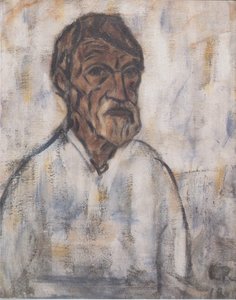
Christian Rohlfs
1849 - 1938 , Germany
Quick Facts
- Artistic Movement Or Style: Expressionism
- Artists Or Movements Influenced By This Artist: ['German Expressionism']
- Artists Who Influenced This Artist:
- Monet
- Cézanne
- Gauguin
- Van Gogh
- Munch
- Nolde
- Date Of Birth: 1849
- Date Of Death: 1938
- Full Name: Christian Rohlfs
- Nationality: German
- Notable Artworks:
- Hilly Landscape in Late Autumn
- Collegiate Church of Soest
- The Temptation of Christ
- Place Of Birth: Gross Niendorf, Germany
Related Articles
Celestial Messengers: Angels in Painting – A Historical & Artistic Exploration
Explore the captivating history of angels in painting! Discover symbolism, iconic Renaissance & Byzantine masterpieces, and renowned artists. Expert insights for art lovers & collectors at ArtsDot.
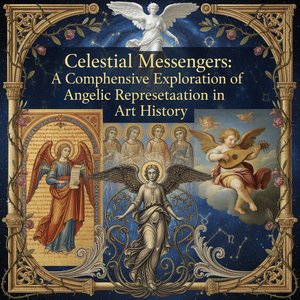
Celestial Messengers: A Comprehensive Exploration of Angelic Representation in Art History
Explore the captivating history of angels in art! Discover symbolism, iconic Renaissance masterpieces & renowned artists. Expert insights for art lovers & collectors at ArtsDot.
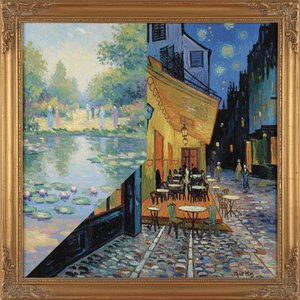
Beyond Light & Color: Impressionism vs. Post-Impressionism for the Discerning Collector
Explore the nuances of Impressionism & Post-Impressionism with . Expert insights for collectors on style, investment, and acquiring museum-quality reproductions.

The Enduring Legacy of Oil on Canvas: Technique, History & Aesthetic Impact
Explore the rich history & techniques of oil painting – from Renaissance masters to Impressionism. Discover pigments, layering methods, and why this timeless medium endures. Expert insights for artists & art enthusiasts.
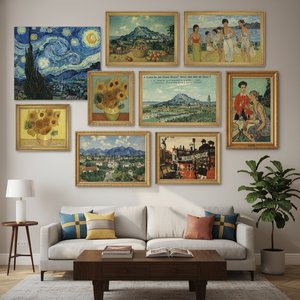
Post-Impressionism's 10 Defining Masterpieces: Art for Your Home |
Journey through Post-Impressionism's 10 defining masterpieces – Van Gogh, Monet & more. Explore iconic paintings, art history & find museum-quality reproductions for your home at . Discover all masterpieces online!