 Preview
 Send
Send Share
Share
 Details

 Download
 Similars
 X-Ray
X-Ray Diaporama
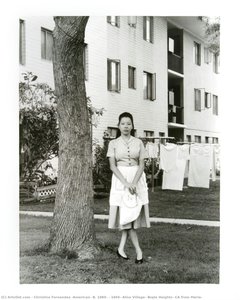
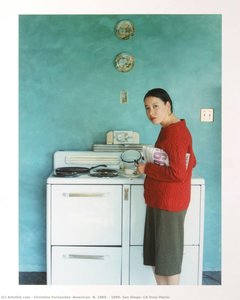
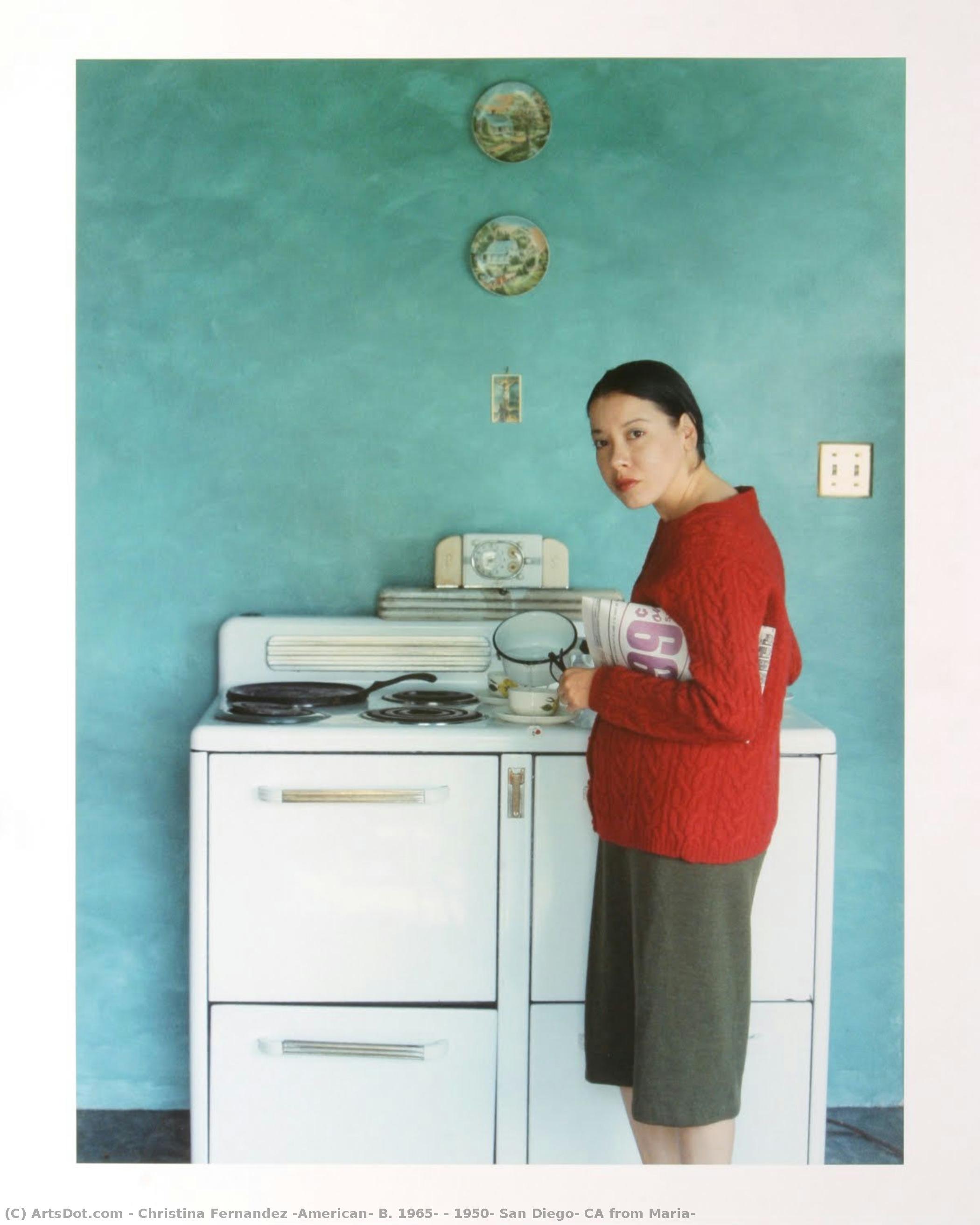
1950, San Diego, CA from Maria
 1996
1996 50.0 x 40.0 cm
 USC Fisher Museum of Art
 Read More
Giclée / Art Print
Museum-quality giclée or canvas print with fast production and flexible finish options. ( Buy Hand Made Painting Buy Image)




































Pick from our preset sizes that match the artwork's original proportions.

You may enter your own dimensions to fit a specific frame or space. If your selected size does not match the original image's proportions, we will either crop the artwork or extend the image with a mirrored or solid-fill edge. A digital mockup will be sent for your approval before production begins.
Please note that the on-screen preview does not reflect the actual cropping or extension. Only the mockup will accurately show the final composition.
While custom sizes are available, we recommend selecting a dimension from the predefined list to preserve the original proportions.
Worldwide Delivery () in 2 weeks instead of standard 4/5 weeks. (29 August)

Free Worldwide Express Shipping

High-Quality Linen Canvas

Full Shipping Insurance

Customs Tax Refund Guarantee

True Color Matching Guarantee

60-Day Return Policy (Defects Only)

100% Money-Back Guarantee

Bulk Discount Offer
 Glass option is only available in size under 110 CM

1950, San Diego, CA from Maria
Giclée / Art Print
Reproduction Size
-


Total Price
$ 63
Related Artworks









Artist Biography
A Life Woven into the Fabric of Place
Christina Fernandez, born in Los Angeles in 1965, is a photographer whose work resonates with a profound sense of belonging and a critical examination of identity, migration, and labor within the complex landscape of Southern California. Her artistic journey isn’t simply about capturing images; it's about excavating histories, both personal and collective, and presenting them as layered narratives that challenge conventional understandings of place and experience. Growing up as the daughter of Chicano activists instilled in Fernandez a deep social consciousness, which became the bedrock of her creative practice. This upbringing wasn’t merely biographical detail but a formative influence shaping her commitment to representing marginalized voices and untold stories. She earned a Bachelor of Arts from UCLA in 1989, followed by an MFA from the California Institute of the Arts in 1996, solidifying her technical skills while simultaneously nurturing her conceptual approach.Early Explorations: Family History and Reimagined Narratives
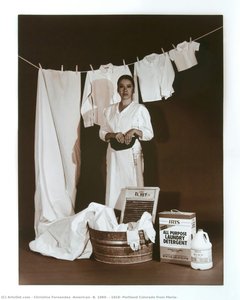
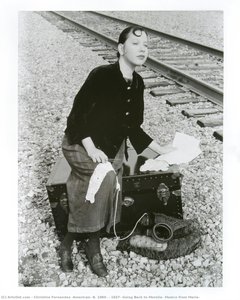
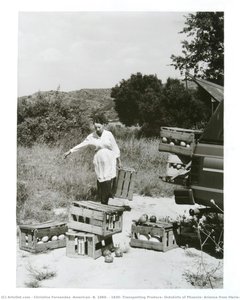
Fernandez’s early work is particularly striking for its intimate engagement with family history. The series *María's Great Expedition* (1995-1996) stands as a pivotal moment in her development, a poignant reimagining of her great-grandmother’s journey from Mexico to Southern California. Rather than presenting a straightforward documentary account, Fernandez constructed staged scenes and incorporated maps, creating a visual tapestry that blended personal memory with broader historical contexts. This wasn't about recreating the past but *interpreting* it—acknowledging the gaps in knowledge and embracing the power of artistic license to fill them. The use of costumes and varied printing techniques signaled the passage of time and underscored the enduring challenges faced by immigrants, challenging stereotypes and offering a nuanced portrayal of resilience. These early photographs weren’t just images; they were acts of recovery, reclaiming narratives often lost or silenced in dominant historical accounts.The Urban Landscape as a Site of Memory and Labor
As Fernandez's career progressed, her focus expanded to encompass the urban landscape of Los Angeles, particularly neighborhoods like Boyle Heights and El Sereno. Her *Lavanderia* series (2002) offers a compelling study of laundromats—seemingly mundane spaces that become imbued with significance through her lens. The graffiti-covered windows serve as membranes between public and private worlds, revealing traces of lives lived and stories untold. Fernandez’s attention to the aesthetic qualities of these surfaces – their “visual violence” combined with unexpected beauty – highlights the complex realities of working-class communities. Similarly, *Sereno* (2006) delves into the effects of gentrification in El Sereno, documenting abandoned objects and spaces as silent witnesses to displacement and loss. The absence of human figures is deliberate, forcing viewers to confront the tangible consequences of economic forces on vulnerable populations. These works aren’t simply about depicting poverty or hardship; they are meditations on belonging, access, and the ever-shifting dynamics of urban life.Technique and Themes: Blurring Boundaries
Fernandez's artistic approach is characterized by a deliberate blurring of boundaries—between documentary and fiction, personal and historical, photography and collage. She often employs multiple exposures, layering images to create dreamlike compositions that evoke memory and suggest hidden connections. Her work frequently addresses themes of space, migration, immigration, labor, gender, and her relationship to Los Angeles. This multifaceted approach allows her to explore the complexities of identity in a way that is both deeply personal and broadly relevant. She doesn’t shy away from difficult subjects—the exploitation of farmworkers, the trauma of displacement, the challenges faced by marginalized communities—but she approaches them with sensitivity and nuance, avoiding simplistic narratives or easy answers.Recognition and Legacy: A Voice for the Unseen
Christina Fernandez has received numerous awards and fellowships, including a Fellowship for Visual Arts from the California Community Foundation in 2011, acknowledging her significant contributions to the field of photography. Her work is held in prestigious museum collections, including the Smithsonian American Art Museum and the Museum of Modern Art, solidifying her place within contemporary art discourse. She has been an associate professor at Cerritos College since 2001, nurturing a new generation of photographers committed to social justice and artistic innovation. In 2021, she was honored with the Latinx Artist Fellowship from the US Latinx Art Forum, further recognizing her dedication to representing Latino experiences. Her thirty-year survey *Multiple Exposures* traveled to six major museums across the United States, cementing her legacy as a vital voice for the unseen and unheard. Fernandez’s work continues to resonate powerfully, reminding us of the importance of bearing witness, challenging dominant narratives, and embracing the complexities of human experience.
christina fernandez (american, b. 1965)
1965 - , United States of America
Quick Facts
- Artistic Movement Or Style: Contemporary Portraiture
- Artists Or Movements Influenced By This Artist: ['Social Documentary Photography']
- Artists Who Influenced This Artist:
- Edward Hopper
- Dorothea Lange
- Date Of Birth: Living
- Full Name: Christina Fernandez
- Nationality: American
- Notable Artworks: ['Untitled Landscape']
- Place Of Birth: United States of America