 Preview
 Send
Send Share
Share
 Details

 Download
 Similars
 X-Ray
X-Ray Diaporama
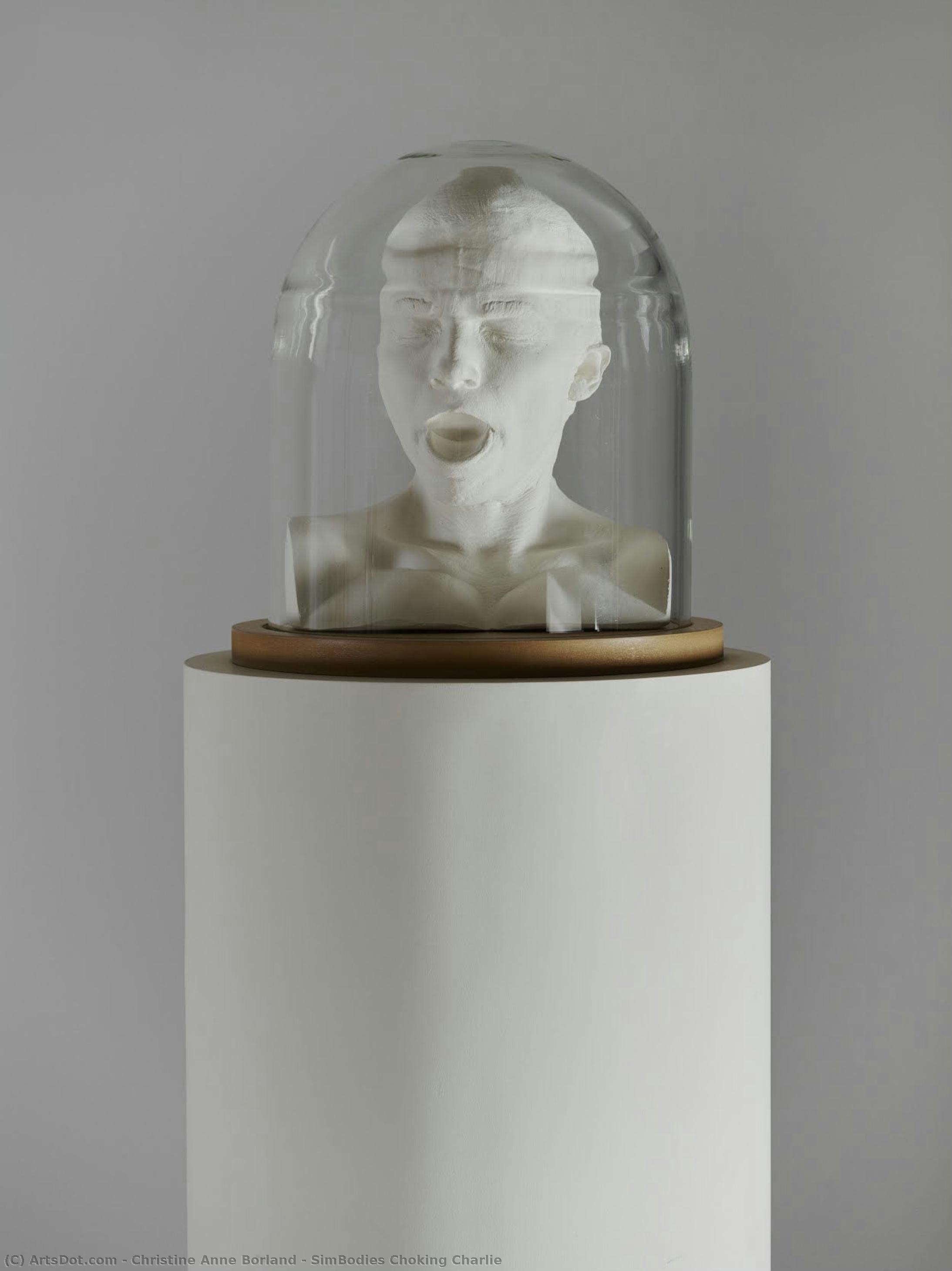
SimBodies Choking Charlie
 2009
2009 170.0 x 44.0 cm
 Arts Council Collection
 Read More
Giclée / Art Print
Museum-quality giclée or canvas print with fast production and flexible finish options. ( Buy Hand Made Painting Buy Image)




































Pick from our preset sizes that match the artwork's original proportions.

You may enter your own dimensions to fit a specific frame or space. If your selected size does not match the original image's proportions, we will either crop the artwork or extend the image with a mirrored or solid-fill edge. A digital mockup will be sent for your approval before production begins.
Please note that the on-screen preview does not reflect the actual cropping or extension. Only the mockup will accurately show the final composition.
While custom sizes are available, we recommend selecting a dimension from the predefined list to preserve the original proportions.
Worldwide Delivery () in 2 weeks instead of standard 4/5 weeks. (25 August)

Free Worldwide Express Shipping

High-Quality Linen Canvas

Full Shipping Insurance

Customs Tax Refund Guarantee

True Color Matching Guarantee

60-Day Return Policy (Defects Only)

100% Money-Back Guarantee

Bulk Discount Offer
 Glass option is only available in size under 110 CM

SimBodies Choking Charlie
Giclée / Art Print
Reproduction Size
-


Total Price
$ 63
Collectible Description
Related Artworks






Artist Biography
The Interdisciplinary Vision of Christine Borland
Born in the quiet landscape of Darvel, Ayrshire, in 1965, Christine Borland emerged as a vital voice within the seismic shifts of the late twentieth-century art world. As a prominent figure of the Young British Artists (YBA) movement, her presence was felt not merely through spectacle, but through a profound, intellectual inquiry into the very fabric of human existence. Her journey began with a rigorous foundation at the Glasgow School of Art, where she immersed herself in environmental art. This early preoccupation with ecological systems and conceptual boundaries laid the groundwork for a career defined by the blurring of lines—between science and art, between the individual and the institution, and between the visible and the microscopic.
Borland’s academic evolution continued at the University of Ulster, where she earned her MA in 1988, providing her with the critical theoretical tools necessary to navigate complex socio-political landscapes. Her early years in the Glasgow art scene, including her involvement with the Transmission Gallery, nurtured a collaborative spirit that would become her hallmark. It was during this era of intense creative ferment that she achieved widespread recognition, most notably through her nomination for the prestigious Turner Prize in 1997. This moment served as a definitive milestone, positioning her as an artist capable of translating heavy, often unsettling, scientific and ethical realities into poignant visual narratives.
Bridging Science and the Human Experience
What distinguishes Borland’s oeuvre is her fearless foray into the realms of medical science, forensics, and genetics. Rather than viewing these disciplines as clinical or detached, she approaches them as rich territories for exploring the vulnerabilities of life. Her work often functions as a bridge, connecting the cold precision of laboratory data with the visceral, emotional reality of human mortality. Through meticulous research, she investigates how social systems and powerful institutions can exploit or devalue biological life, turning the gaze toward the ethical complexities inherent in modern healthcare and genetic engineering.
This investigative approach was further enriched by her 2004 appointment to the Glenfiddich Artist Residency Programme. This period of intensive exploration allowed her to deepen her engagement with scientific methodologies, leading to projects that delve into the histories of medicine and the profound implications of human heredity. Her art does not merely observe these subjects; it interrogates them, asking what it means to be part of a biological lineage and how much of our identity is governed by forces beyond our control. In doing so, she transforms the scientific inquiry into a deeply moving meditation on the fragility and interconnectedness of all living things.
Legacy and Academic Influence
Beyond the gallery walls, Borland has significantly shaped the future of contemporary art through her commitment to education and leadership. Her appointment as a Professor at BALTIC Northumbria University in 2012, where she directs the Institute of Contemporary Art in Newcastle upon Tyne, underscores her role as an influential mentor and thinker. In this capacity, she continues to foster environments where cross-disciplinary dialogue can flourish, encouraging new generations of artists to look beyond traditional mediums and embrace the complexities of a globalized, scientifically-driven world.
The historical significance of Christine Borland lies in her ability to maintain artistic rigor while tackling the most pressing ethical dilemmas of our time. Her work remains a testament to the power of art to act as a catalyst for understanding, turning the microscopic and the clinical into a universal language of empathy and reflection. Her legacy is found not only in her celebrated exhibitions but in the enduring way she challenges us to confront the beautiful, terrifying mysteries of our own biological existence.
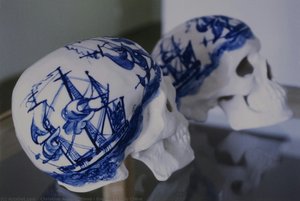
christine anne borland
1965 - , United Kingdom
Quick Facts
- Artistic Movement Or Style: Young British Art
- Date Of Birth: 1965
- Full Name: Christine Anne Borland
- Nationality: Scottish
- Notable Artworks:
- SimBodies Eargirl
- SimBodies Choking Charlie
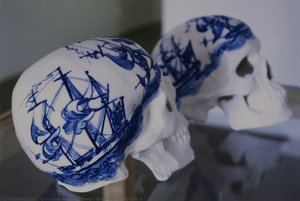
- English Family China
- Place Of Birth: Darvel, United Kingdom