 Preview
 Send
Send Share
Share
 Details

 Download
 Similars
 X-Ray
X-Ray Diaporama
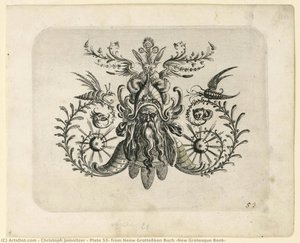
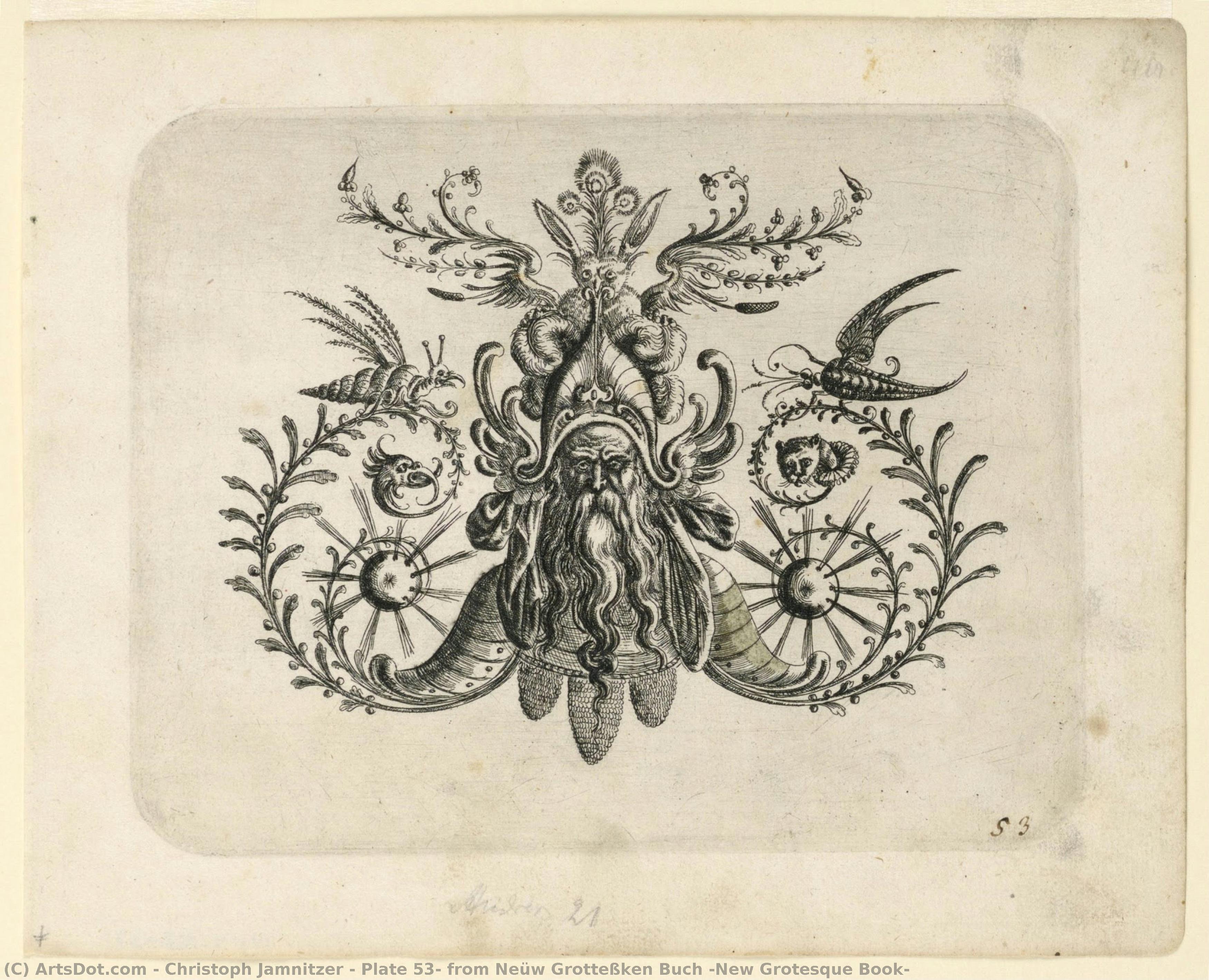
Plate 53, from Neüw Grotteßken Buch (New Grotesque Book)

 Read More
Hand Made Oil Reproduction
Hand-painted oil on canvas in your size and frame, made to order by our artists. ( Buy Print Buy Image)




































Pick from our preset sizes that match the artwork's original proportions.

You may enter your own dimensions to fit a specific frame or space. If your selected size does not match the original image's proportions, we will either crop the artwork or extend the painting with additional hand-painted elements. A digital mockup will be sent for your approval before production begins.
Please note that the on-screen preview does not reflect the actual cropping or extension. Only the mockup will accurately show the final composition.
While custom sizes are available, we recommend selecting a dimension from the predefined list to preserve the original proportions.
After order, ArtsDot.com team will email client for instructions and provide a mockup preview
Worldwide Delivery () in 3/4 weeks instead of standard 5 weeks. (23 August). No compromise on quality.

Free Worldwide Express Shipping

High-Quality Linen Canvas

Full Shipping Insurance

Customs Tax Refund Guarantee

True Color Matching Guarantee

60-Day Return Policy (Defects Only)

100% Money-Back Guarantee

Bulk Discount Offer
 Glass option is only available in size under 110 CM

Plate 53, from Neüw Grotteßken Buch (New Grotesque Book)
Reproduction Medium
Reproduction Size
-


Total Price
$ 263
Related Artworks









Artist Biography
Christoph Jamnitzer: The Nuremberg Manner’s Master
Christoph Jamnitzer (1563 – 1618) stands as a pivotal figure in the artistic landscape of Renaissance Germany, particularly renowned for his contribution to what is known as the ‘Nuremberg Manner.’ Born in Nuremberg—a city steeped in tradition and burgeoning with mercantile prosperity—Jamnitzer’s life coincided with an era defined by intellectual ferment and artistic innovation. His lineage traced back to Wenzel Jamnitzer, a celebrated artist who had established a formidable reputation for his sculptural prowess and architectural designs, providing him with an invaluable foundation of artistic knowledge and experience. This familial connection cemented Jamnitzer's position within the influential artistic circles of his time. Jamnizer’s career unfolded across multiple disciplines—goldsmithing, metalworking, printmaking, and crucially, theoretical art scholarship—demonstrating a remarkable breadth of talent that transcended conventional boundaries. He wasn’t merely a craftsman; he was an innovator who actively shaped the aesthetic sensibilities of his era. His workshop produced breathtaking objects ranging from elaborate jewelry adorned with intricate enamelwork to monumental architectural models intended for civic celebrations, showcasing unparalleled technical skill and artistic vision. These creations embody the distinctive stylistic hallmarks of the Nuremberg Manner—characterized by meticulous detail, stylized ornamentation, and a harmonious blend of classical influences with regional traditions. A cornerstone of Jamnitzer’s legacy resides in his groundbreaking treatise on perspective, “Perspectiva Corporum Regularium,” published in 1594. This work represents a significant advancement in geometrical optics and profoundly impacted the artistic practices of subsequent generations. It meticulously analyzed the principles governing spatial representation, offering precise mathematical formulas and diagrams that served as invaluable guides for artists striving to achieve realism and grandeur. Furthermore, “Neuw Grottessken Buch,” released in 1603, solidified Jamnitzer’s reputation as a visionary designer and cemented his place among the foremost thinkers of his time. This ambitious project envisioned a vast subterranean chamber—a ‘Grotesque Book’—designed to inspire awe and contemplation through its monumental scale and imaginative ornamentation. It was conceived as an immersive experience intended to elevate the viewer's understanding of natural beauty and artistic grandeur. Jamnitzer’s influence extended far beyond his immediate workshop, permeating the broader artistic discourse of Europe. His meticulous observations on materials and techniques—particularly concerning the application of enamel—became foundational for artists seeking to emulate the luminous effects achieved by Nuremberg craftsmen. Moreover, his theoretical explorations anticipated developments in scientific thought, foreshadowing the burgeoning interest in mathematical modeling and visual representation that would characterize the Baroque period. Christoph Jamnitzer’s enduring legacy testifies to the transformative power of artistic inquiry and underscores his indelible contribution to the history of European art and design.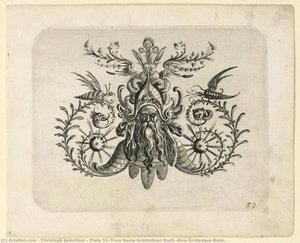
christoph jamnitzer
1563 - 1618 , Germany
Quick Facts
- Artistic Movement Or Style: Nuremberg Manner
- Artists Or Movements Influenced By This Artist: ['Renaissance']
- Artists Who Influenced This Artist: ['Wenzel Jamnitzer']
- Date Of Death: 1618
- Full Name: Christoph Jamnitzer
- Nationality: German
- Notable Artworks: ['Plate 53, from Neüw Grotteßken Buch']
- Place Of Birth: Nuremberg, Germany