 Preview
 Send
Send Share
Share
 Details

 Download
 Similars
 X-Ray
X-Ray Diaporama
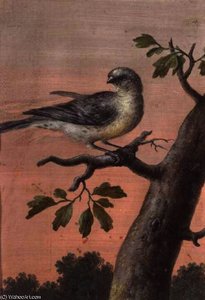
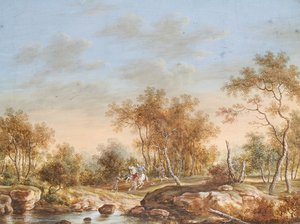
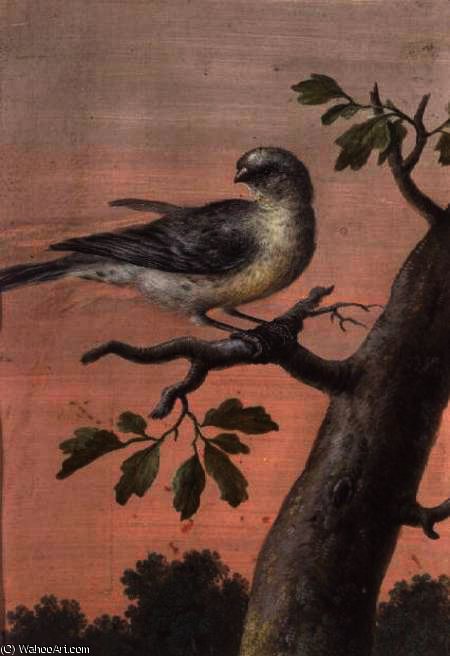
A Bird on a Branch, (gouache
 Read More
Hand Made Oil Reproduction
Hand-painted oil on canvas in your size and frame, made to order by our artists. ( Buy Print Buy Image)




































Pick from our preset sizes that match the artwork's original proportions.

You may enter your own dimensions to fit a specific frame or space. If your selected size does not match the original image's proportions, we will either crop the artwork or extend the painting with additional hand-painted elements. A digital mockup will be sent for your approval before production begins.
Please note that the on-screen preview does not reflect the actual cropping or extension. Only the mockup will accurately show the final composition.
While custom sizes are available, we recommend selecting a dimension from the predefined list to preserve the original proportions.
After order, ArtsDot.com team will email client for instructions and provide a mockup preview
Worldwide Delivery () in 3/4 weeks instead of standard 5 weeks. (24 August). No compromise on quality.

Free Worldwide Express Shipping

High-Quality Linen Canvas

Full Shipping Insurance

Customs Tax Refund Guarantee

True Color Matching Guarantee

60-Day Return Policy (Defects Only)

100% Money-Back Guarantee

Bulk Discount Offer
 Glass option is only available in size under 110 CM

A Bird on a Branch, (gouache
Reproduction Medium
Reproduction Size
-


Total Price
$ 263
Related Artworks
Artist Biography
Jacob Christoph Le Blon: The Pioneer of Color Printing
Jacob Christoph Le Blon, a name perhaps less familiar than those of his contemporaries, stands as a pivotal figure in the history of art and printmaking. Born in Frankfurt in 1667, he wasn’t merely a painter or engraver; he was an inventor—a visionary who fundamentally altered how images were reproduced and disseminated. His ingenious system for creating color prints, utilizing three copper dyes – red, yellow, and blue – laid the groundwork for the modern CMYK color model that dominates printing today. Le Blon’s legacy isn't found in grand museums or celebrated portraits, but rather in the silent revolution he sparked within the world of visual communication.
Le Blon’s early life was steeped in the traditions of his family – a lineage deeply rooted in printmaking and bookbinding. His father, Christophe Le Blon, was an engraver and bookseller, and his grandfather, Christof Le Blon, had connections to the renowned artist Matthäus Merian. This environment fostered an appreciation for visual representation from a young age. He received training under Conrad Ferdinand Meyer in Zurich, though definitive documentation of this period remains elusive. However, it was in Rome, between 1696 and 1702, that Le Blon truly honed his skills, studying under the esteemed Carlo Maratta and immersing himself in the techniques of Italian painting. This exposure to classical art profoundly influenced his later work, particularly in its meticulous detail and realistic portrayal of figures.
Upon returning to Amsterdam in 1702, Le Blon established himself as a miniature painter and engraver, quickly gaining recognition for his technical proficiency. He was introduced to Bonaventura van Overbeek, a fellow artist who encouraged him to experiment with color printing. This collaboration proved crucial; Van Overbeek recognized the potential of Le Blon’s system and provided invaluable guidance. In 1710, Le Blon achieved a breakthrough, producing his first color prints using plates inked with yellow, red, and blue dyes. This innovative process involved meticulously engraving three separate copper plates – one for each color – and applying them sequentially to a single sheet of paper. The resulting images possessed a remarkable depth and richness of hue previously unattainable in monochrome prints.
Le Blon’s ambition extended beyond mere experimentation; he sought official recognition for his invention. In 1719, he secured royal patents from King George I of Great Britain, cementing his place in history as the inventor of a system that would eventually become the foundation of modern color printing. He established “The Picture Office,” a business dedicated to reproducing paintings and portraits, but unfortunately, the venture proved commercially unsuccessful. Despite this setback, Le Blon’s contribution remained significant – he had fundamentally altered the landscape of image reproduction. His work, though largely overlooked during his lifetime, is now recognized as a cornerstone of printmaking history.
The Influence of Alonso Cano and Early Baroque Painting
While Jacob Christoph Le Blon focused on the mechanics of color printing, another significant figure in 17th-century art was Alonso Cano (1601–1667), a Spanish painter, sculptor, architect, and draughtsman. Cano’s work, characterized by its dramatic lighting, dynamic compositions, and realistic depictions of battle scenes, exerted a subtle but important influence on Le Blon's approach to rendering form and color. Cano’s emphasis on chiaroscuro – the contrast between light and dark – provided a valuable precedent for Le Blon’s efforts to create depth and volume in his color prints.
Cano’s training in Seville, under the tutelage of Sebastián Velázquez (a contemporary of Diego Velázquez), instilled in him a deep understanding of anatomy, perspective, and the expressive potential of light. His paintings often depicted historical events with meticulous detail, capturing the energy and chaos of warfare. Le Blon, though working in a different medium, shared a similar desire to convey realism and drama through his prints. The influence is not direct imitation but rather an absorption of principles – a recognition that successful representation requires careful observation and skillful manipulation of tonal values.
Furthermore, the Baroque artistic movement, which flourished throughout Europe during this period, shaped both artists’ sensibilities. Baroque painting emphasized emotional intensity, dramatic gestures, and opulent ornamentation. Cano's works exemplify these characteristics, while Le Blon’s prints, particularly his portraits, often reflected a similar sense of grandeur and sophistication. The Baroque aesthetic provided a framework for understanding how to effectively communicate visual information – a shared foundation that contributed to their respective artistic achievements.
Jonathan Richardson: A Contemporary and Fellow Innovator
The story of Jacob Christoph Le Blon is intertwined with the work of Jonathan Richardson (1667–1745), another English artist who significantly advanced the understanding of color theory and printmaking. Richardson, often referred to as “the Elder” to distinguish him from his son, was a portrait painter, collector of drawings, and influential writer on art. His most notable contribution was *An Essay on the Theory of Painting* (1719), which provided a groundbreaking analysis of color perception and its application in artistic representation.
Richardson’s essay challenged prevailing notions about color, arguing that colors are not inherent qualities of objects but rather perceptions created by the eye. He proposed a model based on three primary colors – red, yellow, and blue – which he believed could be mixed to produce all other hues. This theory, known as the RYB color model, laid the groundwork for modern color science. Richardson’s work directly influenced Le Blon, who adopted a similar approach in his own experiments with color printing. Both artists were driven by a desire to understand and replicate the visual experience of color – a shared intellectual pursuit that bridged the gap between art and science.
Richardson's connection to Le Blon is further strengthened by the fact that he quoted Le Blon as a source of information on German painters for his *Schouburg*, a comprehensive survey of European artists. This demonstrates a recognition of Le Blon’s expertise and a shared interest in documenting artistic knowledge. The collaboration between these two figures highlights the interconnectedness of the art world during the 18th century – a period of intellectual ferment and creative innovation.
Gabriël Metsu: A Parallel World of Detail and Observation
Comparing Jacob Christoph Le Blon with Gabriël Metsu (1629–1667), another Dutch painter active during the same era, reveals intriguing parallels and divergences in their artistic approaches. Both artists were masters of detail and observation, meticulously rendering objects and figures with remarkable accuracy. However, Metsu’s focus was primarily on intimate domestic scenes – portraits of families, still lifes of everyday objects, and genre paintings that captured the quiet rhythms of daily life.
Metsu's style is characterized by a subtle use of light and shadow, creating a sense of atmosphere and realism. His compositions are often tightly framed, drawing the viewer’s attention to specific details. Le Blon, on the other hand, was primarily concerned with the technical aspects of color printing – developing a system for reproducing images in multiple colors. While Metsu's work demonstrates an acute awareness of visual perception, Le Blon’s innovation lay in his ability to translate that understanding into a practical method for creating color prints.
Despite their differing artistic goals, both artists shared a commitment to realism and a deep appreciation for the beauty of everyday objects. Their works offer valuable insights into the artistic sensibilities of 17th-century Holland – a period marked by experimentation, innovation, and a burgeoning interest in visual representation. Le Blon’s legacy, though often overshadowed, stands as a testament to his ingenuity and his profound impact on the history of art and printmaking.
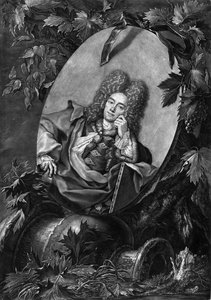
christoph ludwig agricola
1667 - 1719 , Germany
Quick Facts
- Artistic Movement Or Style: Halftone printing, Mezzotint
- Artists Or Movements Influenced By This Artist:
- CMYK color model
- Joshua Reynolds
- Artists Who Influenced This Artist:
- Conrad Ferdinand Meyer
- Carlo Maratta
- Date Of Birth: May 2, 1667
- Date Of Death: May 16, 1741
- Full Name: Jacob Christoph Le Blon
- Nationality: German
- Notable Artworks:
- Siege of Armentières
- Siege of Dixmude
- Place Of Birth: Frankfurt, Germany