 Preview
 Send
Send Share
Share
 Details

 Download
 Similars
 X-Ray
X-Ray Diaporama
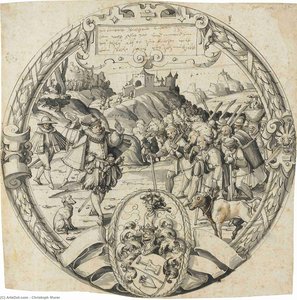
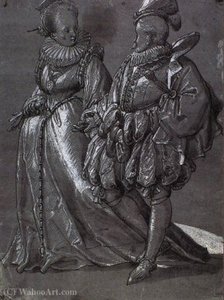
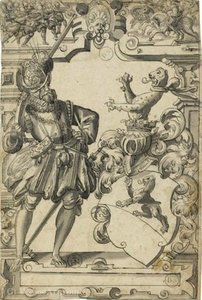
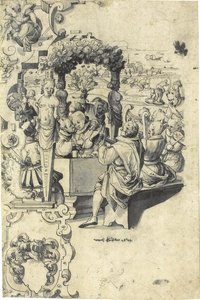
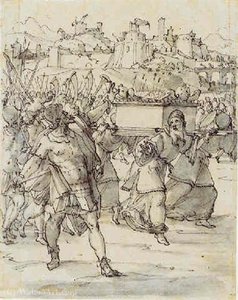
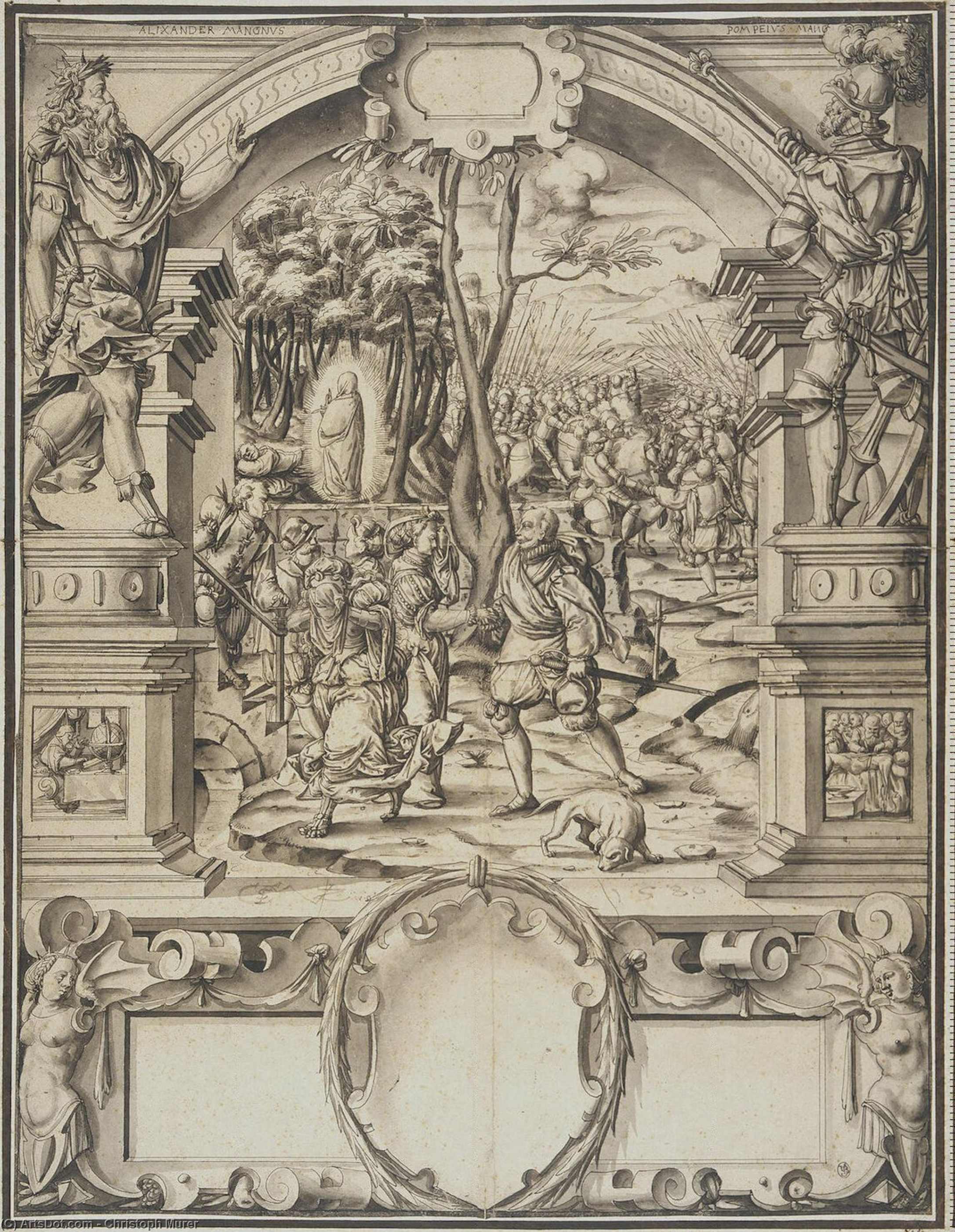
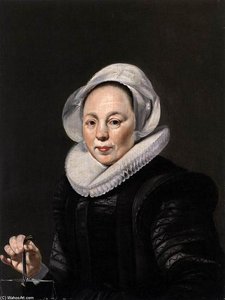
Leonard Turnidzer Setting Off On A Journey
 Read More
Hand Made Oil Reproduction
Hand-painted oil on canvas in your size and frame, made to order by our artists. ( Buy Print Buy Image)




































Pick from our preset sizes that match the artwork's original proportions.

You may enter your own dimensions to fit a specific frame or space. If your selected size does not match the original image's proportions, we will either crop the artwork or extend the painting with additional hand-painted elements. A digital mockup will be sent for your approval before production begins.
Please note that the on-screen preview does not reflect the actual cropping or extension. Only the mockup will accurately show the final composition.
While custom sizes are available, we recommend selecting a dimension from the predefined list to preserve the original proportions.
After order, ArtsDot.com team will email client for instructions and provide a mockup preview
Worldwide Delivery () in 3/4 weeks instead of standard 5 weeks. (17 August). No compromise on quality.

Free Worldwide Express Shipping

High-Quality Linen Canvas

Full Shipping Insurance

Customs Tax Refund Guarantee

True Color Matching Guarantee

60-Day Return Policy (Defects Only)

100% Money-Back Guarantee

Bulk Discount Offer
 Glass option is only available in size under 110 CM

Leonard Turnidzer Setting Off On A Journey
Reproduction Medium
Reproduction Size
-


Total Price
$ 263
Related Artworks
Artist Biography
Christoph Murer: A Renaissance Master of Light and Narrative
Christoph Murer, a name perhaps less familiar than some of his contemporaries, stands as a pivotal figure in the vibrant artistic landscape of 16th-century Switzerland. Born in Zurich in 1558 and tragically passing away in Winterthur in 1614, Murer’s legacy resides primarily in his breathtaking stained glass windows and intricate woodcuts – works that seamlessly blend historical narrative with exquisite craftsmanship. While he didn't amass the fame of a Rembrandt or Titian, his contributions to the artistic development of his time, particularly within the context of Swiss Renaissance art, are profoundly significant.
Murer’s early life was deeply intertwined with the artistic traditions of his family. His father, Jos Murer, was a renowned glass painter and councilor, establishing a lineage of artists dedicated to illuminating spaces with color and storytelling. This familial connection provided Murer with an invaluable foundation, immersing him in the techniques and aesthetic sensibilities of stained glass from a young age. He apprenticed under his father, mastering the delicate process of manipulating molten glass – a skill demanding both technical precision and artistic vision. Crucially, he also studied woodcutting under Tobias Stimmer in Strasbourg, gaining expertise in creating detailed monochrome images that would often serve as preparatory sketches for his stained-glass panels or stand alone as independent works.
The Art of the Window: Narrative and Technique
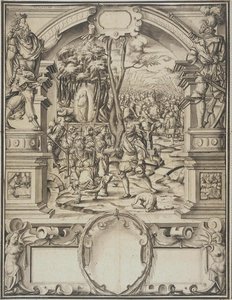
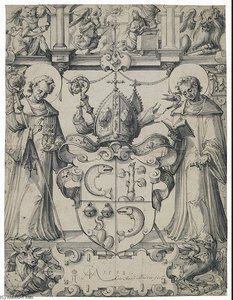
Murer’s most celebrated work lies in his stained glass windows. These weren't merely decorative elements; they were meticulously crafted narratives, frequently depicting scenes from Swiss history, mythology, or religious stories. His approach was remarkably innovative for the period. Unlike many contemporary artists who relied heavily on existing iconography, Murer infused his windows with a dynamic sense of movement and psychological depth. Consider his “Study for a Stained-Glass Window,” currently housed at The Metropolitan Museum of Art – a drawing that reveals the complex planning behind these monumental works. It showcases Hercules choosing between Virtue and Vice, a powerful allegorical scene rendered with remarkable clarity and attention to detail. The architectural framing elements in the foreground, suggesting a stage setting, further enhance the narrative quality.
His technique was equally impressive. Murer employed vibrant colors – deep blues, rich reds, and luminous greens – skillfully layered within the glass to create an illusion of depth and light. He utilized a variety of techniques, including *flambé* (a process that creates a fiery orange effect) and *opalescence* (achieving a milky or iridescent sheen), adding texture and visual interest to his panels. The influence of Italian Renaissance art is evident in Murer’s use of perspective and dramatic lighting, though he adapted these principles to suit the unique qualities of stained glass.
Beyond the Window: Woodcuts and Illustrations
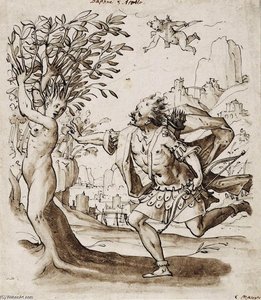
While best known for his windows, Murer was also a prolific woodcut designer and illustrator. His work extended beyond religious subjects; he created intricate depictions of historical figures, mythological scenes, and even everyday life. His illustrations for Jacob Micyllus’s edition of Ovid's *Metamorphoses* are particularly noteworthy – showcasing his ability to capture the fantastical elements of classical mythology with a distinctly Swiss sensibility. These woodcuts demonstrate a remarkable level of detail and artistic skill, reflecting Murer’s versatility as an artist.
His collaboration with Tobias Stimmer on projects like the “Teutsche Speisskamer” (The German Larder) further highlights his artistic partnership and shared creative vision. This publication, a comprehensive guide to culinary arts, featured Murer's woodcuts illustrating various food preparation techniques – a testament to his ability to adapt his skills to diverse subject matter.
A Legacy of Light and Storytelling
Christoph Murer’s impact on the artistic landscape of Switzerland is undeniable. He wasn’t merely a craftsman; he was a storyteller, an innovator, and a master of light and color. His stained-glass windows continue to captivate viewers today, offering a glimpse into the rich cultural heritage of 16th-century Europe. His work stands as a testament to the power of art to illuminate not only physical spaces but also the human spirit – a legacy that continues to resonate through his enduring creations.
Further research into Murer’s life and work can be found on the Web Gallery of Art (https://www.wga.hu/bio/m/murer/biograph.html) and through resources like The British Museum (https://www.britishmuseum.org/collection/term/BIOG37766), offering valuable insights into his life, techniques, and artistic context.
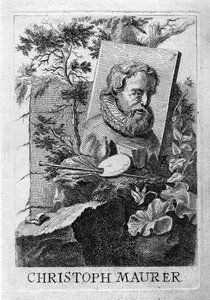
christoph murer
1558 - 1614 , Switzerland
Quick Facts
- Artistic Movement Or Style: Renaissance, Glass Painting
- Artists Or Movements Influenced By This Artist:
- Tobias Stimmer
- Renaissance art
- Artists Who Influenced This Artist: ['Jos Murer']
- Date Of Birth: 1558, Zurich, Switzerland
- Date Of Death: 1614, Winterthur, Switzerland
- Full Name: Christoph Murer
- Nationality: Swiss
- Notable Artworks:
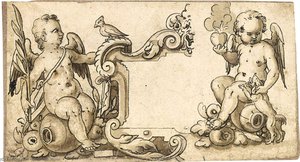
- Study of two putti
- In the dance border pair
- Study for a stained-glass window
- Place Of Birth: Zurich, Switzerland