

 Preview
 Send
Send Share
Share
 Details

 Download
 Similars
 X-Ray
X-Ray Diaporama
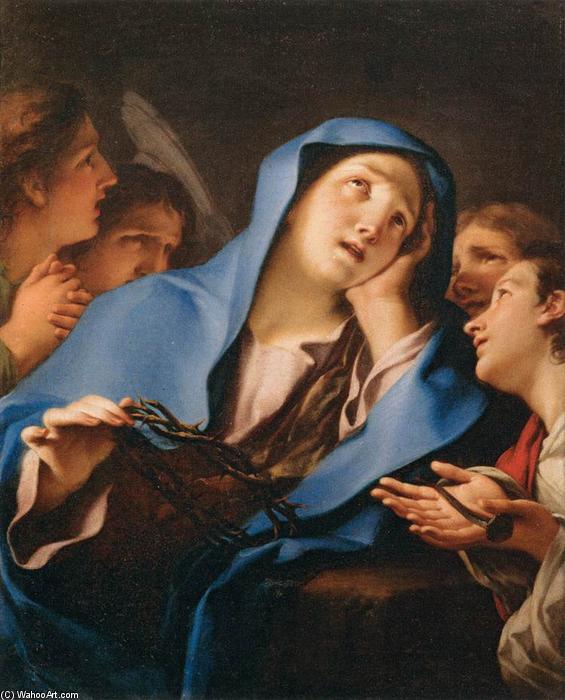
Virgin of Sorrow Surrounded by Angels
 1780
1780 47.0 x 38.0 cm
 The Louvre
 Read More
Purchase a high-resolution, enhanced digital image, far superior to the online preview.
Each file is meticulously prepared by our in-house specialists using advanced tools and expert manual retouching. We ensure every image has exceptional clarity, precise color accuracy, and fine detail.
The final file is delivered via email within 72 hours, optimized for immediate use in professional, editorial, and print environments. This is the same quality trusted by top-tier design studios, publishers, and galleries.
Digital Image
Download a high-resolution file for personal display, printing, and creative projects. ( Buy Print Buy Hand Made Painting)
Included in Every Digital Image Order
Expert Digital Delivery, Guaranteed
When you choose ArtsDot.com, you're not just getting an image - you're receiving a professionally enhanced digital artwork, crafted with precision and backed by a satisfaction guarantee. Here's everything that comes with your order, automatically:

Fast Email Delivery
Your high-resolution digital image file will be emailed to you within 72 hours of ordering - ready for immediate use.

AI-Enhanced Digital File
Your artwork is professionally optimized using advanced AI tools and manual editing, ensuring maximum detail, clarity, and color accuracy.

Free Lifetime Re-Delivery
Accidentally deleted or lost your file? No worries - we'll resend it to you anytime, free of charge.

No Import Fees - Ever
Enjoy your artwork instantly with zero customs, duties, or delivery fees - digital downloads are always tax-free.

Color Accuracy Guarantee
We ensure your digital image reflects the original colors as closely as possible using professional tools and color management.

60-Day Satisfaction Guarantee
If you're not satisfied with your digital image, we'll revise it or refund 100% within 60 days - no questions asked.

100% Money-Back Guarantee
Not satisfied? Get a full refund within 60 days of receiving your digital file - no questions asked.

Bulk Order Discounts
Buy 3 images, save 10% - Buy 5, save 15% - Buy 10+, save 20%. Great for creative projects, galleries, and agencies.
Related Artworks








Artist Biography
Christoph Unterberger: Baroque Painter of Alpine Majesty
Christoph Unterberger (b. 1732, Cavalese, Italy; d. 1798, Roma) stands as a pivotal figure in Austrian Baroque painting and a testament to the enduring legacy of Tyrolean artistic tradition. Born into a family steeped in artistic patronage—his uncle Michelangelo Unterberger was co-director of the Academy of Fine Arts, Vienna—Christoph’s formative years were shaped by exposure to both Viennese academic ideals and the vibrant artistic ferment of Rome, establishing him as an artist deeply rooted in two distinct European centers. His life's work embodies a synthesis of these influences, resulting in monumental altarpieces and frescoes that capture the grandeur of Alpine landscapes alongside profound explorations of religious themes.- Early Training & Viennese Influence: Christoph’s initial artistic education commenced under his uncle Franz Sebald Unterberger, who instilled in him a foundational understanding of Baroque style—characterized by dramatic chiaroscuro and opulent ornamentation—particularly evident in Tyrolean ecclesiastical art. Subsequently, he honed his skills at the Academy of Fine Arts, Vienna, where Michelangelo Unterberger championed a more classical approach, fostering an appreciation for disegno (drawing) and humanist ideals. This dual influence profoundly shaped Unterberger’s artistic sensibilities.
- Roman Apprenticeship & Mengsian Circle: Recognizing the importance of mastering Roman artistic conventions, Unterberger traveled to Rome in 1758, immersing himself in the tutelage of Anton Rafael Mengs—a leading proponent of Neoclassical aesthetics and a key figure within Mengs’ influential circle. This association proved transformative, exposing Unterberger to innovative techniques and inspiring him to adopt a more refined style characterized by subtle tonal gradations and meticulous detail.
- Notable Commissions & Artistic Achievements: Unterberger's prolific output spanned across diverse genres—portraiture, mythological scenes, landscapes, and decorative frescoes—demonstrating his versatility as an artist. He achieved considerable renown for his monumental altarpiece of St. Jules and St. Agnes in Brixen Cathedral (1769), a masterpiece that exemplifies the Baroque’s expressive power and masterful use of color. Equally impressive were his contributions to Villa Borghese, where he collaborated with Mengs on the decoration of the Papyrus Room—a daring experiment in fresco painting that pushed artistic boundaries.
- Vienna Revisited & Legacy: Returning to Vienna in 1773, Unterberger continued his artistic endeavors, securing commissions from prominent patrons and establishing himself as a respected Court Painter. His final masterpiece, Hebe (1795), celebrated for its innovative lighting effects—a technique championed by Mengs—became an emblem of Viennese Baroque artistry. Christoph Unterberger’s enduring legacy resides not merely in the beauty of his paintings but also in his role as a conduit between Baroque grandeur and Neoclassical refinement, securing his place as one of Austria's most celebrated artists of the eighteenth century.
Ignaz Unterberger: A Painter Shaped by Tradition & Innovation
Ignaz Unterberger (b. 1748, Cavalese; d. 1797, Vienna) emerged from a lineage deeply intertwined with Tyrolean artistic heritage—his father, Franz Sebald Unterberger, was also a painter and engraver—and continued the family’s tradition of excellence in Baroque art. Like his brother Christoph, Ignaz received an early education under his uncle Michelangelo Unterberger, absorbing the stylistic precepts of Viennese Baroque painting. However, Ignaz distinguished himself through a fervent dedication to printmaking—a medium he pursued with unwavering passion throughout his life—and demonstrated remarkable ingenuity as an inventor.- Early Artistic Development & Roman Exposure: Ignaz’s artistic journey commenced in Cavalese, where he honed his skills under the guidance of his father and uncle. Recognizing the importance of broadening his horizons, he traveled to Rome in 1769—a pivotal moment that cemented his connection with Mengs' circle and exposed him to the burgeoning Neoclassical movement. This immersion fostered a stylistic sensibility characterized by meticulous observation and subtle tonal nuances—traits evident in his celebrated portrait of Mozart (1784).
- Vienna Patronage & Artistic Recognition: Ignaz’s return to Vienna marked the zenith of his artistic career, securing prestigious commissions from influential figures such as Emperor Francis II. His painting Hebe (1795)—a daring exploration of light and color—became an instant sensation, lauded for its innovative techniques and cementing Unterberger's reputation as a visionary artist. Despite lacking formal Academy membership, Ignaz’s work garnered widespread acclaim and solidified his position as one of Austria’s foremost painters of the late Baroque era.
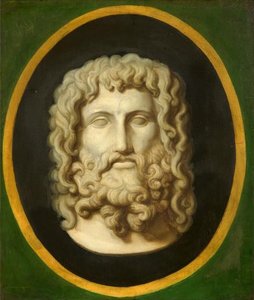
christoph unterberger
1732 - 1798 , Italy
Quick Facts
- Artistic Movement Or Style: High Baroque
- Artists Or Movements Influenced By This Artist: ['Anton Rafael Mengs']
- Artists Who Influenced This Artist:
- Franz Sebald Unterberger
- Michelangelo Unterberger
- Date Of Birth: 24 July 1748
- Full Name: Ignaz Unterberger
- Nationality: Austrian
- Notable Artworks:
- Hebe
- Maternal Love
- Place Of Birth: Cavalese (Italy)

