

 Preview
 Send
Send Share
Share
 Details

 Download
 Similars
 X-Ray
X-Ray Diaporama
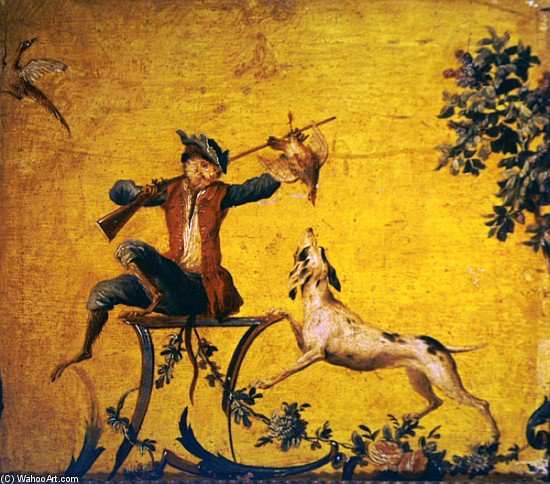
Monkey Hunter And Hunting Dog (painted Wood)
 Read More
Purchase a high-resolution, enhanced digital image, far superior to the online preview.
Each file is meticulously prepared by our in-house specialists using advanced tools and expert manual retouching. We ensure every image has exceptional clarity, precise color accuracy, and fine detail.
The final file is delivered via email within 72 hours, optimized for immediate use in professional, editorial, and print environments. This is the same quality trusted by top-tier design studios, publishers, and galleries.
Digital Image
Download a high-resolution file for personal display, printing, and creative projects. ( Buy Print Buy Hand Made Painting)
Included in Every Digital Image Order
Expert Digital Delivery, Guaranteed
When you choose ArtsDot.com, you're not just getting an image - you're receiving a professionally enhanced digital artwork, crafted with precision and backed by a satisfaction guarantee. Here's everything that comes with your order, automatically:

Fast Email Delivery
Your high-resolution digital image file will be emailed to you within 72 hours of ordering - ready for immediate use.

AI-Enhanced Digital File
Your artwork is professionally optimized using advanced AI tools and manual editing, ensuring maximum detail, clarity, and color accuracy.

Free Lifetime Re-Delivery
Accidentally deleted or lost your file? No worries - we'll resend it to you anytime, free of charge.

No Import Fees - Ever
Enjoy your artwork instantly with zero customs, duties, or delivery fees - digital downloads are always tax-free.

Color Accuracy Guarantee
We ensure your digital image reflects the original colors as closely as possible using professional tools and color management.

60-Day Satisfaction Guarantee
If you're not satisfied with your digital image, we'll revise it or refund 100% within 60 days - no questions asked.

100% Money-Back Guarantee
Not satisfied? Get a full refund within 60 days of receiving your digital file - no questions asked.

Bulk Order Discounts
Buy 3 images, save 10% - Buy 5, save 15% - Buy 10+, save 20%. Great for creative projects, galleries, and agencies.
Related Artworks
Artist Biography
A Life Dedicated to Idyllic Charm: Christophe Huet and the Rococo Spirit
Christophe Huet, born in Pontoise, France, around 1700 and passing away in Paris in 1759, was a painter whose name, though perhaps less celebrated today than some of his contemporaries, resonated with appreciation during the height of the Rococo era. He belonged to a family deeply entrenched in artistic pursuits—a lineage that undoubtedly shaped his early inclinations and development. While concrete details regarding his formal training remain elusive, it is known he studied at the Académie de Saint-Luc from 1734, participating in their initial Salon exhibitions starting in 1751. This association placed him within a vibrant artistic community, though distinct from the more established Académie Royale des Peintures et Sculptures. Huet’s career flourished through commissions for decorative schemes and paintings that captured the lightheartedness and refined sensibility characteristic of the period.The Allure of Animal Studies and Decorative Interiors
Huet primarily gained recognition for his depictions of animals, particularly dogs, and idyllic scenes brimming with a gentle charm. His work was influenced by masters like François Desportes and Jean-Baptiste Oudry, both renowned for their realistic yet elegant animal paintings. However, Huet distinguished himself through the intimate quality of his compositions and a delicate handling of color. He wasn’t merely recording animals; he was crafting narratives—scenes that often hinted at aristocratic leisure and the pleasures of rural life. His 1740 painting, *Dog Pointing at Partridges*, exhibited at the Salon of 1756, exemplifies this skill, showcasing a keen observation of nature combined with an artistic flair for detail. Yet, it is perhaps his decorative work that truly cemented his reputation during his lifetime. Huet was commissioned to design interiors for prominent residences, including the château of Champs in Seine-et-Marne for Madame de Pompadour and the ‘Cabinet des Singes’ at the Hôtel de Rohan in Paris. These projects weren't simply about applying paint to walls; they were immersive experiences—complete environments designed to evoke a sense of refined elegance and playful sophistication.A Family Legacy: Distinguishing Huet from His Contemporaries
The Huet family’s artistic prominence presents a fascinating, yet sometimes confusing, aspect of Christophe's legacy. His nephew, Jean-Baptiste Huet I, also achieved considerable success as a landscape and portrait painter, often working in similar styles. This familial connection led to occasional conflation of their works, making attribution challenging even today. While both artists shared an affinity for pastoral scenes and aristocratic subjects, Jean-Baptiste’s oeuvre expanded into more ambitious landscapes and portraits reflecting the revolutionary moments unfolding during his career—a trajectory somewhat distinct from Christophe's focus on decorative interiors and smaller-scale animal studies. Another relative, Jean-François-Marie Huet Villiers, further contributed to the family’s artistic renown with exquisite miniature portraits and mythological compositions. Understanding these relationships is crucial for accurately appreciating each artist’s unique contributions within the broader context of 18th-century French art.Technique and Style: Embracing Rococo Sensibilities
Huet's technique was characterized by a delicate brushstroke, a soft palette, and an attention to detail that brought his subjects to life. He skillfully employed *chinoiseries*—the incorporation of Chinese motifs into Western art—and arabesques, adding layers of visual interest and sophistication to his decorative schemes. His paintings weren’t about grand statements or dramatic narratives; they were about creating a harmonious atmosphere—a sense of refined pleasure and understated elegance. This aesthetic aligns perfectly with the Rococo movement's emphasis on lightness, grace, and intimacy. He wasn’t striving for historical accuracy or profound philosophical meaning; instead, he sought to capture the fleeting beauty of everyday life and the joys of aristocratic leisure. His work reflects a world of carefully curated pleasure, where nature is idealized and animals are presented as charming companions rather than subjects of rigorous scientific study.Historical Significance: A Painter of Atmosphere and Refinement
While Christophe Huet may not be a household name today, his contribution to the Rococo aesthetic remains significant. He was a master of creating atmosphere—transforming spaces into immersive environments that reflected the refined tastes of his patrons. His paintings, though often smaller in scale, capture the spirit of an era defined by elegance, pleasure, and a celebration of beauty. His work provides valuable insight into the decorative preferences of the French aristocracy during the 18th century, offering a glimpse into their world of leisure and refinement. Though he died in relative obscurity, his legacy lives on through the charming paintings and captivating interiors that continue to delight viewers with their delicate beauty and Rococo spirit. The rediscovery and appreciation of artists like Huet allow for a more nuanced understanding of 18th-century French art—moving beyond the grand narratives of history painting to embrace the subtle charms of everyday life and the artistry of creating an atmosphere of refined pleasure.
christophe huet
1700 - 1759 , France
Quick Facts
- Artistic Movement Or Style: Idyllic Scenes
- Artists Or Movements Influenced By This Artist: ['Barbizon']
- Date Of Birth: 1700
- Date Of Death: 1759
- Full Name: Christophe Huet
- Nationality: French
- Notable Artworks:
- Singerie: The Sculptor
- Singerie: The Picnic
- Place Of Birth: Pontoise, France

