 Preview
 Send
Send Share
Share
 Details

 Download
 Similars
 X-Ray
X-Ray Diaporama
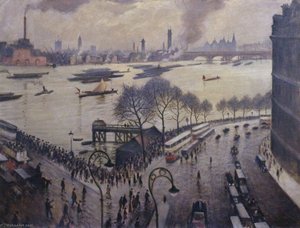
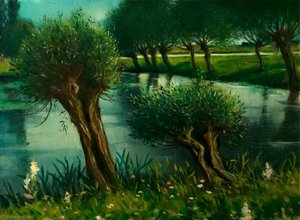
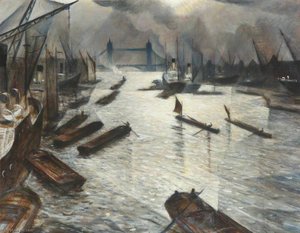
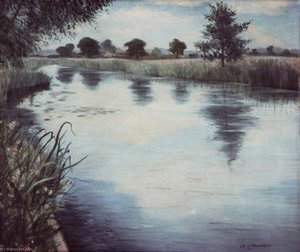
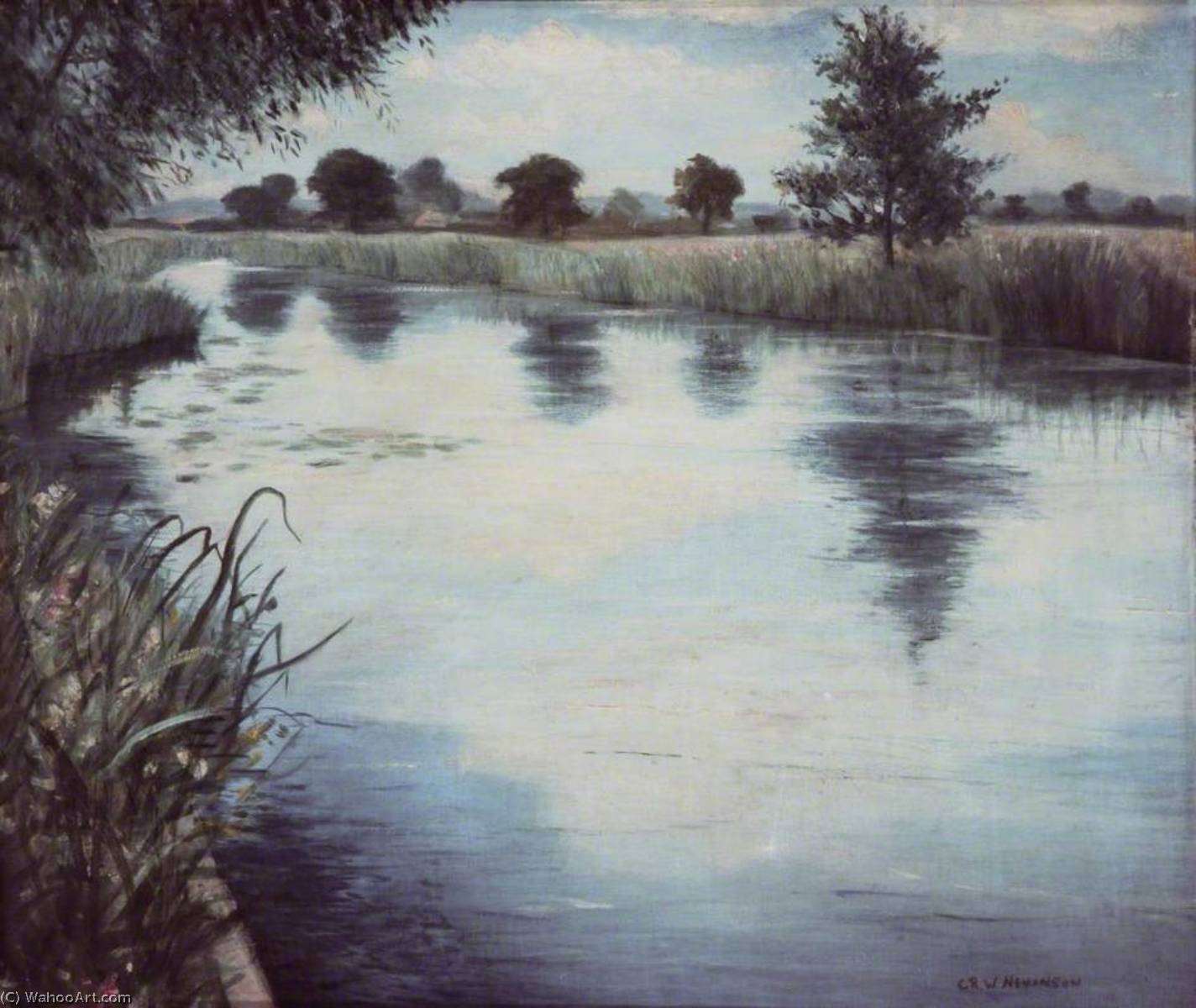
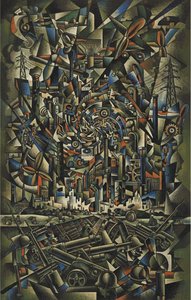
A River in England
 Oil On Canvas
- WallArt
- Cubism
 1944
1944- 19th Century
 51.0 x 61.0 cm
 Walker Art Gallery
 Read More
Hand Made Oil Reproduction
Hand-painted oil on canvas in your size and frame, made to order by our artists. ( Buy Print Buy Image)




P118B $10

P118H $10

P118W $10

P438Z $10

P508JH $12

P508YH $12

P805H $10

P805Z $10

P919BZ $10

P919G $10

P919XJ $10

P959ZH $10

P968JZ $12

W106C $8

W218G $10

W218JH $8

W218Y $10

W307PJ $10

W316G $10

W316PJ $8

W316Y $10

W398PJ $8

W4111J $10

W500HY $15

W500JH $15

W692G $12

W849H $8

W940BG $15

W953PJ $8




Pick from our preset sizes that match the artwork's original proportions.

You may enter your own dimensions to fit a specific frame or space. If your selected size does not match the original image's proportions, we will either crop the artwork or extend the painting with additional hand-painted elements. A digital mockup will be sent for your approval before production begins.
Please note that the on-screen preview does not reflect the actual cropping or extension. Only the mockup will accurately show the final composition.
While custom sizes are available, we recommend selecting a dimension from the predefined list to preserve the original proportions.
After order, ArtsDot.com team will email client for instructions and provide a mockup preview
Worldwide Delivery () in 3/4 weeks instead of standard 5 weeks. (17 August). No compromise on quality.

Free Worldwide Express Shipping

High-Quality Linen Canvas

Full Shipping Insurance

Customs Tax Refund Guarantee

True Color Matching Guarantee

60-Day Return Policy (Defects Only)

100% Money-Back Guarantee

Bulk Discount Offer
 Glass option is only available in size under 110 CM

A River in England
Reproduction Medium
Reproduction Size
-


Total Price
$ 263
Artwork Description
A Serene Reflection: Christopher Richard Wynne Nevinson’s ‘A River in England’
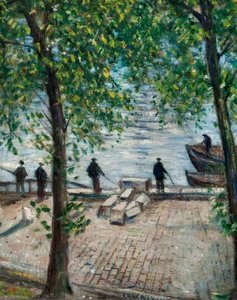
Christopher Richard Wynne Nevinson's 1944 painting, “A River in England,” is more than just a depiction of a tranquil waterway; it’s a carefully constructed meditation on nature, peace, and the enduring human connection to the landscape. Executed during a period of significant social and artistic change in Britain – a nation grappling with the aftermath of two World Wars and burgeoning modernism – Nevinson offers a quiet counterpoint through his masterful rendering of a classic English scene. The painting immediately draws the viewer into a world of soft light and subtle color, dominated by the reflective surface of the river and the expansive sky above. The composition is deliberately balanced, utilizing horizontal lines to emphasize the flatness of the water and land while vertical elements – notably the prominent tree on the right bank – introduce a dynamic counterpoint, preventing the scene from feeling static.
Technique and Materials: A Study in Impressionistic Realism
- Oil on Canvas/Panel: The artwork is unequivocally an oil painting, utilizing layered brushstrokes to build texture and create a sense of depth. Impasto techniques are subtly employed, particularly around the water’s surface and the reeds along the bank, adding physicality and visual interest.
- Realistic Style with Impressionistic Touches: While rooted in realism, Nevinson's approach leans towards impressionism, evident in his focus on capturing fleeting moments of light and atmosphere. The diffused lighting suggests an overcast day, contributing to the painting’s overall mood of tranquility.
- Detailed Brushwork: Careful attention is paid to detail – from the reflections shimmering on the water to the intricate patterns of foliage – demonstrating a meticulous approach to his craft. This level of precision elevates the work beyond mere representation and into the realm of considered observation.
Historical Context and Influences
Nevinson’s artistic journey was shaped by the intellectual currents of his time. Born in Hampstead, London, in 1889, he benefited from a family steeped in progressive ideals – his father, Henry Nevinson, was a celebrated war correspondent, and his mother, Margaret Nevinson, actively participated in the suffrage movement. This upbringing instilled within him a strong sense of social awareness and independent thought, qualities that undoubtedly informed his artistic vision. Studying at the Slade School of Art under Henry Tonks, he absorbed traditional techniques but ultimately sought a more expressive language, aligning himself with the broader trends of modern art while retaining a commitment to realistic representation. The painting’s creation in 1944, following the devastation of World War II, reflects a desire for solace and renewal – a yearning for the restorative power of nature.
Symbolism and Emotional Impact
"A River in England" transcends a simple landscape depiction; it embodies profound symbolic meaning. The river itself represents fluidity, change, and the passage of time, while the surrounding vegetation symbolizes life, growth, and harmony with nature. The serene scene evokes feelings of peace, contemplation, and perhaps even nostalgia – inviting the viewer to escape the anxieties of modern life and reconnect with a simpler, more natural world. The balanced composition and soft lighting contribute significantly to this emotional impact, creating an atmosphere of quiet beauty that resonates deeply with the human spirit.
Related Artworks
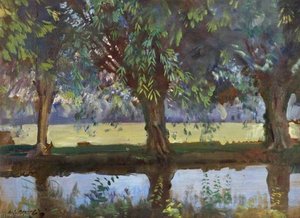
Artist Biography
Early Life and Artistic Awakening
Christopher Richard Wynne Nevinson, known as C.R.W. Nevinson or simply Richard Nevinson, emerged onto the British art scene at a moment of profound societal shift. Born in 1889 in Hampstead, London, his upbringing was steeped in intellectual and progressive ideals. His father, Henry Nevinson, was a renowned war correspondent and journalist, while his mother, Margaret Nevinson, dedicated herself to the burgeoning suffrage movement as a writer and activist. This environment instilled in young Richard a keen awareness of social issues and a spirit of independent thought that would permeate his artistic vision. Though initially struggling to find direction, he eventually enrolled at the Slade School of Art in 1909, studying under Henry Tonks alongside future luminaries like Stanley Spencer and Mark Gertler. While Tonks encouraged traditional techniques, Nevinson found himself drawn towards more radical currents, seeking a visual language that could capture the dynamism of the modern world. Early influences included the work of Augustus John, but it was his encounter with the Italian Futurists and Wyndham Lewis that truly ignited his artistic trajectory.Embracing Modernity: Futurism, Vorticism, and the Brink of War
Nevinson’s artistic development took a decisive turn when he befriended Filippo Marinetti, the charismatic leader of the Italian Futurist movement. Captivated by Futurism's celebration of speed, technology, and the energy of urban life, Nevinson began to incorporate its principles into his own work. He briefly aligned himself with Wyndham Lewis’s Rebel Art Centre, a hub for avant-garde experimentation in London. However, this association was short-lived. A fundamental disagreement over artistic direction led to a rift between Nevinson and Lewis, resulting in Nevinson's exclusion from the Vorticist movement—a distinctly British offshoot of Futurism founded by Lewis himself. Despite this falling out, Nevinson continued to explore Futurist ideas, even co-authoring a manifesto for English Futurism alongside Marinetti. His early paintings reflected these influences, depicting scenes of modern London – bustling streets, railway stations, and the nascent Underground system – with fragmented forms and dynamic compositions. These works weren’t merely representations of place; they were attempts to convey the *feeling* of modernity—its exhilarating pace and relentless energy. Alongside his exploration of Futurist aesthetics, Nevinson maintained close ties with artists like Mark Gertler and Dora Carrington, sharing a brief period of artistic kinship rooted in Neo-Primitivism before diverging onto their individual paths.The Horrors of War and the Rise of a War Artist
The outbreak of World War I irrevocably altered Nevinson’s artistic focus. Initially joining the Friends' Ambulance Unit, he witnessed firsthand the brutal realities of war while tending to wounded soldiers on the Western Front. Illness forced his return to Britain, but he soon volunteered with the Royal Army Medical Corps, determined to contribute to the war effort. This experience profoundly impacted his art. He abandoned some of the more abstract tendencies of Futurism and Cubism, seeking a more direct and visceral way to depict the horrors he had witnessed. Paintings like La Mitrailleuse (The Machine Gunner), created in 1915, stand as powerful testaments to the devastation of modern warfare. Utilizing fragmented forms and jarring perspectives, Nevinson conveyed not just the physical destruction but also the psychological trauma inflicted by mechanized conflict. His work resonated deeply with a public grappling with the unprecedented scale of the war, and he was officially appointed a war artist in 1917. However, as the war progressed, his style shifted again, moving towards a more realistic approach, though still imbued with a sense of unease and disillusionment.Post-War Years: Travels, Turmoil, and Legacy
The years following World War I proved to be turbulent for Nevinson. A trip to the United States in 1920 inspired a series of paintings depicting New York City’s skyscrapers and bustling streets, but he struggled to recapture the critical acclaim he had achieved during the war. His personality—described as temperamental and prone to exaggeration—led to strained relationships with contemporaries, and his tendency to embellish his wartime experiences drew criticism. He published his memoir, Paint and Prejudice, in 1937, a work notable for its lively prose but also marred by inaccuracies and inconsistencies. While he continued to paint landscapes and portraits, his post-war career never reached the heights of his earlier achievements. Despite this, Nevinson remains a significant figure in British art history. He is recognized as one of the most important war artists of World War I, whose innovative use of Futurist and Cubist techniques brought a new level of intensity and emotional depth to depictions of conflict. His work continues to resonate today, offering a powerful and unsettling reflection on the horrors of modern warfare and the complexities of modernity itself.Enduring Significance
Nevinson’s contribution extends beyond his wartime paintings. He played a crucial role in introducing avant-garde ideas to Britain, challenging conventional artistic norms and paving the way for future generations of artists. His exploration of speed, technology, and urban life anticipated many of the themes that would dominate 20th-century art. Though his personal life was often marked by conflict and disappointment, his artistic legacy endures as a testament to his talent, vision, and unwavering commitment to capturing the spirit of his time. He stands as a poignant reminder of the power of art to bear witness to history, to challenge perceptions, and to provoke profound emotional responses.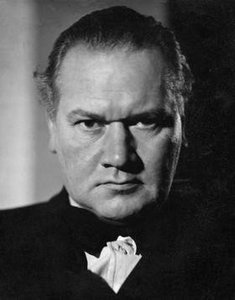
Christopher Richard Wynne Nevinson
1889 - 1946 , United Kingdom
Quick Facts
- Artistic Movement Or Style: Futurism, Cubism
- Artists Or Movements Influenced By This Artist: ['Avant-garde art in Britain']
- Artists Who Influenced This Artist:
- Augustus John
- F.T. Marinetti
- Wyndham Lewis
- Date Of Birth: 1889
- Date Of Death: 1946
- Full Name: Christopher Richard Wynne Nevinson
- Nationality: British
- Notable Artworks:
- La Mitrailleuse
- Over the Lines
- Blackfriars Bridge
- Silver Estuary
- Place Of Birth: Hampstead, UK
Related Articles

John Constable's Masterpieces: Explore 25 Iconic Landscapes for Your Home
Journey through John Constable's 25 most celebrated landscapes. Explore Romanticism, Dedham Vale & his masterful use of light in iconic paintings like 'Hay Wain'. Find museum-quality art reproductions and elevate your home decor on ArtsDot.com.
C.R.W. Nevinson: A Vorticist Vision of War & Modernity
Explore the powerful art of C.R.W. Nevinson, a key British Vorticist painter. Discover his impactful depictions of WWI and evolution beyond Futurism. Expert analysis & high-quality reproductions at ArtsDot.

Beyond the Horizon: 10 Landscape Masterpieces for Your Home Decor
Journey through 10 breathtaking landscape paintings by Monet, Van Gogh & more! Explore iconic artworks, artistic techniques & find inspiration for your home decor. Museum-quality reproductions at ArtsDot.com. Discover all masterpieces on ArtsDot.com

Romantic Landscapes: 10 Masterpieces for Your Home | ArtsDot
Journey through 10 Romantic landscape masterpieces by Friedrich, Turner & Cole. Explore emotional art, sublime nature scenes & iconic 19th-century paintings. Find museum-quality reproductions for your home at ArtsDot.com – discover the full collection online!

Evocations of Place: A Historical Journey Through Landscape Art
Explore the rich history of landscape art with ArtsDot. Discover renowned artists, movements like Impressionism & Romanticism, and expert guidance for collecting timeless pieces. Find your perfect serene escape today!