

 Preview
 Send
Send Share
Share
 Details

 Download
 Similars
 X-Ray
X-Ray Diaporama
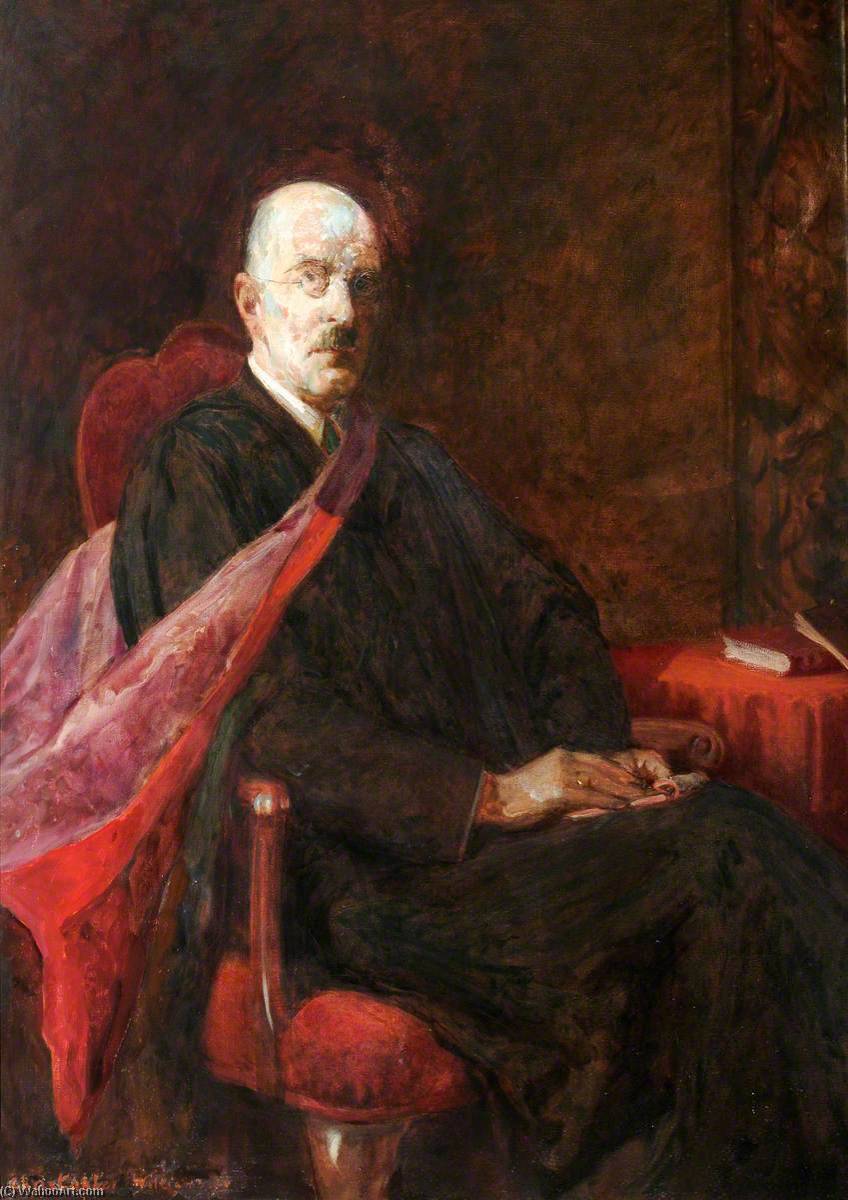
Sir Henry Rudolf Reichel (1856–1931), First Principal (1884–1927)
 Acrylic On Canvas
- WallArt
- Celtic Revival
 1926
1926 127.0 x 106.0 cm
 Bangor University
 Read More
Purchase a high-resolution, enhanced digital image, far superior to the online preview.
Each file is meticulously prepared by our in-house specialists using advanced tools and expert manual retouching. We ensure every image has exceptional clarity, precise color accuracy, and fine detail.
The final file is delivered via email within 72 hours, optimized for immediate use in professional, editorial, and print environments. This is the same quality trusted by top-tier design studios, publishers, and galleries.
Digital Image
Download a high-resolution file for personal display, printing, and creative projects. ( Buy Print Buy Hand Made Painting)
Included in Every Digital Image Order
Expert Digital Delivery, Guaranteed
When you choose ArtsDot.com, you're not just getting an image - you're receiving a professionally enhanced digital artwork, crafted with precision and backed by a satisfaction guarantee. Here's everything that comes with your order, automatically:

Fast Email Delivery
Your high-resolution digital image file will be emailed to you within 72 hours of ordering - ready for immediate use.

AI-Enhanced Digital File
Your artwork is professionally optimized using advanced AI tools and manual editing, ensuring maximum detail, clarity, and color accuracy.

Free Lifetime Re-Delivery
Accidentally deleted or lost your file? No worries - we'll resend it to you anytime, free of charge.

No Import Fees - Ever
Enjoy your artwork instantly with zero customs, duties, or delivery fees - digital downloads are always tax-free.

Color Accuracy Guarantee
We ensure your digital image reflects the original colors as closely as possible using professional tools and color management.

60-Day Satisfaction Guarantee
If you're not satisfied with your digital image, we'll revise it or refund 100% within 60 days - no questions asked.

100% Money-Back Guarantee
Not satisfied? Get a full refund within 60 days of receiving your digital file - no questions asked.

Bulk Order Discounts
Buy 3 images, save 10% - Buy 5, save 15% - Buy 10+, save 20%. Great for creative projects, galleries, and agencies.
Collectible Description
Sir Henry Rudolf Reichel (1856–1931), First Principal (1884–1927): A Portrait of Visionary Leadership
Christopher Williams’s *Sir Henry Rudolf Reichel* is more than just a depiction of a man; it's an encapsulation of ambition, intellect, and the quiet dignity of service—qualities that define both the subject and Williams’s artistic vision. Executed in 1926, during Reichel’s tenure as Principal of Bangor University, the painting transcends mere likeness, immersing viewers in a carefully constructed tableau of scholarly contemplation and understated authority. Williams employed a masterful blend of realism and Impressionistic brushstrokes to capture Reichel's presence. The artist skillfully rendered the man’s facial features with meticulous detail—the furrowed brow conveying deep thought, the gaze focused intently on an unseen horizon—yet softened these contours with subtle hues that suggest warmth and compassion. This delicate balance reflects Williams’s belief in portraying subjects not merely as they appear but as they embody inner character. The muted palette—dominated by earthy reds, browns, and creams—creates a sense of serenity and reinforces the painting's contemplative mood. Notably, the inclusion of a second chair and a book serves as symbolic anchors, representing Reichel’s dedication to his role as educator and intellectual pursuits. The painting’s stylistic influences are discernible in Leighton’s influence on Williams’s early artistic development—a commitment to academic precision combined with an appreciation for emotive color. Furthermore, the Celtic Revival movement permeated Welsh art during this period, inspiring Williams's exploration of mythological themes and fostering a desire to convey cultural heritage through visual storytelling. The painting’s composition directs the viewer’s eye upwards, mirroring Reichel’s gaze and symbolizing aspiration toward knowledge and enlightenment. Beyond its aesthetic qualities, *Sir Henry Rudolf Reichel* speaks powerfully to the enduring values of leadership and intellectual curiosity. It serves as a reminder that true greatness lies not only in achieving outward success but also in cultivating inner reflection and pursuing lifelong learning—principles embodied by Williams himself and eloquently conveyed through this remarkable artwork. Its quiet grandeur continues to resonate with collectors and interior designers alike, offering an opportunity to adorn spaces with a piece of Welsh artistic history imbued with profound symbolic meaning.Technical Details & Artistic Approach
Williams’s technique demonstrates considerable skill in capturing texture and light—essential elements for conveying depth and atmosphere. He achieved this through layering thin glazes of pigment onto the canvas, allowing each subsequent layer to subtly modify the color and luminosity of its predecessor. This painstaking process resulted in a surface that possesses remarkable richness and subtlety, reflecting Williams’s dedication to achieving artistic excellence. The artist utilized a palette knife to apply textured brushstrokes—particularly evident in the chair upholstery—adding visual interest and enhancing the painting's tactile quality. Careful attention was paid to capturing the nuances of light emanating from the window, illuminating Reichel’s face and casting soft shadows across his attire. The meticulous rendering of detail—evident in the folds of Reichel’s shirt collar and the texture of his tweed jacket—underscores Williams’s commitment to realism. However, he skillfully tempered this precision with Impressionistic brushstrokes that soften edges and diffuse colors, creating a harmonious blend of observation and artistic interpretation. This approach aligns perfectly with the broader stylistic currents of the Celtic Revival, which championed expressive color and evocative imagery as vehicles for conveying cultural identity. Williams’s masterful technique elevates *Sir Henry Rudolf Reichel* beyond mere portraiture—transforming it into an immersive experience that invites contemplation and appreciation for both artistic skill and visual beauty. The painting's enduring appeal stems from its ability to capture not only the likeness of a man but also the essence of his character—a testament to Williams’s profound understanding of art as a means of communicating emotion and conveying cultural heritage.Historical Context & Symbolism
The painting emerged during a pivotal moment in Welsh intellectual history—the Celtic Revival, which sought to revive interest in Celtic mythology and folklore and to celebrate Wales's unique cultural traditions. Christopher Williams was deeply influenced by this movement, as evidenced by his exploration of mythological themes in other works—particularly *Ceridwen* and *Branwen*. The depiction of Reichel’s contemplative posture reflects the broader ethos of the Revival, which championed introspection and spiritual contemplation as pathways to understanding oneself and one's place within the natural world. Furthermore, Williams’s artistic endeavors coincided with a period of significant social reform—characterized by growing calls for greater educational opportunity and social justice. His commitment to fostering intellectual curiosity aligns seamlessly with these aspirations, mirroring Reichel’s dedication to Bangor University as a beacon of learning and scholarship. The inclusion of the book symbolizes Reichel's pursuit of knowledge—a cornerstone of Welsh cultural identity during this era—and underscores Williams’s belief in art as a catalyst for personal growth and societal progress. The painting’s formal composition—with its upward gaze and balanced arrangement—communicates a sense of aspiration toward enlightenment—a central theme within the Celtic Revival. It serves as a reminder that true greatness lies not only in achieving outward success but also in cultivating inner reflection and embracing lifelong learning—principles embodied by Williams himself and eloquently conveyed through this timeless masterpiece.Emotional Impact & Artistic Legacy
Ultimately, *Sir Henry Rudolf Reichel* transcends its formal conventions to evoke profound emotional resonance—capturing the quiet dignity of leadership and the contemplative serenity of scholarly contemplation. Williams’s masterful technique imbues the painting with palpable warmth and luminosity—creating an immersive experience that invites viewers to engage in a dialogue with both artistic skill and visual beauty. The subtle palette—dominated by earthy reds, browns, and creams—contributes to this emotive effect—generating a sense of tranquility and reinforcing the painting's contemplative mood. The portrait’s psychological depth—evident in Reichel’s gaze and posture—reveals Williams’s profound understanding of human character—a testament to his artistic vision as a conduit for conveying emotion and fostering empathy. Like many Welsh artists of his time, Williams sought to celebrate Wales’s cultural heritage through visual storytelling—imbuing *Sir Henry Rudolf Reichel* with symbolic meaning that transcends its immediate aesthetic qualities. Christopher Williams's enduring legacy rests on his ability to transform observation into art—capturing not merely the likeness of a man but also the essence of his character—a feat accomplished with remarkable skill and sensitivity in *Sir Henry Rudolf Reichel*. Its timeless beauty continues to inspire collectors and interior designers alike, offering an opportunity to adorn spaces with a piece of Welsh artistic history imbued with profound symbolic meaning.Related Artworks

Artist Biography
Christopher Williams: A Life in Art
Christopher David Williams (1873-1934) was a celebrated Welsh artist whose career spanned the late Victorian and early 20th centuries. He is particularly remembered for his evocative portraits, allegorical scenes, and landscapes that often reflected a strong sense of Welsh identity and the spirit of the Celtic Revival.
Early Life and Education
Born in Maesygwrath, Wales, Williams initially faced opposition from his father, Evan Williams, who envisioned a medical career for him. However, a transformative visit to the Walker Art Gallery in Liverpool in 1892, where he was deeply moved by Frederick Leighton’s *Perseus and Andromeda*, ignited his passion for art. This experience solidified his determination to pursue a life as an artist.
Artistic Development and Influences
- Early Training: Williams began his formal artistic training at the Neath Technical Institute under Mr. Kerr in 1892-1893.
- Royal College of Art & Royal Academy Schools: He continued his studies at the Royal College of Art for three years, followed by further education at the Royal Academy Schools from 1896 to 1901.
- Key Influences: Frederick Leighton was a significant early influence, inspiring Williams’s academic approach and attention to detail. He also drew inspiration from Pre-Raphaelite aesthetics and the broader artistic currents of the Celtic Revival.
Major Achievements and Recognition
- Royal Academy Exhibitions: Williams first exhibited at the Royal Academy in 1902 with *Paolo and Francesca*, followed by a portrait of his father in 1903. He went on to exhibit eighteen paintings there throughout his career.
- Royal Society of British Artists: In 1910, he was invited to join the Royal Society of British Artists, exhibiting thirty-seven paintings with them over the next decade.
- Royal Commission: A pivotal moment came in 1911 when King George V commissioned Williams to create a commemorative painting of the investiture of Edward, Prince of Wales at Caernarfon Castle. He completed two versions of this important work.
- Portraiture: Williams became highly sought after as a portraitist, creating likenesses of prominent figures such as David Lloyd George, Sir John Williams, and Sir Henry Jones.
Themes and Style
Williams’s work is characterized by:
- Portraiture: His portraits are known for their psychological depth and realistic rendering of his subjects.
- Celtic Revival: He frequently explored themes from Welsh mythology and folklore, particularly in paintings like *Ceridwen* and *Branwen*, inspired by the Mabinogion.
- Landscape Painting: Williams painted landscapes extensively throughout Wales, as well as during travels to Switzerland, Italy, France, Spain, Morocco, and Holland.
- Allegorical Scenes: He often incorporated allegorical elements into his work, imbuing it with symbolic meaning.
Historical Significance and Legacy
Christopher Williams played a significant role in promoting Welsh art and culture during his lifetime. He actively participated in the National Eisteddfod as an adjudicator and served on committees for the National Museum of Wales and the Honourable Society of Cymmrodorion. His work reflects a strong sense of national identity and contributed to the artistic flourishing of Wales in the early 20th century.
His paintings are held in numerous public collections, including the National Museum of Wales, the Royal Collection, and the Glynn Vivian Art Gallery, ensuring his legacy continues to inspire and captivate audiences today. He was a brother-in-law to fellow artist Fred Appleyard, and father to astronomer Evan Gwyn Williams and artist Ivor Williams.

christopher williams
1873 - 1934 , United States of America
Quick Facts
- Birth Date: 1873
- Birth Place: Maesygwrath, Wales
- Death Date: 1934
- Influenced By: Frederick Leighton
- Movement: Celtic Revival, Victorian painting
- Name: Christopher Williams
- Nationality: Welsh
- Notable Works: The Awakening of Wales, Paolo and Francesca, portraits of David Lloyd George

