

 Preview
 Send
Send Share
Share
 Details

 Download
 Similars
 X-Ray
X-Ray Diaporama
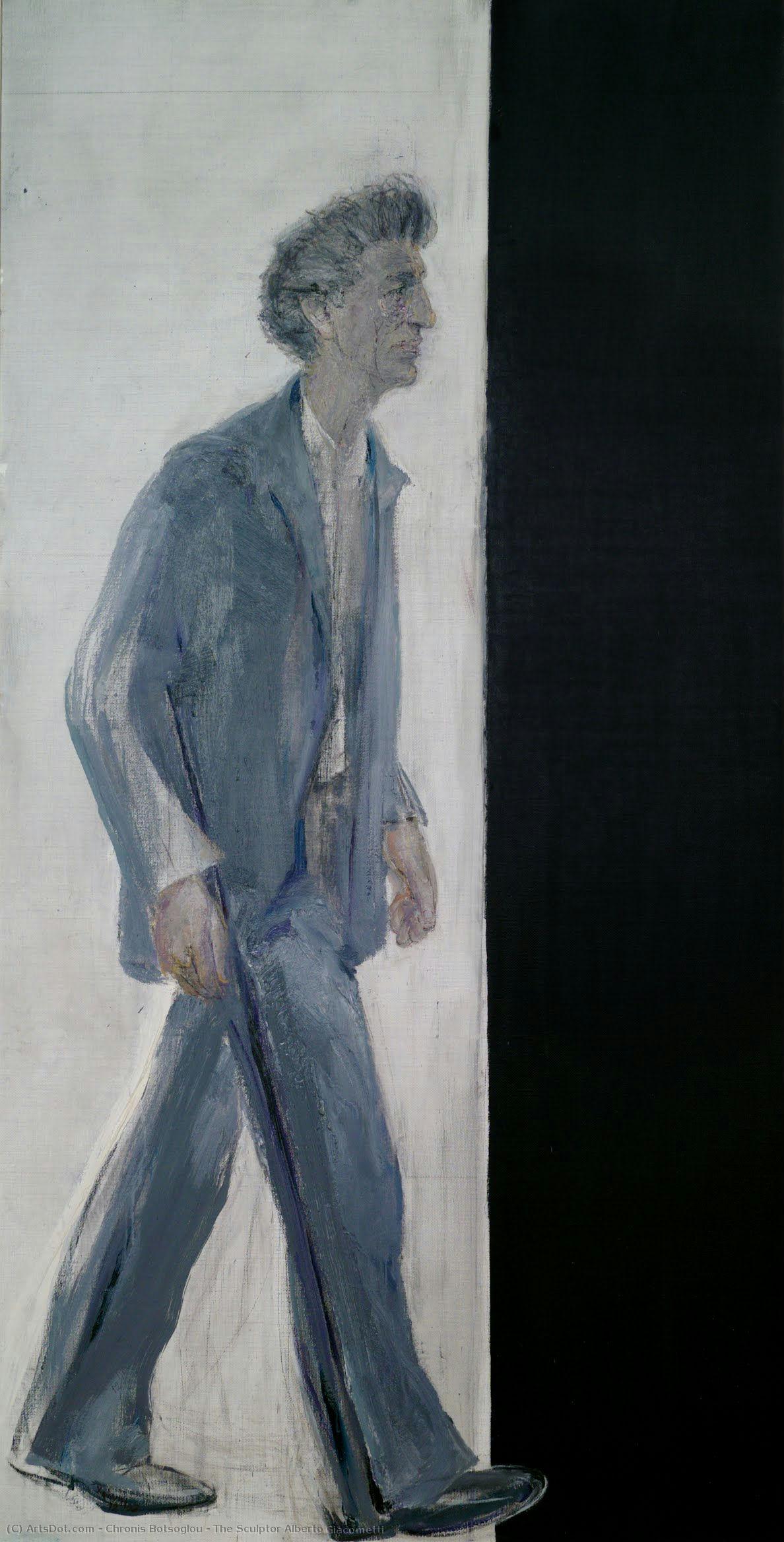
The Sculptor Alberto Giacometti
 2003
2003 199.0 x 98.0 cm
 The Sotiris Felios Collection
 Read More
Purchase a high-resolution, enhanced digital image, far superior to the online preview.
Each file is meticulously prepared by our in-house specialists using advanced tools and expert manual retouching. We ensure every image has exceptional clarity, precise color accuracy, and fine detail.
The final file is delivered via email within 72 hours, optimized for immediate use in professional, editorial, and print environments. This is the same quality trusted by top-tier design studios, publishers, and galleries.
Digital Image
Download a high-resolution file for personal display, printing, and creative projects. ( Buy Print Buy Hand Made Painting)
Included in Every Digital Image Order
Expert Digital Delivery, Guaranteed
When you choose ArtsDot.com, you're not just getting an image - you're receiving a professionally enhanced digital artwork, crafted with precision and backed by a satisfaction guarantee. Here's everything that comes with your order, automatically:

Fast Email Delivery
Your high-resolution digital image file will be emailed to you within 72 hours of ordering - ready for immediate use.

AI-Enhanced Digital File
Your artwork is professionally optimized using advanced AI tools and manual editing, ensuring maximum detail, clarity, and color accuracy.

Free Lifetime Re-Delivery
Accidentally deleted or lost your file? No worries - we'll resend it to you anytime, free of charge.

No Import Fees - Ever
Enjoy your artwork instantly with zero customs, duties, or delivery fees - digital downloads are always tax-free.

Color Accuracy Guarantee
We ensure your digital image reflects the original colors as closely as possible using professional tools and color management.

60-Day Satisfaction Guarantee
If you're not satisfied with your digital image, we'll revise it or refund 100% within 60 days - no questions asked.

100% Money-Back Guarantee
Not satisfied? Get a full refund within 60 days of receiving your digital file - no questions asked.

Bulk Order Discounts
Buy 3 images, save 10% - Buy 5, save 15% - Buy 10+, save 20%. Great for creative projects, galleries, and agencies.
Related Artworks
Artist Biography
Robert Delaunay: A Pioneer of Color and Rhythm
Robert Delaunay, born Robert-Victor-Felix Delaunay in Paris on April 12th, 1885, was a pivotal figure in the early development of modern art. His life, marked by both artistic innovation and personal transformation alongside his wife Sonia Delaunay, ultimately shaped the trajectory of Orphism and significantly influenced movements like Cubism and Abstract Art. From humble beginnings as an apprentice to a theatrical designer, Delaunay’s journey was one of relentless experimentation with color, light, and form—a pursuit that redefined the possibilities of painting itself. His career spanned several decades, culminating in a legacy of vibrant abstraction and a profound impact on generations of artists.Early Influences and the Rise of Neo-Impressionism
Delaunay’s early artistic development was deeply rooted in the principles of Neo-Impressionism. Following his apprenticeship, he began to paint, initially exploring decorative arts before gravitating towards a more expressive style. Inspired by figures like Paul Signac and Georges Seurat, Delaunay embraced the Neo-Impressionist technique of dividing colors into small strokes of pure hues, believing that this method would create a shimmering effect when viewed from a distance. This approach, however, proved only a stepping stone for his later explorations. He moved beyond mere replication of natural appearances, seeking to capture the essence of light and color itself—a core tenet of his evolving artistic philosophy. His early works, such as “Saint-Séverin” (1906-7), demonstrate this shift, showcasing an increasing interest in capturing atmospheric effects through carefully orchestrated color combinations.The Birth of Orphism: Color and Rhythm
A turning point arrived in 1912 when Delaunay, along with Sonia and other artists including František Kupka and Chaïm Soutine, began to develop what would become known as Orphism. This movement, named after the Greek word for “rainbow,” was characterized by an intense focus on color—not as a representation of reality, but as an independent entity capable of evoking emotion and creating visual rhythms. Delaunay’s paintings from this period, such as "Disc" (1912) and "Circular Forms" (1912), exemplify this radical departure. He abandoned traditional perspective and form, instead employing geometric shapes—circles, squares, and lines—arranged in dynamic compositions that pulsed with color and energy. Influenced by theories of light and color developed by scientists like Michel Eugène Chevreul, Delaunay believed that colors could be combined to create a sense of movement and vibration. This exploration was further fueled by his interest in the work of Paul Klee and other artists experimenting with abstraction.Collaboration with Sonia Delaunay and the Expansion of Artistic Practice
The partnership with Sonia Delaunay proved crucial to Robert’s artistic development, and their collaboration extended beyond painting. Sonia, a talented textile designer, began creating vibrant fabrics incorporating geometric patterns inspired by her husband's paintings. This led to a fascinating exchange—Robert translating his visual rhythms onto fabric, while Sonia applied them to textiles, effectively expanding the reach of Orphism into new mediums. Furthermore, they established the “Atelier du Rectangle,” a collaborative studio where they produced furniture, wallpaper, and other decorative objects, solidifying their commitment to exploring the expressive potential of geometric abstraction. This period also saw Robert Delaunay experimenting with relief painting, culminating in his monumental panels for the Aeronautics pavilion at the 1937 Paris International Exhibition—large-scale works that showcased his mastery of color and composition.Later Years and Abstract Legacy
Following World War I, Delaunay’s style evolved further, moving towards a more purely abstract approach. He continued to work with vibrant colors and geometric forms, but increasingly focused on creating dynamic compositions that emphasized rhythm and movement. Despite facing challenges during the Nazi occupation of France, he persevered in his artistic practice, producing significant works until his death in Montpellier on October 25th, 1941. Robert Delaunay’s legacy extends far beyond his own paintings. His pioneering work with color, his exploration of abstraction, and his influence on subsequent generations of artists—including Stanton Macdonald-Wright, Morgan Russell, and Paul Klee—cemented his place as a foundational figure in the development of modern art. His emphasis on color as an independent expressive force continues to resonate within abstract painting today, reminding us of the transformative power of visual experimentation.
chronis botsoglou
1941 - 2022 , Greece
Quick Facts
- Artistic Movement Or Style:
- Divisionism
- Cubism
- Orphism
- Abstract art
- Artists Or Movements Influenced By This Artist:
- Stanton-Wright
- Morgan Russell
- Klee
- Marc
- Apollinaire
- Artists Who Influenced This Artist:
- Neoimpressionism
- Cézanne
- Date Of Birth: April 12, 1885
- Date Of Death: October 25, 1941
- Full Name: Robert Delaunay
- Nationality: French
- Notable Artworks:
- Endless Rhythm
- Cubism
- Orphic Cubism
- Simultanism
- Place Of Birth: Paris, France

