 Preview
 Send
Send Share
Share
 Details

 Download
 Similars
 X-Ray
X-Ray Diaporama
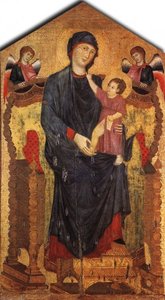
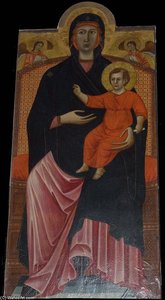
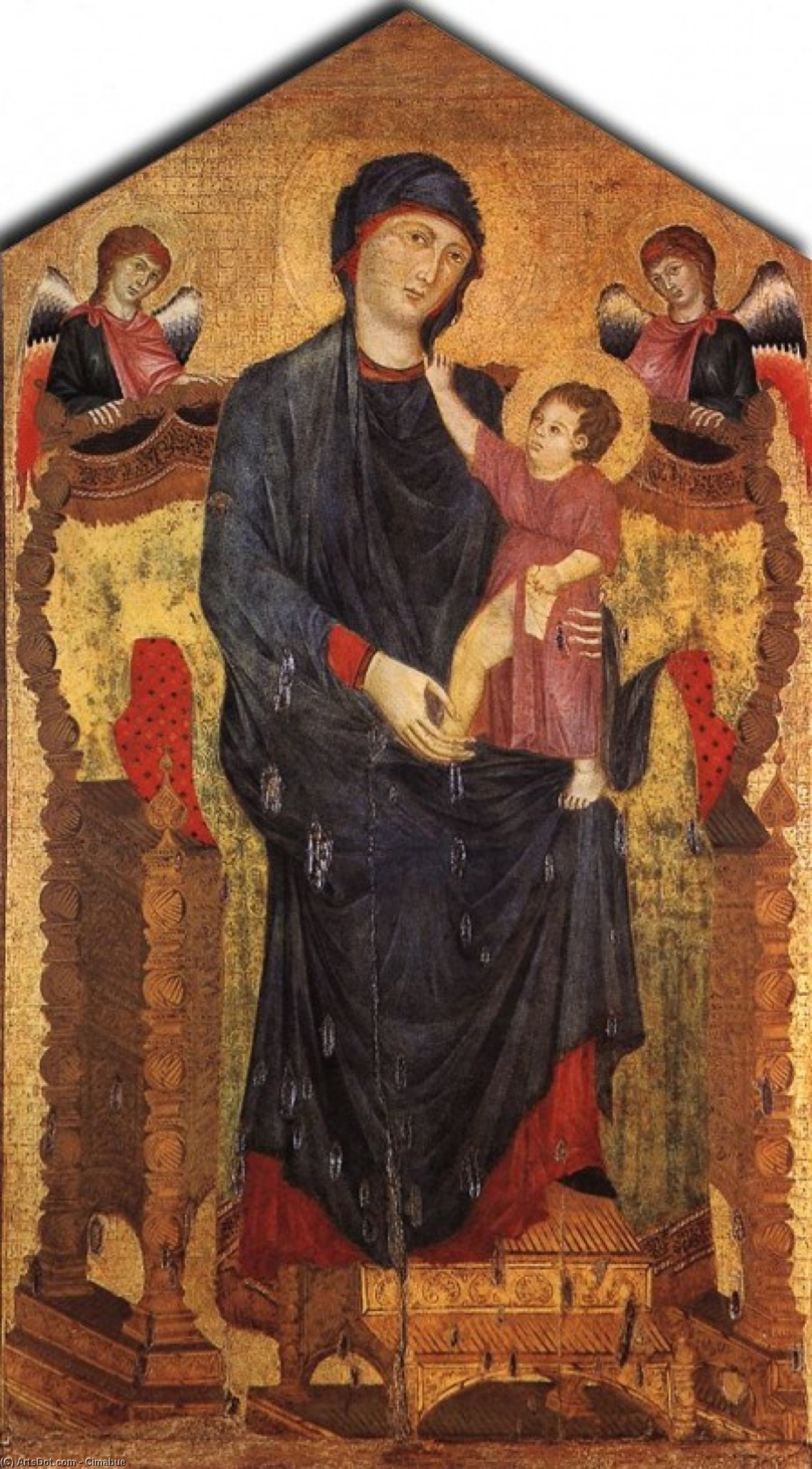
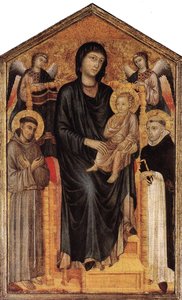
Madonna Enthroned with the Child and Two Angels
 Acrylic On Canvas
- WallArt
- Byzantine-influenced Italian Renaissance
 Renaissance
 218.0 x 118.0 cm
 Santa Maria dei Servi
 Read More
Hand Made Oil Reproduction
Hand-painted oil on canvas in your size and frame, made to order by our artists. ( Buy Print Buy Image)




P118B $10

P118H $10

P118W $10

P438Z $10

P508JH $12

P508YH $12

P805H $10

P805Z $10

P919BZ $10

P919G $10

P919XJ $10

P959ZH $10

P968JZ $12

W106C $8

W218G $10

W218JH $8

W218Y $10

W307PJ $10

W316G $10

W316PJ $8

W316Y $10

W398PJ $8

W4111J $10

W500HY $15

W500JH $15

W692G $12

W849H $8

W940BG $15

W953PJ $8




Pick from our preset sizes that match the artwork's original proportions.

You may enter your own dimensions to fit a specific frame or space. If your selected size does not match the original image's proportions, we will either crop the artwork or extend the painting with additional hand-painted elements. A digital mockup will be sent for your approval before production begins.
Please note that the on-screen preview does not reflect the actual cropping or extension. Only the mockup will accurately show the final composition.
While custom sizes are available, we recommend selecting a dimension from the predefined list to preserve the original proportions.
After order, ArtsDot.com team will email client for instructions and provide a mockup preview
Worldwide Delivery () in 3/4 weeks instead of standard 5 weeks. (16 August). No compromise on quality.

Free Worldwide Express Shipping

High-Quality Linen Canvas

Full Shipping Insurance

Customs Tax Refund Guarantee

True Color Matching Guarantee

60-Day Return Policy (Defects Only)

100% Money-Back Guarantee

Bulk Discount Offer
 Glass option is only available in size under 110 CM

Madonna Enthroned with the Child and Two Angels
Reproduction Medium
Reproduction Size
-


Total Price
$ 263
Artwork Description
A Bridge Between Worlds: Cimabue’s ‘Madonna Enthroned’
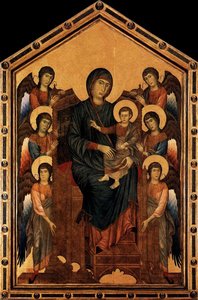
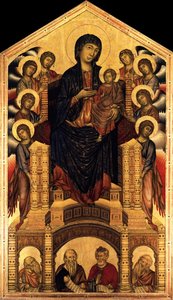
Cimabue's “Madonna Enthroned with the Child and Two Angels,” a painting shrouded in the quiet reverence of the Florentine dawn, represents far more than just a devotional image. It stands as a pivotal moment in art history – a courageous step away from the rigid formality of Byzantine iconography towards the nascent realism that would blossom into the Italian Renaissance. Born Cenni di Pepo around 1240 in Florence, Cimabue wasn’t merely a painter; he was an innovator who subtly challenged established conventions, laying the groundwork for artists like Giotto. The nickname “bull-headed,” often attributed to him, suggests a stubborn determination and a willingness to experiment – qualities undeniably present in his deliberate shifts within artistic expression. This particular work, likely created around 1290, embodies this transition perfectly, showcasing a masterful blend of Byzantine tradition with the burgeoning spirit of Italian artistry.
The Majesty of the Throne: Style and Technique
At first glance, “Madonna Enthroned” immediately evokes the grandeur of Byzantine art. The composition centers around the Virgin Mary, seated on an elaborate, richly ornamented throne – a direct inheritance from the iconographic traditions of Constantinople. She is depicted in a pose characteristic of Byzantine depictions: serene, dignified, and radiating an aura of otherworldly grace. Her flowing robes, rendered in deep blues and purples, are meticulously detailed, reflecting Cimabue’s mastery of tempera paint on gesso panel – a technique favored for its luminosity and durability. The use of gold leaf accents, particularly around the throne and the Virgin's crown, further emphasizes her divine status and adds to the painting’s overall sense of opulence. However, subtle differences distinguish this work from purely Byzantine art. Cimabue introduces a greater degree of naturalism into his portrayal; Mary’s features are more individualized, her gaze direct and engaging, rather than simply symbolic. The angels flanking her, while still possessing a certain formality, exhibit a slightly softer, more approachable quality.
Symbolic Layers: Angels, Prophets, and the Church
Beyond the central figures, “Madonna Enthroned” is rich in symbolism. The two angels, positioned on either side of the Virgin, are not merely attendants but active participants in her divine mission. Their gestures – one offering a book (representing scripture) and the other holding a lily (a symbol of purity) – reinforce the narrative of Mary’s role as the embodiment of grace and salvation. The presence of what appear to be prophets in the background, though somewhat indistinct, further emphasizes the sacred context. The architectural setting—a stylized representation of a church—underscores the painting's devotional purpose and its connection to the institutionalized faith of the time. Notably, the cross visible in the upper right corner serves as a constant reminder of Christ’s sacrifice and the promise of redemption.
A Legacy Forged: Cimabue and the Dawn of Renaissance Art
Cimabue's influence extends far beyond this single masterpiece. He served as a crucial mentor to Giotto, arguably the most important figure in bridging the gap between Byzantine art and the Renaissance. While Cimabue remained committed to traditional forms, his willingness to experiment with perspective, naturalism, and emotional expression paved the way for Giotto’s revolutionary innovations. “Madonna Enthroned” is therefore not just a beautiful work of art; it's a tangible link to the artistic lineage that shaped Western painting. It represents a pivotal moment where art began to move beyond purely symbolic representation towards a more profound engagement with human experience and the world around us. ArtsDot’s meticulously crafted reproductions allow you to bring this significant piece of art history into your own space, experiencing its beauty and symbolism firsthand.
Related Artworks
Artist Biography
The Florentine Dawn: Cimabue and the Transition from Byzantium
Giovanni Cimabue, born Cenni di Pepo around 1240 in Florence, stands as a monumental figure—a bridge between the established artistic traditions of the Byzantine world and the burgeoning innovations that would define the Italian Renaissance. His life, though partially obscured by time and romanticized accounts – most notably those penned by Giorgio Vasari centuries later – marks an undeniable turning point in Western art history. Cimabue wasn’t simply a painter; he was a courageous innovator who dared to subtly challenge artistic conventions, laying the groundwork for the revolutionary changes that would soon sweep across Italy. Even his nickname, believed to mean “bull-headed,” hints at a strong will and perhaps a rebellious spirit—qualities demonstrably present in his willingness to experiment with form and expression. He represents a crucial moment where art began to shift from being solely devotional imagery towards something more humanistic and emotionally resonant.Early Influences and Artistic Development
Initially immersed in the Italo-Byzantine style prevalent throughout Florence, Cimabue’s early work adhered closely to established aesthetic principles: flattened figures adorned with shimmering gold leaf, symbolic rather than realistic depictions of space, and a profound focus on religious iconography. However, even within these constraints, a nascent desire for naturalism began to emerge. He wasn't content merely replicating existing forms; he sought to imbue his paintings with a greater sense of life and emotional depth. While the precise nature of his early training remains debated, it’s likely he honed his skills within Florentine workshops, absorbing the techniques and influences of the time while simultaneously developing his own unique artistic voice. The Byzantine style, characterized by its formality and spiritual focus, provided him with a solid foundation, but Cimabue began to subtly introduce elements that would foreshadow the coming Renaissance—a greater attention to volume, more expressive facial features, and a nascent understanding of spatial relationships. This wasn’t a sudden break from tradition, but rather a gradual evolution, a delicate balancing act between honoring the past and embracing new possibilities.Masterpieces and Artistic Innovations
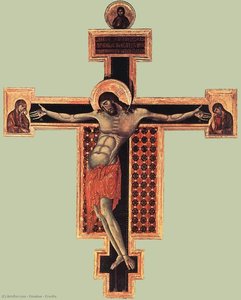
Cimabue's legacy is cemented through a series of breathtaking works that showcase his evolving style. The Maestà (Louvre), originally created for the Church of San Francesco in Pisa, stands as one of his most celebrated masterpieces. This monumental altarpiece exemplifies his mastery of composition and use of color, while simultaneously hinting at the shift away from rigid Byzantine conventions. The figures, though still possessing a degree of formality, exhibit a newfound sense of volume and presence. The Crucifixion (San Domenico, Arezzo), dating around 1270, is particularly significant as an early demonstration of his departure from strict Byzantine norms. Here, the proportions are more realistic, and the emotional weight of the scene is palpable—a stark contrast to the often-distant depictions found in earlier religious art. Further evidence of Cimabue’s innovative spirit can be seen in works like the Flagellation of Christ (Frick Collection), generally attributed to his workshop. This complex composition reveals an evolving understanding of perspective and spatial relationships, showcasing a growing interest in creating more immersive and believable scenes. His contributions weren't limited to panel paintings; Cimabue also excelled as a mosaicist, contributing significantly to the decoration of the Baptistery of Florence—though these mosaics have unfortunately suffered from deterioration over time.A Pivotal Teacher: Giotto and Beyond
Perhaps Cimabue’s most enduring legacy lies in his role as the teacher of Giotto di Bondone. While historical accounts vary regarding the exact nature of their relationship, it is widely accepted that Giotto received crucial training under Cimabue's guidance. However, Giotto would ultimately surpass his master, revolutionizing Italian painting with an even more radical embrace of naturalism and emotional realism. It’s a testament to Cimabue’s skill as a teacher that he fostered such talent, even knowing it might eclipse his own achievements. The story, often recounted by Vasari, of Giotto playfully painting a fly on Cimabue's face speaks volumes about the dynamic between master and pupil—a playful rivalry that ultimately pushed both artists to greater heights. Cimabue’s influence extended beyond Giotto, impacting numerous other artists of the period. He challenged the artistic norms of his time, demonstrating that art could be more than just religious symbolism; it could also reflect human emotion and experience. His willingness to experiment with form, proportion, and expression paved the way for the innovations of the Renaissance, establishing him as a crucial transitional figure in the history of Western art.Enduring Significance
Cimabue passed away in 1302 in Pisa, leaving behind a body of work that continues to captivate and inspire. Despite his significant contributions, details surrounding his later life remain scarce. However, his artistic legacy resonates powerfully through the works of his students and the evolution of Italian art. He represents a crucial step in the development of Western painting, moving away from the stylized conventions of the Byzantine era towards a more humanistic and naturalistic approach. His paintings are not merely historical artifacts; they are windows into a pivotal moment in artistic history—a time when artists began to question established norms and explore new possibilities. He was a pioneer, a visionary who dared to challenge the status quo and lay the foundations for the artistic brilliance that would define the Renaissance. Cimabue’s work reminds us that even within tradition, there is always room for innovation, and that true artistry lies in the courage to push boundaries and explore new horizons.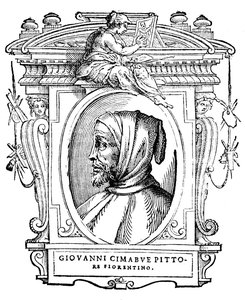
Cimabue
1240 - 1302 , Italy
Quick Facts
- Artistic Movement Or Style: Byzantine & Renaissance
- Artists Or Movements Influenced By This Artist:
- Giotto
- Duccio
- Artists Who Influenced This Artist:
- Giunta Pisano
- Coppo di Marcovaldo
- Date Of Birth: c. 1240
- Date Of Death: 1302
- Full Name: Giovanni Cimabue
- Nationality: Italian
- Notable Artworks:
- Maestà
- Crucifixion
- Flagellation of Christ
- Place Of Birth: Florence, Italy
Related Articles
Raphael's Masterpieces: 25 Iconic Paintings & Renaissance Art for Your Home
Explore 25 breathtaking Raphael paintings! Journey through the Italian Renaissance with masterpieces like 'School of Athens' & iconic Madonnas. Find museum-quality art reproductions and elevate your home decor on ArtsDot.com.

Giotto's Masterpieces: 25 Renaissance Artworks for Your Home | ArtsDot
Explore 25 breathtaking artworks by Giotto di Bondone, a Renaissance master. Discover the stories behind iconic frescoes & paintings like the Scrovegni Chapel cycle. Find museum-quality Giotto reproductions and elevate your home decor with ArtsDot.com.
Illuminating Eternity: A Comprehensive Exploration of Byzantine Art's Legacy
Explore the rich history & stunning artistry of the Byzantine Empire! Discover iconic mosaics, profound symbolism, and lasting influence on Western art. A comprehensive guide for history lovers.
Jacob Henricus Maris: A Master of Dutch Atmospheric Realism & the Intimate Landscape
Explore the captivating world of Jacob Henricus Maris, a leading figure of the Dutch Hague School. Discover his atmospheric landscapes, signature brushstrokes & lasting influence on 19th-century art. Learn more at ArtsDot.

Fra Angelico's Masterpieces: 25 Renaissance Paintings for Your Home | ArtsDot
Explore 25 breathtaking masterpieces by Fra Angelico, a Renaissance master. Discover the stories behind his iconic frescoes, Annunciations & religious art. Find museum-quality reproductions and elevate your home decor with ArtsDot.com.