

 Preview
 Send
Send Share
Share
 Details

 Download
 Similars
 X-Ray
X-Ray Diaporama
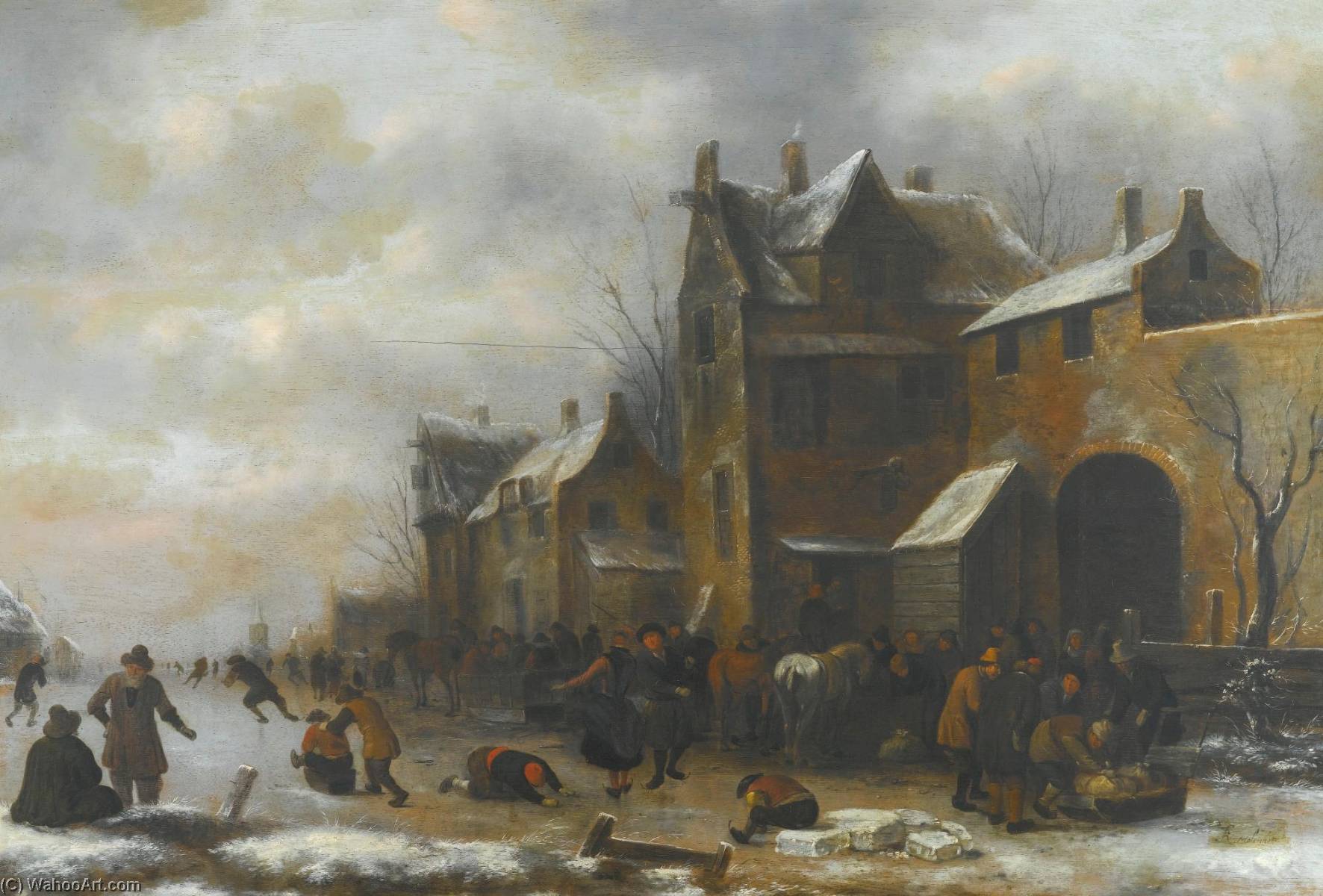
Winter landscape with skaters, travellers and their horses outside a village, figures packing bundles onto a sledge by an archway on the left
 72.0 x 110.0 cm
 Read More
Purchase a high-resolution, enhanced digital image, far superior to the online preview.
Each file is meticulously prepared by our in-house specialists using advanced tools and expert manual retouching. We ensure every image has exceptional clarity, precise color accuracy, and fine detail.
The final file is delivered via email within 72 hours, optimized for immediate use in professional, editorial, and print environments. This is the same quality trusted by top-tier design studios, publishers, and galleries.
Digital Image
Download a high-resolution file for personal display, printing, and creative projects. ( Buy Print Buy Hand Made Painting)
Included in Every Digital Image Order
Expert Digital Delivery, Guaranteed
When you choose ArtsDot.com, you're not just getting an image - you're receiving a professionally enhanced digital artwork, crafted with precision and backed by a satisfaction guarantee. Here's everything that comes with your order, automatically:

Fast Email Delivery
Your high-resolution digital image file will be emailed to you within 72 hours of ordering - ready for immediate use.

AI-Enhanced Digital File
Your artwork is professionally optimized using advanced AI tools and manual editing, ensuring maximum detail, clarity, and color accuracy.

Free Lifetime Re-Delivery
Accidentally deleted or lost your file? No worries - we'll resend it to you anytime, free of charge.

No Import Fees - Ever
Enjoy your artwork instantly with zero customs, duties, or delivery fees - digital downloads are always tax-free.

Color Accuracy Guarantee
We ensure your digital image reflects the original colors as closely as possible using professional tools and color management.

60-Day Satisfaction Guarantee
If you're not satisfied with your digital image, we'll revise it or refund 100% within 60 days - no questions asked.

100% Money-Back Guarantee
Not satisfied? Get a full refund within 60 days of receiving your digital file - no questions asked.

Bulk Order Discounts
Buy 3 images, save 10% - Buy 5, save 15% - Buy 10+, save 20%. Great for creative projects, galleries, and agencies.
Related Artworks








Artist Biography
The Quiet Observer: Life and Times of Claes Molenaer
Claes Molenaer, a name perhaps less immediately recognizable than some of his Dutch Golden Age contemporaries, nevertheless occupies a significant niche in the history of 17th-century painting. Born in Haarlem around 1630 – precise dates remain elusive, typical for artists of this period whose lives weren’t always meticulously documented – Molenaer dedicated himself to capturing the intimate moments of everyday life within the Dutch burgher class. His world was one of comfortable interiors, bustling kitchens, and convivial gatherings, scenes he rendered with a remarkable sensitivity to light, texture, and human interaction. While biographical details are scarce, we know he came from a family connected to the art world; his father, Pieter Molenaer, was also a painter, though less successful. This familial influence undoubtedly played a crucial role in shaping Claes’s early artistic development, providing both encouragement and initial training. He married Maria van Hille in 1654, and their life seems to have been relatively stable, allowing him to focus on his craft without the disruptions that plagued some other artists of the era. Molenaer remained a Haarlem resident throughout his career, becoming a member of the Guild of St. Luke in 1657, solidifying his position within the local artistic community.A Master of Genre: Style and Technique
Molenaer’s oeuvre is almost entirely devoted to genre painting – depictions of ordinary people engaged in everyday activities. He didn't tackle grand historical narratives or religious allegories; instead, he found beauty and meaning in the commonplace. His paintings are characterized by a remarkable realism, achieved through meticulous attention to detail and a masterful handling of light and shadow. He was particularly adept at rendering textures: the sheen of pewter tankards, the crispness of linen tablecloths, the warmth of polished wood – these details contribute to the palpable sense of reality that defines his work. His compositions are often intimate and balanced, drawing the viewer into the scene as a silent observer. Molenaer’s palette is typically warm and earthy, dominated by browns, ochres, and grays, punctuated by carefully chosen accents of color. He wasn't interested in dramatic contrasts or flamboyant displays of virtuosity; his aim was to create paintings that were both visually appealing and psychologically insightful. His brushwork is generally smooth and refined, though he occasionally employed a looser technique for backgrounds and less important details. He frequently depicted scenes within taverns and kitchens, spaces where social interaction flourished and stories unfolded.Influences and Development: From Pieter Molenaer to Frans Hals
The influence of Claes’s father, Pieter Molenaer, is evident in his early works, which share a similar subject matter and compositional style. However, Claes quickly developed his own distinct voice, moving beyond the somewhat formulaic approach of his father. A key influence on his development was undoubtedly Frans Hals, whose dynamic brushwork and lively characterizations had a profound impact on many Haarlem artists. While Molenaer didn’t adopt Hals’s full-blown exuberance, he clearly absorbed some of his energy and spontaneity.- The works of Dirck van Baburen also seem to have played a role in shaping Molenaer's early style.
- He was influenced by the Italianate painting tradition, particularly in his use of light and shadow.
- Molenaer’s compositions often reflect the influence of contemporary theater, with their carefully staged scenes and dramatic interactions.
Major Achievements and Recurring Themes
While Molenaer didn’t produce a vast body of work – fewer than fifty paintings are currently attributed to him – those that survive demonstrate his exceptional talent and unique artistic vision. His tavern scenes are particularly noteworthy, capturing the lively atmosphere and social dynamics of these popular gathering places. Paintings like “The Fishmonger” and “Interior with a Woman and Child” showcase his ability to portray everyday life with both realism and sensitivity. A recurring theme in Molenaer’s work is the depiction of women, often shown engaged in domestic activities or interacting with others. He portrays them not as idealized figures, but as complex individuals with their own thoughts and feelings. Another common motif is the presence of children, who add a sense of innocence and vitality to his scenes. He also frequently depicted musical instruments, suggesting an appreciation for the arts and culture of his time. His ability to imbue these seemingly simple scenes with a quiet dignity and psychological depth sets him apart from many of his contemporaries.Historical Significance: A Window into 17th-Century Dutch Life
Claes Molenaer’s historical significance lies in his ability to provide a glimpse into the everyday life of 17th-century Holland. His paintings are not grand statements about politics or religion; they are intimate portraits of ordinary people engaged in their daily routines. However, it is precisely this focus on the commonplace that makes his work so valuable. He captures the social customs, material culture, and psychological attitudes of a society undergoing rapid economic and cultural change. His paintings offer insights into the values and beliefs of the Dutch burgher class, revealing their emphasis on domesticity, sociability, and artistic appreciation. While he may not have achieved the same level of fame as some other Golden Age masters, Molenaer’s work continues to be admired for its realism, sensitivity, and psychological depth. He remains a significant figure in the history of Dutch genre painting, offering a unique and compelling window into a fascinating period of artistic and social development.
Quick Facts
- Artistic Movement Or Style: Baroque art
- Date Of Death: Living
- Full Name: Claes Molenaer
- Nationality: Dutch

