 Preview
 Send
Send Share
Share
 Details

 Download
 Similars
 X-Ray
X-Ray Diaporama
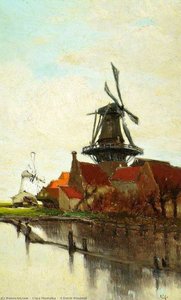
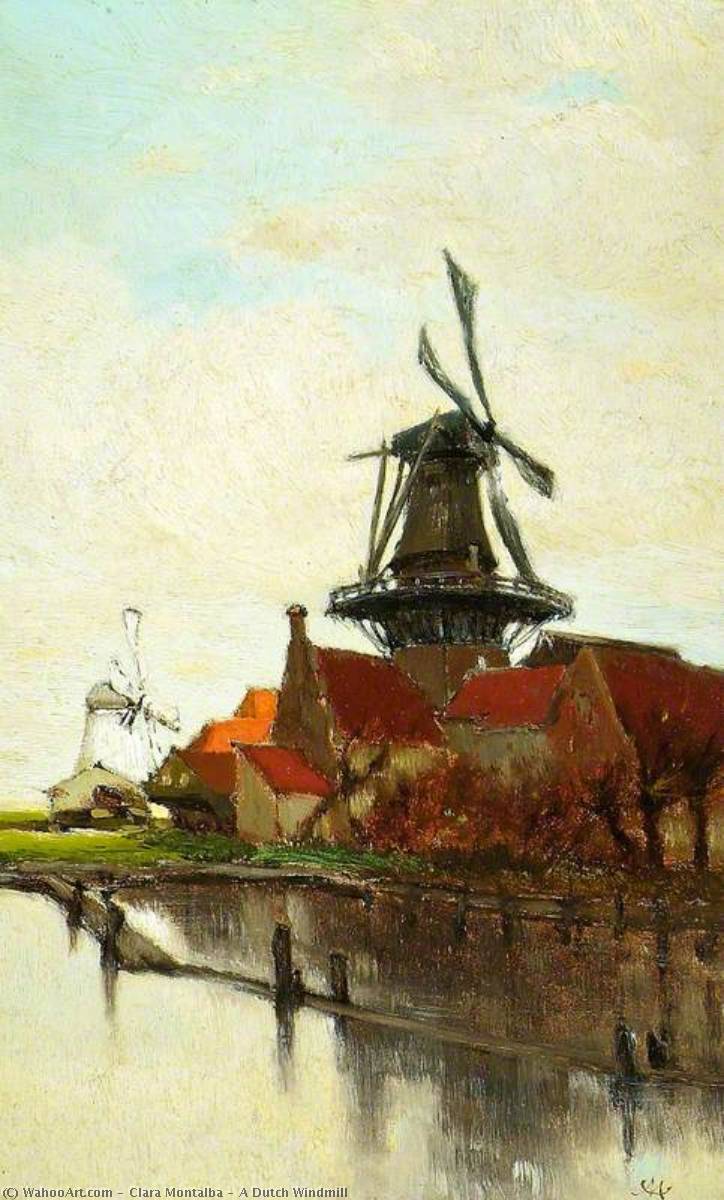
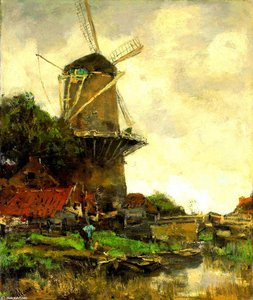
A Dutch Windmill
 1885
1885 30.0 x 19.0 cm
 Read More
Hand Made Oil Reproduction
Hand-painted oil on canvas in your size and frame, made to order by our artists. ( Buy Print Buy Image)




































Pick from our preset sizes that match the artwork's original proportions.

You may enter your own dimensions to fit a specific frame or space. If your selected size does not match the original image's proportions, we will either crop the artwork or extend the painting with additional hand-painted elements. A digital mockup will be sent for your approval before production begins.
Please note that the on-screen preview does not reflect the actual cropping or extension. Only the mockup will accurately show the final composition.
While custom sizes are available, we recommend selecting a dimension from the predefined list to preserve the original proportions.
After order, ArtsDot.com team will email client for instructions and provide a mockup preview
Worldwide Delivery () in 3/4 weeks instead of standard 5 weeks. (18 August). No compromise on quality.

Free Worldwide Express Shipping

High-Quality Linen Canvas

Full Shipping Insurance

Customs Tax Refund Guarantee

True Color Matching Guarantee

60-Day Return Policy (Defects Only)

100% Money-Back Guarantee

Bulk Discount Offer
 Glass option is only available in size under 110 CM

A Dutch Windmill
Reproduction Medium
Reproduction Size
-


Total Price
$ 263
Related Artworks
Artist Biography
Élisabeth Vigée Le Brun: A Portraitist of the Ancien Régime
Élisabeth Louise Vigée Le Brun, born in Paris in 1755 and passing away in 1842, stands as a pivotal figure in the history of French art. More than simply a painter, she was a keen observer of her time, a shrewd businesswoman, and a remarkably successful portraitist who navigated the complex social landscape of the late 18th and early 19th centuries. Her career spanned decades, marked by patronage from royalty, nobility, and prominent figures of the era, solidifying her reputation as one of France’s most accomplished artists.
Vigée Le Brun's artistic journey began with a formal education in Paris, initially under the tutelage of her aunt, Julie Le Brun, a talented artist herself. However, it was her apprenticeship with Louis-Denis Monestier that provided her with foundational skills in drawing and painting. Crucially, she later studied under the renowned portraitist, François Boucher, at the Académie Royale de Peinture et de Sculpture, absorbing his techniques and understanding of classical composition. This early training laid the groundwork for her distinctive style – a blend of Rococo elegance and emerging Neoclassical restraint.
Her breakthrough came with her commission to paint Marie Antoinette in 1778. This marked the beginning of a long and fruitful relationship with the Queen, during which Vigée Le Brun produced numerous portraits that captured the regal beauty and grace of the French monarchy. These works became immensely popular, establishing Vigée Le Brun’s reputation and securing her position as the court painter. Following the French Revolution, she continued to serve various members of the royal family in exile, including Louis XVIII and Charles X, demonstrating her adaptability and enduring talent.
The Art of Portraiture: Technique and Subject Matter
Vigée Le Brun’s portraits are characterized by a remarkable ability to capture not only physical likeness but also personality and mood. She meticulously studied her subjects, employing subtle gestures, expressions, and poses to reveal their inner selves. Her use of light and shadow was particularly masterful, creating a sense of depth and drama within the frame. Unlike some of her contemporaries who favored stiff formality, Vigée Le Brun’s portraits often exuded warmth and intimacy, reflecting her close relationships with her sitters.
Her technique involved careful preparation – extensive sketching and studies to understand the subject's features and mannerisms. She utilized a layered approach, beginning with underdrawings and gradually building up the image with delicate glazes of paint. Her palette was rich and vibrant, employing warm tones to create a sense of luminosity and capturing the subtle nuances of skin color and fabric texture. Notable works like *Marie Antoinette with a rose* and *Self-portrait in a Straw Hat* exemplify her skill in conveying both grandeur and personal charm.
A Woman in a Man’s World
Vigée Le Brun's career was fraught with challenges, primarily due to the prevailing prejudices against women artists. Despite her talent and success, she faced resistance from male colleagues and critics who questioned her abilities and legitimacy within the art world. She actively circumvented these obstacles by establishing a network of influential patrons and cultivating relationships with prominent figures in Parisian society. Her salon became a hub for artistic discussion and social gatherings, providing her with valuable opportunities to showcase her work and gain recognition.
Furthermore, she was one of the few women admitted into the Académie Royale de Peinture et de Sculpture in 1786, a significant achievement that underscored her artistic merit. Her election to numerous other academies across Europe – including those in Vienna, St. Petersburg, and Florence – further cemented her status as a respected artist on an international scale. She was also one of the first women to be granted the title of “Monsieur” by the French Academy of Arts, a recognition that symbolized her elevated position within the artistic community.
Legacy and Influence
Élisabeth Vigée Le Brun’s legacy extends far beyond her individual works. She broke ground as one of the few women to achieve significant success in the male-dominated world of 18th-century art, paving the way for future generations of female artists. Her portraits continue to be admired for their beauty, elegance, and psychological insight. Her meticulous approach to portraiture—combining technical skill with a deep understanding of human character—influenced countless artists who followed in her footsteps.
Today, her paintings are housed in major museums around the world, serving as enduring testaments to her artistic genius and her remarkable life story. She remains an important figure in art history, representing not only a period of great social and political upheaval but also a testament to the power of talent, determination, and resilience.
clara montalba
1842 - 1929 , United Kingdom
Quick Facts
- Artistic Movement Or Style: Portrait painting
- Artists Or Movements Influenced By This Artist:
- Rococo
- Neoclassicism
- Artists Who Influenced This Artist:
- Daubigny
- Reynolds
- Date Of Birth: 16 April 1755
- Date Of Death: 30 March 1842
- Full Name: Élisabeth Vigée Le Brun
- Nationality: French
- Notable Artworks:
- Marie Antoinette
- Self-portrait Straw Hat
- Lady Hamilton
- Place Of Birth: Paris, France