 Preview
 Send
Send Share
Share
 Details

 Download
 Similars
 X-Ray
X-Ray Diaporama
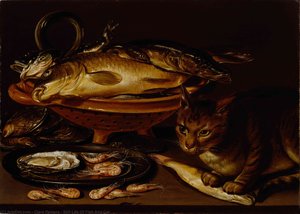
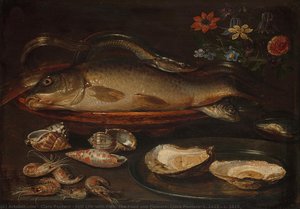
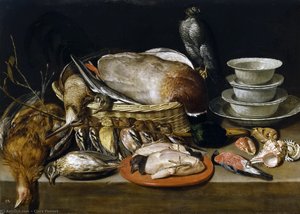
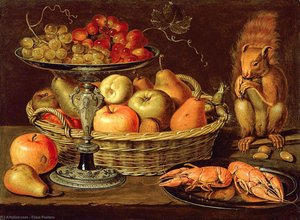
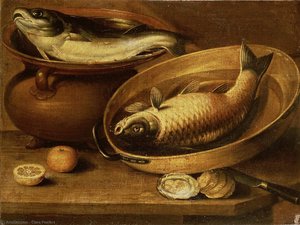
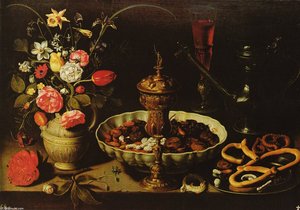
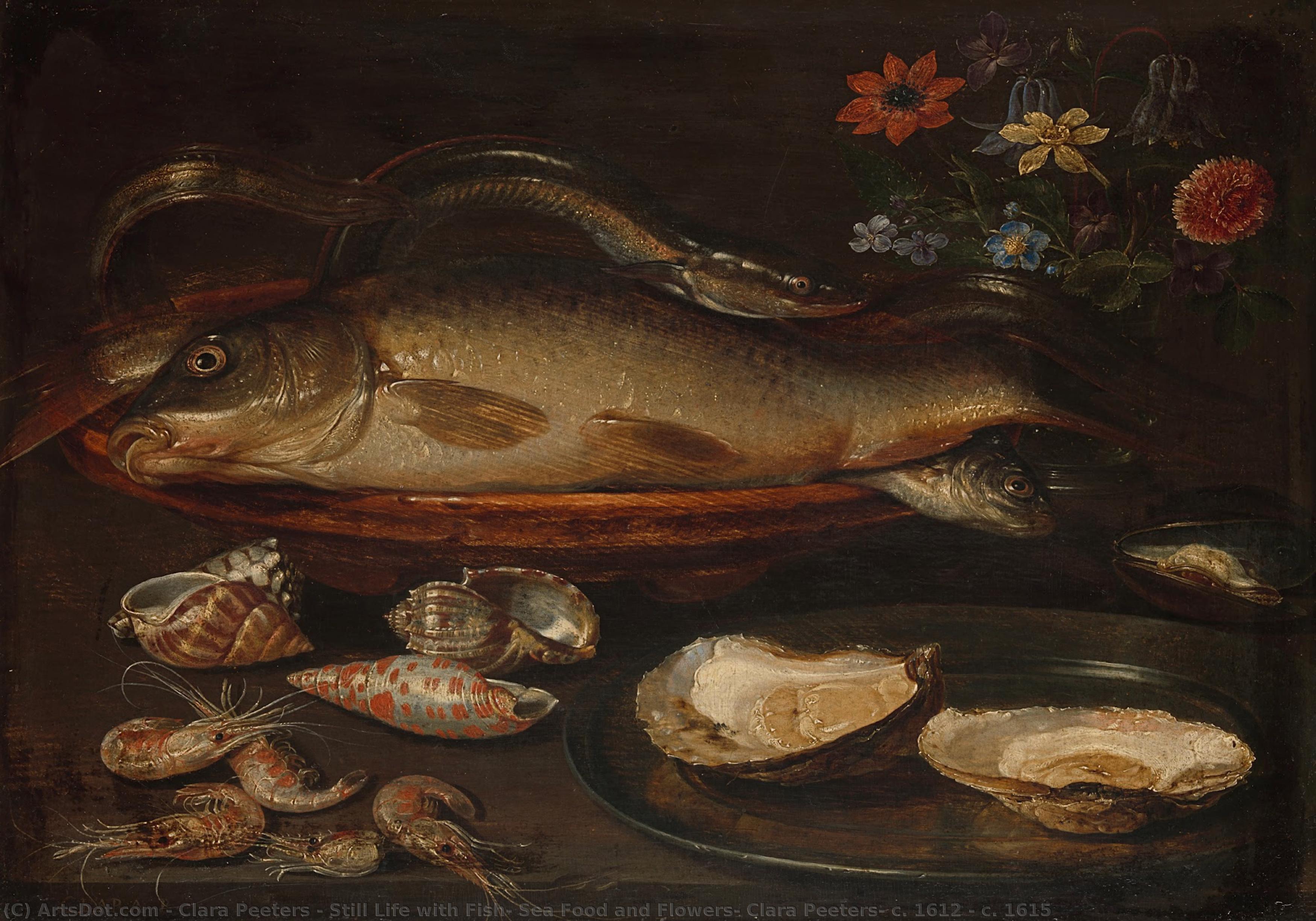
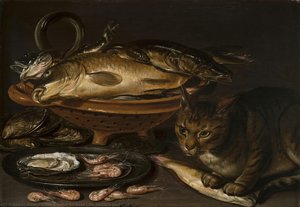
Still Life with Fish, Sea Food and Flowers, Clara Peeters, c. 1612 - c. 1615
 1615
1615 25.0 x 35.0 cm
 Read More
Giclée / Art Print
Museum-quality giclée or canvas print with fast production and flexible finish options. ( Buy Hand Made Painting Buy Image)




































Pick from our preset sizes that match the artwork's original proportions.

You may enter your own dimensions to fit a specific frame or space. If your selected size does not match the original image's proportions, we will either crop the artwork or extend the image with a mirrored or solid-fill edge. A digital mockup will be sent for your approval before production begins.
Please note that the on-screen preview does not reflect the actual cropping or extension. Only the mockup will accurately show the final composition.
While custom sizes are available, we recommend selecting a dimension from the predefined list to preserve the original proportions.
Worldwide Delivery () in 2 weeks instead of standard 4/5 weeks. (29 August)

Free Worldwide Express Shipping

High-Quality Linen Canvas

Full Shipping Insurance

Customs Tax Refund Guarantee

True Color Matching Guarantee

60-Day Return Policy (Defects Only)

100% Money-Back Guarantee

Bulk Discount Offer
 Glass option is only available in size under 110 CM

Still Life with Fish, Sea Food and Flowers, Clara Peeters, c. 1612 - c. 1615
Giclée / Art Print
Reproduction Size
-


Total Price
$ 63
Related Artworks








Artist Biography
Clara Peeters: Pioneer of Dutch Still Life
Clara Peeters (1594-after 1657) stands as a singular figure in seventeenth-century Flemish art—one of the earliest recognized female painters operating within the burgeoning Dutch Golden Age. Despite societal constraints that severely limited women’s access to artistic training and guild membership, Peeters carved out a remarkable career, leaving behind an oeuvre characterized by meticulous detail, innovative compositional strategies, and a fascination with capturing the textures and nuances of everyday life—particularly food. Her legacy continues to inspire scholars and artists alike as they grapple with questions surrounding her identity, training, and the elusive nature of her artistic output.- Early Life & Family
- Training & Artistic Style
- Notable Works & Oeuvre Size
- Influence & Legacy
- Ongoing Debate: Attribution & Authenticity
Early Life & Family
Born in Antwerp around 1587—the exact date remains debated by historians—Clara Peeters descended from a family steeped in artistic tradition. Records indicate that her father, Jean Peeters, was himself a painter, suggesting an environment conducive to fostering creative pursuits. The baptismal records confirm her birth within the Church of St. Walburga, Antwerp, cementing her place within the city’s vibrant artistic community. Further documentation reveals her marriage to Henricus Joosen in 1639—also at St. Walburga—establishing a domestic life alongside her husband and contributing to the growing family lineage of Peeters.Training & Artistic Style
The precise circumstances surrounding Peeters’s artistic education remain shrouded in mystery, largely due to the limitations imposed upon women during this period. Unlike many male artists who benefited from formal guild apprenticeships—a cornerstone of Flemish artistic development—Peeters’s name does not appear in guild records, fueling speculation that she may have been educated privately or by a familial mentor. However, her distinctive style—characterized by exceptional technical polish and compositional sophistication—strongly suggests training within the Antwerp tradition, where artists prioritized meticulous detail and careful finish. Scholars believe Peeters was likely influenced by Osias Beert, a fellow Antwerp painter who pioneered still life techniques during his apprenticeship.Notable Works & Oeuvre Size
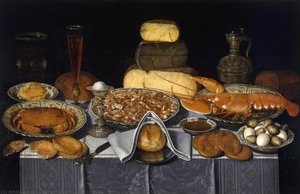
Peeters’s artistic output is remarkably concentrated within the period between 1607 and 1621—a span during which she produced eighteen paintings before her eighteenth birthday. These early works exemplify her mastery of technique and demonstrate a profound understanding of visual representation, capturing scenes of food—particularly cheeses—with unparalleled realism. Beyond these seminal pieces, estimates suggest that Peeters’s oeuvre encompasses approximately seventy-six additional canvases—though definitive attribution remains challenging due to the prevalence of copies bearing her signature by various hands. Her penchant for depicting opulent banquet settings and meticulously rendered objects—including decorative knives adorned with nude figures—established her as a pivotal figure in shaping the traditions of Dutch “breakfast pieces” (“ontbijtjes”) and “banquet pieces” (“banketje”).Influence & Legacy
Clara Peeters’s contribution to art history extends beyond her individual paintings. She represents a crucial milestone in recognizing women's artistic capabilities during the Dutch Golden Age—the earliest significant female painter of this era. Her work challenged prevailing societal norms and paved the way for future generations of female artists. Moreover, Peeters’s stylistic innovations—particularly her focus on capturing textures and subtleties—influenced subsequent painters and solidified her position as a pioneer in still life genre.Ongoing Debate: Attribution & Authenticity
Despite the undeniable quality of Peeters' surviving works—primarily dated between 1607 and 1621—scholarly debate persists regarding their authorship. Two paintings bearing the signature “CP”—considered anonymous by the RKD—have been subjected to intense scrutiny, prompting questions about whether they truly represent Peeters’s hand. Furthermore, the loss of a painting purportedly attributed to Peeters in 1657 adds another layer of complexity to the discussion surrounding her artistic output. The pervasive presence of copies created by unidentified artists underscores the difficulty in definitively establishing Peeters' oeuvre size and cementing her place within art history.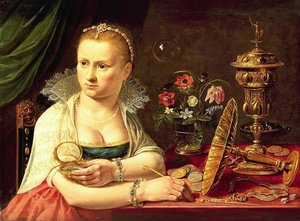
Clara Peeters
1594 - 1657 , Belgium
Quick Facts
- Artistic Movement Or Style: Dutch Golden Age
- Artists Or Movements Influenced By This Artist: ['Judith Leyster']
- Artists Who Influenced This Artist: ['Osias Beert']
- Date Of Birth: Antwerp, Belgium (1594)
- Date Of Death: after 1657
- Full Name: Clara Peeters
- Nationality: Flemish
- Notable Artworks:
- Still Life with Fish, Sea Food and Flowers
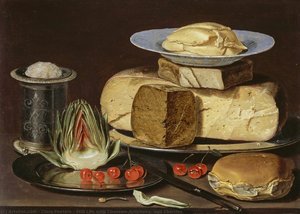
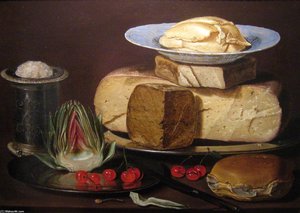
- Still Life with Cheeses, Artichoke, and Cherries
- Place Of Birth: Antwerp