 Send
Send Share
Share
 Details

 Download
 Similars
 Diaporama
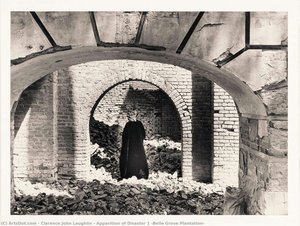
Apparition of Disaster 1 (Belle Grove Plantation)


 Read More
Giclée / Art Print
Museum-quality giclée or canvas print with fast production and flexible finish options. ( Buy Hand Made Painting Buy Image)




































Pick from our preset sizes that match the artwork's original proportions.

You may enter your own dimensions to fit a specific frame or space. If your selected size does not match the original image's proportions, we will either crop the artwork or extend the image with a mirrored or solid-fill edge. A digital mockup will be sent for your approval before production begins.
Please note that the on-screen preview does not reflect the actual cropping or extension. Only the mockup will accurately show the final composition.
While custom sizes are available, we recommend selecting a dimension from the predefined list to preserve the original proportions.
Worldwide Delivery () in 2 weeks instead of standard 4/5 weeks. (29 August)

Free Worldwide Express Shipping

High-Quality Linen Canvas

Full Shipping Insurance

Customs Tax Refund Guarantee

True Color Matching Guarantee

60-Day Return Policy (Defects Only)

100% Money-Back Guarantee

Bulk Discount Offer
 Glass option is only available in size under 110 CM

Apparition of Disaster 1 (Belle Grove Plantation)
Giclée / Art Print
Reproduction Size
-


Total Price
$ 63
A Spectral Encounter with the Southern Gothic
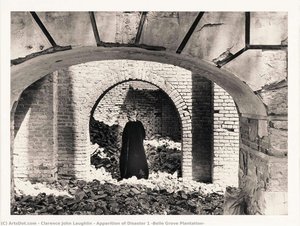
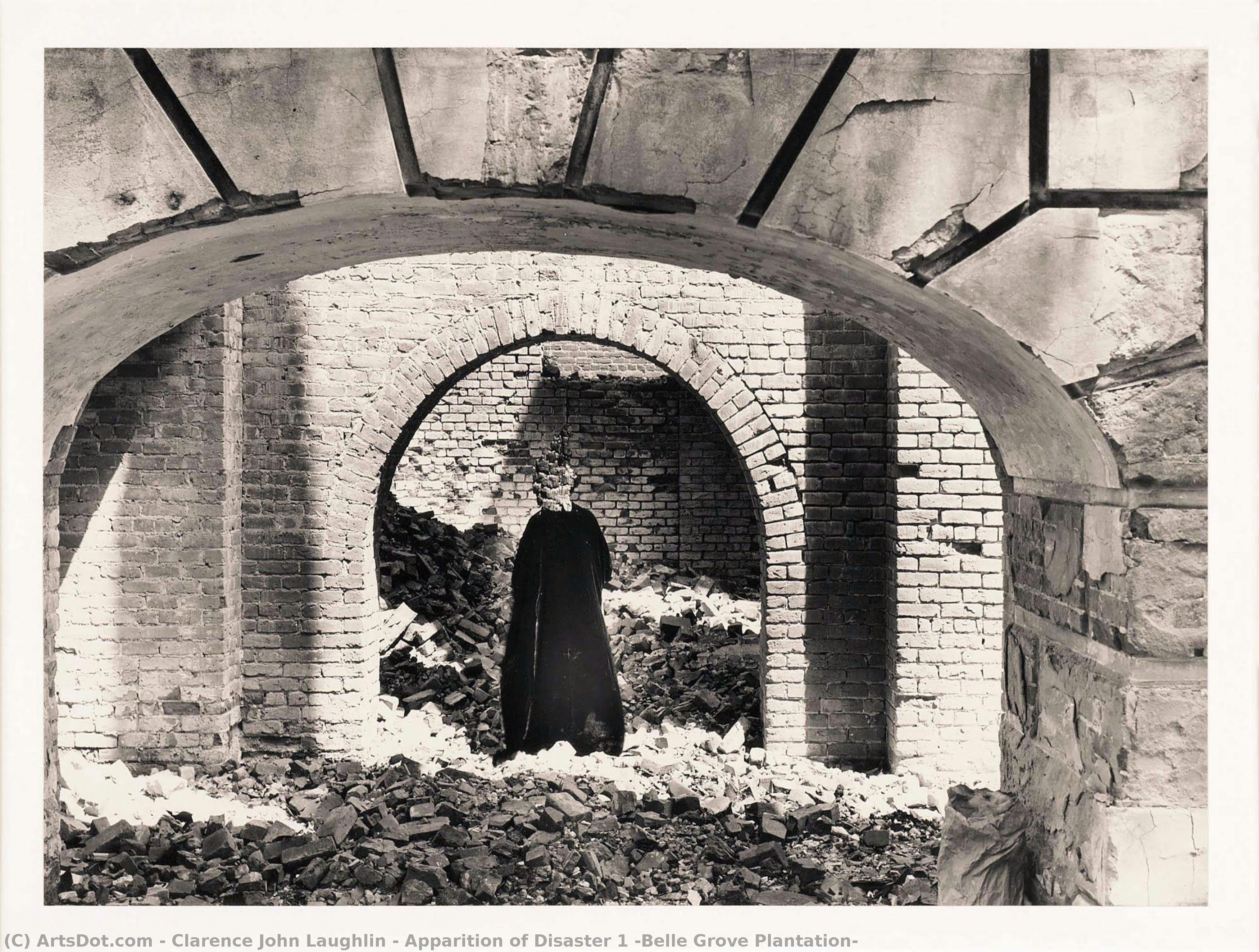
In the hauntingly beautiful photograph Apparition of Disaster 1 (Belle Grove Plantation), Clarence John Laughlin invites us into a realm where the boundaries between reality and memory dissolve. Captured in 1952, this evocative black-and-white composition serves as a masterclass in the Southern Gothic aesthetic. The viewer is presented with a figure—cloaked in what appears to be a long, solemn habit—standing before a weathered brick archway. This architectural element does more than provide a frame; it acts as a portal into a forgotten era of Louisiana history. Through Laughlin’s lens, the scene transcends mere documentation, becoming a dreamlike tableau where the textures of aged brick and the stillness of the figure coalesce into a profound sense of mystery.
Laughlin, an architect of atmosphere, utilizes a low-angle perspective to imbue the subject with a monumental, almost ethereal presence. This technique creates a dramatic sense of depth, drawing the eye through the tunnel of the archway and into the unknown distance. The interplay of light and shadow is particularly striking, lending a painterly quality to the photograph that blurs the line between photography and fine art. The inclusion of two clocks—one perched near the upper periphery and another nestled in the lower frame—introduces a surrealist layer to the work. These temporal markers suggest a fracturing of time, hinting that within the confines of Belle Grove Plantation, the past is never truly gone, but rather perpetually haunting the present.
Symbolism and the Weight of History
The emotional resonance of this piece lies in its ability to evoke nostalgia and a gentle, lingering melancholy. For the collector or interior designer, Apparition of Disaster 1 offers more than just a visual focal point; it provides a narrative depth that can transform a space. The figure, shrouded and enigmatic, symbolizes the ghosts of the American South—the remnants of grandeur, loss, and the inevitable decay of once-mighty estates. The brickwork, with its tactile imperfections, speaks to the endurance of history against the passage of time, while the clocks serve as memento mori, reminding us of the fleeting nature of human existence.
This artwork is an ideal acquisition for those seeking to introduce a sense of intellectual intrigue and sophisticated drama into a curated environment. Whether placed in a minimalist gallery setting or a richly textured study, the photograph’s monochromatic palette and profound stillness command attention. It is a piece that invites contemplation, encouraging the viewer to linger on its surfaces and search for meaning within its shadows. As a high-quality reproduction, it allows the timeless, spectral beauty of Laughlin's vision to become a permanent inhabitant of modern interiors, bridging the gap between mid-century photographic mastery and contemporary aesthetic sensibilities.
Related Artworks
Artist Biography
Clarence John Laughlin: Weaver of Southern Dreams
Clarence John Laughlin (1905 – 1985) wasn’t merely a photographer; he was an architect of atmosphere, a conjurer of forgotten landscapes and spectral narratives. Born in Lake Charles, Louisiana, into a family grappling with the sudden loss of their rice-growing fortune, Laughlin's early life instilled within him a profound sense of melancholy and a deep connection to the evocative spirit of the American South. This formative period—marked by his father’s death at a young age and the subsequent relocation to New Orleans—shaped his artistic vision, imbuing his work with an undercurrent of nostalgia, mystery, and a haunting beauty that continues to resonate today.
Laughlin's creative journey began unexpectedly in his mid-twenties. Initially aspiring to be a writer, influenced by the stylistic flourishes of French symbolism—a passion nurtured by his father’s literary pursuits—he found himself drawn to the art of photography. Self-taught and meticulously observant, he quickly mastered the basics of a 2½ by 2¼ view camera, transforming it into a tool for capturing not just images, but entire worlds. His early work focused on architectural details, showcasing a keen eye for composition and an appreciation for geometric forms. However, Laughlin soon abandoned these constraints, embracing a more ambitious approach—staging elaborate allegories populated with models, costumes, and props, creating surreal scenes that blurred the lines between reality and fantasy.
The Surrealist South
Laughlin’s most enduring legacy lies in his exploration of Southern folklore, history, and the intangible essence of place. He wasn't interested in simply documenting landscapes; he sought to evoke a feeling—a sense of longing for a bygone era, a whisper of ghostly encounters, and an appreciation for the region’s complex and often contradictory identity. His photographs frequently featured decaying mansions, overgrown cemeteries, and shadowy figures, creating a distinctly melancholic atmosphere that became his signature style. He drew inspiration from Eugène Atget, whose documentation of Parisian street life offered a model for capturing the fading beauty of urban spaces, but Laughlin uniquely applied this lens to the rural South.
A pivotal moment in Laughlin’s career came with the publication of *Ghosts Along the Mississippi* (1948), a collection of 100 black and white images that cemented his reputation as a visionary artist. This book, a meticulously crafted exploration of Louisiana's plantation architecture, wasn’t just a visual record; it was an attempt to capture the lingering memories embedded within these structures—the echoes of generations past, the weight of history, and the enduring power of storytelling. Laughlin deliberately layered historical narratives with imagined scenarios, creating a dreamlike quality that blurred the boundaries between fact and fiction.
Collaborations and Influences
Throughout his career, Laughlin cultivated close relationships with fellow artists and photographers. Dody Weston Thompson, a talented model and photographer in her own right, became a frequent collaborator, lending her beauty and presence to many of his staged compositions. His work also benefited from the influence of Edward Steichen, whose time at Vogue magazine provided Laughlin with valuable exposure and experience. However, he ultimately rejected the constraints of commercial photography, prioritizing personal projects that allowed him to fully realize his artistic vision.
Laughlin’s photographic style was characterized by a deliberate use of light and shadow, often employing dramatic contrasts to heighten the sense of mystery and drama. He frequently utilized techniques such as double exposure and multiple printing processes to create layered images with complex textures and visual effects. His meticulous attention to detail—from the careful selection of props to the precise positioning of models—contributed to the overall atmosphere of his photographs, transforming them into immersive experiences for the viewer.
A Lasting Legacy
Clarence John Laughlin’s impact on American photography is profound and enduring. He is widely considered one of the pioneers of surrealist photography in the United States, a genre that challenged conventional notions of representation and explored the realm of dreams and imagination. His work continues to be exhibited and studied by art historians and enthusiasts alike, captivating audiences with its haunting beauty and evocative storytelling. Following his death in 1985, Louisiana State University acquired his vast collection of over 30,000 books, a testament to Laughlin’s intellectual curiosity and the breadth of his artistic interests—ranging from science fiction and fantasy to European architecture and the occult.
A particularly notable example of Laughlin's work is the pair of photographs depicting a 1939 Ford, where the photographer's reflection appears within the image. These photographs were appraised at $7,000 - $9,000 in 2013 and are now considered priceless artifacts, offering a glimpse into the artist’s unique vision and his masterful manipulation of light and shadow.
clarence john laughlin
1905 - 1985
Quick Facts
- Artistic Movement Or Style: Surrealist photography
- Artists Or Movements Influenced By This Artist: ['French Symbolism']
- Artists Who Influenced This Artist: ['Eugene Atget']
- Date Of Birth: 1905
- Date Of Death: 1985
- Full Name: Clarence John Laughlin
- Nationality: American
- Notable Artworks:
- Ghosts Along the Mississippi
- Untitled (Victoriana)
- Place Of Birth: Lake Charles, Louisiana
Related Articles

White on Canvas: 10 Masterpieces & Timeless Elegance for Your Home Decor
Explore 10 iconic white paintings by Monet, Whistler & Rothko! Discover the stories behind these serene masterpieces and their impact on art history. Find museum-quality reproductions for your home decor at .

Dark Masterpieces: 10 Iconic Paintings Dominated by Black Tones |
Explore 10 iconic paintings dominated by black tones, from Rembrandt’s chiaroscuro to Goya's dark expressions. Discover the stories behind these masterpieces & find museum-quality art reproductions for your home at .

Monochrome Visions: Exploring the Aesthetic & Historical Significance of Black & White Photography
Explore the rich history & artistic power of black and white photography. From early techniques to iconic masters like Ansel Adams, discover why monochrome continues to captivate art lovers today. Expert insights for collectors.
Mars Black Masterpieces: 10 Iconic Paintings & Timeless Art Decor Ideas
Delve into the power of 'Mars Black' with 10 iconic paintings by masters like Rembrandt & Caravaggio. Explore dramatic chiaroscuro, gothic art, and timeless beauty. Find museum-quality reproductions & elevate your home decor on .
Ivory Black Masters: 10 Paintings That Define Dramatic Art |
Delve into the power of 'Ivory Black' with 10 iconic paintings by masters like Rembrandt & Caravaggio. Explore dramatic chiaroscuro, gothic moods & timeless art history. Find museum-quality reproductions and elevate your home decor at