 Preview
 Send
Send Share
Share
 Details

 Download
 Similars
 X-Ray
X-Ray Diaporama
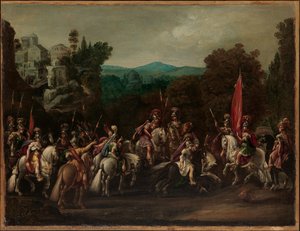
Departure of the Amazons
 Oil On Canvas
- WallArt
- Baroque
 1620
1620 51.0 x 66.0 cm
 Metropolitan Museum of Art
 Read More
Hand Made Oil Reproduction
Hand-painted oil on canvas in your size and frame, made to order by our artists. ( Buy Print Buy Image)




P118B $10

P118H $10

P118W $10

P438Z $10

P508JH $12

P508YH $12

P805H $10

P805Z $10

P919BZ $10

P919G $10

P919XJ $10

P959ZH $10

P968JZ $12

W106C $8

W218G $10

W218JH $8

W218Y $10

W307PJ $10

W316G $10

W316PJ $8

W316Y $10

W398PJ $8

W4111J $10

W500HY $15

W500JH $15

W692G $12

W849H $8

W940BG $15

W953PJ $8




Pick from our preset sizes that match the artwork's original proportions.

You may enter your own dimensions to fit a specific frame or space. If your selected size does not match the original image's proportions, we will either crop the artwork or extend the painting with additional hand-painted elements. A digital mockup will be sent for your approval before production begins.
Please note that the on-screen preview does not reflect the actual cropping or extension. Only the mockup will accurately show the final composition.
While custom sizes are available, we recommend selecting a dimension from the predefined list to preserve the original proportions.
After order, ArtsDot.com team will email client for instructions and provide a mockup preview
Worldwide Delivery () in 3/4 weeks instead of standard 5 weeks. (17 August). No compromise on quality.

Free Worldwide Express Shipping

High-Quality Linen Canvas

Full Shipping Insurance

Customs Tax Refund Guarantee

True Color Matching Guarantee

60-Day Return Policy (Defects Only)

100% Money-Back Guarantee

Bulk Discount Offer
 Glass option is only available in size under 110 CM

Departure of the Amazons
Reproduction Medium
Reproduction Size
-


Total Price
$ 263
Artwork Description
Departure of the Amazons: A Baroque Vision of Warrior Women
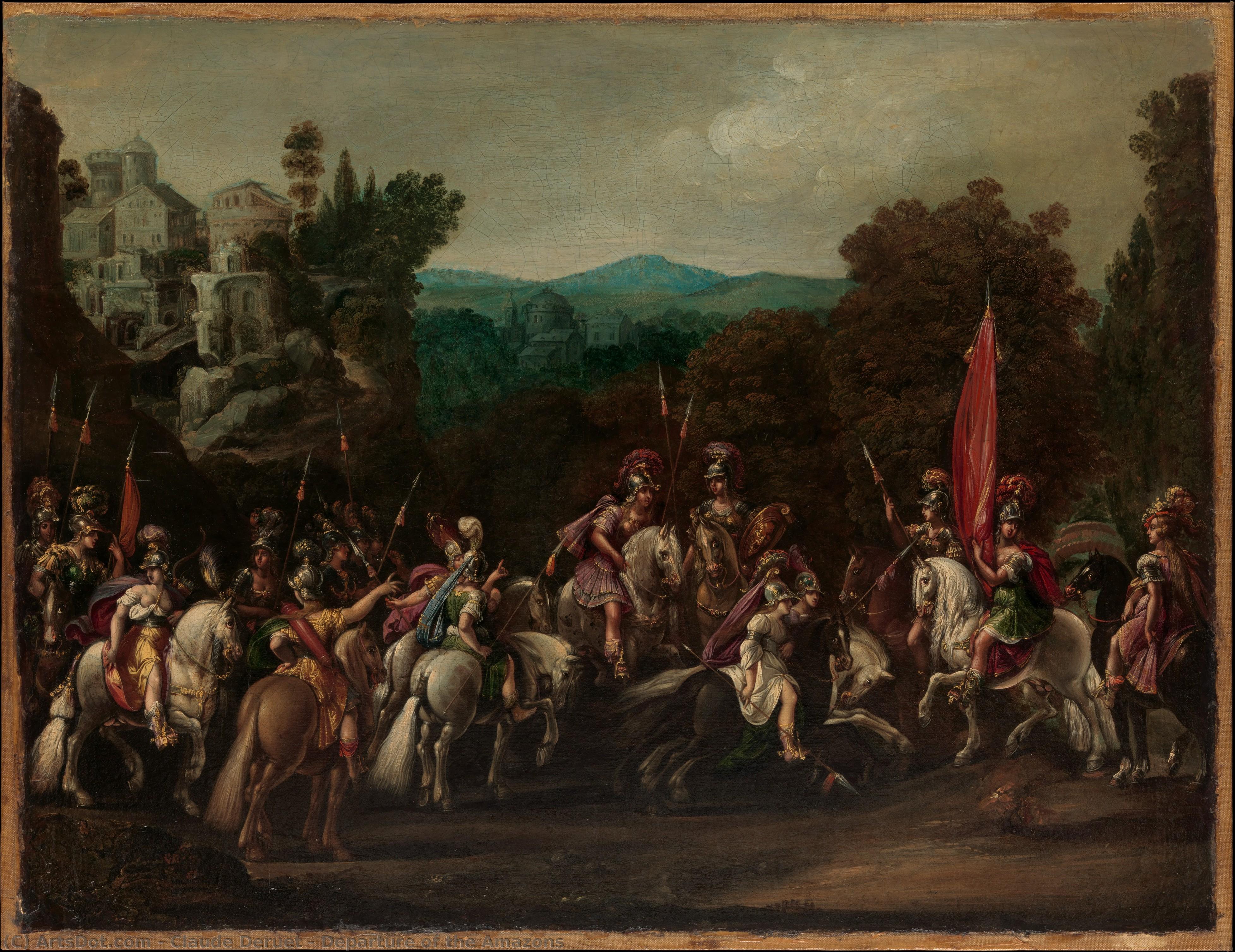
Claude Deruet’s “Departure of the Amazons,” painted circa 1620, is more than just a historical scene; it's a meticulously crafted tableau brimming with power, dynamism, and a subtle exploration of gender roles within the context of 17th-century Lorraine. This monumental canvas transports us to a pivotal moment – the departure of a formidable band of Amazons, legendary female warriors from Greek mythology, embarking on an unknown journey. Deruet’s masterful command of composition, color, and light elevates this subject beyond mere illustration, transforming it into a compelling narrative that speaks volumes about ambition, strength, and the complexities of societal expectations.
The painting immediately commands attention with its dramatic scale and vibrant palette. The scene unfolds on a bustling streetscape, rendered in rich browns, deep reds, and shimmering golds – colors evocative of both wealth and impending conflict. Deruet employs a dynamic diagonal composition, guiding our eye along the line of horses and riders, creating a sense of relentless forward momentum. Each figure is meticulously detailed, from the intricate harnesses adorning the steeds to the expressions of determination etched on the faces of the warriors. The artist’s use of chiaroscuro – the dramatic interplay of light and shadow – further intensifies the scene's impact, highlighting key figures and adding a layer of theatricality.
Influences and Artistic Context
Deruet’s work is deeply rooted in the artistic traditions of his time. Trained initially by Jacques Bellange, the court painter to Duke Charles III of Lorraine, Deruet spent formative years absorbing the stylistic conventions of the Lorraine Baroque school. However, a pivotal journey to Rome in the 1610s proved transformative, exposing him to the works of Antonio Tempesta, a master of dramatic composition and tenebrism. This encounter profoundly influenced Deruet’s approach, particularly his ability to convey movement and emotion through carefully orchestrated light and shadow. The painting echoes Tempesta's influence in its theatrical lighting and dynamic arrangement of figures, but it also demonstrates Deruet’s own unique artistic voice – a blend of classical restraint and Baroque exuberance.
The subject itself—the Amazons—holds significant symbolic weight. In Greek mythology, the Amazons were fierce warrior women who defied societal norms and challenged traditional gender roles. They represented independence, strength, and a rejection of patriarchal constraints. Deruet’s depiction subtly acknowledges this symbolism while simultaneously presenting them as formidable warriors capable of commanding respect. The scene isn't simply a historical record; it’s an assertion of female power within a world dominated by men.
Technique and Materials
“Departure of the Amazons” is executed in oil on canvas, a technique that allowed Deruet to achieve remarkable detail and luminosity. The artist demonstrates a sophisticated understanding of color theory, layering hues to create depth and richness. Notice the subtle variations in tone – the warm glow of the sunlight reflecting off the armor, the cool shadows cast by the buildings—that contribute to the painting’s overall realism. Deruet's meticulous attention to detail extends to the rendering of textures: the rough grain of the horses’ coats, the polished metal of the weapons, and the flowing fabric of the warriors’ garments are all rendered with impressive accuracy.
The composition is further enhanced by Deruet’s skillful use of perspective. The buildings in the background recede into the distance, creating a sense of depth and spatial awareness. He also employs a technique known as “contrapposto,” where figures are posed with one leg slightly forward, creating a dynamic and naturalistic stance. This subtle detail adds to the painting’s overall sense of movement and vitality.
Symbolism and Emotional Impact
Beyond its historical and artistic merits, "Departure of the Amazons" resonates on an emotional level. The scene evokes a sense of anticipation, excitement, and perhaps even a touch of melancholy. The warriors' determined expressions suggest that they are embarking on a perilous journey, but their confidence and strength inspire admiration. The painting’s dramatic lighting and dynamic composition create a powerful visual experience, drawing the viewer into the heart of the action. It is a testament to Deruet’s ability to capture not just a historical event, but also the spirit and emotions associated with it.
Reproductions of this captivating artwork offer an exceptional opportunity to bring its grandeur and narrative power into any space. Whether adorning a grand salon or a more intimate room, “Departure of the Amazons” serves as a timeless reminder of female strength, artistic mastery, and the enduring allure of historical drama.
Related Artworks
Artist Biography
Claude Deruet: A Nancy Baroque Master
Claude Deruet (1588 – 1660) stands as a prominent figure in the artistic landscape of 17th-century France, particularly within the vibrant baroque tradition emanating from Nancy. Born into a noble family, his formative years were steeped in artistic patronage and fostered by an apprenticeship under Jacques Bellange, the court painter to Charles III, Duke of Lorraine—a connection that profoundly shaped his career trajectory. This early influence instilled in him a meticulous attention to detail and a masterful command of technique, characteristics that would define his enduring legacy.- Early Life & Training: Deruet’s artistic journey commenced with formal training under Bellange, allowing him access to the highest echelon of artistic circles and equipping him with invaluable skills in portraiture and decorative painting.
- Roman Period (c. 1612 – 1619): Seeking further refinement and inspiration, Deruet traveled to Rome around 1612, where he studied diligently alongside Antonio Tempesta—a renowned etcher and painter whose stylistic innovations resonated deeply with Deruet’s sensibilities. This period witnessed the creation of his first significant fresco in Villa Borghese, showcasing an emerging talent for dramatic composition and nuanced color palettes.
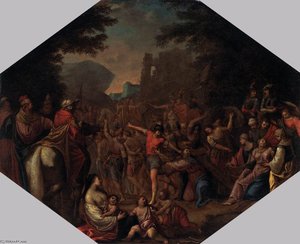
- Notable Paintings: Among Deruet's celebrated works are “Departure of the Amazons” (1620) and “Road to Calvary” (1620)—scenes imbued with dynamism and emotional intensity—testaments to his artistic prowess.
- Royal Patronage & Recognition: Recognizing Deruet’s exceptional talent, Charles III bestowed upon him nobility in 1621, followed by knighthood of the Order of St Michael in 1645 by Louis XIII—a testament to his contribution to Lorraine's cultural prestige.
Legacy & Historical Significance
Claude Deruet’s artistic legacy extends beyond his individual masterpieces—he established a tradition of dramatic storytelling and refined technique that profoundly impacted subsequent generations of painters. His work continues to inspire admiration for its expressive power and stylistic sophistication, securing his place as one of the most important artists of the baroque era in France. The enduring fascination with his depictions of samurai underscores the broader cultural exchange between Europe and Asia during this period—a testament to Deruet’s artistic vision and intellectual curiosity.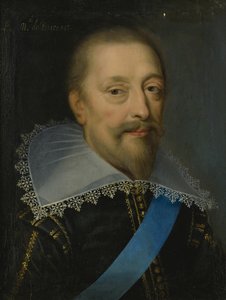
Claude Deruet
1588 - 1660 , France
Quick Facts
- Artistic Movement Or Style: Baroque
- Artists Or Movements Influenced By This Artist: ['Antonio Tempesta']
- Artists Who Influenced This Artist: ['Jacques Bellange']
- Date Of Birth: Nancy, France (1588)
- Date Of Death: 1660
- Full Name: Claude Deruet
- Nationality: French
- Notable Artworks:
- Departure of the Amazons
- Triumph of the Amazons
- Place Of Birth: Nancy
Related Articles

Monet's Masterpieces: 25 Iconic Artworks to Transform Your Home
Journey through 25 iconic Claude Monet masterpieces! Explore Impressionism’s beauty, from Water Lilies to Rouen Cathedral. Discover stunning art reproductions & curated decor ideas – explore the full collection online at ArtsDot.com.

Baroque Drama: Bringing Opulence & Emotion into Contemporary Interiors
Explore the opulent world of Baroque interior design! Discover key elements, modern applications & how to bring dramatic elegance into your home with 's authentic reproductions.

The Dramatic Flourish: Exploring the Baroque Movement's Enduring Legacy in Art History
Explore the dramatic world of Baroque art! Discover iconic artists like Caravaggio & Rubens, defining techniques, and its lasting impact on art history. Expert insights for collectors & enthusiasts at ArtsDot.

Baroque Masterpieces: 10 Paintings That Defined an Era |
Journey through the drama & grandeur of Baroque art! Explore 10 masterpieces by Caravaggio, Rembrandt, Rubens & more. Discover stunning oil paintings, rich colors & timeless stories. Find museum-quality reproductions at .

The Visceral Stage: Exploring Dramatic Narratives & Emotional Intensity in Baroque Art
Explore the dramatic world of Baroque art! Discover iconic masters like Caravaggio & Rembrandt, their techniques, and the movement's lasting impact. Expert insights for collectors & enthusiasts at ArtsDot.