 Preview
 Send
Send Share
Share
 Details

 Download
 Similars
 X-Ray
X-Ray Diaporama
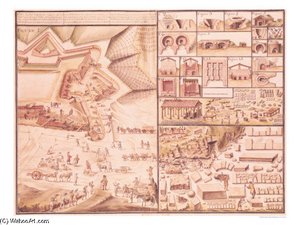
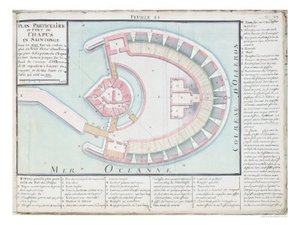
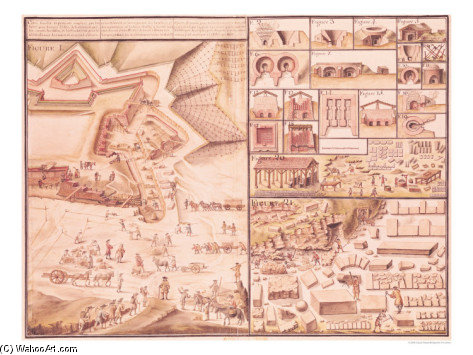
Construction Of A Town Square And The Tools Used
 Read More
Giclée / Art Print
Museum-quality giclée or canvas print with fast production and flexible finish options. ( Buy Hand Made Painting Buy Image)




































Pick from our preset sizes that match the artwork's original proportions.

You may enter your own dimensions to fit a specific frame or space. If your selected size does not match the original image's proportions, we will either crop the artwork or extend the image with a mirrored or solid-fill edge. A digital mockup will be sent for your approval before production begins.
Please note that the on-screen preview does not reflect the actual cropping or extension. Only the mockup will accurately show the final composition.
While custom sizes are available, we recommend selecting a dimension from the predefined list to preserve the original proportions.
Worldwide Delivery () in 2 weeks instead of standard 4/5 weeks. (22 August)

Free Worldwide Express Shipping

High-Quality Linen Canvas

Full Shipping Insurance

Customs Tax Refund Guarantee

True Color Matching Guarantee

60-Day Return Policy (Defects Only)

100% Money-Back Guarantee

Bulk Discount Offer
 Glass option is only available in size under 110 CM

Construction Of A Town Square And The Tools Used
Giclée / Art Print
Reproduction Size
-


Total Price
$ 63
Related Artworks








Artist Biography
A Cartographer of Power: The Life and Art of Claude Masse
Claude Masse, born in France in 1652 and passing away in 1737, occupies a fascinating, yet often overlooked, position within the annals of French art. He wasn’t a painter of grand historical scenes or delicate portraits; instead, Masse dedicated his considerable talent to the meticulous documentation of fortifications, townscapes, and construction projects—a visual chronicler of power, engineering, and the evolving landscape of early modern France. While biographical details remain scarce, the sheer volume and precision of his work suggest a life deeply embedded within military and administrative circles, likely serving as an official cartographer or engineer’s assistant. His artistry wasn't about personal expression in the Romantic sense; it was a commitment to clarity, accuracy, and the functional beauty inherent in architectural design.The Precision of Observation: Masse’s Artistic Style
Masse’s technique is characterized by an extraordinary attention to detail rendered with remarkable skill using pen and ink, often delicately washed with watercolor. His drawings aren't merely representations; they are technical blueprints brought to life. He possessed a unique ability to convey depth and perspective in his architectural depictions, allowing viewers to grasp the scale and complexity of the structures he documented. Fortifications were a recurring subject—intricate plans revealing bastions, ramparts, moats, and gatehouses with astonishing precision. Beyond military architecture, Masse also captured bustling townscapes, offering glimpses into the daily life of 17th and 18th-century France. His depictions of construction projects reveal not only the finished structures but also the scaffolding, tools, and human activity involved in their creation—a rare insight into the practicalities of building during this period. The emphasis is always on functionality and clarity, eschewing dramatic flourishes for a sober realism that speaks to his professional background.Serving the Crown: The Context of Masse’s Work
The demand for detailed architectural plans and maps was particularly high during the reign of Louis XIV, as France embarked on an ambitious program of military expansion and infrastructure development. Masse's work likely played a crucial role in these endeavors, providing essential information for strategic planning, construction management, and administrative oversight. His drawings weren’t intended for public display but rather served as practical tools for those in positions of authority—military commanders, engineers, and government officials.- His maps of towns like Lille and Saint-Savinien offer invaluable insights into the urban planning strategies of the period.
- The detailed cross-sections and profiles of fortifications reveal a deep understanding of military engineering principles.
- Drawings depicting construction projects provide a rare glimpse into the logistical challenges of building during this era.
Beyond Military Applications: Townscapes and Everyday Life
While renowned for his fortifications, Masse's artistry extended beyond purely military applications. His townscape drawings offer captivating glimpses into the daily life of 18th-century France. These aren’t idealized visions but rather realistic depictions of bustling streets, crowded marketplaces, and modest dwellings. He captured the essence of urban environments, providing valuable documentation for historians interested in social history and architectural evolution. His attention to detail extends beyond buildings—he meticulously renders carts, pedestrians, animals, and even the textures of cobblestone streets, creating a vivid sense of place. These drawings offer a counterpoint to the grand narratives of royal power, revealing the lives of ordinary citizens within the context of a rapidly changing society.A Legacy in Detail: Historical Significance
Though not widely celebrated during his lifetime, Claude Masse’s work holds significant historical value today. His meticulous documentation provides invaluable insights into the military architecture, urban planning, and construction practices of 17th and 18th-century France. His drawings serve as a vital resource for historians, architects, and art scholars seeking to understand the material culture and social landscape of this period. The precision and clarity of his technique continue to inspire admiration, offering a testament to the power of observation and the enduring beauty of functional design. Masse’s legacy lies not in grand artistic statements but rather in the quiet dedication to documenting the world around him—a cartographer of power whose artistry continues to illuminate the past.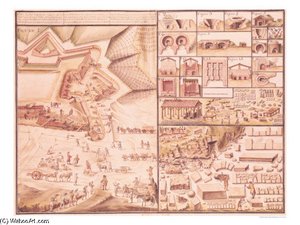
claude masse
1652 - 1737
Quick Facts
- Artistic Movement Or Style: Baroque
- Artists Or Movements Influenced By This Artist: ['Claude Lorrain']
- Artists Who Influenced This Artist:
- Giovanni Benedetto Castiglione
- Annibale Carracci
- Date Of Death: 1737
- Full Name: Claude Macé
- Nationality: French
- Notable Artworks: ["Recueil de 283 estampes gravées à l'eau forte d'ap Cabinet Jabach"]
- Place Of Birth: Paris, France