

 Preview
 Send
Send Share
Share
 Details

 Download
 Similars
 X-Ray
X-Ray Diaporama
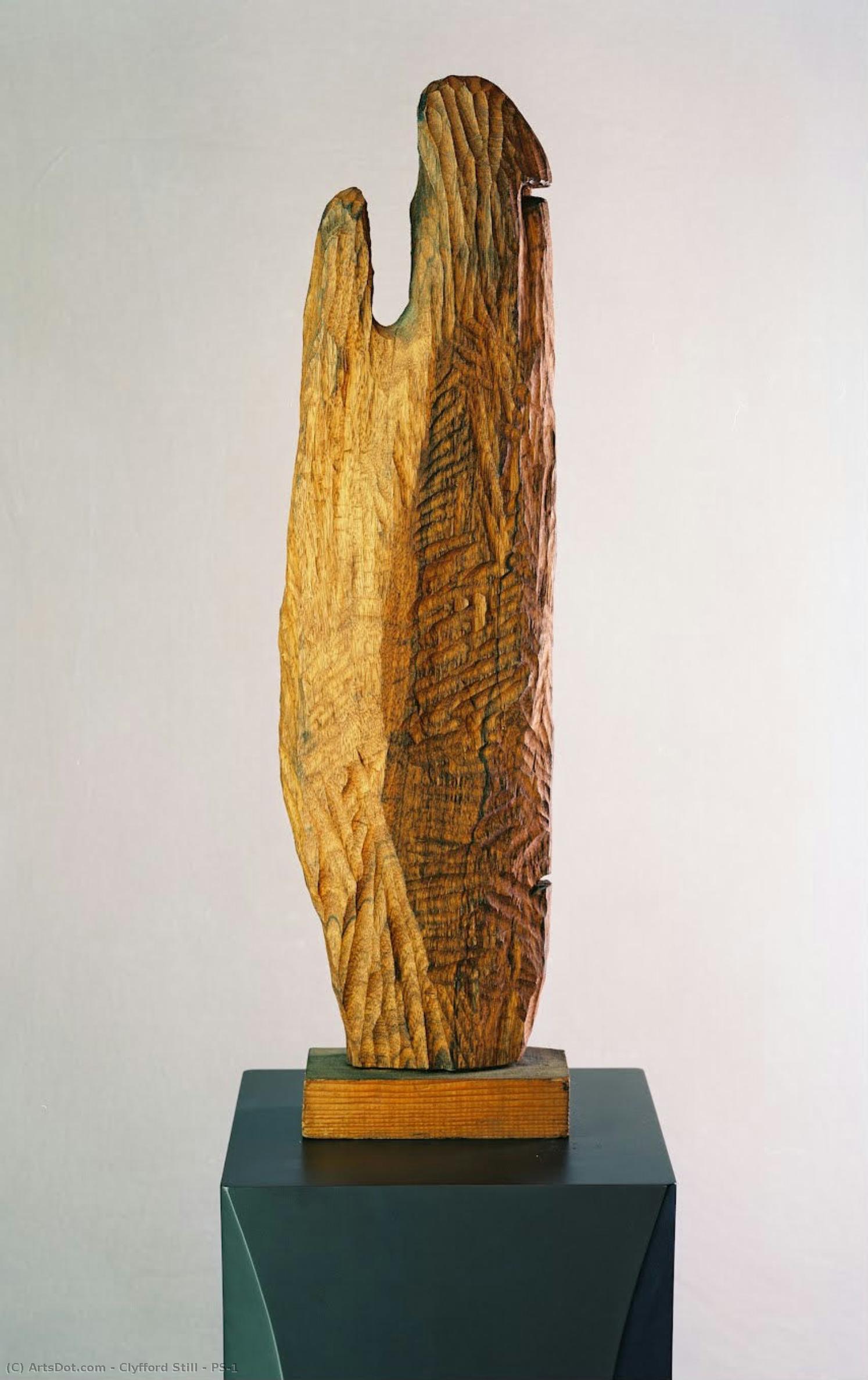
PS-1


 Read More
Purchase a high-resolution, enhanced digital image, far superior to the online preview.
Each file is meticulously prepared by our in-house specialists using advanced tools and expert manual retouching. We ensure every image has exceptional clarity, precise color accuracy, and fine detail.
The final file is delivered via email within 72 hours, optimized for immediate use in professional, editorial, and print environments. This is the same quality trusted by top-tier design studios, publishers, and galleries.
Digital Image
Download a high-resolution file for personal display, printing, and creative projects. ( Buy Print Buy Hand Made Painting)
Included in Every Digital Image Order
Expert Digital Delivery, Guaranteed
When you choose ArtsDot.com, you're not just getting an image - you're receiving a professionally enhanced digital artwork, crafted with precision and backed by a satisfaction guarantee. Here's everything that comes with your order, automatically:

Fast Email Delivery
Your high-resolution digital image file will be emailed to you within 72 hours of ordering - ready for immediate use.

AI-Enhanced Digital File
Your artwork is professionally optimized using advanced AI tools and manual editing, ensuring maximum detail, clarity, and color accuracy.

Free Lifetime Re-Delivery
Accidentally deleted or lost your file? No worries - we'll resend it to you anytime, free of charge.

No Import Fees - Ever
Enjoy your artwork instantly with zero customs, duties, or delivery fees - digital downloads are always tax-free.

Color Accuracy Guarantee
We ensure your digital image reflects the original colors as closely as possible using professional tools and color management.

60-Day Satisfaction Guarantee
If you're not satisfied with your digital image, we'll revise it or refund 100% within 60 days - no questions asked.

100% Money-Back Guarantee
Not satisfied? Get a full refund within 60 days of receiving your digital file - no questions asked.

Bulk Order Discounts
Buy 3 images, save 10% - Buy 5, save 15% - Buy 10+, save 20%. Great for creative projects, galleries, and agencies.
Collectible Description
A Glimpse into Clyfford Still's Raw Abstraction: PS-1
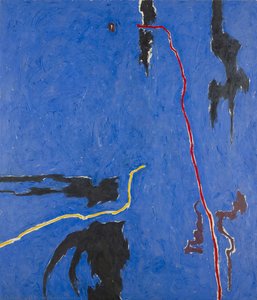
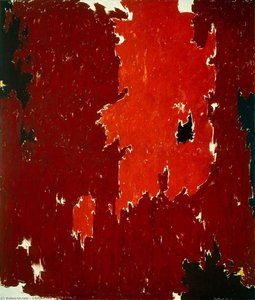
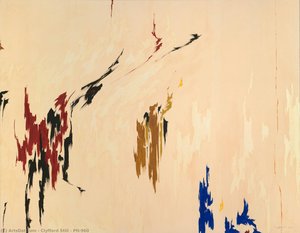
This striking work, titled "PS-1," represents a pivotal moment in the career of American abstract expressionist Clyfford Still. Created in 1943, it stands as an early and powerful example of his signature style – a radical departure from representational art that would profoundly influence subsequent generations of painters. The photograph captures a close-up view of this monumental piece, revealing its textured surface and the dynamic interplay of color that defines Still's aesthetic. While the original dimensions are unknown, reproductions allow viewers to experience the scale and impact intended by the artist. The presence of an observer in the background subtly highlights the artwork’s ability to captivate and inspire contemplation.Style & Technique: The Birth of Color Field Painting
"PS-1" is a cornerstone of what would later be termed "Color Field painting." Still's approach was revolutionary for its time, emerging between 1938 and 1942 – earlier than many of his contemporaries like Mark Rothko. Unlike the gestural brushstrokes often associated with Abstract Expressionism (think Jackson Pollock), Still favored a more controlled application of paint, allowing the colors themselves to become the primary subject. He employed techniques such as pouring, staining, and layering to create deeply saturated fields of color that seem to emanate from within the canvas. The absence of recognizable forms or figures forces the viewer to confront pure color and texture, engaging in a direct emotional response. The rough edges and seemingly haphazard arrangement of these chromatic zones are deliberate; they contribute to the work’s raw energy and sense of untamed power.Historical Context & Influences
The creation of "PS-1" occurred during World War II, a period of immense social and political upheaval. While Still rarely spoke directly about the war's influence on his art, it’s reasonable to assume that the anxieties and uncertainties of the era contributed to his desire to move beyond traditional representation. His work can be seen as an attempt to express universal emotions and experiences through purely abstract means. He drew inspiration from a variety of sources including Native American sand paintings and geological formations, seeking forms that felt primal and timeless. Still’s rejection of conventional artistic norms positioned him at the forefront of a new era in American art, paving the way for artists like Raymond Parker and Charles Gibbons who would further explore the possibilities of abstract expressionism.Emotional Impact & Symbolism
"PS-1" is not about depicting something specific; it's about evoking feeling. The jagged edges and contrasting colors create a sense of tension and dynamism, while the overall composition suggests vastness and depth. The work resists easy interpretation, allowing viewers to project their own emotions and experiences onto its surface. While Still avoided explicit symbolism, many interpret his paintings as reflections of the sublime – that overwhelming feeling of awe and wonder inspired by nature or spiritual experience. The seemingly chaotic arrangement of color can be seen as a metaphor for the complexities and contradictions of human existence. Ultimately, "PS-1" invites viewers to engage in a deeply personal and emotional dialogue with art.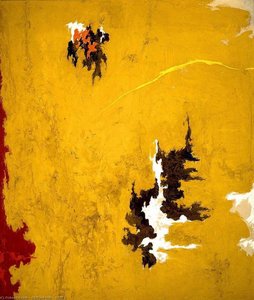
Artist Biography
A Pioneer of Abstract Expressionism: The Life and Art of Clyfford Still
Clyfford Still, born in 1904 amidst the vast landscapes of Grandin, North Dakota, stands as a pivotal figure in the evolution of American art. His journey, marked by an unwavering commitment to artistic integrity and a relentless exploration of form and color, positioned him among the leading lights of Abstract Expressionism. Though often overshadowed by contemporaries like Jackson Pollock and Mark Rothko, Still’s contribution was foundational; he ventured into non-figurative painting earlier than many of his peers, forging a path toward a new visual language that would profoundly influence modern art. His early life, spent moving between North Dakota, Washington, and Alberta, Canada, instilled in him a deep connection to the natural world – a resonance that would echo throughout his artistic career. A brief period of study at the Art Students League in New York City in 1925 offered initial exposure to the art world, but it was his subsequent experiences teaching and painting on the West Coast that truly shaped his unique vision. He wasn’t simply seeking to depict nature; he aimed to capture its raw essence, its underlying forces of creation and destruction.From Representation to Revelation: The Development of a Unique Style
The transformation from representational work to the radical abstraction for which Still is celebrated occurred between 1938 and 1942, a period of intense experimentation and self-discovery. This shift wasn’t merely stylistic; it was profoundly philosophical. He sought to strip away all recognizable imagery, believing that true artistic expression lay in confronting the fundamental elements of painting itself – color, form, and surface. Early works like PH-616 (1929) offer a glimpse into this transitional period, showcasing his initial exploration of rural life rendered with a muted palette and evocative symbolism. These paintings weren’t simply depictions; they were imbued with a sense of longing, a quiet contemplation of the human condition within the vastness of the American landscape. As he moved further toward abstraction, these representational elements gradually dissolved into jagged planes of color, fractured surfaces, and imposing vertical forms. These weren't merely abstract shapes; they were imbued with raw emotion, existential angst, and the sublime power of nature. He worked primarily with oil paint applied with palette knives, building up layers of texture that created a dynamic interplay between light and shadow. This technique allowed him to create surfaces that seemed to pulse with energy, inviting viewers into an immersive experience—a confrontation with the very act of painting itself.The Language of Color and Form: Key Characteristics of Still’s Work
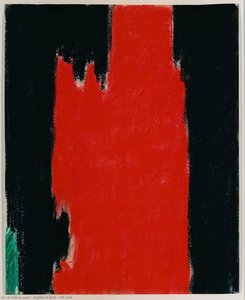
Still's mature paintings are characterized by their monumental scale and dramatic color juxtapositions. He favored large canvases, believing that only through such expansiveness could he convey the full emotional weight of his vision. His compositions typically feature irregular, fractured planes of color – often dark and brooding hues punctuated by flashes of brighter tones. These forms aren’t simply arranged on the canvas; they seem to emerge from it, creating a sense of depth and spatial ambiguity. The vertical element is particularly significant in Still's work, representing what he termed “the vertical necessity of life” – a defiant assertion of human spirit against overwhelming forces. 1957-D No. 1, with its predominantly black and yellow palette accented by white and red, exemplifies this characteristic use of color and form to evoke powerful emotional responses. He deliberately avoided titles that might suggest specific interpretations, preferring a numerical system (e.g., “1957-D No. 1”) that emphasized the painting’s purely visual qualities. This was part of his broader effort to resist categorization and maintain control over how his work was perceived. He wanted viewers to experience the paintings directly, without preconceived notions or external narratives.Legacy and Influence: A Lasting Impact on Modern Art
Clyfford Still's influence extends far beyond his own body of work. He is considered a key progenitor of Color Field painting, a movement that emphasized the expressive potential of color as an independent element in art. His uncompromising artistic vision and rejection of conventional norms paved the way for subsequent generations of abstract painters. While he often distanced himself from the New York art world, his impact on its development was undeniable. He taught at various institutions, including Washington State University and the California School of Fine Arts, inspiring countless students to explore their own creative potential. In 1959, a comprehensive retrospective of his work at the Albright-Knox Art Gallery in Buffalo, New York, solidified his reputation as a major force in American art. Perhaps one of his most significant legacies is The Clyfford Still Museum in Denver, Colorado, which houses an extraordinary collection of over 3,125 works – representing 93 percent of his lifetime output and complete archives. This museum provides unparalleled access to the breadth and depth of his artistic vision, ensuring that his contributions will continue to be studied and appreciated for generations to come. His work continues to resonate with viewers today, offering a powerful meditation on the human condition and the enduring mysteries of existence.Further Exploration
- Explore more about Clyfford Still’s artworks at ArtsDot.com.
- Discover the Color Field art movement.
- Learn about artists like Mark Rothko and their influence on the art world.
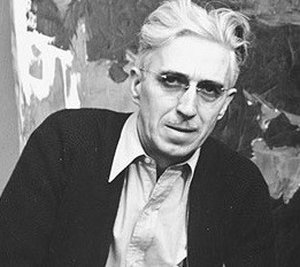
Clyfford Still
1904 - 1980 , United States of America
Quick Facts
- Artistic Movement Or Style: Abstract Expressionism
- Artists Or Movements Influenced By This Artist: ['Color Field painting']
- Date Of Birth: 1904
- Date Of Death: 1980
- Full Name: Clyfford Still
- Nationality: American
- Notable Artworks:
- PH-616
- 1957-D No. 1
- 1950 W
- January 1951
- Place Of Birth: Grandin, USA

