 Preview
 Send
Send Share
Share
 Details

 Download
 Similars
 X-Ray
X-Ray Diaporama
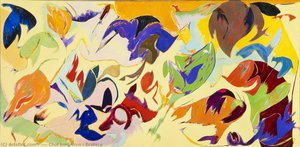
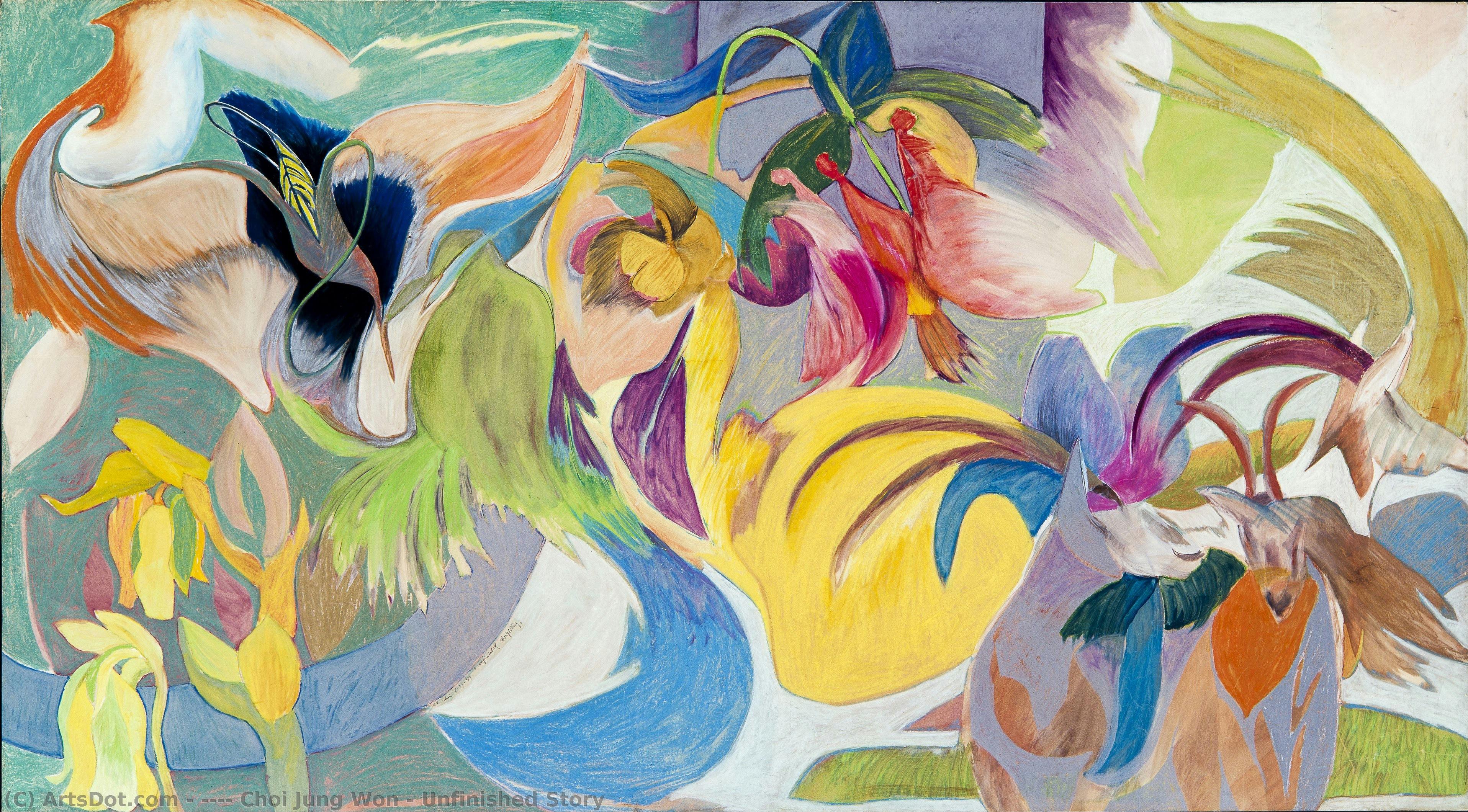
Unfinished Story
 266.0 x 147.0 cm
 Read More
Hand Made Oil Reproduction
Hand-painted oil on canvas in your size and frame, made to order by our artists. ( Buy Print Buy Image)




































Pick from our preset sizes that match the artwork's original proportions.

You may enter your own dimensions to fit a specific frame or space. If your selected size does not match the original image's proportions, we will either crop the artwork or extend the painting with additional hand-painted elements. A digital mockup will be sent for your approval before production begins.
Please note that the on-screen preview does not reflect the actual cropping or extension. Only the mockup will accurately show the final composition.
While custom sizes are available, we recommend selecting a dimension from the predefined list to preserve the original proportions.
After order, ArtsDot.com team will email client for instructions and provide a mockup preview
Worldwide Delivery () in 3/4 weeks instead of standard 5 weeks. (21 August). No compromise on quality.

Free Worldwide Express Shipping

High-Quality Linen Canvas

Full Shipping Insurance

Customs Tax Refund Guarantee

True Color Matching Guarantee

60-Day Return Policy (Defects Only)

100% Money-Back Guarantee

Bulk Discount Offer
 Glass option is only available in size under 110 CM

Unfinished Story
Reproduction Medium
Reproduction Size
-


Total Price
$ 263
Artwork Description
Related Artworks
Artist Biography
The Enduring Spirit of Choi Jung Won: A Life Woven in Ink and Brush
Choi Jung Won, a contemporary Korean master, stands as a vital link to the rich traditions of East Asian painting while simultaneously forging a uniquely personal artistic voice. Though biographical details remain somewhat elusive – a deliberate choice perhaps, reflecting his focus on the work itself rather than celebrity – it is understood that Choi was born in Korea and continues to live and create there. This intentional privacy allows for an unburdened appreciation of his art, free from the distractions of personality cults or sensational narratives. His journey has been one of deep immersion in classical techniques, followed by a subtle yet profound evolution towards a style that is both deeply rooted in history and strikingly modern in its sensibility.A Foundation in Tradition: Calligraphy, Landscape, and the Scholar’s Brush
Choi Jung Won's artistic lineage traces back through centuries of Korean painting, heavily influenced by the scholar-artist tradition. This is immediately apparent in his masterful calligraphy, which isn’t merely decorative but integral to the composition of his works. He doesn’t simply *add* text; he allows the energy and form of the characters to interact with the imagery, creating a harmonious balance between word and visual representation. His early training focused on the “Four Gentlemen” – plum blossom, orchid, bamboo, and chrysanthemum – symbolic plants representing virtues like perseverance, refinement, resilience, and integrity. These motifs recur throughout his oeuvre, not as tired tropes but as vehicles for exploring deeper philosophical themes. Equally central to his development was a rigorous study of landscape painting, specifically in the traditions of ink wash (sumukhwa or suibokuga). He absorbed the techniques of creating atmospheric depth through varying shades of ink, employing both bold washes and delicate brushstrokes to evoke the spirit of nature. The influence of earlier masters like Jeong Seon and Kim Hongdo is discernible, but Choi never simply replicates; he internalizes these lessons and transforms them into something distinctly his own.Evolving a Personal Language: Minimalism, Abstraction, and Emotional Resonance
While deeply respectful of tradition, Choi Jung Won’s work isn't defined by strict adherence to it. Over time, his paintings have moved towards increasing abstraction, stripping away unnecessary detail in favor of capturing the *essence* of a subject. This is not an abandonment of representation but rather a refinement – a distillation of form and energy. His landscapes, for example, often feature simplified mountains, trees reduced to their skeletal structures, and vast expanses of empty space. These aren’t depictions of specific places; they are meditations on the power and tranquility of nature, inviting viewers to project their own emotions and experiences onto the canvas. The use of negative space is particularly significant, creating a sense of stillness and contemplation. He often works in monochromatic palettes – shades of black ink on white paper or silk – further emphasizing the importance of line, texture, and tonal variation. This minimalist approach isn’t cold or sterile; it's imbued with a profound emotional resonance, conveying a sense of quietude, solitude, and spiritual awakening.Themes and Symbolism: Nature, Zen Buddhism, and the Search for Harmony
Recurring themes in Choi Jung Won’s work reveal his deep engagement with philosophical concepts, particularly those found within Zen Buddhism. Nature is not simply a subject to be depicted but a pathway to enlightenment – a mirror reflecting the impermanence of all things. The mountains he paints often symbolize strength and stability, while flowing water represents change and adaptability. Bamboo, in particular, holds special significance, embodying resilience, humility, and moral integrity. His paintings frequently evoke a sense of harmony between humanity and nature, suggesting that true peace can only be found through aligning oneself with the natural order. The deliberate simplicity of his compositions encourages viewers to slow down, quiet their minds, and connect with the present moment – a core tenet of Zen practice. He doesn’t offer explicit narratives or moral lessons; instead, he creates visual poems that invite contemplation and self-discovery.Historical Significance and Contemporary Relevance
Choi Jung Won occupies a unique position within contemporary Korean art. He is not part of any particular avant-garde movement, yet his work has garnered significant critical acclaim both domestically and internationally.- His paintings represent a powerful counterpoint to the often frenetic pace of modern life.
- He demonstrates that tradition doesn’t have to be static or irrelevant; it can be a source of inspiration and renewal.
- His minimalist aesthetic resonates with contemporary sensibilities, appealing to viewers seeking quietude and contemplation in an increasingly chaotic world.
Quick Facts
- Artistic Movement Or Style: Korean Painting
- Date Of Death: Living
- Full Name: Choi Jung Won
- Nationality: Korean