 Preview
 Send
Send Share
Share
 Details

 Download
 Similars
 X-Ray
X-Ray Diaporama
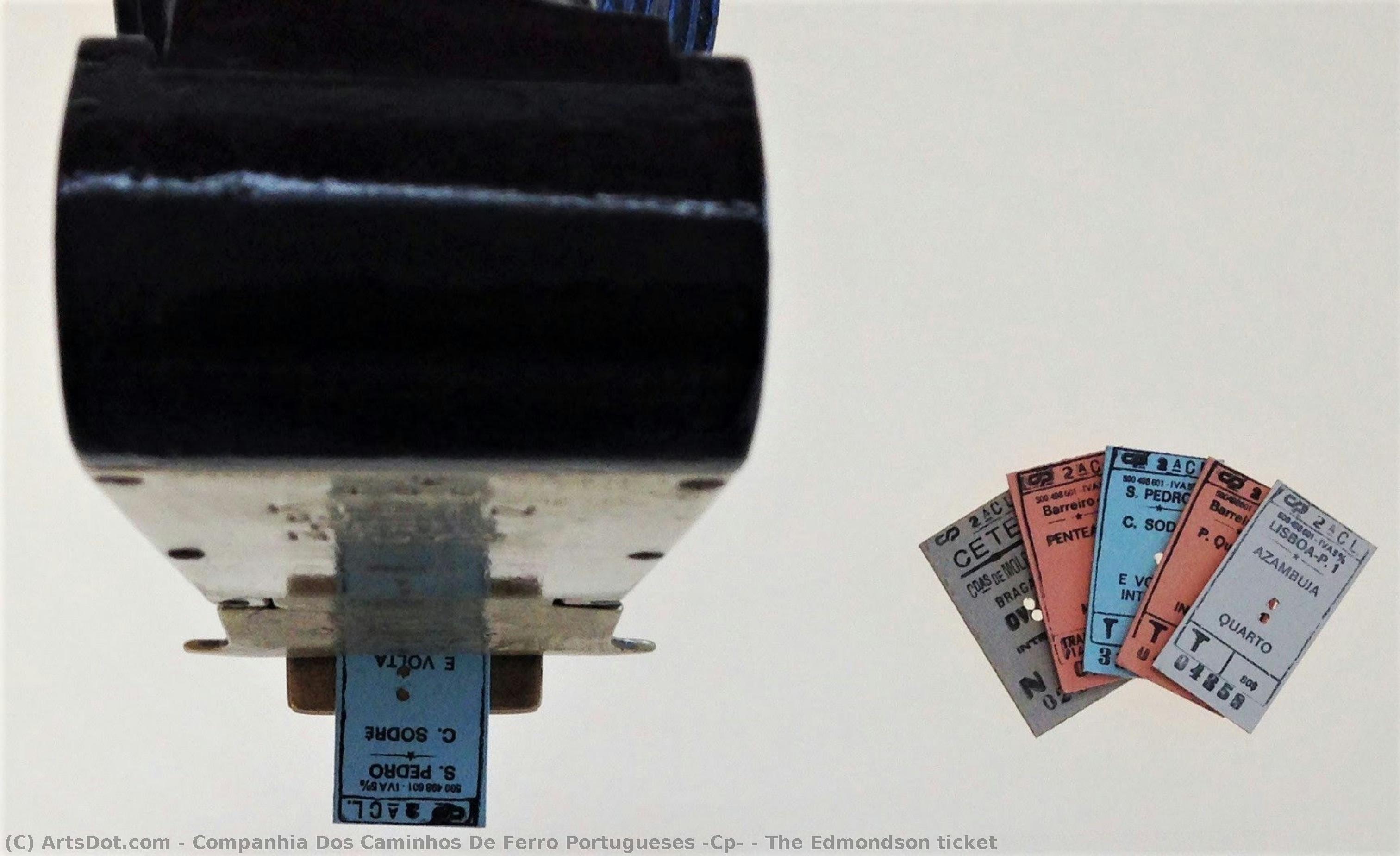
The Edmondson ticket

 Read More
Giclée / Art Print
Museum-quality giclée or canvas print with fast production and flexible finish options. ( Buy Hand Made Painting Buy Image)




































Pick from our preset sizes that match the artwork's original proportions.

You may enter your own dimensions to fit a specific frame or space. If your selected size does not match the original image's proportions, we will either crop the artwork or extend the image with a mirrored or solid-fill edge. A digital mockup will be sent for your approval before production begins.
Please note that the on-screen preview does not reflect the actual cropping or extension. Only the mockup will accurately show the final composition.
While custom sizes are available, we recommend selecting a dimension from the predefined list to preserve the original proportions.
Worldwide Delivery () in 2 weeks instead of standard 4/5 weeks. (1 September)

Free Worldwide Express Shipping

High-Quality Linen Canvas

Full Shipping Insurance

Customs Tax Refund Guarantee

True Color Matching Guarantee

60-Day Return Policy (Defects Only)

100% Money-Back Guarantee

Bulk Discount Offer
 Glass option is only available in size under 110 CM

The Edmondson ticket
Giclée / Art Print
Reproduction Size
-


Total Price
$ 63
Related Artworks








Artist Biography
Alfredo Roque Gameiro (1864–1935): A Pioneer of Portuguese Watercolor
Alfredo Roque Gameiro stands as a pivotal figure in the history of Portuguese art, particularly recognized for his masterful contributions to watercolor painting during the Belle Époque. Born in Vila Nova da Luz, Algarve, Portugal, on November 1864, Gameiro’s artistic journey unfolded against the backdrop of a nation undergoing significant transformations—industrialization, urbanization, and burgeoning cultural engagement with European trends. His formative years were marked by exposure to classical art education, fostering an appreciation for meticulous observation and technical precision that would define his distinctive style.- Early Influences: Gameiro’s artistic sensibilities were profoundly shaped by Impressionism and Neo-Impressionism, movements originating in France that championed capturing fleeting moments of light and color. Artists like Claude Monet and Camille Pissarro served as crucial models, encouraging him to prioritize atmospheric effects over detailed representation.
- Formal Training: He pursued formal training at the Lisbon School of Fine Arts (Escola Superior de Belas Artes), where he honed his skills under renowned instructors, absorbing techniques rooted in academic tradition alongside innovative experimental approaches. This dual influence ensured that Gameiro’s work possessed both stylistic elegance and intellectual depth.
- Watercolor Technique: Gameiro perfected a technique characterized by layering translucent washes of color—a hallmark of watercolor—to achieve luminous textures and subtle tonal gradations. His meticulous brushwork combined with an intuitive understanding of pigment behavior resulted in paintings that exuded warmth, vibrancy, and an unparalleled sense of immediacy.
Notable Works and Artistic Vision
Gameiro’s oeuvre encompasses a diverse range of subjects—landscapes, portraits, genre scenes—each imbued with his characteristic artistic vision. He excelled at depicting the Algarve coastline, capturing its dramatic cliffs, turquoise waters, and sun-drenched beaches with breathtaking accuracy. His watercolors are celebrated for their evocative compositions that convey not merely visual information but also emotional resonance.- “The Coast of Vila Nova da Luz” (1897): This iconic piece exemplifies Gameiro’s mastery of watercolor technique, demonstrating his ability to render the interplay of light and shadow with remarkable subtlety. The painting's serene beauty reflects Gameiro’s fascination with capturing the sublime—the awe-inspiring grandeur of nature—a preoccupation that would permeate much of his subsequent work.
- “The Olive Grove” (1903): Another celebrated canvas showcases Gameiro’s meticulous attention to detail and his profound understanding of color harmony. The olive grove is rendered with painstaking precision, capturing the textures of foliage and fruit while conveying a palpable sense of tranquility.
- Portraits: Gameiro produced numerous portraits that captured the essence of his subjects—often depicting members of Lisbon's aristocratic elite—with sensitivity and psychological insight. His portraits are distinguished by their expressive gaze and nuanced tonal variations, reflecting his commitment to portraying human character with authenticity.
Legacy and Historical Significance
Alfredo Roque Gameiro’s contribution to Portuguese watercolor art is undeniable. He established himself as one of the foremost practitioners of this medium during the Belle Époque, elevating it to a level of artistic sophistication previously unattainable. His paintings continue to inspire admiration for their beauty, technical virtuosity, and emotional depth—testaments to his enduring legacy as a visionary artist who captured the spirit of his time. He is remembered not merely as a painter but as an embodiment of Portuguese cultural identity during a period of significant modernization and artistic renewal.Further Exploration
To delve deeper into Gameiro’s artistic achievements, consult scholarly publications on Portuguese art history and biographical studies focusing on his life and career. Museums housing his paintings—particularly the Museu Nacional de Arte Contemporânea da Fundação Calouste Gulbenkian in Lisbon—offer invaluable opportunities for experiencing his artwork firsthand.
companhia dos caminhos de ferro portugueses (cp)
1860 - 1975 , Portugal
Quick Facts
- Artistic Movement Or Style: Impressionism
- Artists Or Movements Influenced By This Artist: ['Post-Impressionism']
- Artists Who Influenced This Artist: ['Claude Monet']
- Date Of Birth: 1864
- Date Of Death: 1935
- Full Name: Alfredo Roque Gameiro
- Nationality: Portuguese
- Notable Artworks: ['The Olive Grove']
- Place Of Birth: Lisbon, Portugal