 Preview
 Send
Send Share
Share
 Details

 Download
 Similars
 X-Ray
X-Ray Diaporama
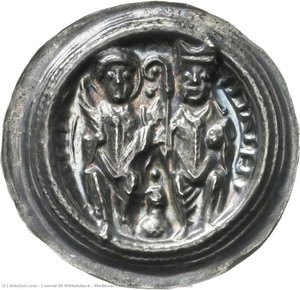
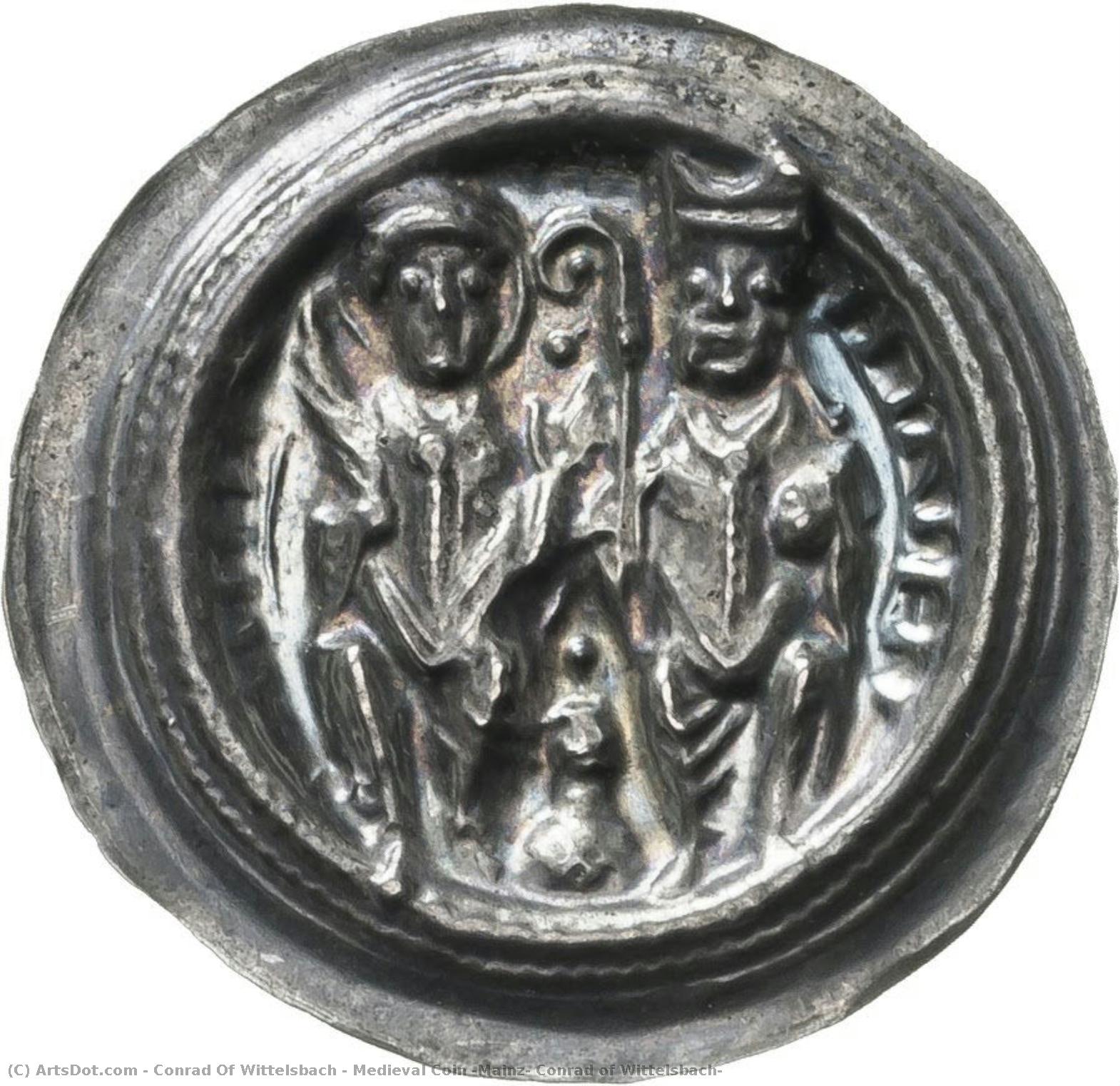
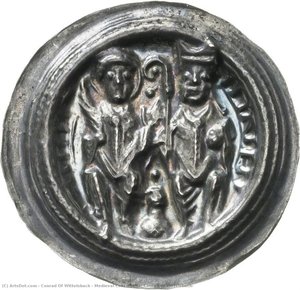
Medieval Coin (Mainz: Conrad of Wittelsbach)

 Read More
Hand Made Oil Reproduction
Hand-painted oil on canvas in your size and frame, made to order by our artists. ( Buy Print Buy Image)




































Pick from our preset sizes that match the artwork's original proportions.

You may enter your own dimensions to fit a specific frame or space. If your selected size does not match the original image's proportions, we will either crop the artwork or extend the painting with additional hand-painted elements. A digital mockup will be sent for your approval before production begins.
Please note that the on-screen preview does not reflect the actual cropping or extension. Only the mockup will accurately show the final composition.
While custom sizes are available, we recommend selecting a dimension from the predefined list to preserve the original proportions.
After order, ArtsDot.com team will email client for instructions and provide a mockup preview
Worldwide Delivery () in 3/4 weeks instead of standard 5 weeks. (5 September). No compromise on quality.

Free Worldwide Express Shipping

High-Quality Linen Canvas

Full Shipping Insurance

Customs Tax Refund Guarantee

True Color Matching Guarantee

60-Day Return Policy (Defects Only)

100% Money-Back Guarantee

Bulk Discount Offer
 Glass option is only available in size under 110 CM

Medieval Coin (Mainz: Conrad of Wittelsbach)
Reproduction Medium
Reproduction Size
-


Total Price
$ 313
Related Artworks








Artist Biography
A Legacy Forged in Faith and Power
Conrad of Wittelsbach (c. 1120–1200) stands as a pivotal figure in the tapestry of medieval German history, embodying the intricate complexities of papal politics, dynastic struggles, and the profound weight of ecclesiastical patronage during the tumultuous reign of Frederick Barbarossa. Born into the illustrious Wittelsbach dynasty—descendants of the influential Otto I—his life was defined by an enduring commitment to the spiritual and temporal prestige of the Holy Roman Empire. His existence was not merely one of quiet contemplation within the church, but a masterful navigation of the shifting tides of power that characterized the twelfth century.
The early years of Conrad’s life were steeped in the high-stakes environment of Bavarian nobility. Growing up within the Wittelsbach family instilled in him an innate understanding of political maneuvering and the perennial nature of familial rivalry. Following the death of Otto IV, Conrad ascended to the ducal throne of Bavaria, a move that ignited a protracted conflict with rival noble houses, most notably Henry of Saxony. This period of his life underscored the precarious balance of power within the fragmented German lands, where every dynastic claim was a potential spark for widespread upheaval.
The Archbishopric and the Shadow of Schism
As his career transitioned from the secular battlefield to the sacred halls of the church, Conrad’s influence expanded far beyond the borders of Bavaria. His ecclesiastical journey began in Salzburg and reached its zenith with his appointment as the Archbishop of Mainz in 1161. This position was one of immense responsibility, requiring him to skillfully navigate escalating tensions between competing figures such as Rudolf of Zähringen and Christian von Buch. His role at the Council of Lodi became a defining moment in his legacy; there, alongside Frederick Barbarossa, he championed papal authority, demonstrating a profound commitment to upholding Carolingian traditions against the burgeoning ambitions of imperial expansion.
Conrad’s tenure was marked by a remarkable defiance of political and religious fragmentation. Notably, his stance against Pope Alexander III’s antipope, Victor IV, solidified his reputation as a staunch defender of papal primacy. This period of intense ecclesiastical dispute required a diplomat's touch and a statesman's resolve, as he sought to maintain the integrity of the Church amidst a landscape of shifting loyalties. His ability to command respect in both the imperial court and the Roman Curia made him one of the most formidable prelates of his era.
Architectural Vision and Historical Significance
Beyond the corridors of political power, Conrad’s legacy is etched into the very stone of Germany. He possessed a visionary commitment to restoring prestige to the Mainz Cathedral, viewing architectural grandeur as a physical manifestation of divine and imperial authority. His alliance with Emperor Frederick Barbarossa was instrumental in securing the cathedral's charter, ensuring that the structure would serve as a beacon of piety and power for generations to come. Through his patronage, he helped facilitate moments of profound symbolic importance, such as the Diet of Augsburg in 1184, where the "Maastricht Miracle"—a celebrated liturgical procession—symbolized the deep-seated connection between papal piety and imperial stability.
The historical significance of Conrad of Wittelsbach lies in his unique ability to bridge the gap between the sacred and the secular. He was a man who understood that the strength of an empire rested as much on the sanctity of its cathedrals as on the might of its armies. His life remains a testament to a period where faith, politics, and art were inextricably linked, leaving behind a legacy that continues to resonate through the historical echoes of the Holy Roman Empire.
conrad of wittelsbach
1200 , Germany
Quick Facts
- Artistic Movement Or Style: Medieval Art
- Artists Or Movements Influenced By This Artist: ['Frederick Barbarossa']
- Artists Who Influenced This Artist: ['Otto IV']
- Date Of Death: 1200
- Full Name: Conrad of Wittelsbach
- Nationality: German
- Notable Artworks: ['Mainz Cathedral']
- Place Of Birth: Cologne, Germany