 Preview
 Send
Send Share
Share
 Details

 Download
 Similars
 X-Ray
X-Ray Diaporama
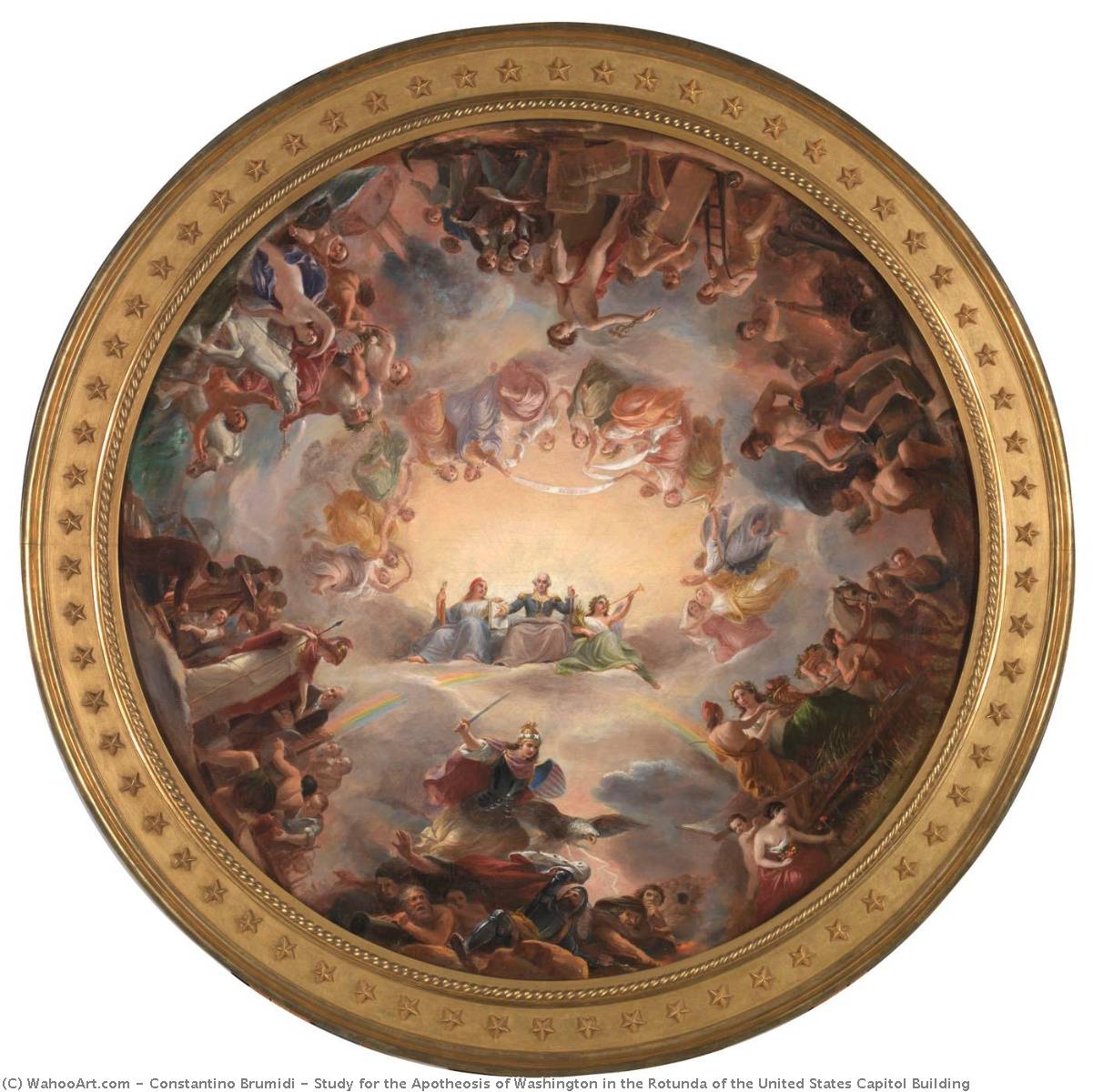
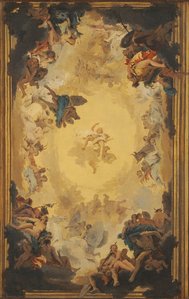
Study for the Apotheosis of Washington in the Rotunda of the United States Capitol Building

 Read More
Hand Made Oil Reproduction
Hand-painted oil on canvas in your size and frame, made to order by our artists. ( Buy Print Buy Image)




































Pick from our preset sizes that match the artwork's original proportions.

You may enter your own dimensions to fit a specific frame or space. If your selected size does not match the original image's proportions, we will either crop the artwork or extend the painting with additional hand-painted elements. A digital mockup will be sent for your approval before production begins.
Please note that the on-screen preview does not reflect the actual cropping or extension. Only the mockup will accurately show the final composition.
While custom sizes are available, we recommend selecting a dimension from the predefined list to preserve the original proportions.
After order, ArtsDot.com team will email client for instructions and provide a mockup preview
Worldwide Delivery () in 3/4 weeks instead of standard 5 weeks. (26 August). No compromise on quality.

Free Worldwide Express Shipping

High-Quality Linen Canvas

Full Shipping Insurance

Customs Tax Refund Guarantee

True Color Matching Guarantee

60-Day Return Policy (Defects Only)

100% Money-Back Guarantee

Bulk Discount Offer
 Glass option is only available in size under 110 CM

Study for the Apotheosis of Washington in the Rotunda of the United States Capitol Building
Reproduction Medium
Reproduction Size
-


Total Price
$ 263
Related Artworks







Artist Biography
The Painter of Washington’s Glory
Constantino Brumidi stands as a singular figure in American art history—a Greek-Italian immigrant who irrevocably shaped the visual landscape of Washington, D.C., and cemented his legacy as one of the foremost fresco painters of his era. Born in Rome in 1805 to a Greek father from Messenia and an Italian mother, Brumidi’s early artistic inclinations were nurtured within the prestigious Roman artistic tradition. His formative years were defined by a profound appreciation for neoclassical aesthetics and meticulous craftsmanship, qualities that would later define his distinctive style throughout a prolific career that bridged the Old World and the New.
Brumidi’s formal training was as diverse as his heritage, encompassing both sculpture and painting. This dual education afforded him invaluable insight into anatomical precision and sculptural form, allowing him to approach a flat canvas with a three-dimensional sensibility. He honed his skills at the Academy in Rome, absorbing the techniques of legendary masters such as Bertel Thorvaldsen, Antonio Canova, and Baron Vincenzo Camuccini. Perhaps most significantly, his early career was marked by prestigious commissions within the Vatican walls under the patronage of Pope Gregory XVI. These experiences exposed him to the grandeur of papal splendor and solidified his mastery of monumental fresco painting, a technique requiring immense physical stamina and technical precision.
From Roman Palaces to American Democracy
Before his arrival in the United States, Brumidi had already established himself as a respected artist within the European aristocracy, decorating various Roman palaces, including those of Prince Torlonia. However, it was his migration to America that would allow him to translate the classical grandeur of Rome into the burgeoning visual language of a young republic. Upon arriving in the United States, Brumidi brought with him a repertoire of techniques that were virtually unknown in the American landscape at the time, specifically the difficult and prestigious art of true fresco.
His early American works demonstrated a remarkable versatility. In Maryland, he undertook the ambitious task of decorating St. Stephen’s Church in Baltimore, where his monumental fresco depicting the martyrdom of Saint Stephen became a cornerstone of American religious art. His ability to blend poignant narrative with classical beauty was further evidenced in his work at Taylor's Chapel. These early commissions served as a prelude to his most enduring contribution: the transformation of the United States Capitol Building into a sanctuary of historical and allegorical storytelling.
The Apotheosis of an American Icon
The pinnacle of Brumidi’s career—and indeed, his greatest gift to the American people—is found within the Rotunda of the U.S. Capitol. It was here that he executed his most famous masterpiece, the Apotheosis of Washington. This breathtaking fresco portrays George Washington ascending to divine status, surrounded by a celestial assembly of allegorical figures representing Liberty, Victory, and various aspects of American progress. Through this work, Brumidi did more than merely decorate a ceiling; he created a visual mythology for a nation, using the language of Neoclassicism to elevate American ideals to the level of the eternal.
Beyond the Rotunda, his influence permeates the very corridors of power through what are now known as the Brumidi Corridors. These vaulted, ornately decorated passages on the first floor of the Senate wing serve as a testament to his vision and tireless labor. His work in these corridors, characterized by intricate designs and historical motifs, continues to inspire awe in visitors today. Through his brush, the marble and stone of the Capitol were imbued with life, history, and a sense of destiny, ensuring that Constantino Brumidi would forever be remembered as the architect of American grandeur.
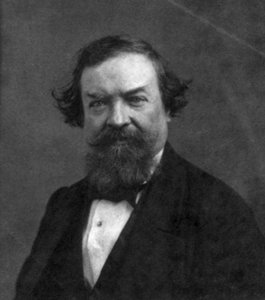
Constantino Brumidi
1805 - 1880
Quick Facts
- Artistic Movement Or Style: Neoclassical
- Artists Who Influenced This Artist:
- Baron Camuccini
- Antonio Canova
- Bertel Thorvaldsen
- Date Of Birth: 1805
- Full Name: Constantino Brumidi
- Nationality: Greek-Italian
- Notable Artworks:
- Apotheosis of Washington
- Martyrdom of St. Stephen
- Assumption of Mary
- Holy Trinity (Mexico City Cathedral)
- Place Of Birth: Rome, Italy