 Preview
 Send
Send Share
Share
 Details

 Download
 Similars
 X-Ray
X-Ray Diaporama
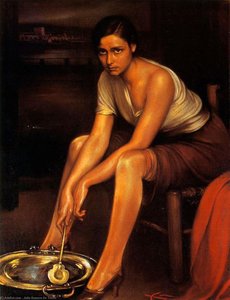
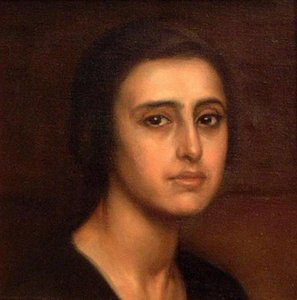
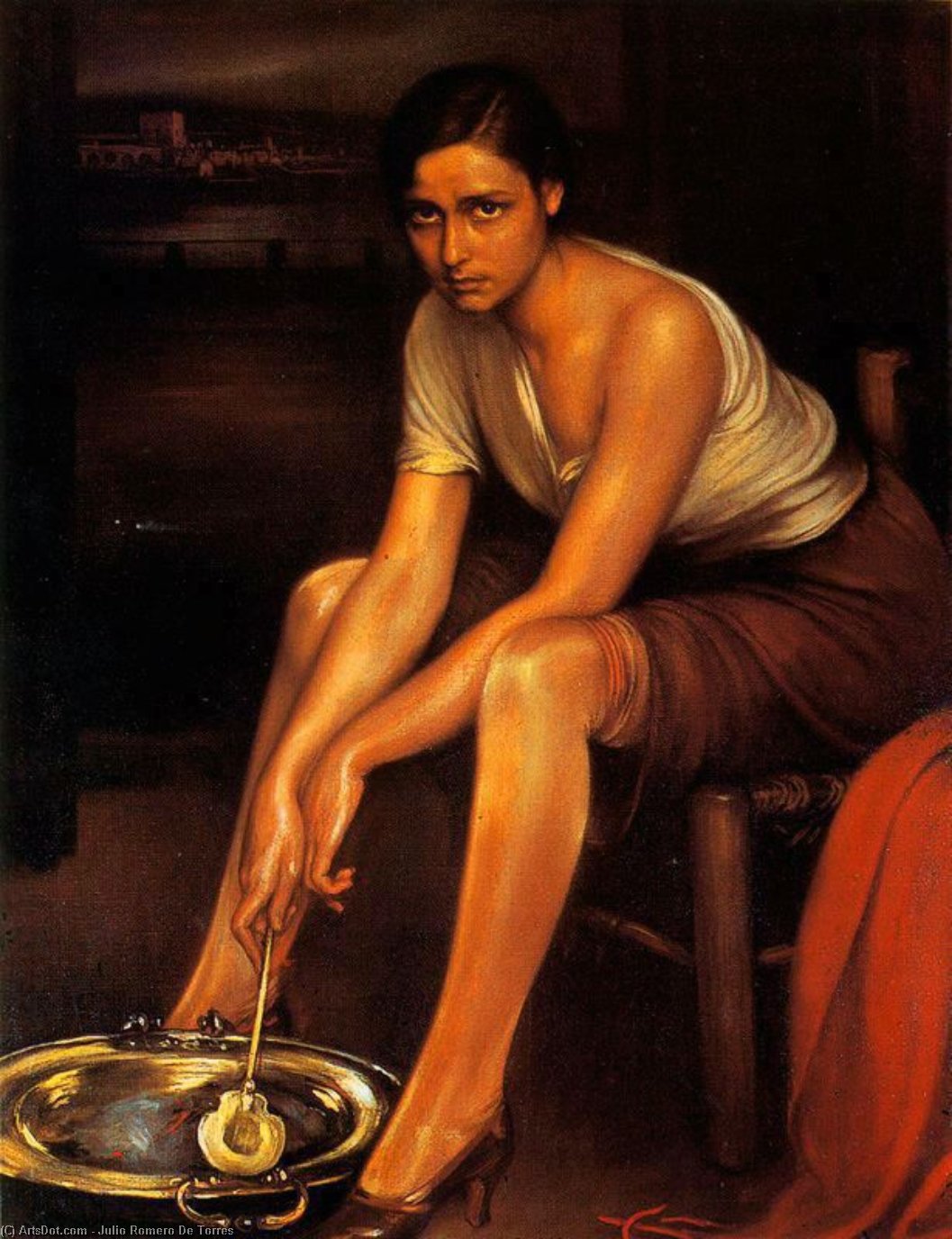
La chiquita piconera
 Read More
Hand Made Oil Reproduction
Hand-painted oil on canvas in your size and frame, made to order by our artists. ( Buy Print Buy Image)




































Pick from our preset sizes that match the artwork's original proportions.

You may enter your own dimensions to fit a specific frame or space. If your selected size does not match the original image's proportions, we will either crop the artwork or extend the painting with additional hand-painted elements. A digital mockup will be sent for your approval before production begins.
Please note that the on-screen preview does not reflect the actual cropping or extension. Only the mockup will accurately show the final composition.
While custom sizes are available, we recommend selecting a dimension from the predefined list to preserve the original proportions.
After order, ArtsDot.com team will email client for instructions and provide a mockup preview
Worldwide Delivery () in 3/4 weeks instead of standard 5 weeks. (16 August). No compromise on quality.

Free Worldwide Express Shipping

High-Quality Linen Canvas

Full Shipping Insurance

Customs Tax Refund Guarantee

True Color Matching Guarantee

60-Day Return Policy (Defects Only)

100% Money-Back Guarantee

Bulk Discount Offer
 Glass option is only available in size under 110 CM

La chiquita piconera
Reproduction Medium
Reproduction Size
-


Total Price
$ 263
Artwork Description
The Painting's Composition
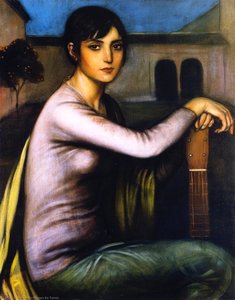
The composition of the painting is characterized by a sense of intimacy and warmth. The young woman is seated in a chair, looking directly at the viewer with a sense of confidence and self-assurance. In the background, a doorway opens up to reveal a view of the Puente Romano and the Torre de la Calahorra in Córdoba, Spain. The use of light and shadow creates a sense of depth and dimensionality, drawing the viewer into the painting.Artistic Style
The artistic style of Julio Romero De Torres is characterized by a blend of traditional and modern elements. His use of color and composition is reminiscent of the old masters, while his subject matter and technique are distinctly modern. The La Chiquita Piconera is a prime example of this style, with its bold brushstrokes and vivid colors.- The painting is considered a masterpiece of Spanish art and is widely regarded as one of the most important works of the 20th century.
- The Museo Julio Romero de Torres in Córdoba, Spain, has an extensive collection of the artist's works, including the La Chiquita Piconera.
- Handmade oil painting reproductions of the La Chiquita Piconera are available at https://ArtsDot.com, allowing art lovers to own a piece of history.
The La Chiquita Piconera is a testament to the enduring power of art to captivate and inspire us. Its beauty, composition, and historical significance make it a must-see for anyone interested in Spanish art and culture.
Related Artworks
Artist Biography
A Son of Córdoba: The Life and Art of Julio Romero de Torres
Julio Romero de Torres, born in the heart of Córdoba, Spain, in 1874, was more than simply a painter; he was a visual poet who captured the very soul of Andalusia. His life unfolded amidst a period of intense cultural ferment, as Spain grappled with its identity and sought new artistic voices to express it. Coming from a family deeply rooted in artistry—his father, Rafael Romero Barros, being a celebrated realist painter and founder of Córdoba’s Museum of Fine Arts—Julio's path seemed almost predetermined. Yet, he wasn’t merely an inheritor of his father’s style; he forged his own unique vision, one that masterfully blended realism with the burgeoning symbolism of the late 19th and early 20th centuries. From a tender age, ten years old to be precise, Romero de Torres received formal training at Córdoba's School of Fine Arts, laying the foundation for a career defined by meticulous technique and profound emotional depth. His earliest works already hinted at his innate talent, but it was through extensive travel and exposure to diverse artistic currents that his style truly began to blossom.
Forging a Symbolist Vision: Travel and Transformation
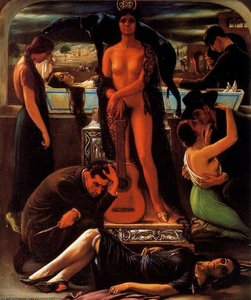
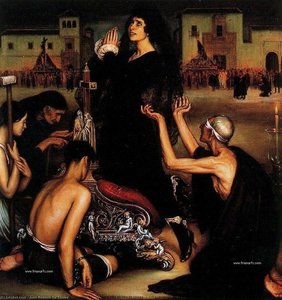
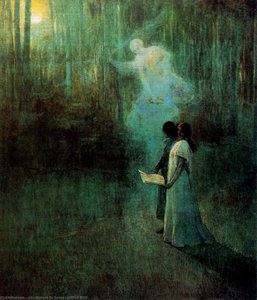
Romero de Torres’s artistic journey wasn't confined within the borders of Spain. He embarked on extensive travels across Europe—Italy, France, England, the Low Countries—immersing himself in different cultures and absorbing new influences. These experiences were pivotal in shaping his signature style, a captivating blend of realism and impressionism infused with potent symbolism. While he initially experimented with various approaches, it was after a transformative trip to Italy in 1908 that his artistic direction solidified. He became increasingly fascinated by the power of suggestion, using evocative imagery and carefully chosen colors to convey deeper meanings and emotions. This period marked a distinct departure from purely representational art towards a more subjective and symbolic expression. The intellectual climate of Córdoba also played a crucial role; he engaged with the vibrant discussions at the Royal Academy of Science, Arts and Literature, absorbing the philosophical currents that informed his work. He wasn't simply painting what he saw but interpreting the world through a lens of symbolism, folklore, and Andalusian identity. Amor Místico y Amor Profano, perhaps his most iconic work, exemplifies this approach perfectly.
Masterpieces of Andalusia: Themes and Techniques
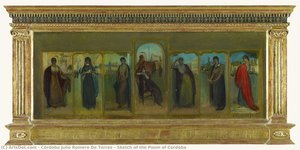
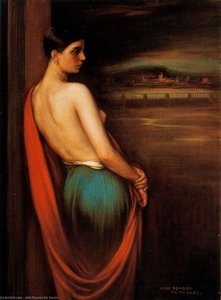
Romero de Torres’s oeuvre is deeply rooted in the culture and landscape of Andalusia, particularly his beloved Córdoba. His paintings are populated with archetypal figures—gypsies, bullfighters, women draped in shawls—rendered with a striking realism that belies their symbolic weight. El Poema de Córdoba, another testament to his deep connection with his hometown, is a triptych celebrating the city’s rich history and cultural heritage. His technique was characterized by meticulous attention to detail, dramatic lighting, and a masterful use of color—often employing a palette dominated by blacks, blues, and greens to create an atmosphere of mystery and intensity. He didn't shy away from challenging societal norms either; his work often touched upon themes of passion, sensuality, and the complexities of human relationships, sometimes sparking controversy but always captivating audiences. The artist’s ability to imbue everyday scenes with a sense of mythic grandeur is particularly striking. He elevated the ordinary—a flamenco dancer, a street scene—to the level of timeless allegory.
Recognition and Enduring Legacy
Throughout his career, Romero de Torres received numerous accolades, including honorable mentions and awards at national exhibitions in 1895, 1899, and 1904. He became a respected figure in the Spanish art world, eventually securing a professorship at the Real Academia de Bellas Artes de San Fernando in Madrid in 1916. However, his artistic journey wasn't without its challenges; he faced criticism for his unconventional subject matter and stylistic choices. Despite these obstacles, he remained true to his vision, continuing to explore the themes that resonated most deeply with him. Today, his legacy endures through his captivating paintings and the Museo Julio Romero de Torres in Córdoba, housed in his former residence. The museum stands as a testament to his enduring impact on Spanish art, showcasing not only his own works but also pieces by other prominent artists like Francisco Zurbarán, Alejo Fernández, and Valdés Leal. His ability to capture the essence of Andalusia—its beauty, its passion, its mystery—continues to inspire and enthrall viewers around the world, solidifying his place as one of Spain’s most important and beloved painters.
- Born: Córdoba, Spain, 1874
- Died: Córdoba, Spain, 1930
- Style: Symbolism, Realism, Impressionism
- Notable Works: Amor Místico y Amor Profano, El Poema de Córdoba, La Chiquita Piconera
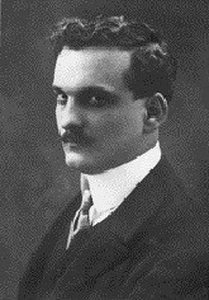
Córdoba Julio Romero de Torres
1874 - 1930 , Spain
Quick Facts
- Artistic Movement Or Style: Symbolism, Impressionism
- Date Of Birth: 1874
- Date Of Death: 1930
- Full Name: Julio Romero de Torres
- Nationality: Spanish
- Notable Artworks:
- Amor Místico y Amor Profano
- El Poema de Córdoba
- La chiquita piconera
- Place Of Birth: Córdoba, Spain