 Preview
 Send
Send Share
Share
 Details

 Download
 Similars
 X-Ray
X-Ray Diaporama
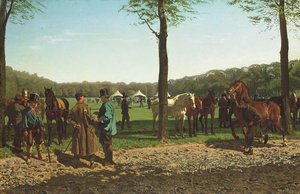
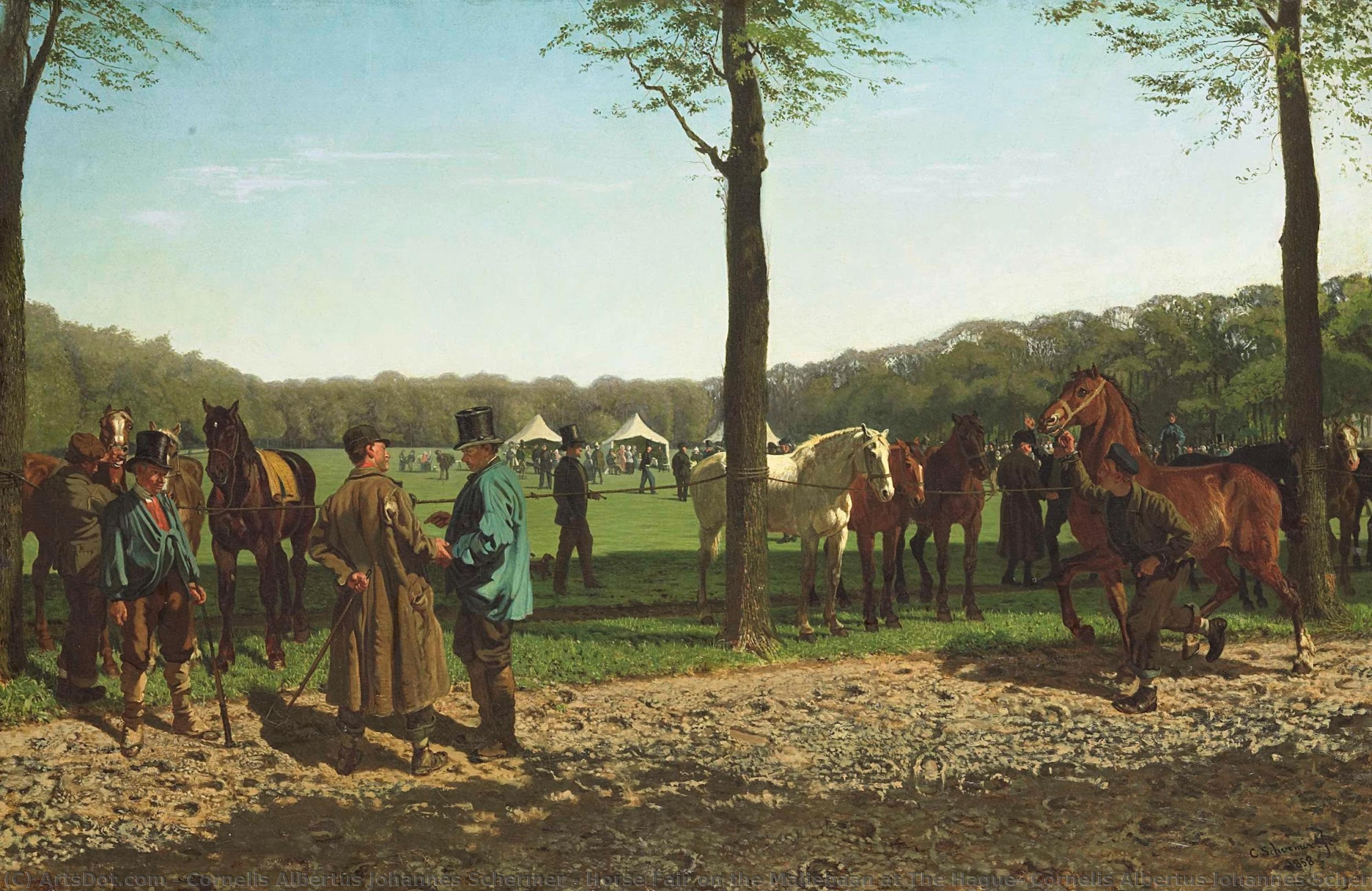
Horse Fair on the Maliebaan at The Hague, Cornelis Albertus Johannes Schermer, 1858
 1858
1858 63.0 x 97.0 cm
 Read More
Giclée / Art Print
Museum-quality giclée or canvas print with fast production and flexible finish options. ( Buy Hand Made Painting Buy Image)




































Pick from our preset sizes that match the artwork's original proportions.

You may enter your own dimensions to fit a specific frame or space. If your selected size does not match the original image's proportions, we will either crop the artwork or extend the image with a mirrored or solid-fill edge. A digital mockup will be sent for your approval before production begins.
Please note that the on-screen preview does not reflect the actual cropping or extension. Only the mockup will accurately show the final composition.
While custom sizes are available, we recommend selecting a dimension from the predefined list to preserve the original proportions.
Worldwide Delivery () in 2 weeks instead of standard 4/5 weeks. (3 September)

Free Worldwide Express Shipping

High-Quality Linen Canvas

Full Shipping Insurance

Customs Tax Refund Guarantee

True Color Matching Guarantee

60-Day Return Policy (Defects Only)

100% Money-Back Guarantee

Bulk Discount Offer
 Glass option is only available in size under 110 CM

Horse Fair on the Maliebaan at The Hague, Cornelis Albertus Johannes Schermer, 1858
Giclée / Art Print
Reproduction Size
-


Total Price
$ 63
Related Artworks









Artist Biography
The Equestrian Vision of Cornelis Schermer
Born in the historic city of The Hague in 1824, Cornelis Albertus Johannes Schermer emerged as a profound voice in nineteenth-century Dutch art, specifically through his unparalleled devotion to the equine form. His life and work serve as a window into a bygone era, where the relationship between man and horse was central to the social and economic fabric of European life. As both a painter and an engraver, Schermer possessed a rare ability to translate the muscular tension, the glossy sheen of a coat, and the spirited temperament of horses onto canvas and plate with breathtaking precision. His artistic journey was not merely about documenting animals, but about capturing the very soul of the Victorian era's fascination with movement, strength, and natural grandeur.
The foundation of Schermer’s technical mastery can be traced back to his early training under the guidance of Anton Mauve. As a prominent figure within the Hague School, Mauve provided Schermer with an essential understanding of tonal painting and the delicate art of capturing atmospheric light. This influence is palpable in Schermer's ability to render the hazy, moisture-laden air of the Netherlands, allowing his subjects to emerge from their environments with a sense of lived-in reality. By blending the meticulous anatomical accuracy required for equestrian portraiture with the soft, evocative techniques of tonalism, Schermer created works that felt both physically substantial and poetically ethereal.
Mastery of the Canvas and the Marketplace
Schermer’s reputation reached international heights through his ability to compose complex, narrative-driven scenes that placed his equine subjects within a broader human context. His most celebrated achievement, “The Horse Fair on the Maliebaan at The Hague” (1858), stands as a monumental testament to his skill. In this ambitious work, Schermer does not merely paint horses; he orchestrates a vibrant, bustling tableau of life. The viewer is transported to the historic marketplace, where the clatter of hooves and the negotiations of traders seem almost audible. Through a masterful command of composition, he balances the energetic movement of the crowd with the focused, anatomical detail of the horses being presented for sale.
His artistic style represents a sophisticated intersection of several movements:
- Realism: A commitment to the truthful depiction of anatomy and the gritty, authentic details of 19th-century commerce.
- Romantic Idealism: An infusion of emotion and grandeur that elevates his subjects beyond mere biological specimens into symbols of nobility and power.
- Tonalism: The use of a nuanced palette to evoke specific moods and atmospheric conditions, a legacy of his training with the Hague Impressionists.
Beyond the large-scale oil paintings, Schermer’s work as an engraver allowed him to disseminate his vision to a wider audience, ensuring that his depictions of equine elegance reached collectors far beyond the borders of the Netherlands. His ability to manipulate line and shadow in printmaking complemented the lush textures of his paintings, creating a cohesive body of work that celebrated the horse as both a biological marvel and a cultural icon. Today, Schermer remains a cornerstone of equestrian art, remembered for a career that successfully bridged the gap between scientific observation and romantic storytelling.
cornelis albertus johannes schermer
1824 - 1915 , Netherlands
Quick Facts
- Artistic Movement Or Style: Equine Art
- Date Of Birth: 1824
- Full Name: Cornelis Albertus Johannes Schermer
- Nationality: Dutch
- Notable Artworks: ['Horse Fair on the Maliebaan at The Hague']
- Place Of Birth: The Hague, Netherlands