 Preview
 Send
Send Share
Share
 Details

 Download
 Similars
 X-Ray
X-Ray Diaporama
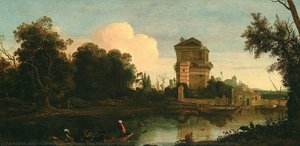
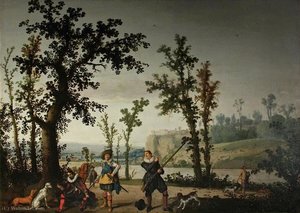
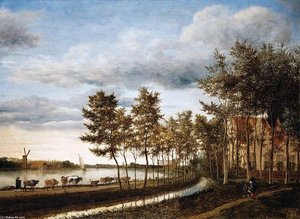
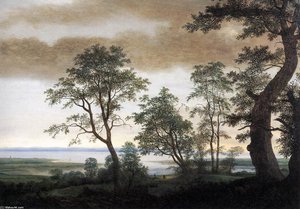
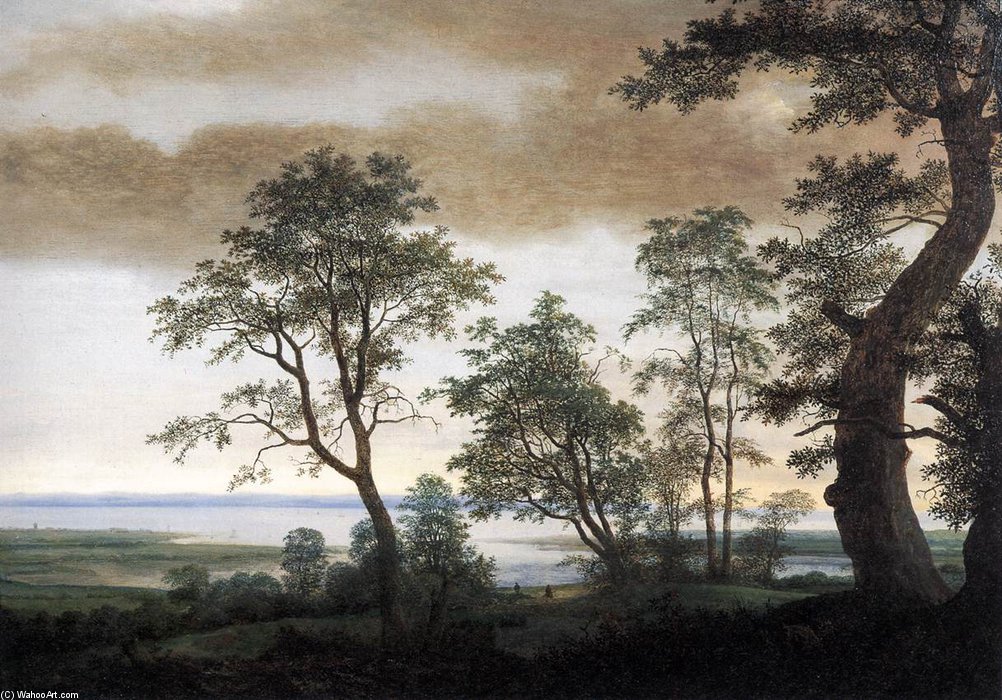
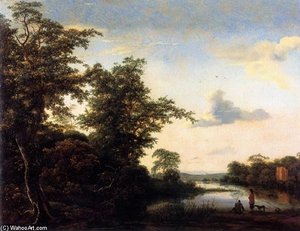
Landscape With Estuary
 Read More
Hand Made Oil Reproduction
Hand-painted oil on canvas in your size and frame, made to order by our artists. ( Buy Print Buy Image)




































Pick from our preset sizes that match the artwork's original proportions.

You may enter your own dimensions to fit a specific frame or space. If your selected size does not match the original image's proportions, we will either crop the artwork or extend the painting with additional hand-painted elements. A digital mockup will be sent for your approval before production begins.
Please note that the on-screen preview does not reflect the actual cropping or extension. Only the mockup will accurately show the final composition.
While custom sizes are available, we recommend selecting a dimension from the predefined list to preserve the original proportions.
After order, ArtsDot.com team will email client for instructions and provide a mockup preview
Worldwide Delivery () in 3/4 weeks instead of standard 5 weeks. (17 August). No compromise on quality.

Free Worldwide Express Shipping

High-Quality Linen Canvas

Full Shipping Insurance

Customs Tax Refund Guarantee

True Color Matching Guarantee

60-Day Return Policy (Defects Only)

100% Money-Back Guarantee

Bulk Discount Offer
 Glass option is only available in size under 110 CM

Landscape With Estuary
Reproduction Medium
Reproduction Size
-


Total Price
$ 263
Related Artworks
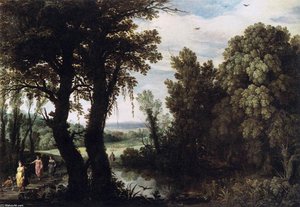
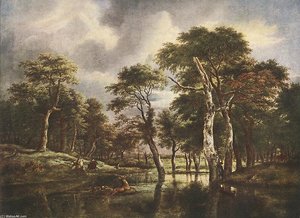
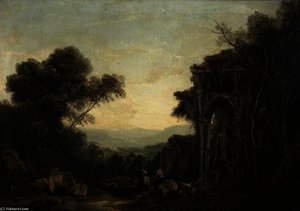
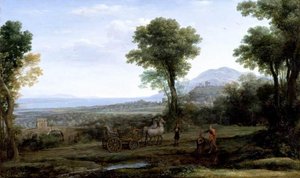
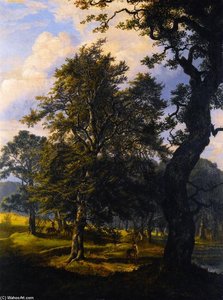
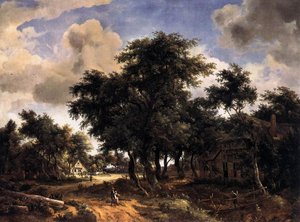
Artist Biography
Cornelis Hendricksz the Younger Vroom: A Pioneer of Dutch Seascape
Cornelis Hendricksz Vroom (1591-1661) stands as a pivotal figure in the history of European painting, particularly recognized for his groundbreaking contributions to the development of Dutch seascape art. Born in Haarlem during the vibrant era of the Dutch Golden Age, Vroom’s life was marked by adventure and artistic evolution, ultimately shaping him into one of the first artists to truly capture the dynamism and power of the sea on canvas. His work wasn't merely depictions of ships at sea; it represented a shift towards realism, atmospheric perspective, and a profound engagement with the natural world – qualities that would profoundly influence generations of Dutch painters.Early Life and Artistic Training
Vroom’s lineage was steeped in artistic tradition. He was the son of Hendrick Cornelisz Vroom, a renowned marine painter himself, and his stepfather was a ceramic painter, establishing a family legacy deeply rooted in visual arts. This familial connection provided him with an early introduction to painting techniques and styles. However, young Cornelis, restless and seeking experience beyond the confines of Haarlem, embarked on a remarkable journey that spanned Europe. Driven by a desire for adventure and artistic exploration, he initially traveled to Spain, then Italy, immersing himself in the artistic currents of Florence and Rome. He studied under Paulus Bril, absorbing the principles of classical composition and technique. This formative period exposed him to diverse artistic influences, including Italian Renaissance masters, which would later inform his own distinctive style. His early travels were not without hardship; tales abound of perilous journeys, freezing temperatures, and near-starvation experiences – stories that underscore the adventurous spirit behind his art.The Development of a Unique Style
Returning to Haarlem in 1590, Vroom established himself as an independent artist. He quickly developed a distinctive style characterized by a remarkable ability to convey the movement and texture of water. Unlike earlier Netherlandish marine paintings that often presented ships as static objects within a stylized background, Vroom’s works depicted the sea as a living force – turbulent, unpredictable, and imbued with atmospheric depth. He pioneered the use of “bird's-eye” viewpoints, looking down on the waves from above, a technique borrowed from earlier Flemish painters but refined to create a sense of immediacy and drama. Crucially, he moved away from this elevated perspective in later works, adopting a lower vantage point that offered a more realistic and immersive experience for the viewer. This shift reflected his growing interest in capturing the raw power and beauty of the natural world. His compositions often featured dramatic lighting effects, highlighting the interplay of light and shadow on the water’s surface, further enhancing the sense of realism and dynamism.Major Works and Themes
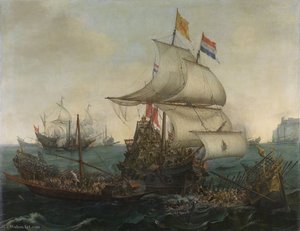
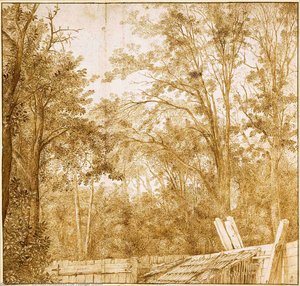
Vroom's artistic output encompassed a diverse range of subjects, including naval battles, coastal scenes, and depictions of maritime life. Among his most celebrated works are “Trees behind a Wooden Fence” (circa 1622), a serene pastoral scene that showcases his mastery of landscape composition; "Oak Wood With Stagnant Water" (circa 1630s), which captures the stillness and tranquility of a wooded shoreline; and “River Landscape with Imaginary Roman Ruins” (circa 1635), demonstrating his ability to integrate historical elements into contemporary landscapes. His most famous works, however, are undoubtedly his depictions of naval engagements – particularly those commemorating victories over the Spanish Armada. These paintings were commissioned by the Dutch government and served as powerful symbols of national pride and maritime prowess. The Battle of Lepanto (1615), though unsigned, is widely attributed to Vroom due to its stylistic similarities with other known works. Beyond these grand historical scenes, Vroom also produced numerous smaller-scale works that captured the everyday life of fishermen and sailors, offering a glimpse into the realities of maritime existence.Influence and Legacy
Cornelis Hendricksz Vroom’s impact on the development of Dutch landscape painting is undeniable. He was a key figure in establishing a new tradition of realistic seascape art that would be followed by his son, Cornelis Hendriksz Vroom, and other prominent artists such as Jan van de Velde and Jacob van Ruisdael. His innovative use of perspective, atmospheric effects, and dynamic compositions paved the way for future generations of Dutch painters to explore the complexities and beauty of the natural world. His work continues to be admired today for its technical skill, emotional intensity, and profound engagement with the subject matter. Vroom’s legacy extends beyond his individual paintings; he represents a pivotal moment in the history of art – a time when artists began to truly embrace the power and potential of landscape painting as a means of expressing both observation and emotion. His life story—a blend of artistic ambition, personal hardship, and adventurous spirit—adds another layer of fascination to his already remarkable contribution to the world of art.
cornelis hendricksz the younger vroom
1591 - 1661 , Netherlands
Quick Facts
- Artistic Movement Or Style: Dutch Landscape Art
- Artists Or Movements Influenced By This Artist:
- Jan and Esaias van de Velde
- Adam Elsheimer
- Artists Who Influenced This Artist:
- Hendrik Cornelisz Vroom
- Jacob van Ruisdael
- Date Of Birth: 1591, Haarlem
- Date Of Death: 1661, Haarlem
- Full Name: Cornelis Hendricksz Vroom
- Nationality: Dutch
- Notable Artworks:
- Trees behind a Fence
- Oak Wood With Stagnant Water
- River Landscape with Imaginary Roman Ruins
- Place Of Birth: Haarlem, Netherlands