 Preview
 Send
Send Share
Share
 Details

 Download
 Similars
 X-Ray
X-Ray Diaporama
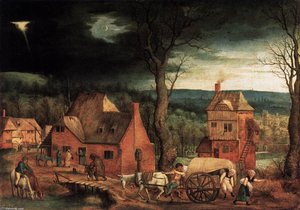
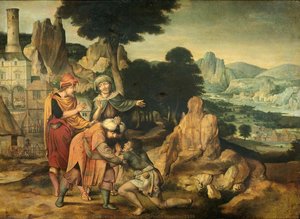
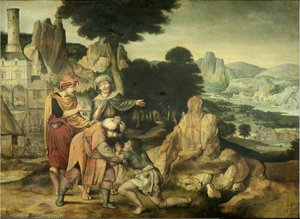
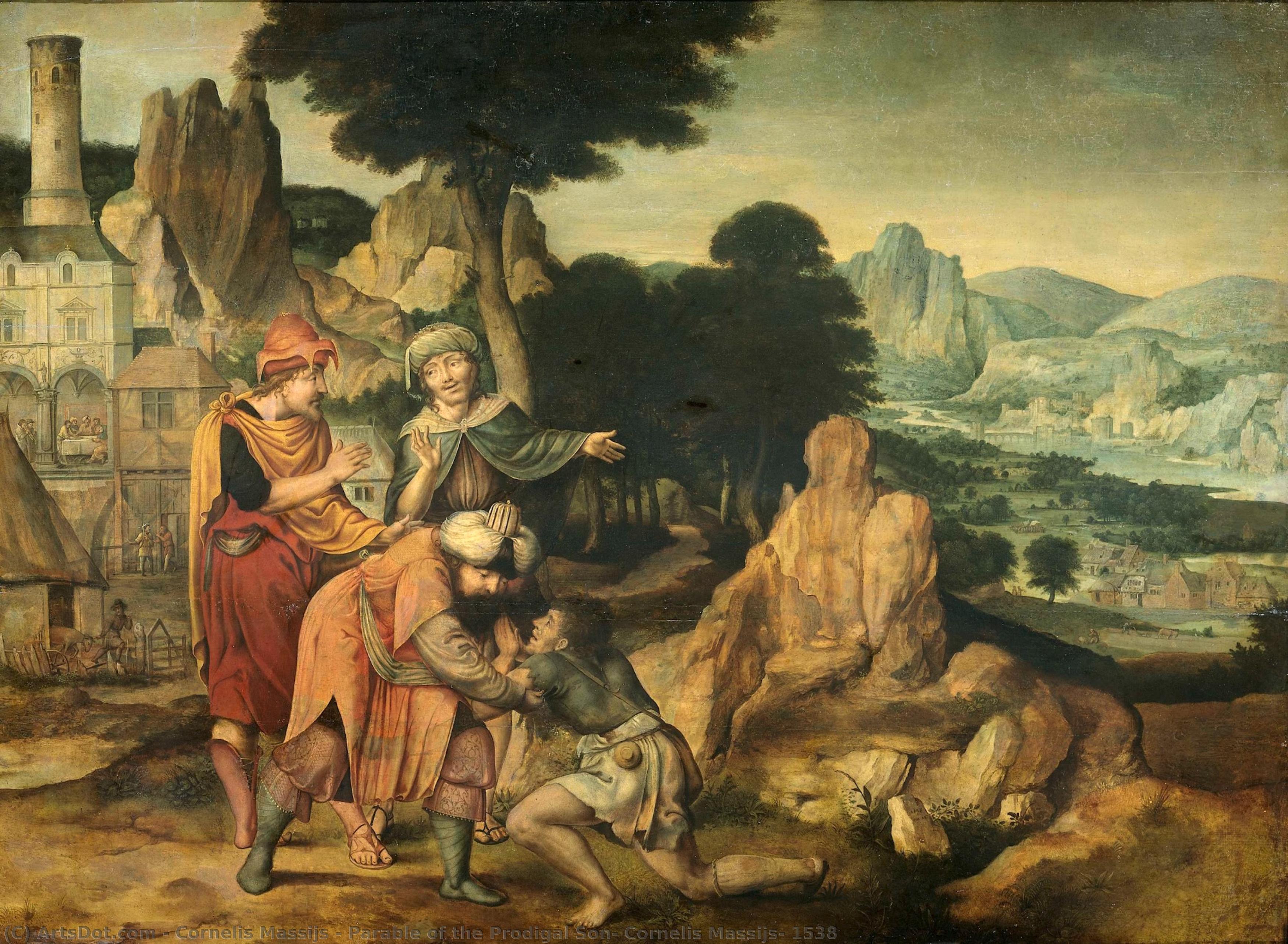
Parable of the Prodigal Son, Cornelis Massijs, 1538
 1538
1538 75.0 x 100.0 cm
 Read More
Hand Made Oil Reproduction
Hand-painted oil on canvas in your size and frame, made to order by our artists. ( Buy Print Buy Image)




































Pick from our preset sizes that match the artwork's original proportions.

You may enter your own dimensions to fit a specific frame or space. If your selected size does not match the original image's proportions, we will either crop the artwork or extend the painting with additional hand-painted elements. A digital mockup will be sent for your approval before production begins.
Please note that the on-screen preview does not reflect the actual cropping or extension. Only the mockup will accurately show the final composition.
While custom sizes are available, we recommend selecting a dimension from the predefined list to preserve the original proportions.
After order, ArtsDot.com team will email client for instructions and provide a mockup preview
Worldwide Delivery () in 3/4 weeks instead of standard 5 weeks. (16 August). No compromise on quality.

Free Worldwide Express Shipping

High-Quality Linen Canvas

Full Shipping Insurance

Customs Tax Refund Guarantee

True Color Matching Guarantee

60-Day Return Policy (Defects Only)

100% Money-Back Guarantee

Bulk Discount Offer
 Glass option is only available in size under 110 CM

Parable of the Prodigal Son, Cornelis Massijs, 1538
Reproduction Medium
Reproduction Size
-


Total Price
$ 263
Artwork Description
Related Artworks

Artist Biography
Cornelis Massys: A Pioneer of Realism in the Northern Renaissance
Cornelis Massys, born in Antwerp around 1510 and tragically lost to history sometime before 1556, stands as a pivotal figure bridging the fantastical landscapes of Joachim Patinir with the burgeoning realism that would define later Netherlandish painting. Often overshadowed by his more famous brother, Jan Massys, Cornelis carved out a unique artistic identity through his unsettling genre scenes, meticulous animal studies, and early contributions to printmaking – establishing himself as a crucial innovator in the transition between stylistic epochs.
His early life was deeply intertwined with the vibrant artistic community of Antwerp. Trained under his father, Quinten Matsys, a leading figure in the city’s guild, Cornelis initially followed in his father's footsteps, mastering the techniques of portraiture and religious painting. However, unlike his brother who remained firmly rooted in traditional Flemish styles, Cornelis demonstrated an early inclination towards exploring new approaches to representation. This manifested first through his engagement with printmaking – a skill he diligently honed, producing intricate engravings that showcased both technical proficiency and a nascent interest in capturing the nuances of everyday life.
The Landscape as a Starting Point
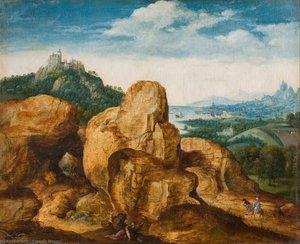
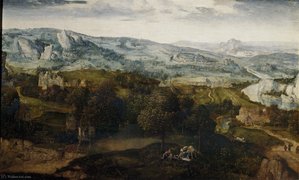
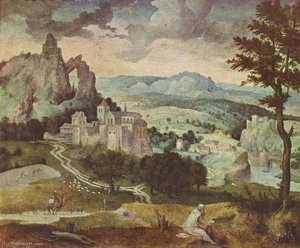
Cornelis Massys’s most enduring legacy rests upon his pioneering work in landscape painting. Initially, his landscapes were deeply influenced by Patinir – characterized by their dreamlike quality, intricate details, and allegorical narratives. Works like “Landscape with the Flight to Egypt” (c. 1538) demonstrate this early phase perfectly: a meticulously rendered vista populated with symbolic figures, evoking a sense of otherworldly beauty. Yet, even within this established framework, Massys subtly introduced elements of observation and atmospheric perspective – hinting at a shift towards a more naturalistic approach.
Crucially, Massys’s landscapes weren't merely decorative backgrounds; they served as the foundation for his explorations into genre scenes. He began to integrate human figures into these meticulously constructed environments, creating unsettling juxtapositions between idealized nature and the realities of human existence. This marked a departure from the purely symbolic landscapes of Patinir and paved the way for the development of ‘pure landscapes’ – characterized by their focus on depicting the natural world without narrative or allegorical content – that would emerge in subsequent generations.
Genre Scenes and Moralizing Prints
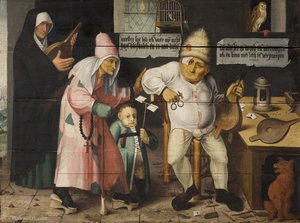
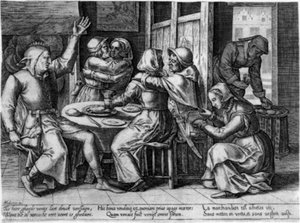
As his career progressed, Massys increasingly focused on genre scenes—paintings depicting everyday life. These works are often imbued with a sense of unease and moral ambiguity. His “Brothel” (c. 1538-1540), an engraving, is perhaps the most striking example: a chaotic depiction of revelry and indulgence, rendered in stark detail that exposes the corruption and moral decay beneath the surface. These prints weren’t simply illustrations; they were deliberate commentaries on societal values, reflecting the anxieties and concerns of the era.
Massys's engagement with printmaking extended beyond mere illustration. He skillfully copied works by Italian masters like Marcantonio Raimondi and Parmigianino, adapting their techniques to his own style. Furthermore, he produced a series of engravings depicting biblical stories and moralizing scenes – demonstrating a keen understanding of the power of visual narrative to convey ethical lessons.
A Legacy of Realism and Innovation
Cornelis Massys’s artistic journey represents a crucial transition in the history of Northern Renaissance art. He wasn't merely a follower of his father; he was an innovator who pushed the boundaries of representation, introducing elements of realism, atmospheric perspective, and psychological depth into his work. His landscapes served as a springboard for his genre scenes, which, in turn, challenged conventional notions of beauty and morality.
While his output remains relatively modest compared to some of his contemporaries, Massys’s influence is undeniable. He laid the groundwork for subsequent generations of landscape painters – including artists like Pieter Bruegel the Elder – who would build upon his innovations and further develop the genre. His legacy endures not only in his surviving paintings and prints but also in his pioneering spirit and his willingness to challenge artistic conventions, solidifying his place as a significant, albeit often overlooked, figure in the development of Western art.
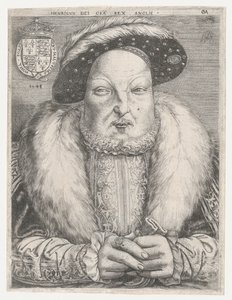
cornelis massys
1510 - 1556 , Belgium
Quick Facts
- Artistic Movement Or Style: Early Netherlandish
- Artists Or Movements Influenced By This Artist: ['Later Netherlandish landscape painting']
- Artists Who Influenced This Artist:
- Joachim Patinir
- Quentin Massys
- Date Of Birth: 1510, Antwerp
- Date Of Death: c. 1556, unknown
- Full Name: Cornelis Massys
- Nationality: Flemish
- Notable Artworks:
- Parable of the Prodigal Son
- Landscape with the Flight to Egypt
- Brothel
- Arrival of the Holy Family
- Place Of Birth: Antwerp, Belgium