 Preview
 Send
Send Share
Share
 Details

 Download
 Similars
 X-Ray
X-Ray Diaporama
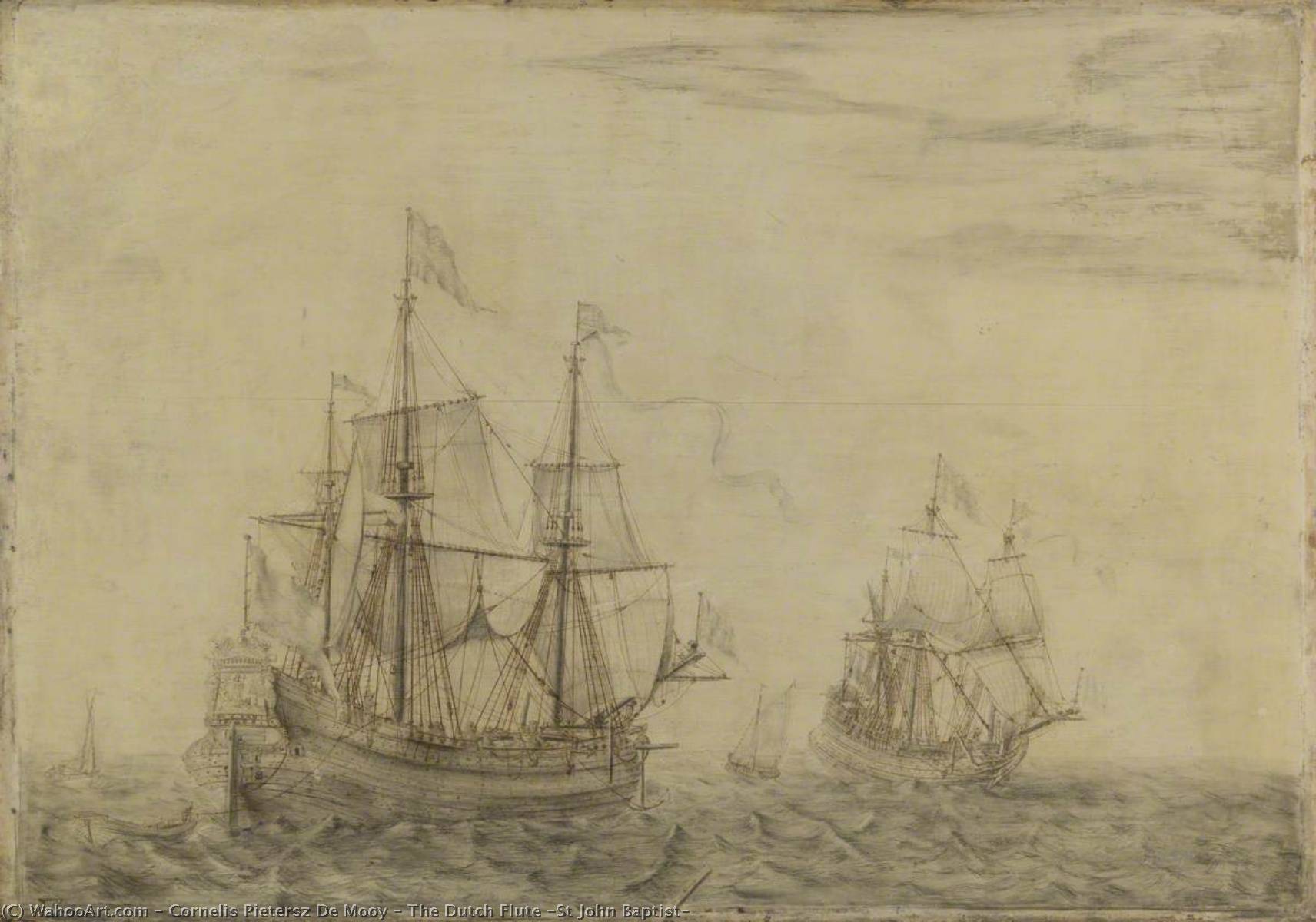
The Dutch Flute 'St John Baptist'
 1668
1668 59.0 x 83.0 cm
 Read More
Hand Made Oil Reproduction
Hand-painted oil on canvas in your size and frame, made to order by our artists. ( Buy Print Buy Image)




































Pick from our preset sizes that match the artwork's original proportions.

You may enter your own dimensions to fit a specific frame or space. If your selected size does not match the original image's proportions, we will either crop the artwork or extend the painting with additional hand-painted elements. A digital mockup will be sent for your approval before production begins.
Please note that the on-screen preview does not reflect the actual cropping or extension. Only the mockup will accurately show the final composition.
While custom sizes are available, we recommend selecting a dimension from the predefined list to preserve the original proportions.
After order, ArtsDot.com team will email client for instructions and provide a mockup preview
Worldwide Delivery () in 3/4 weeks instead of standard 5 weeks. (23 August). No compromise on quality.

Free Worldwide Express Shipping

High-Quality Linen Canvas

Full Shipping Insurance

Customs Tax Refund Guarantee

True Color Matching Guarantee

60-Day Return Policy (Defects Only)

100% Money-Back Guarantee

Bulk Discount Offer
 Glass option is only available in size under 110 CM

The Dutch Flute 'St John Baptist'
Reproduction Medium
Reproduction Size
-


Total Price
$ 263
Artwork Description
Artistic Significance
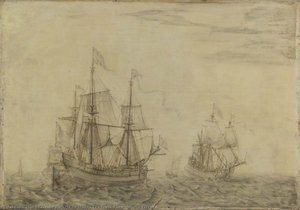
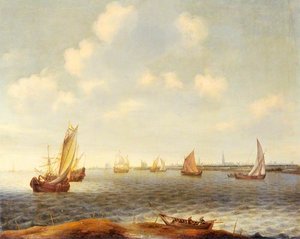
The painting depicts two ships sailing in the ocean, with crew members and passengers enjoying their time at sea. The atmosphere of the painting is calm and serene, capturing a moment in time when two ships were sailing together across the ocean. The level of detail in the painting is impressive, with intricate designs on the ships and realistic portrayals of the people on board. Key Features of the painting include:- The use of oil on panel, which allows for a high level of detail and texture
- The depiction of everyday life on ships in the 17th century
- The attention to detail in the designs and architecture of the ships
Artist Background
Cornelis Pietersz De Mooy was a Dutch painter known for his maritime scenes and landscapes. His work can be found in various museums and collections, including the National Maritime Museum (United States). To learn more about the artist and his works, visit https://ArtsDot.com/@/Cornelis-Pietersz-De-Mooy.The The Dutch Flute 'St John Baptist' is a significant work in the history of maritime art, offering a glimpse into life on ships in the 17th century. As a masterpiece by Cornelis Pietersz De Mooy, it continues to inspire and educate art lovers today. For handmade oil painting reproductions of this and other notable works, visit https://ArtsDot.com.
Related Artworks









Artist Biography
Cornelis de Mooy: Master of the Dutch Harbor
Cornelis Pietersz de Mooy, a name perhaps less familiar than Rembrandt or Vermeer, nevertheless stands as a towering figure in 17th-century Dutch art. Born around 1635 and tragically dying in 1693, De Mooy’s legacy rests primarily on his extraordinary depictions of maritime life – specifically, the bustling harbors and turbulent seas surrounding the Netherlands. His paintings aren't merely scenes of ships; they are meticulously rendered narratives of commerce, naval power, and the ever-present drama of human interaction with the elements. He was a master of capturing movement, light, and atmosphere, elevating the humble subject of harbor life to an art form.
De Mooy’s early life remains somewhat shrouded in mystery. Records suggest he began his artistic training as an assistant to Frans Hals in Haarlem, absorbing the influence of Hals' dynamic brushwork and interest in capturing fleeting moments. However, it was in Amsterdam that De Mooy truly flourished, establishing himself as a leading marine painter by the 1660s. This period coincided with the height of Dutch maritime power – the Golden Age – and his work directly reflects this era’s economic dominance and naval prowess. Unlike many of his contemporaries who focused on grand historical or religious scenes, De Mooy chose to depict the realities of a nation built upon trade and seafaring.
The Language of the Sea
De Mooy's distinctive style is immediately recognizable through his masterful use of light and shadow. He employed a technique known as ‘chiaroscuro,’ dramatically contrasting bright highlights with deep, dark recesses to create a sense of depth and realism. His ships aren’t idealized; they are weathered, scarred by the sea, and often depicted in moments of intense action – battling storms, maneuvering through treacherous currents, or engaged in lively trade. The water itself is never static; it's rendered as a swirling mass of blues, greens, and whites, conveying both its beauty and its inherent danger.
Crucially, De Mooy’s paintings are populated with figures – sailors, merchants, dockworkers – each contributing to the narrative. These aren’t simply background elements; they add scale, drama, and a sense of human connection to the maritime scene. He meticulously depicted their clothing, tools, and expressions, revealing details about their lives and roles within the bustling harbor economy. His attention to detail extends beyond the figures themselves, encompassing the rigging of the ships, the construction of the docks, and the surrounding buildings – all rendered with remarkable accuracy.
Key Works and Influences
Among De Mooy’s most celebrated works are “Vessels in an Estuary off Amsterdam” (circa 1670), a dynamic depiction of ships navigating a complex waterway, and “Dutch Shipping” (1690), which captures the chaotic energy of a busy harbor. “The Dutch Flute ‘St John Baptist’,” also from 1685, showcases his ability to combine maritime scenes with intimate portraits, reflecting a broader interest in depicting everyday life.
De Mooy's work was influenced by several sources. The early works of Jan van de Velde the Elder, known for his detailed ship paintings, undoubtedly shaped his approach. However, De Mooy developed a unique style that transcended mere imitation. He drew inspiration from contemporary accounts of maritime life and, perhaps surprisingly, from the works of landscape painters like Jacob van Ruisdael, whose atmospheric depictions of nature informed his treatment of light and color.
Legacy and Historical Significance
Despite not achieving the same level of fame as some of his contemporaries, Cornelis de Mooy’s contribution to Dutch art is undeniable. His paintings offer a valuable glimpse into the economic and social realities of the Golden Age, revealing the importance of maritime trade to the Netherlands' prosperity. His meticulous attention to detail, combined with his dramatic use of light and color, established him as one of the foremost marine painters of his time.
Today, De Mooy’s works are housed in major museums across Europe, including the Rijksmuseum in Amsterdam and the Mauritshuis in The Hague. His paintings continue to captivate viewers with their vibrant depictions of a bygone era – an era defined by exploration, trade, and the enduring allure of the sea.
cornelis pietersz de mooy
1640 - 1693
Quick Facts
- Artistic Movement Or Style: Marine painting
- Artists Or Movements Influenced By This Artist: ['Philips Cluver']
- Artists Who Influenced This Artist: ['Jan van de Velde II']
- Date Of Birth: c.1635/1645
- Date Of Death: 1693
- Full Name: Cornelis Pietersz de Mooy
- Nationality: Dutch
- Notable Artworks:
- Vessels in an Estuary
- Dutch Shipping
- The Dutch Flute 'St John Baptist'
- Place Of Birth: Waddenzee, Netherlands