

 Preview
 Send
Send Share
Share
 Details

 Download
 Similars
 X-Ray
X-Ray Diaporama
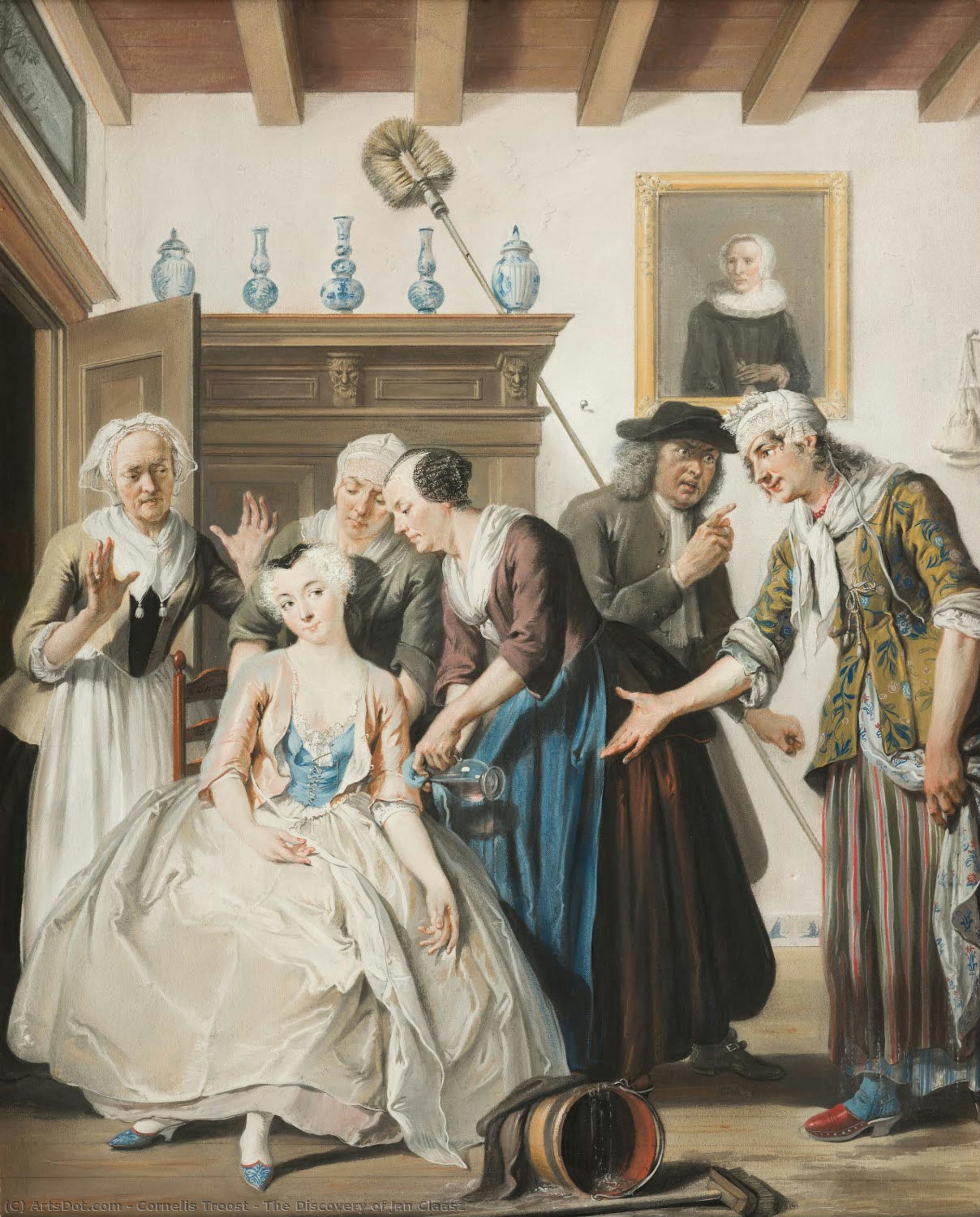
The Discovery of Jan Claasz


 Read More
Purchase a high-resolution, enhanced digital image, far superior to the online preview.
Each file is meticulously prepared by our in-house specialists using advanced tools and expert manual retouching. We ensure every image has exceptional clarity, precise color accuracy, and fine detail.
The final file is delivered via email within 72 hours, optimized for immediate use in professional, editorial, and print environments. This is the same quality trusted by top-tier design studios, publishers, and galleries.
Digital Image
Download a high-resolution file for personal display, printing, and creative projects. ( Buy Print Buy Hand Made Painting)
Included in Every Digital Image Order
Expert Digital Delivery, Guaranteed
When you choose ArtsDot.com, you're not just getting an image - you're receiving a professionally enhanced digital artwork, crafted with precision and backed by a satisfaction guarantee. Here's everything that comes with your order, automatically:

Fast Email Delivery
Your high-resolution digital image file will be emailed to you within 72 hours of ordering - ready for immediate use.

AI-Enhanced Digital File
Your artwork is professionally optimized using advanced AI tools and manual editing, ensuring maximum detail, clarity, and color accuracy.

Free Lifetime Re-Delivery
Accidentally deleted or lost your file? No worries - we'll resend it to you anytime, free of charge.

No Import Fees - Ever
Enjoy your artwork instantly with zero customs, duties, or delivery fees - digital downloads are always tax-free.

Color Accuracy Guarantee
We ensure your digital image reflects the original colors as closely as possible using professional tools and color management.

60-Day Satisfaction Guarantee
If you're not satisfied with your digital image, we'll revise it or refund 100% within 60 days - no questions asked.

100% Money-Back Guarantee
Not satisfied? Get a full refund within 60 days of receiving your digital file - no questions asked.

Bulk Order Discounts
Buy 3 images, save 10% - Buy 5, save 15% - Buy 10+, save 20%. Great for creative projects, galleries, and agencies.
Collectible Description
A Glimpse into Amsterdam’s Rococo Heart: The Discovery of Jan Claasz
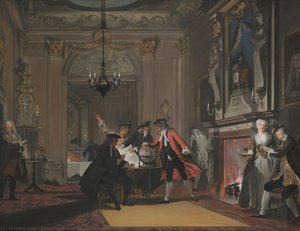
Cornelis Troost's "The Discovery of Jan Claasz," painted in 1738, isn’t merely a depiction of a theatrical scene; it’s a vibrant snapshot of 18th-century Amsterdam life, brimming with wit, intrigue, and the subtle tensions simmering beneath a veneer of social grace. This pastel masterpiece, now residing within the Mauritshuis in The Hague, transports us to a dimly lit room, thick with conversation and the promise – or threat – of clandestine romance. Troost masterfully captures the atmosphere of a private gathering, a microcosm reflecting the city’s bustling cultural landscape.
The painting centers around Saartje, a young woman poised on the precipice of marriage to the decidedly unremarkable Reinier. Her secret passion, however, lies with Jan Claasz, a figure shrouded in mystery and disguised as a servant girl. The scene unfolds with a carefully orchestrated chaos – bottles scattered across tables, suggesting revelry and perhaps a touch of excess; a vase and bowl hinting at a shared meal, fostering intimacy; and the central focus: Saartje’s clandestine encounter with her lover. Troost's skill lies not just in rendering these objects but in conveying the unspoken emotions swirling within this tableau – desire, deception, and the desperate hope for a forbidden connection.
Technique and Style: The Delicate Dance of Pastel
Troost’s choice of medium—pastel on paper—is crucial to understanding the painting's allure. Pastels offer an unparalleled luminosity and delicate handling, allowing Troost to build layers of color with astonishing subtlety. He employs a loose, expressive brushstroke, characteristic of Rococo style, prioritizing atmosphere and feeling over precise detail. Notice how he uses light and shadow to create depth and drama within the room – the soft glow illuminating Saartje’s face, contrasting sharply with the darker corners concealing her secret rendezvous. The composition is carefully balanced, drawing the eye through a series of interconnected vignettes, each contributing to the overall narrative.
The painting's palette leans towards warm, inviting tones—russets, ochres, and creams—creating a sense of intimacy and domesticity. However, these comforting hues are punctuated by flashes of brighter color – the crimson of a ribbon or the deep purple of a velvet drape – adding visual interest and subtly hinting at the underlying drama. The use of *sfumato*, a technique borrowed from Leonardo da Vinci, softens edges and creates an ethereal quality, further enhancing the painting’s dreamlike atmosphere.
A Window into Amsterdam's Social Fabric
“The Discovery of Jan Claasz” offers a fascinating glimpse into the social dynamics of 18th-century Amsterdam. The play itself, “Jan Claasz or the Supposed Servant Girl,” was a popular theatrical piece, reflecting contemporary anxieties about social mobility and romantic entanglements. Troost’s painting captures this spirit with remarkable accuracy, portraying a world where appearances often masked deeper desires and secret passions. The inclusion of details like the scattered bottles suggests a lively social scene, while the clandestine meeting underscores the constraints placed upon women during that era.
Furthermore, the painting speaks to the city’s thriving artistic community. Troost was not only a painter but also an actor and stage designer, deeply immersed in the world of theatre. This experience undoubtedly informed his ability to capture the nuances of human interaction and create such a compelling narrative within a single image. The scene is reminiscent of the works of Watteau and Boucher, both masters of capturing fleeting moments of social life with exquisite detail and psychological insight.
Symbolism and Emotional Resonance
Beyond its surface narrative, “The Discovery of Jan Claasz” is rich in symbolism. Saartje’s impending marriage represents the societal pressures placed upon women to conform to expectations. Her secret love for Jan Claasz embodies a rebellion against these constraints, a yearning for authentic connection and personal fulfillment. The act of disguise—Jan Claasz assuming the role of a servant girl—highlights the fluidity of identity and the lengths people will go to pursue their desires. The painting’s overall mood is one of bittersweet longing – a poignant reminder that love can blossom in unexpected places, even amidst social barriers.
Related Artworks
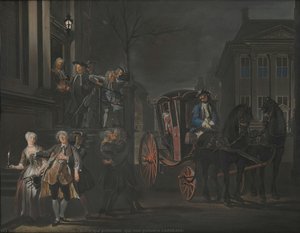
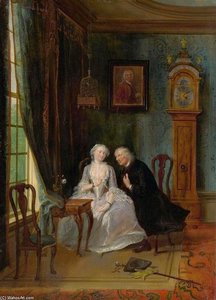
Artist Biography
A Window into Amsterdam’s Golden Age
Cornelis Troost, a name inextricably linked to the vibrant tapestry of 18th-century Amsterdam, was more than just an artist; he was a keen observer and masterful recorder of his era. Born in the heart of the Dutch Republic on October 8, 1696, in Amsterdam, Troost’s journey from aspiring actor to celebrated painter reveals a fascinating confluence of artistic passions and personal transformation. Initially trained as a performer on the stage, he found his true calling not amidst applause and drama, but within the meticulous detail and subtle nuances of painting. His life's trajectory is marked by a deliberate shift – a conscious rejection of the spotlight for the quiet contemplation of brushstrokes, ultimately leading him to become one of the most significant figures in Dutch Rococo genre art.
Troost’s artistic education began under the tutelage of Arnold Boonen, a respected portraitist who recognized his student's innate talent. This apprenticeship provided a crucial foundation, but it was Troost’s early drawings that truly showcased his distinctive style – particularly one dated 1708 depicting Prince Eugene of Savoy and the notorious bookseller and spy, Louis Renard, engaging in clandestine activities within a luxurious Amsterdam brothel. This piece, brimming with wit and intrigue, hinted at the themes he would later explore with such captivating skill: the complexities of social life, the allure of pleasure, and the hidden currents beneath the veneer of respectability.
The Elegance of Rococo and Social Narrative
As his career matured, Troost became a master of capturing the delicate balance between frivolity and sophistication. His work was undoubtedly influenced by the prevailing artistic trends of his time, including the dramatic compositions of William Hogarth, known for his satirical depictions of London society, and the elegant grace of French masters like Watteau, Boucher, and Lancret. This synthesis of Dutch realism and French Rococo elegance allowed him to create works that were both deeply grounded in local reality and exquisitely refined.
His repertoire was remarkably diverse, ranging from intimate portraits to monumental group compositions. Some of his most enduring contributions to the art world include:
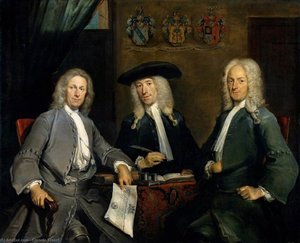
- Portrait of the Inspectors of the Collegium Medicum (1724): A stunning Rococo oil painting that showcases the height of 18th-century Dutch artistry and institutional elegance.
- Portrait of Maria Magdalena Stavenisse (c. 1726): A Baroque masterpiece that utilizes refined detail to showcase aristocratic wealth and status.
- Regents of the Aalmoezeniersweeshuis Orphanage (1729): A monumental group portrait that serves as a window into the social structures of Amsterdam, utilizing dramatic lighting and an opulent setting to convey a sense of civic importance.
Legacy of a Master Observer
The significance of Cornelis Troost lies in his ability to act as a visual historian for a period of transition. While the era of the great Dutch Golden Age masters had passed, Troost breathed new life into the Dutch tradition by infusing it with the lightheartedness and decorative charm of the Rococo movement. His paintings do not merely depict faces; they capture the spirit of an age—the rustle of silk, the flicker of candlelight, and the subtle social hierarchies of Amsterdam's upper class.
Through his witty portraits and captivating genre scenes, Troost left behind a legacy that continues to enchant viewers. He remains a pivotal figure who bridged the gap between the heavy, dramatic traditions of the 17th century and the airy, graceful aesthetics of the 18th century, ensuring that the social nuances of his beloved Amsterdam would be preserved in pigment for generations to come.
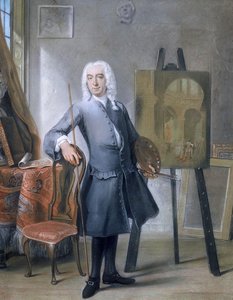
Cornelis Troost
1696 - 1750 , Netherlands
Quick Facts
- Artistic Movement Or Style: Rococo genre scenes
- Artists Or Movements Influenced By This Artist: ['Sara Troost']
- Artists Who Influenced This Artist:
- William Hogarth
- Watteau
- Boucher
- Lancret
- Date Of Birth: October 8, 1696
- Date Of Death: March 7, 1750
- Full Name: Cornelis Troost
- Nationality: Dutch
- Notable Artworks:
- NELRI series
- Jeronimus Tonneman
- Inspectors of Collegium
- Place Of Birth: Amsterdam, Netherlands

