 Send
Send Share
Share
 Details

 Download
 Similars
 Diaporama
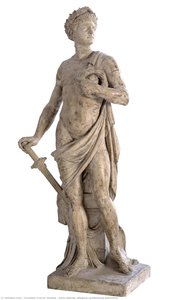
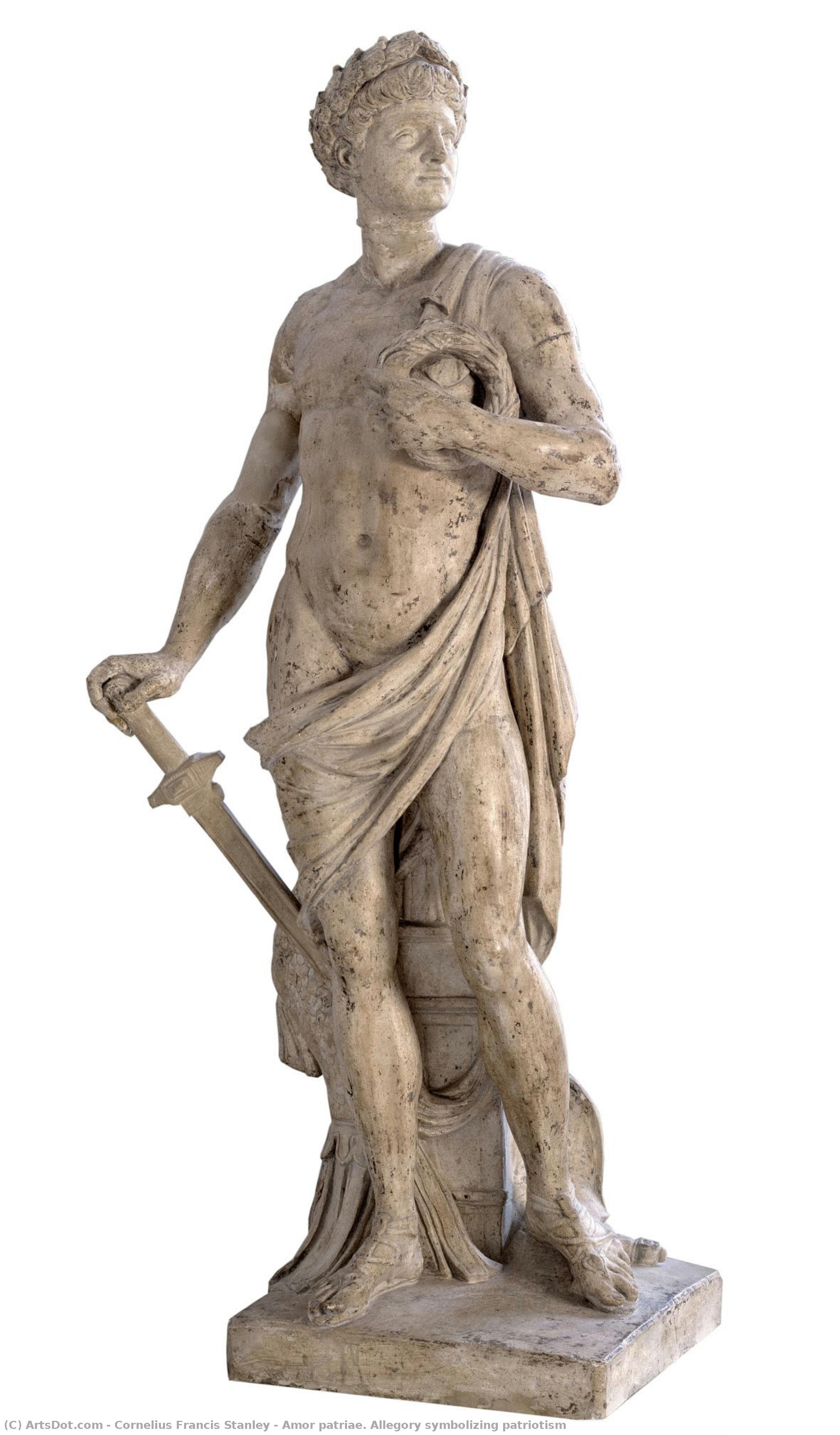
Amor patriae. Allegory symbolizing patriotism
 Plaster
- Sculpture
- Neoclassicism
 1777
1777- 19th Century
 45.0 x 112.0 cm
 National Gallery of Denmark
 Read More
Giclée / Art Print
Museum-quality giclée or canvas print with fast production and flexible finish options. ( Buy Hand Made Painting Buy Image)




































Pick from our preset sizes that match the artwork's original proportions.

You may enter your own dimensions to fit a specific frame or space. If your selected size does not match the original image's proportions, we will either crop the artwork or extend the image with a mirrored or solid-fill edge. A digital mockup will be sent for your approval before production begins.
Please note that the on-screen preview does not reflect the actual cropping or extension. Only the mockup will accurately show the final composition.
While custom sizes are available, we recommend selecting a dimension from the predefined list to preserve the original proportions.
Worldwide Delivery () in 2 weeks instead of standard 4/5 weeks. (22 August)

Free Worldwide Express Shipping

High-Quality Linen Canvas

Full Shipping Insurance

Customs Tax Refund Guarantee

True Color Matching Guarantee

60-Day Return Policy (Defects Only)

100% Money-Back Guarantee

Bulk Discount Offer
 Glass option is only available in size under 110 CM

Amor patriae. Allegory symbolizing patriotism
Giclée / Art Print
Reproduction Size
-


Total Price
$ 63
Collectible Description
Related Artworks

Artist Biography
Claude Monet: Capturing the Ephemeral Light of Impressionism
Born in Paris in 1840, Claude Monet’s journey to becoming one of the most influential figures in art history was far from a straightforward path. Initially raised in Le Havre, Normandy—a region that would profoundly shape his artistic vision—Monet's early life was marked by a familial disapproval of his chosen profession. His father, a shopkeeper, envisioned a more stable future for his son within the world of commerce, a stark contrast to Monet’s burgeoning passion for capturing the fleeting beauty of the natural world. This initial resistance fueled a quiet determination within him, driving him to pursue painting independently and ultimately revolutionize how we perceive and represent light and color.
Monet's artistic education began informally, largely through the guidance of Eugène Boudin, a landscape painter who recognized and nurtured his talent. Boudin introduced Monet to the crucial concept of *plein air* painting—working directly outdoors, observing nature’s subtleties in real-time. This practice proved transformative, shifting Monet away from the studio's artificial light and towards a more immediate, sensory connection with his subject matter. He later studied under Charles Gleyre, alongside future Impressionist luminaries like Pierre-Auguste Renoir and Frédéric Bazille, absorbing influences from both academic traditions and the emerging avant-garde.
The Seeds of Impressionism
The 1860s witnessed a pivotal period in Monet’s artistic development. He experimented with figure painting, influenced by Edouard Manet's looser brushstrokes and rejection of traditional academic conventions. However, it was his encounters with Boudin and the burgeoning group of artists seeking to break free from established norms that truly ignited the spark for Impressionism. The 1874 exhibition, dubbed “The Exhibition of Rejected Works,” marked a turning point. Monet’s painting *Impression, Sunrise*—the work that gave the movement its name—became a symbol of this radical new approach. Critics initially scorned the painting's apparent lack of finish and blurred forms, but Monet and his fellow artists embraced the label “Impressionists,” viewing it as a badge of honor signifying their commitment to capturing the subjective experience of seeing.
Following the initial rejection, Monet and his colleagues organized independent exhibitions that showcased their innovative techniques. These included works depicting scenes from everyday life—portraits of friends, landscapes of the Seine River, and glimpses into Parisian leisure activities. Monet’s focus shifted increasingly to capturing the effects of light and atmosphere, a pursuit he relentlessly pursued throughout his career. He developed a systematic approach, returning repeatedly to the same subjects under varying conditions – haystacks, Rouen Cathedral, water lilies—to meticulously document the subtle shifts in color and luminosity that occurred over time.
A Life Dedicated to Light
Monet’s life was inextricably linked to his art. He spent a significant portion of his career traveling throughout France, documenting diverse landscapes and capturing the essence of different seasons. The Franco-Prussian War forced him to relocate to London for several years, an experience that profoundly influenced his artistic sensibilities. Upon returning to France, he established himself at Giverny in 1883, purchasing a property with a water garden—a space that would become his lifelong sanctuary and the subject of some of his most iconic works. The creation of this garden, complete with Japanese bridges and meticulously planted flowerbeds, provided him with an endless source of inspiration for his paintings.
Throughout his later years, Monet’s artistic practice became increasingly focused on capturing the ephemeral qualities of light. He experimented with broken brushstrokes, layering colors to create a shimmering effect that mimicked the way light interacts with surfaces. His series of water lilies—painted over decades in his garden at Giverny—represent perhaps his most enduring legacy, offering a profound meditation on the beauty and transience of nature. Claude Monet died in 1926, leaving behind an unparalleled body of work that continues to captivate audiences worldwide with its luminous colors, delicate brushwork, and evocative portrayal of the natural world.
Monet’s Legacy
Claude Monet's impact on the course of art history is undeniable. He not only spearheaded the Impressionist movement but also fundamentally altered our understanding of painting itself. His emphasis on capturing fleeting moments, subjective perceptions, and the effects of light paved the way for subsequent artistic movements, including Post-Impressionism and Modernism. His innovative techniques—such as *plein air* painting, broken brushstrokes, and the use of complementary colors—continue to inspire artists today. Beyond his technical innovations, Monet’s legacy lies in his ability to transport viewers into a world of light, color, and atmosphere, reminding us of the beauty and wonder that surrounds us.
cornelius francis stanley
1840 - 1901 , United Kingdom
Quick Facts
- Artistic Movement Or Style: Impressionism
- Artists Or Movements Influenced By This Artist:
- Pierre-Auguste Renoir
- Post-Impressionism
- Artists Who Influenced This Artist:
- Eugène Boudin
- Charles Gleyre
- Date Of Birth: 14 November 1840
- Date Of Death: 5 December 1926
- Full Name: Claude Monet
- Nationality: French
- Notable Artworks:
- Impression, Sunrise
- Water Lilies series
- Rouen Cathedral series
- Place Of Birth: Paris, France
Related Articles

Bronze Sculptures That Defined Art History | ArtsDot
Journey through art history with our Top 10 bronze sculptures! Explore masterpieces by Rodin, Michelangelo & more. Discover stories behind iconic statues and find museum-quality reproductions for your home decor at ArtsDot.com.

The Enduring Form: Exploring Themes & Techniques in Sculpture Across Historical Periods
Explore the rich history of sculpture from ancient masterpieces to contemporary innovations. Discover key techniques, influential artists & investment potential for discerning art collectors.

Bronze Age to Modern Masters: 10 Sculptures That Redefined Art | ArtsDot
Journey through art history with 10 legendary bronze sculptures – from Michelangelo's David to Rodin’s Thinker. Explore the stories, techniques & timeless beauty of these masterpieces. Find museum-quality reproductions & elevate your home decor on ArtsDot.com.
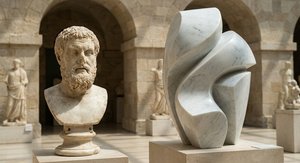
The Enduring Allure of Marble in Art History: From Classical Sculpture to Modern Abstraction
Explore the captivating history of marble sculpture from ancient Greece to modern art. Discover renowned artists like Canova & Michelangelo, carving techniques, and investment insights at ArtsDot.
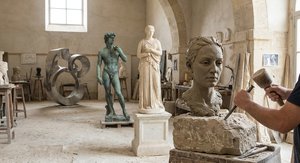
The Enduring Form: Sculpture Across History, Technique & Emotional Resonance
Explore the rich history of sculpture with ArtsDot. Discover key techniques, influential artists & investment potential for discerning collectors. Expert insights into valuing and collecting timeless masterpieces.