

 Preview
 Send
Send Share
Share
 Details

 Download
 Similars
 X-Ray
X-Ray Diaporama
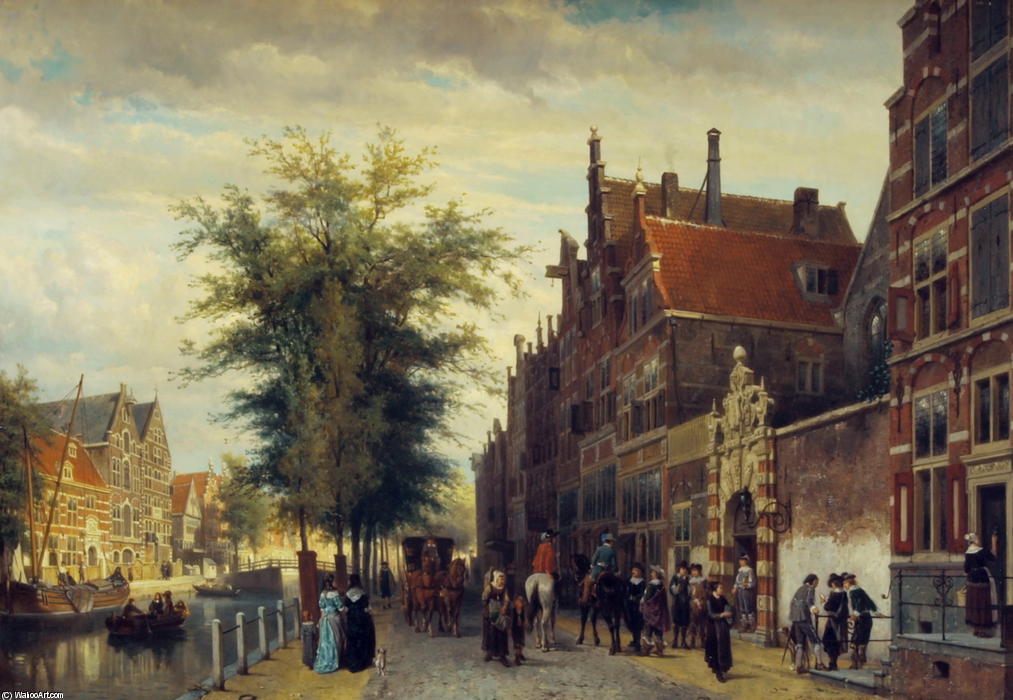
Het Atheneum Illustre aan de Oudezijds Voorburgwal te Amsterdam

 Read More
Purchase a high-resolution, enhanced digital image, far superior to the online preview.
Each file is meticulously prepared by our in-house specialists using advanced tools and expert manual retouching. We ensure every image has exceptional clarity, precise color accuracy, and fine detail.
The final file is delivered via email within 72 hours, optimized for immediate use in professional, editorial, and print environments. This is the same quality trusted by top-tier design studios, publishers, and galleries.
Digital Image
Download a high-resolution file for personal display, printing, and creative projects. ( Buy Print Buy Hand Made Painting)
Included in Every Digital Image Order
Expert Digital Delivery, Guaranteed
When you choose ArtsDot.com, you're not just getting an image - you're receiving a professionally enhanced digital artwork, crafted with precision and backed by a satisfaction guarantee. Here's everything that comes with your order, automatically:

Fast Email Delivery
Your high-resolution digital image file will be emailed to you within 72 hours of ordering - ready for immediate use.

AI-Enhanced Digital File
Your artwork is professionally optimized using advanced AI tools and manual editing, ensuring maximum detail, clarity, and color accuracy.

Free Lifetime Re-Delivery
Accidentally deleted or lost your file? No worries - we'll resend it to you anytime, free of charge.

No Import Fees - Ever
Enjoy your artwork instantly with zero customs, duties, or delivery fees - digital downloads are always tax-free.

Color Accuracy Guarantee
We ensure your digital image reflects the original colors as closely as possible using professional tools and color management.

60-Day Satisfaction Guarantee
If you're not satisfied with your digital image, we'll revise it or refund 100% within 60 days - no questions asked.

100% Money-Back Guarantee
Not satisfied? Get a full refund within 60 days of receiving your digital file - no questions asked.

Bulk Order Discounts
Buy 3 images, save 10% - Buy 5, save 15% - Buy 10+, save 20%. Great for creative projects, galleries, and agencies.
Related Artworks








Artist Biography
The Architect of Atmosphere: The Life and Legacy of Cornelis Springer
Born in the vibrant heart of Amsterdam on May 25th, 1817, Cornelis Springer emerged as a definitive voice in the Dutch landscape tradition during the Romantic era. His artistic identity was deeply intertwined with the structural precision of his upbringing; as the son of Willem Springer, a skilled carpenter and architect, the young artist developed an early, profound respect for the geometry of the built environment. This familial connection to craftsmanship provided more than just a technical foundation; it instilled in him a lifelong fascination with the intricate facades, sturdy arches, and enduring silhouettes of urban architecture. While his path began with the practicalities of construction, it quickly ascended into the ethereal realms of fine art, guided by the mentorship of masters such as Hendrik Gerrit ten Cate and Kasparus Karsen.
Springer’s formal education at the Amsterdam Academy of Fine Arts allowed him to refine a style that balanced rigorous realism with a poetic, almost nostalgic, sensibility. Under the guidance of instructors like Jacobus van der Stok, he learned to navigate the complexities of light and shadow, yet it was his private studies that truly shaped his unique aesthetic. The influence of Karsen, in particular, is evident in Springer’s early explorations of muted copper palettes and the creation of idyllic, sometimes fantastical, townscapes. These works were not merely topographical records but were imbued with a sense of quiet drama, capturing the way light dances across cobblestones or how a morning mist might soften the edges of a cathedral spire.
Mastery of the Dutch Cityscape
The true brilliance of Springer’s oeuvre lies in his ability to transform the mundane elements of urban life into captivating narratives of light and atmosphere. He became a celebrated chronicler of the Netherlands, finding profound beauty in the everyday rhythms of Dutch towns and cities. His paintings often transport the viewer to bustling market squares, tranquil canals reflecting the afternoon sun, or the quiet corners of historic streets. Through his meticulous use of watercolors and etchings, he achieved a level of detail that allowed the textures of brick, stone, and water to feel almost tactile.
His most iconic achievements include evocative depictions of significant landmarks, such as:
- The Sint-Michaëlskerk in Zwolle, where he masterfully captured the spiritual weight of the architecture through light.
- Zaltbommel Town Hall, a subject that allowed him to showcase his skill in rendering complex historical structures.
- Lübeck Town Hall and the Teylers Museum, works that demonstrate his ability to translate grand architectural feats into intimate, atmospheric scenes.
Beyond the grand scale of cityscapes, Springer possessed a remarkable versatility. He frequently turned his gaze toward more intimate subjects, producing genre scenes and portraits that captured domestic interiors bathed in soft, natural light. These smaller, more personal works reveal an artist capable of finding the infinite within the infinitesimal, proving that his mastery extended far beyond the wide vistas of the street to the quietest corners of human existence.
A Lasting Impression on Dutch Art
As a prominent member of the Amsterdam painters' collective, Springer’s association with institutions like Felix Meritis placed him at the center of an intellectual and artistic exchange that defined his era. His work served as a bridge between the meticulous traditions of the past and the expressive, emotive possibilities of the Romantic movement. By focusing on the essence of place rather than grand historical allegories, he offered a more relatable and deeply felt version of Dutch identity—one rooted in the enduring beauty of the landscape and the architectural heritage of his homeland.
Though he passed away in Hilversum in 1891, the legacy of Cornelis Springer remains etched in the very streets he so lovingly painted. His ability to capture the "soul" of a city—the way a certain light hits a canal at dusk or how a shadow stretches across a plaza—continues to resonate with art lovers today. He remains a master of the atmospheric, an artist who taught us that even the most solid structures are subject to the fleeting, magical transformations of light and time.
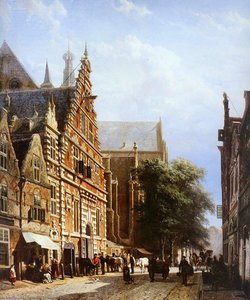
cornelius springer
1817 - 1891
Quick Facts
- Artistic Movement Or Style: Cityscape Painter
- Artists Or Movements Influenced By This Artist: ['Felix Meritis']
- Artists Who Influenced This Artist:
- Hendrik Gerrit ten Cate
- Kasparus Karsen
- Date Of Birth: May 25, 1817
- Date Of Death: February 20, 1891
- Full Name: Cornelis Springer
- Nationality: Dutch
- Notable Artworks:
- Grote Sint-Michaëlskerk Zwolle
- Sint-Maartenskerk Zaltbommel
- Lübeck Town Hall
- Place Of Birth: Amsterdam, Netherlands

