 Preview
 Send
Send Share
Share
 Details

 Download
 Similars
 X-Ray
X-Ray Diaporama
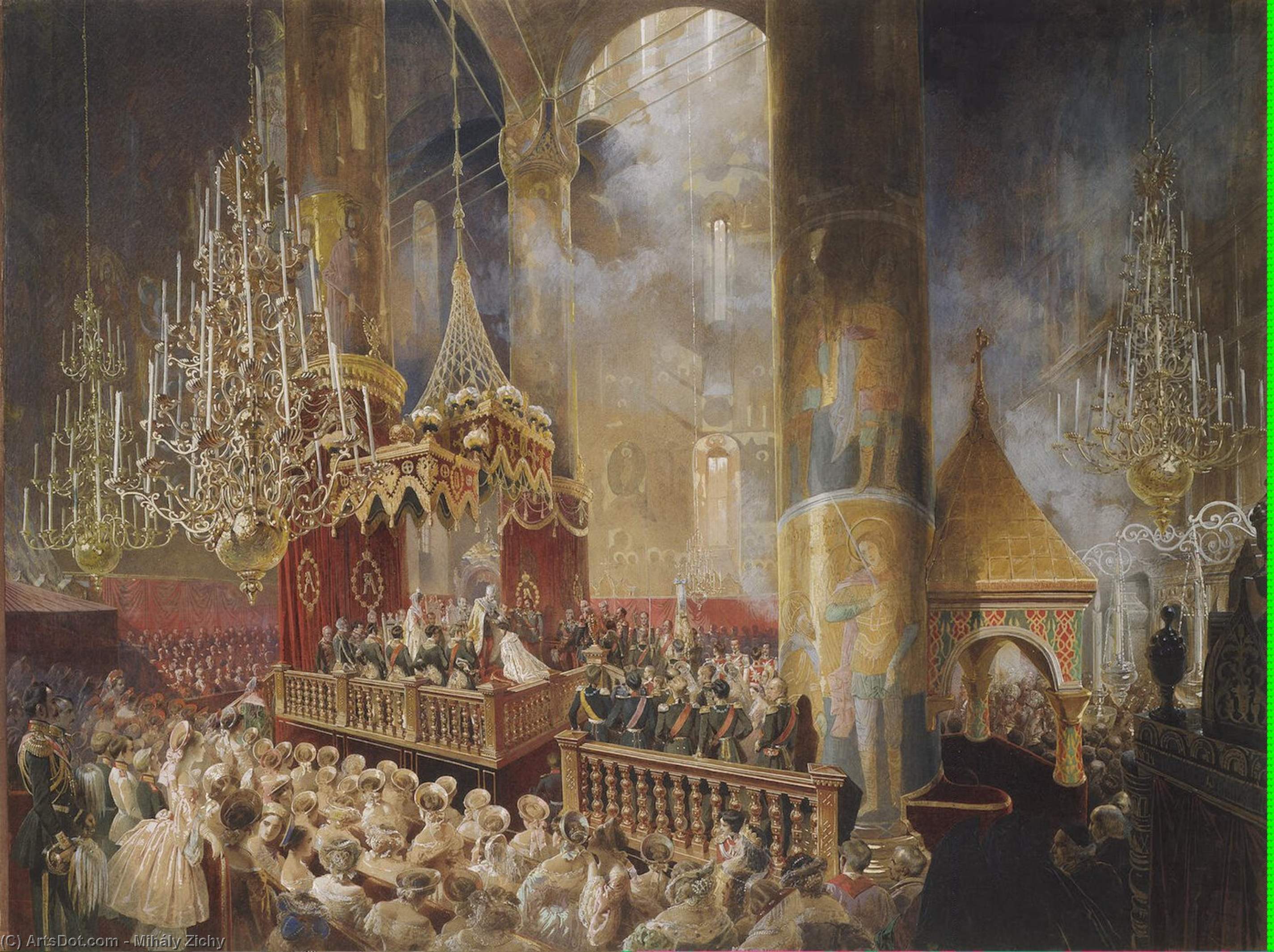
Coronation of Alexander II
 Oil
Oil- WallArt
- Romanticism
 1857
1857- 19th Century
 527.0 x 700.0 cm
 Hermitage Museum
 Read More
Hand Made Oil Reproduction
Hand-painted oil on canvas in your size and frame, made to order by our artists. ( Buy Print Buy Image)




P118B $10

P118H $10

P118W $10

P438Z $10

P508JH $12

P508YH $12

P805H $10

P805Z $10

P919BZ $10

P919G $10

P919XJ $10

P959ZH $10

P968JZ $12

W106C $8

W218G $10

W218JH $8

W218Y $10

W307PJ $10

W316G $10

W316PJ $8

W316Y $10

W398PJ $8

W4111J $10

W500HY $15

W500JH $15

W692G $12

W849H $8

W940BG $15

W953PJ $8




Pick from our preset sizes that match the artwork's original proportions.

You may enter your own dimensions to fit a specific frame or space. If your selected size does not match the original image's proportions, we will either crop the artwork or extend the painting with additional hand-painted elements. A digital mockup will be sent for your approval before production begins.
Please note that the on-screen preview does not reflect the actual cropping or extension. Only the mockup will accurately show the final composition.
While custom sizes are available, we recommend selecting a dimension from the predefined list to preserve the original proportions.
After order, ArtsDot.com team will email client for instructions and provide a mockup preview
Worldwide Delivery () in 3/4 weeks instead of standard 5 weeks. (26 August). No compromise on quality.

Free Worldwide Express Shipping

High-Quality Linen Canvas

Full Shipping Insurance

Customs Tax Refund Guarantee

True Color Matching Guarantee

60-Day Return Policy (Defects Only)

100% Money-Back Guarantee

Bulk Discount Offer
 Glass option is only available in size under 110 CM

Coronation of Alexander II
Reproduction Medium
Reproduction Size
-


Total Price
$ 263
Artwork Description
A Grand Spectacle of Imperial Majesty
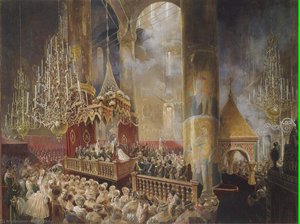
In the sweeping expanse of Count Mihály von Zichy’s Coronation of Alexander II, the viewer is not merely an observer but a silent witness to one of history's most profound displays of sovereign power. Painted in 1857, this monumental work captures the breathless tension and sacred splendor of a ceremony that reshaped the Russian Empire. The canvas breathes with the weight of tradition, as the vast, vaulted architecture of the cathedral envelops a sea of nobility and clergy. At the heart of this composition lies the crown, a shimmering focal point around which the destiny of a nation pivots. Zichy masterfully orchestrates a crowd that feels both immense and intimate, guiding the eye through layers of formal attire, from the sharp lines of contemporary neckwear to the heavy, ornate fabrics of imperial vestments, all set against the backdrop of a cathedral illuminated by the warm, flickering glow of grand chandeliers.
The technique employed by Zichy reflects his deep roots in the Romantic tradition and his rigorous academic training. There is a palpable sense of atmosphere created through the interplay of light and shadow; the way the candlelight dances across the gilded surfaces of the cathedral's interior lends the scene a divine, almost ethereal quality. His brushwork, while precise enough to capture the intricate details of the ceremonial regalia, possesses a fluid, emotive energy that prevents the large-scale scene from feeling static. For the discerning collector or interior designer, this painting offers more than just a depiction of history; it provides a masterclass in chiaroscuro and spatial depth, making it an ideal centerpiece for spaces that demand a sense of drama, prestige, and historical gravity.
Symbolism and the Weight of History
Beyond its surface beauty, the painting serves as a profound meditation on the intersection of divine right and political legitimacy. The cathedral itself acts as a character—a stone vessel of faith and continuity that anchors the fleeting moment of coronation into the eternal timeline of the empire. Every element, from the positioning of the gathered dignitaries to the dramatic height of the soaring arches, is designed to evoke awe. Zichy utilizes the scale of the architecture to dwarf the individual, reminding the viewer of the overwhelming power of the institution over the person. This sense of grandeur is balanced by the human element; the subtle expressions and the collective focus of the assembly create a shared emotional pulse that resonates with anyone moved by the theater of history.
For those looking to integrate such a masterpiece into a curated collection, Coronation of Alexander II offers an unparalleled opportunity to introduce a narrative of strength and elegance. Whether placed in a formal library, a stately dining hall, or a sophisticated gallery setting, this reproduction brings with it the romantic spirit of the 19th century. It is a piece that invites conversation, prompting reflections on the fleeting nature of power and the enduring beauty of artistic legacy. To possess such a work is to hold a fragment of a vanished era, rendered with the visionary touch of a master who understood how to paint not just what was seen, but what was felt.
Related Artworks
Artist Biography
Mihály von Zichy: A Hungarian Romantic Visionary
Mihály von Zichy (1827 – 1906) stands as a pivotal figure in Hungarian romantic painting, embodying the spirit of his era with an unparalleled sensitivity to emotion and form. Born into a noble family in Zalaegrevár, Hungary, Zichy’s artistic journey began under the tutelage of Jakob Marastoni, fostering a foundational understanding of academic principles that would permeate his oeuvre. His formative years were marked by immersion in Viennese art circles, where he honed his skills alongside Waldmüller, establishing connections that proved invaluable throughout his career.- Early Influences: Zichy’s artistic sensibilities were profoundly shaped by the Romantic movement, characterized by an emphasis on imagination, emotion, and individualism – ideals reflected in landscapes imbued with dramatic lighting and expressive brushstrokes.
- Vienna Years & Waldmüller's Mentorship: Studying under Waldmüller solidified Zichy’s technique and broadened his artistic horizons. Waldmüller recognized Zichy’s talent and encouraged him to pursue teaching positions, notably in St. Petersburg, where he cultivated relationships with prominent intellectuals and artists of the time.
- St. Petersburg & Portraiture: His tenure in St. Petersburg witnessed a significant shift towards portraiture, driven by commissions from influential figures like Lajós Batthyány – a bold declaration of allegiance to Hungarian independence during the Austro-Hungarian Compromise of 1867. This portrait exemplifies Zichy’s meticulous attention to detail and psychological insight.
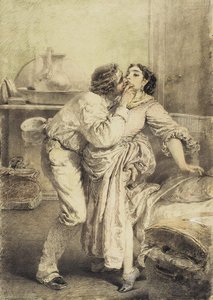
A Diverse Artistic Practice: From Retoucher to Painter & Illustrator
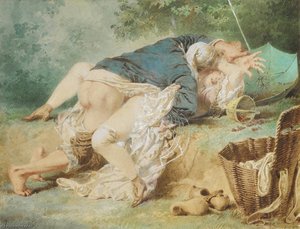
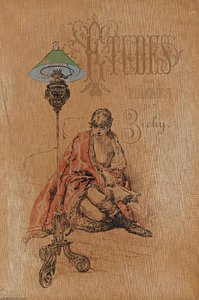
Beyond portraiture, Zichy cultivated a multifaceted artistic practice encompassing retouchership – a skill honed during his early years – watercolor painting, pencil drawings, and expansive oil canvases. His retoucher’s eye translated into an exceptional ability to capture subtle nuances of light and color, informing his painterly style. However, it was his erotic illustrations that garnered particular acclaim, distinguished by their palpable warmth and exploration of human intimacy—a stylistic hallmark reflecting Zichy's fascination with the complexities of relationships. These drawings stand apart as remarkably honest depictions of desire and companionship.- Illustrative Achievements: Zichy’s contribution to Hungarian art extended beyond painting into illustration, notably his ambitious undertaking for “The Knight in the Panther’s Skin,” a celebrated poem by Mihály Petőfi. He meticulously rendered 35 scenes from the poem, capturing its heroic spirit and lyrical beauty—a testament to his dedication and artistic vision.
- Royal Patronage & Artistic Recognition: The Tsar commissioned Zichy to depict Queen Elisabeth laying flowers before Ferenc Deák’s coffin – a poignant memorial commemorating Hungary's national hero. Furthermore, he achieved renown as a court artist thanks to his involvement in the Paris Exhibition of 1878 and was honored with numerous accolades for his artistic merit.
Notable Works & Artistic Legacy
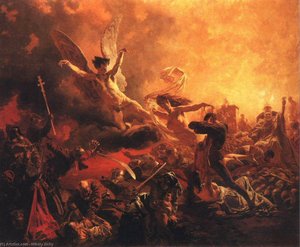
Zichy’s oeuvre is marked by several iconic paintings that continue to resonate with audiences today. “Lifeboat,” executed in 1844, showcases Zichy's early mastery of Romantic landscape painting—characterized by dramatic atmospheric effects and idealized beauty. "Autodafé," painted in 1868, confronts viewers with the horrors of the Spanish Inquisition through a masterful use of chiaroscuro and symbolic imagery. His monumental “Drinking Bout” portrays Henry III with remarkable realism and psychological depth. And “The Victory of the Genius of Destruction,” banned by French authorities for its subversive anti-war sentiment, remains a powerful statement on artistic freedom and moral responsibility.A Lasting Impression: Zichy's Influence & Enduring Relevance
Mihály von Zichy’s legacy extends beyond his individual artworks; he established the Hungarian Artists’ Support Society, demonstrating unwavering compassion for fellow artists facing hardship—a noble gesture reflecting his humanist values. His artistic influence can be discerned in subsequent generations of Hungarian painters who embraced Romantic ideals and pursued expressive techniques. Today, Zichy's paintings are housed in museums across Hungary and beyond, ensuring that his visionary aesthetic continues to inspire admiration and scholarly study. He remains a cornerstone of Hungarian romanticism, an artist whose profound understanding of human emotion and artistic innovation cemented his place within the annals of art history.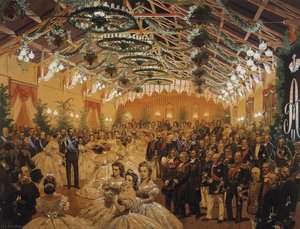
count mihaly von zichy
1827 - 1906
Quick Facts
- Artistic Movement Or Style: Romanticism
- Artists Or Movements Influenced By This Artist: ['Romantic Painting']
- Artists Who Influenced This Artist: ['Waldmüller']
- Date Of Birth: 1827
- Date Of Death: 1906
- Full Name: Mihály von Zichy
- Nationality: Hungarian
- Notable Artworks:
- Lifeboat
- Portrait of Lajos Batthyány
- Autodafé
- Queen Elisabeth laying flowers by the coffin of Ferenc deák
- Drinking bout of Henry III
- Place Of Birth: Zalaegrevár, Hungary
Related Articles
Romantic Realism's Finest: 10 Masterpieces for Your Home | ArtsDot
Explore 10 defining masterpieces of Romantic Realism! Discover Courbet, Millet & Daumier's powerful paintings—capturing emotion and social realities. Find museum-quality reproductions for your home at ArtsDot.com.

Romantic Landscapes: 10 Masterpieces for Your Home | ArtsDot
Journey through 10 Romantic landscape masterpieces by Friedrich, Turner & Cole. Explore emotional art, sublime nature scenes & iconic 19th-century paintings. Find museum-quality reproductions for your home at ArtsDot.com – discover the full collection online!
Alexei Harlamoff: A Study in Russian Romantic Landscape Painting & Imperial Patronage
Explore the captivating world of Alexei Harlamoff, a master of Russian Romantic painting. Discover his life, Imperial patronage, signature style & enduring legacy with ArtsDot.
Romantic Masterpieces: 10 Artworks for a Timeless Home Decor Aesthetic
Fall in love with art! Explore 10 iconic romantic paintings – from Monet & Bouguereau to Fragonard. Discover the stories behind these masterpieces and find museum-quality reproductions for your home decor at .

Patrick Nasmyth: A Scottish Romantic's Vision of History & the Grand Manner
Explore the captivating landscapes of Patrick Nasmyth, a key figure in Scottish Romanticism. Discover his Dutch influences, embrace of the Grand Manner, and lasting artistic legacy. Learn more at ArtsDot.