 Preview
 Send
Send Share
Share
 Details

 Download
 Similars
 X-Ray
X-Ray Diaporama
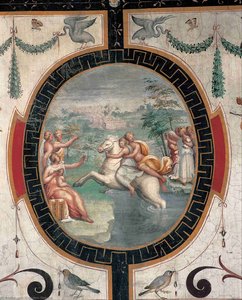
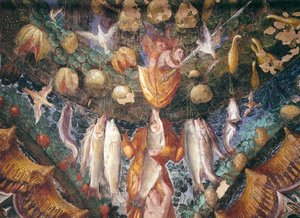
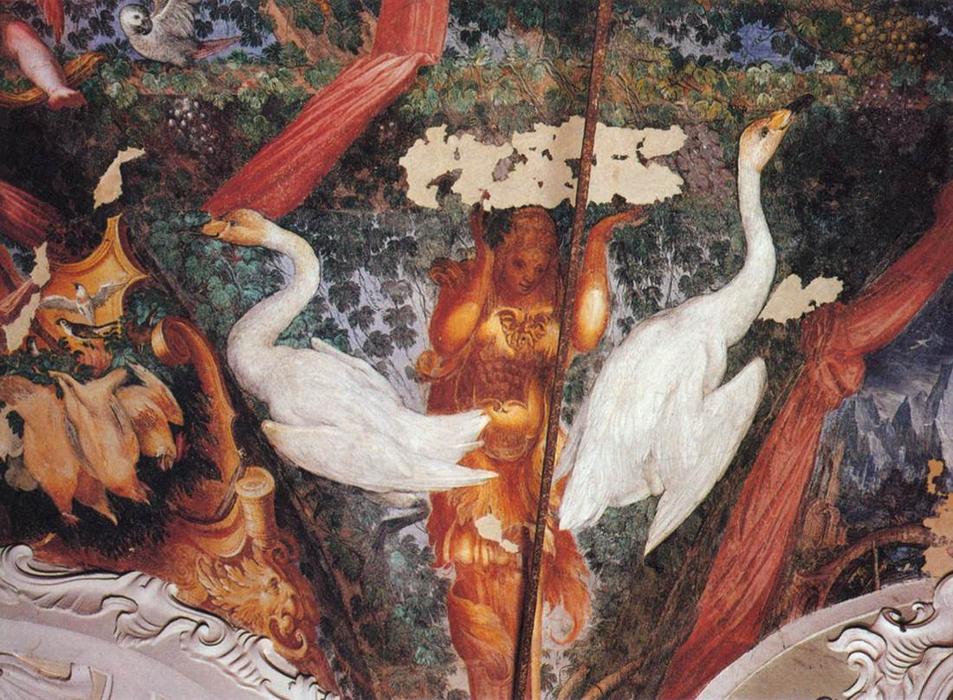
Festoon decoration (detail)


 Read More
Hand Made Oil Reproduction
Hand-painted oil on canvas in your size and frame, made to order by our artists. ( Buy Print Buy Image)




































Pick from our preset sizes that match the artwork's original proportions.

You may enter your own dimensions to fit a specific frame or space. If your selected size does not match the original image's proportions, we will either crop the artwork or extend the painting with additional hand-painted elements. A digital mockup will be sent for your approval before production begins.
Please note that the on-screen preview does not reflect the actual cropping or extension. Only the mockup will accurately show the final composition.
While custom sizes are available, we recommend selecting a dimension from the predefined list to preserve the original proportions.
After order, ArtsDot.com team will email client for instructions and provide a mockup preview
Worldwide Delivery () in 3/4 weeks instead of standard 5 weeks. (17 August). No compromise on quality.

Free Worldwide Express Shipping

High-Quality Linen Canvas

Full Shipping Insurance

Customs Tax Refund Guarantee

True Color Matching Guarantee

60-Day Return Policy (Defects Only)

100% Money-Back Guarantee

Bulk Discount Offer
 Glass option is only available in size under 110 CM

Festoon decoration (detail)
Reproduction Medium
Reproduction Size
-


Total Price
$ 263
Related Artworks
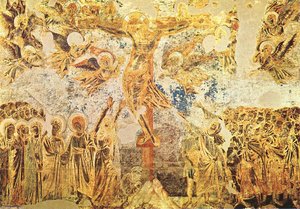
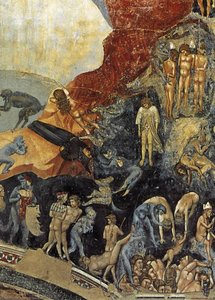
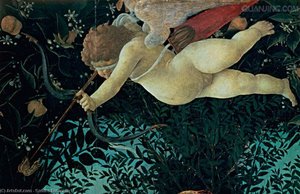
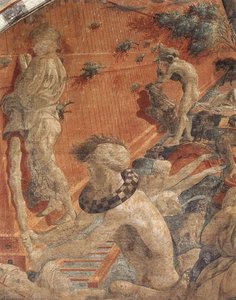
Artist Biography
The Dramatic Soul of Mannerism: The Life of Cristofano Gherardi
In the turbulent landscape of 16th-century Italy, where the serene balance of the High Renaissance began to fracture into something more complex and emotionally charged, Cristofano Gherardi emerged as a master of tension. Born in 1508 in the historic town of Borgo San Sepolcro, Gherardi would become a vital voice in the Mannerist movement, a style defined by its departure from classical harmony in favor of elongated forms, unsettling perspectives, and profound psychological depth. His life and work serve as a window into an era that sought to capture the spiritual and physical struggles of the human condition through deliberate distortion and theatrical light.
Gherardi’s artistic identity was forged in the prestigious workshop of Giorgio Vasari, the legendary biographer and architect of the Florentine Renaissance. As an apprentice to Vasari, Gherardi was immersed in a lineage of greatness, absorbing the sophisticated techniques of masters such as Raffaellino del Colle and the expressive, often restless energy of Rosso Fiorentino. This formative period provided him with a rigorous foundation in classical composition, yet it also gave him the tools to subvert those very rules. Under Vasari’s mentorship, Gherardi learned how to manipulate light and shadow to create a sense of movement and drama that would become his stylistic hallmark.
A Legacy of Shadow and Symbolism
The trajectory of Gherardi’s career was marked by both profound creative output and the political instability of his time. Following the tumultuous events surrounding the death of Duke Alessandro in 1536, Gherardi faced banishment from Florence. This displacement, while perhaps limiting his access to the Florentine court, led him to contribute significantly to the religious landscapes of Tuscany and beyond. His works, often commissioned for churches, transformed sacred narratives into visceral experiences for the faithful.
His mastery is most evident in his ability to weave complex biblical symbolism into compositions that feel alive with motion. Consider the following hallmarks of his celebrated oeuvre:
- Theatrical Lighting: Gherardi utilized a dramatic use of chiaroscuro, where deep shadows clash with brilliant highlights to direct the viewer's eye and heighten the emotional stakes of a scene.
- Dynamic Figures: His characters often possess an elongated elegance, moving through space with a grace that feels both supernatural and physically strained, typical of the Mannerist aesthetic.
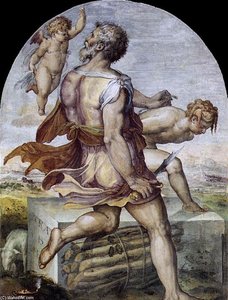
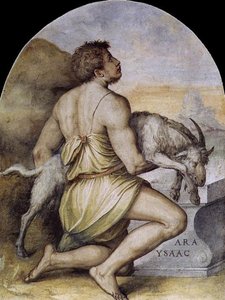
- Biblical Intensity: In works such as Isaac (1555) and Abraham (1555), he captures the raw, terrifying moments of divine command and human sacrifice, using rich textures and complex arrangements to evoke awe.
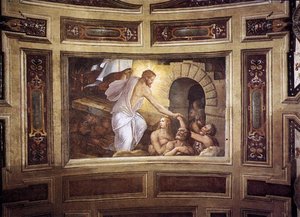
- Narrative Depth: Beyond mere illustration, his frescoes, such as the Descent to Limbo, serve as profound meditations on resurrection and the spiritual journey, utilizing distorted perspectives to create a sense of otherworldly scale.
Historical Significance and Artistic Impact
Though Gherardi may not have achieved the enduring global fame of his mentor Vasari, his contribution to the evolution of Italian art is undeniable. He represents the bridge between the structured perfection of the early 1500s and the more expressive, often unsettling beauty of the late Mannerist period. His ability to take the classical language of the Renaissance and infuse it with a sense of spiritual unrest allowed him to create works that resonated deeply within the religious fervor of the Counter-Reformation.
Today, art historians look to Gherardi as a significant figure in the Florentine and Tuscan traditions. His paintings remain powerful testaments to an era of transition, reminding us of a time when artists dared to move away from the comfort of the known to explore the beautiful, the strange, and the divine. Through his brush, the sacred stories of the past were reimagined with a dramatic intensity that continues to captivate the modern imagination.
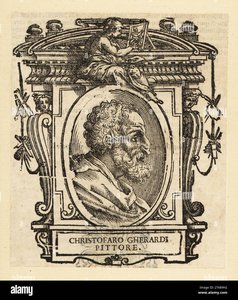
cristofano gherardi
1508 - 1556 , Italy
Quick Facts
- Artistic Movement Or Style: Mannerism
- Artists Or Movements Influenced By This Artist: ['Giorgio Vasari']
- Artists Who Influenced This Artist: ['Raffaellino del Colle']
- Date Of Birth: November 25, 1508
- Date Of Death: April 1556
- Full Name: Cristofano Gherardi
- Nationality: Italian
- Notable Artworks:
- Descent to Limbo
- Abraham
- Isaac
- Place Of Birth: Borgo San Sepolcro, Italy