 Preview
 Send
Send Share
Share
 Details

 Download
 Similars
 X-Ray
X-Ray Diaporama
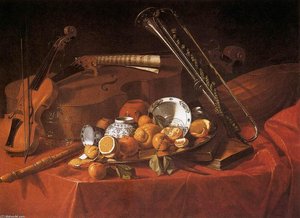
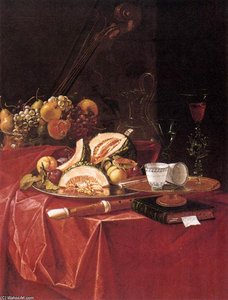
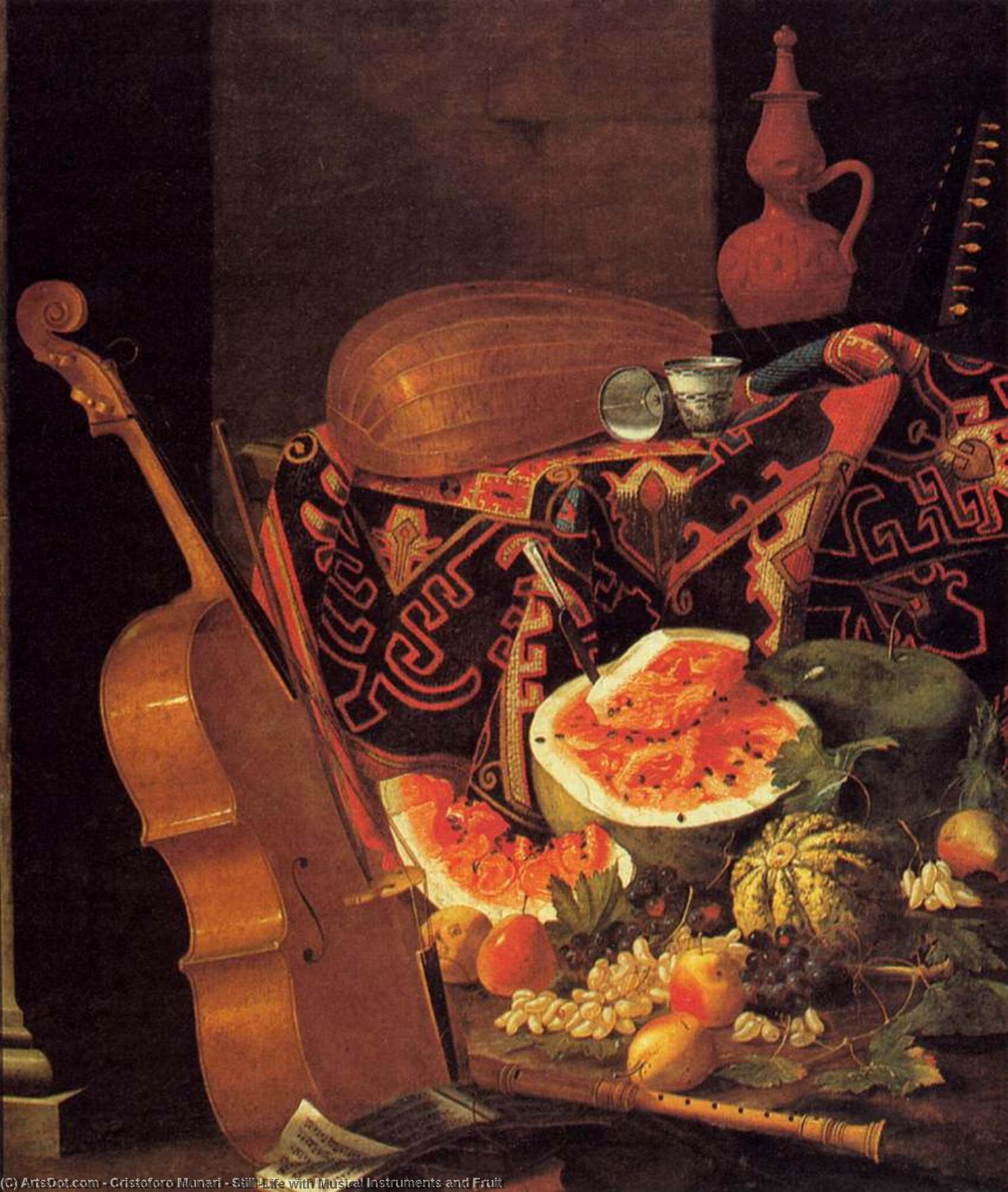
Still-Life with Musical Instruments and Fruit
 Read More
Hand Made Oil Reproduction
Hand-painted oil on canvas in your size and frame, made to order by our artists. ( Buy Print Buy Image)




































Pick from our preset sizes that match the artwork's original proportions.

You may enter your own dimensions to fit a specific frame or space. If your selected size does not match the original image's proportions, we will either crop the artwork or extend the painting with additional hand-painted elements. A digital mockup will be sent for your approval before production begins.
Please note that the on-screen preview does not reflect the actual cropping or extension. Only the mockup will accurately show the final composition.
While custom sizes are available, we recommend selecting a dimension from the predefined list to preserve the original proportions.
After order, ArtsDot.com team will email client for instructions and provide a mockup preview
Worldwide Delivery () in 3/4 weeks instead of standard 5 weeks. (17 August). No compromise on quality.

Free Worldwide Express Shipping

High-Quality Linen Canvas

Full Shipping Insurance

Customs Tax Refund Guarantee

True Color Matching Guarantee

60-Day Return Policy (Defects Only)

100% Money-Back Guarantee

Bulk Discount Offer
 Glass option is only available in size under 110 CM

Still-Life with Musical Instruments and Fruit
Reproduction Medium
Reproduction Size
-


Total Price
$ 263
Related Artworks
Artist Biography
Cristoforo Munari: A Painter of Medici Excess
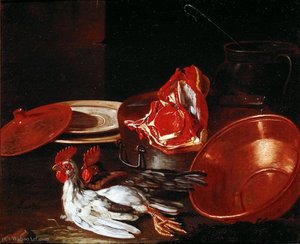
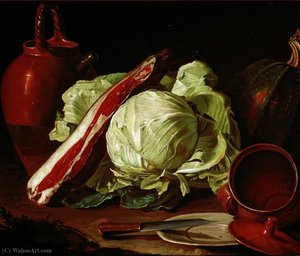
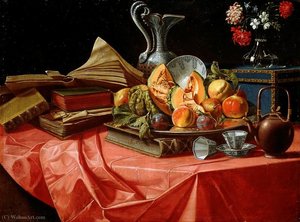
Cristoforo Munari, born in Reggio Emilia in 1667 and tragically passing away in Pisa in 1720, remains a captivating figure within the late Baroque art world. Often referred to as Cristofano Monari, he was an Italian painter whose specialty lay in meticulously rendered still life compositions – a genre where he skillfully captured both the beauty and the decadent remnants of opulent lifestyles. His work offers a unique window into the extravagance of the Medici court, particularly through his evocative depictions of scattered porcelain, gleaming glassware, and the bounty of a lavish table. Munari’s artistic journey began in his birthplace, receiving his initial training in Reggio Emilia before attracting the patronage of Rinaldo d'Este, Duke of Modena. This early exposure to noble circles undoubtedly shaped his aesthetic sensibilities.Early Years and Florentine Patronage
Following his time in Modena, Munari relocated to Rome between 1703 and 1706, a period during which he honed his skills under the influence of Northern still life artists – including the German painter Christian Berentz. This exposure to diverse artistic traditions likely contributed to the subtle nuances within his compositions. However, it was his decade-long association with the Medici court in Florence that proved pivotal to his development. Serving Ferdinand de' Medici and later Cosimo III and Cardinal Francesco Maria de’ Medici, Munari became intimately familiar with the lavish lifestyle of these powerful figures. His still lifes began to reflect this experience, incorporating elements of disarray – a deliberate choice, some art historians suggest – that alluded to the excesses and fleeting pleasures associated with the Medici court's opulent feasts. These weren’t simply arrangements; they were visual echoes of a joyful, perhaps slightly chaotic, surfeit.Style and Influences: Baschenis and Beyond
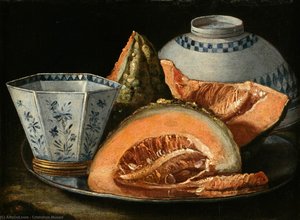
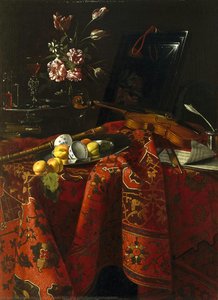
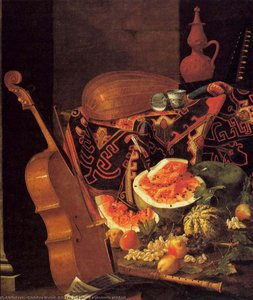
Munari’s artistic style is often compared to that of Evaristo Baschenis, another prominent Italian still life painter of the era. Like Baschenis, Munari possessed a remarkable ability to render detail with precision, capturing the textures and reflections of various materials – from the delicate sheen of porcelain to the subtle gleam of silver cutlery. However, unlike Baschenis’s more formal arrangements, Munari frequently introduced an element of controlled chaos into his compositions. The inclusion of scattered foodstuffs, broken fragments of pottery, and discarded glass created a sense of immediacy and realism, as if the viewer were witnessing the aftermath of a particularly boisterous celebration. This deliberate disarray served to amplify the narrative of indulgence and excess that permeated his work. His meticulous attention to light and shadow further enhanced the three-dimensionality of his subjects, creating a captivating illusion of reality.Later Years and Artistic Restoration
As his career progressed, Munari moved away from courtly commissions and focused primarily on art restoration in Pisa, beginning in 1715. This shift reflected both a change in patronage and perhaps a desire for greater stability. Despite this move, he continued to produce still lifes that retained the hallmarks of his distinctive style – the meticulous detail, the subtle play of light, and the evocative depiction of opulent decay. In 1998, an exhibition showcasing Munari’s paintings in Reggio Emilia garnered significant attention and was hailed as a national success, bringing renewed recognition to this often-overlooked artist.Legacy and Significance
Cristoforo Munari's contribution to Baroque still life painting lies not only in his technical skill but also in his ability to capture the atmosphere of a particular era – the decadent splendor of the Medici court. His works offer a poignant commentary on wealth, excess, and the ephemeral nature of pleasure. His paintings are now held in collections such as the Uffizi Galleries, where they continue to fascinate viewers with their intricate details and evocative narratives. Munari’s legacy endures as a testament to his artistic talent and his unique ability to transform everyday objects into compelling works of art. His work stands as a subtle yet powerful reminder of a bygone era, inviting us to contemplate the beauty and the folly of human indulgence.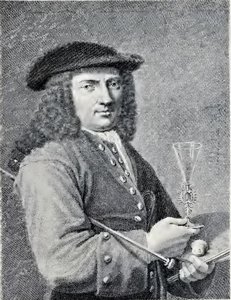
Cristoforo Munari
1667 - 1720 , Italy
Quick Facts
- Artistic Movement Or Style: Baroque Still Life
- Artists Who Influenced This Artist: ['Evaristo Baschenis']
- Date Of Birth: 1667, Reggio Emilia
- Date Of Death: 1720, Pisa
- Full Name: Cristoforo Munari
- Nationality: Italian
- Notable Artworks:
- Still Life with Musical Instruments
- Still Life with Porcelain
- Place Of Birth: Reggio Emilia, Italy