 Preview
 Send
Send Share
Share
 Details

 Download
 Similars
 X-Ray
X-Ray Diaporama
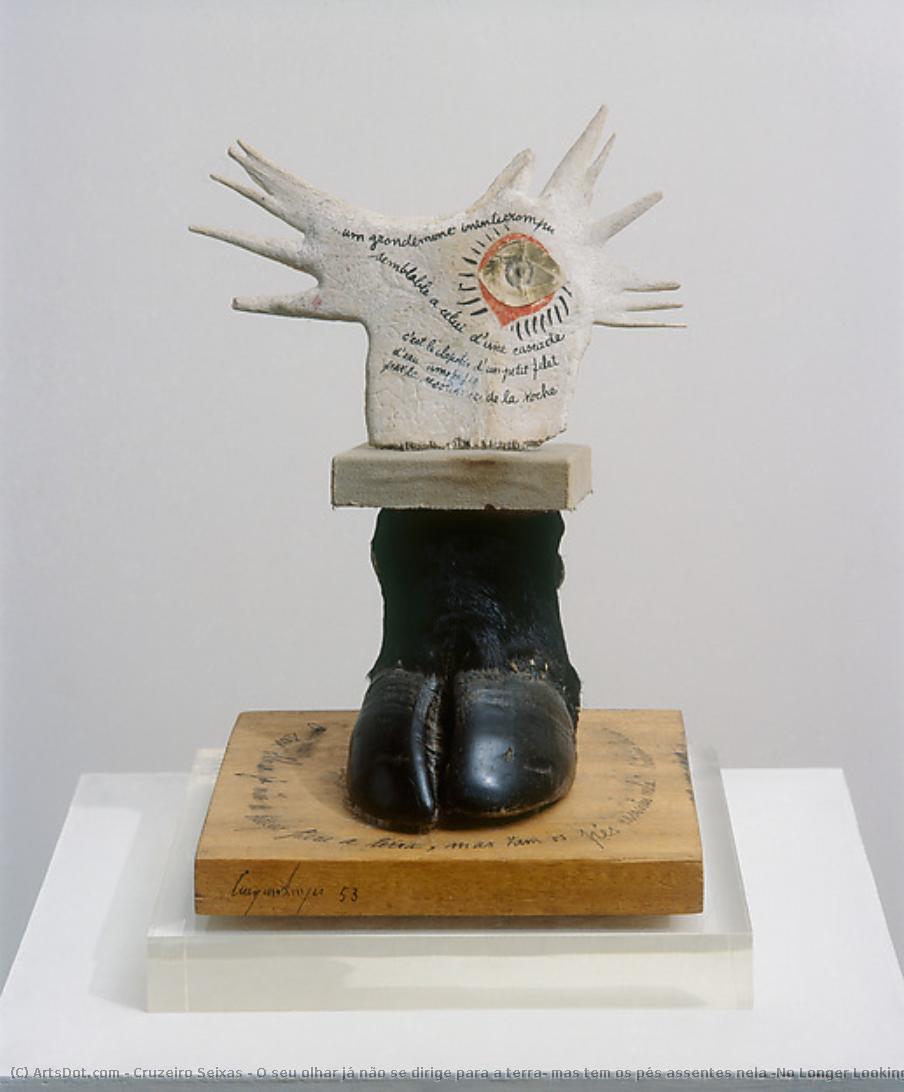
O seu olhar já não se dirige para a terra, mas tem os pés assentes nela (No Longer Looking at the Earth, but Keeping Feet Firmly on the Ground)
 1953
1953 26.0 x 19.0 cm
 Read More
Giclée / Art Print
Museum-quality giclée or canvas print with fast production and flexible finish options. ( Buy Hand Made Painting Buy Image)




































Pick from our preset sizes that match the artwork's original proportions.

You may enter your own dimensions to fit a specific frame or space. If your selected size does not match the original image's proportions, we will either crop the artwork or extend the image with a mirrored or solid-fill edge. A digital mockup will be sent for your approval before production begins.
Please note that the on-screen preview does not reflect the actual cropping or extension. Only the mockup will accurately show the final composition.
While custom sizes are available, we recommend selecting a dimension from the predefined list to preserve the original proportions.
Worldwide Delivery () in 2 weeks instead of standard 4/5 weeks. (27 August)

Free Worldwide Express Shipping

High-Quality Linen Canvas

Full Shipping Insurance

Customs Tax Refund Guarantee

True Color Matching Guarantee

60-Day Return Policy (Defects Only)

100% Money-Back Guarantee

Bulk Discount Offer
 Glass option is only available in size under 110 CM

O seu olhar já não se dirige para a terra, mas tem os pés assentes nela (No Longer Looking at the Earth, but Keeping Feet Firmly on the Ground)
Giclée / Art Print
Reproduction Size
-


Total Price
$ 63
Related Artworks





Artist Biography
A Life Dedicated to the Surreal: The World of Cruzeiro Seixas
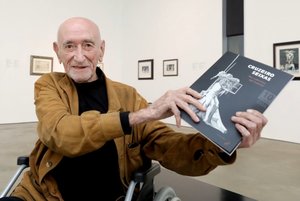
Cruzeiro Seixas, born Artur Manuel Rodrigues do Cruzeiro Seixas on December 3rd, 1920, in Amadora, Portugal, was more than just a painter; he was a visionary who dedicated his life to exploring the depths of the human psyche through art and poetry. He resisted easy categorization, famously disliking the label “painter” preferring instead to be known as “someone who paints.” This subtle distinction speaks volumes about his approach – not merely replicating reality but actively *creating* worlds brimming with symbolism and emotion. His long and prolific career spanned decades, marked by a constant evolution of style yet always anchored in the principles of Surrealism, making him a pivotal figure in Portuguese art history. Seixas’s journey began amidst a burgeoning intellectual climate in Lisbon, where he befriended fellow artists like Mário Cesariny, Marcelino Vespeira, Júlio Pomar and Fernando Azevedo at the António Arroio School. These early connections would prove crucial in shaping his artistic trajectory.Early Influences and the Embrace of Surrealism
Initially drawn to Neorealism in the mid-1940s, Seixas quickly found himself captivated by the revolutionary ideas presented in André Breton’s *Manifeste du Surréalisme*. This marked a turning point, propelling him towards a movement that resonated deeply with his desire to break free from conventional artistic constraints. He became a founding member of the Surrealist Group of Lisbon alongside Cesariny and other like-minded artists, challenging societal norms through exhibitions and collaborative projects during a period overshadowed by Salazar’s dictatorship. This was not merely an aesthetic choice; it was an act of defiance, a commitment to intellectual freedom in a repressive environment. The group sought to unlock the power of the subconscious, exploring dreams, mythology, and the irrational as sources of artistic inspiration. Seixas's early work reflected this exploration, moving away from representational forms towards more abstract and symbolic imagery.A Worldly Muse: Travels and Artistic Development
The year 1950 brought a significant change in Seixas’s life – his enlistment in the Merchant Navy. This decision led him on an extraordinary journey through Africa, India, and Asia, exposing him to diverse cultures and landscapes that profoundly impacted his artistic vision. His time in Angola, beginning in 1951, proved particularly transformative. He immersed himself in the local culture, developing an ethnographic collection and creating art inspired by the vibrant surroundings. This period saw the emergence of a unique poetic voice alongside his visual work, with themes of love, loss, and cultural identity weaving through both mediums. The experience instilled within him a deep fascination with Africa, which he described as “love at first sight,” and became a recurring motif in his art for years to come. His drawings from this period are characterized by a raw energy and emotional intensity, reflecting the complexities of colonial life and the beauty of the African continent.Later Years: Curator, Critic, and Continued Innovation
Upon returning to Portugal in 1964, Seixas became a prominent figure in the art world, not only as an artist but also as a curator and critic. He took on the role of curator at Galeria São Mamede, transforming it into a platform for showcasing emerging artists like Paula Rego, António Areal, and Carlos Calvet. He used this position to champion a new generation of Portuguese artists and promote experimental work. Simultaneously, he continued to create his own art, refining his distinctive style and exploring increasingly complex themes. His later works often incorporated collage, objects, and poetic texts, blurring the boundaries between different artistic disciplines. Seixas was also known for his outspoken criticism of Portuguese politics and institutions, using his art as a form of social commentary during the authoritarian regime.Legacy and Historical Significance
Cruzeiro Seixas passed away on November 8th, 2020, just shy of his centenary, leaving behind an extraordinary body of work that continues to captivate audiences today. He was honored with numerous awards and distinctions throughout his career, including a scholarship from the Calouste Gulbenkian Foundation in 1967 and the Medal of Honor from the Sociedade Portuguesa de Autores in 2012. His legacy extends beyond his paintings and poems; he played a crucial role in establishing Surrealism as a significant force in Portuguese art, inspiring generations of artists to challenge conventions and explore the power of the subconscious. His work is represented in major collections such as the Chiado Museum and the Calouste Gulbenkian Foundation, ensuring its continued accessibility for future generations. Seixas’s unwavering commitment to artistic freedom, his unique vision, and his profound exploration of the human condition solidify his place as a true master of Portuguese art—a “man who paints” whose worlds continue to resonate with depth, mystery, and enduring beauty.- Born: December 3rd, 1920, Amadora, Portugal
- Died: November 8th, 2020, Lisbon, Portugal
- Movement: Surrealism
- Key Themes: Dreams, Mythology, the Subconscious, Cultural Identity, Social Commentary
Quick Facts
- Artistic Movement Or Style: Surrealism
- Artists Who Influenced This Artist:
- Giorgio de Chirico
- Salvador Dalí
- Date Of Birth: December 3, 1920
- Date Of Death: November 8, 2020
- Full Name: Artur Manuel Rodrigues do Cruzeiro Seixas
- Nationality: Portuguese
- Place Of Birth: Amadora, Portugal