 Preview
 Send
Send Share
Share
 Details

 Download
 Similars
 X-Ray
X-Ray Diaporama
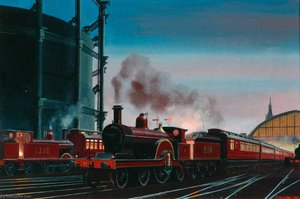
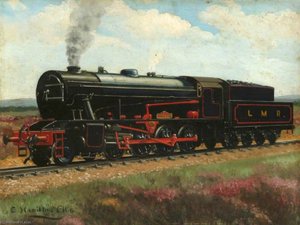
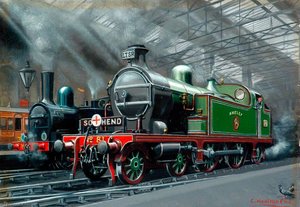
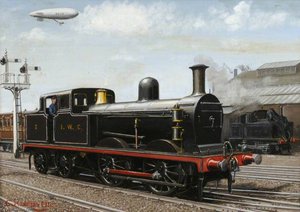
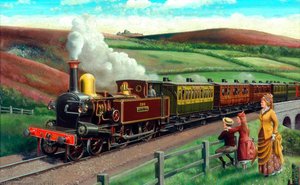
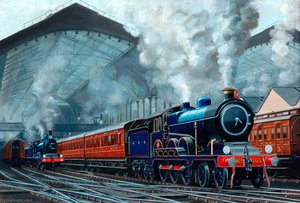
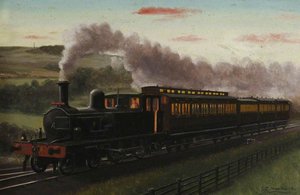
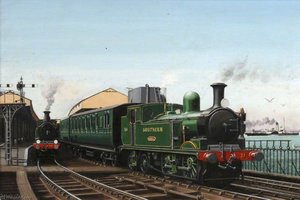
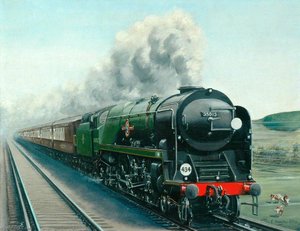
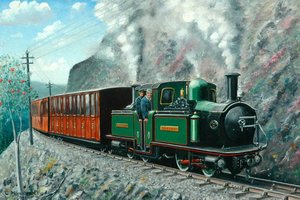
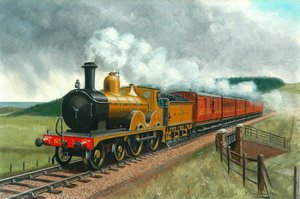
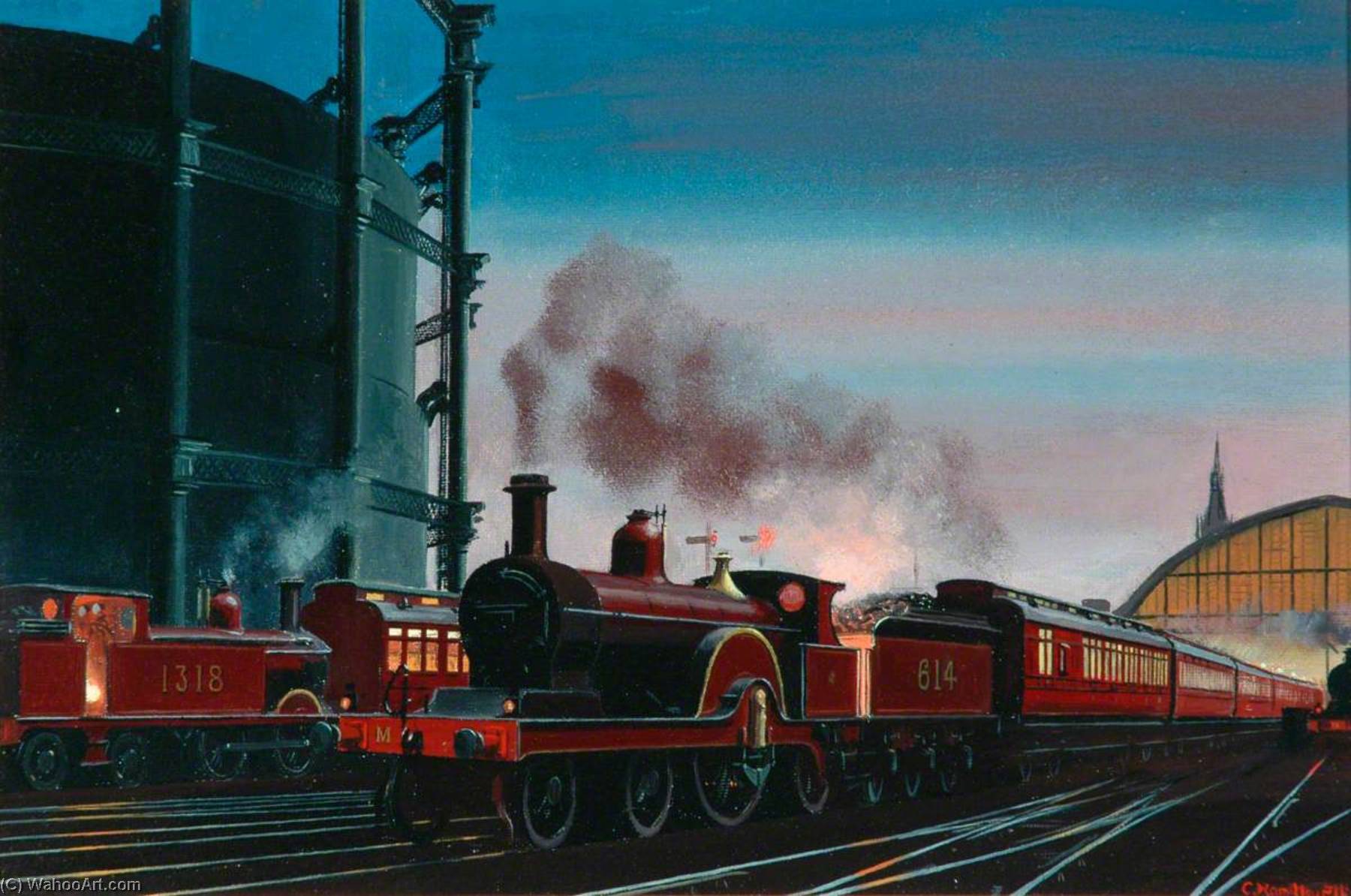
Midland Railway 4–2–2 Locomotive No.614 Hauling Passenger Train out of St Pancras Station
 29.0 x 42.0 cm
 Read More
Hand Made Oil Reproduction
Hand-painted oil on canvas in your size and frame, made to order by our artists. ( Buy Print Buy Image)




































Pick from our preset sizes that match the artwork's original proportions.

You may enter your own dimensions to fit a specific frame or space. If your selected size does not match the original image's proportions, we will either crop the artwork or extend the painting with additional hand-painted elements. A digital mockup will be sent for your approval before production begins.
Please note that the on-screen preview does not reflect the actual cropping or extension. Only the mockup will accurately show the final composition.
While custom sizes are available, we recommend selecting a dimension from the predefined list to preserve the original proportions.
After order, ArtsDot.com team will email client for instructions and provide a mockup preview
Worldwide Delivery () in 3/4 weeks instead of standard 5 weeks. (24 August). No compromise on quality.

Free Worldwide Express Shipping

High-Quality Linen Canvas

Full Shipping Insurance

Customs Tax Refund Guarantee

True Color Matching Guarantee

60-Day Return Policy (Defects Only)

100% Money-Back Guarantee

Bulk Discount Offer
 Glass option is only available in size under 110 CM

Midland Railway 4–2–2 Locomotive No.614 Hauling Passenger Train out of St Pancras Station
Reproduction Medium
Reproduction Size
-


Total Price
$ 263
Related Artworks








Artist Biography
The Visionary of Steam: The Life and Legacy of Cuthbert Hamilton Ellis
Cuthbert Hamilton Ellis, known affectionately to many as "Chip," was far more than a mere chronicler of locomotives; he was a poet of the industrial age. Born on June 29th, 1909, in Raynes Park, Surrey, his soul was irrevocably tethered to the rhythmic pulse of the railway from a tender age. His childhood memories of steam-powered journeys through the lush landscapes of Cornwall served as the foundational inspiration for a life dedicated to capturing the grandeur of the iron horse. This profound fascination would eventually blossom into a dual legacy as both a distinguished writer and a meticulous painter, making him one of the most significant figures in twentieth-century railway art.
His intellectual journey was marked by an eclectic blend of classical education and technical curiosity. Educated at the prestigious Westminster School, Ellis cultivated an appreciation for literature that would later inform his evocative prose, even as he developed a burgeoning interest in the mechanics of engineering. Although his time at Munich and Exeter College, Oxford, provided him with a broader academic horizon, he famously found the traditional rigors of Oxford somewhat unrewarding, a realization that perhaps liberated him to pursue a more visceral, hands-on engagement with the world of steam and steel.
A Literary Journey Through Iron and Ink
Before his brushstrokes became widely celebrated, Ellis established himself as a formidable voice in railway journalism. His literary career began remarkably early, in 1922, when he joined the staff of Country Life. This period was crucial for honing his descriptive powers and building deep connections within the tight-knit community of railway enthusiasts and engineers. Through his work at publications such as Railway Gazette and Modern Transport, he became a respected commentator on industrial progress, possessing a rare ability to translate complex locomotive designs into narratives that resonated with both experts and laypeople alike.
The depth of his literary contribution is evidenced by the staggering output of thirty-six books, many of which remain essential reading for historians of the era. His debut novel, The Engineer-Corporal, published in 1939, showcased his ability to weave technical precision with human drama. Perhaps his most enduring literary achievement, The Trains we Loved, serves as a nostalgic and deeply moving tribute to a vanishing way of life. Even during the shadows of World War II, Ellis’s life took on cinematic proportions; while working under the guise of a journalist in Switzerland for Modern Transport, he was reportedly involved in clandestine operations for MI6, adding an element of high-stakes intrigue to his already storied biography.
The Artistry of Realism and Nostalgia
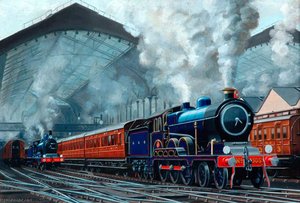
As an artist, Ellis’s style was defined by a profound commitment to realism, tempered by a lyrical sensibility that captured the romantic essence of the steam era. His paintings were not merely technical diagrams of engines; they were atmospheric studies of light, motion, and the interplay between man-made marvels and the natural world. Whether depicting the dramatic lighting of a locomotive at dusk or the quiet dignity of a train traversing the Kent countryside, his work possessed an unmistakable emotional resonance.
His technical mastery allowed him to render the heavy, metallic textures of locomotives with startling accuracy, yet he never lost sight of the "soul" of the machine. His oeuvre often features:
- Detailed Realism: A meticulous attention to the mechanical intricacies of steam engines, from the gleam of polished brass to the swirling plumes of white vapor.
- Atmospheric Landscapes: The integration of industrial subjects into evocative settings, such as the evening light in Ventnor or the rolling hills of the South Eastern Railway routes.
- Industrial Nostalgia: A palpable sense of reverence for a bygone era, capturing the grandeur and the inevitable decline of the steam age.
Through his dual mastery of the pen and the brush, Cuthbert Hamilton Ellis ensured that the majesty of the steam locomotive would not fade into the obscurity of history. He remains a pivotal figure whose work serves as a bridge between the raw power of the industrial revolution and the tender nostalgia of the twentieth century, preserving the heartbeat of the railways for generations to come.
cuthbert hamilton ellis
1909 - 1987
Quick Facts
- Artistic Movement Or Style: Railway Art
- Artists Or Movements Influenced By This Artist: ['Railway Art']
- Artists Who Influenced This Artist:
- Gilbert Dunlop
- Ian C Allen
- Date Of Birth: June 29, 1909
- Date Of Death: June 29, 1987
- Full Name: Cuthbert Hamilton Ellis
- Nationality: British
- Notable Artworks:
- No.6 'Ventnor Town'
- No.31, 'Chale'
- No.2 'Isle of Wight Central'
- Place Of Birth: Raynes Park, Surrey