 Preview
 Send
Send Share
Share
 Details

 Download
 Similars
 X-Ray
X-Ray Diaporama
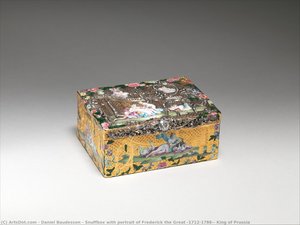
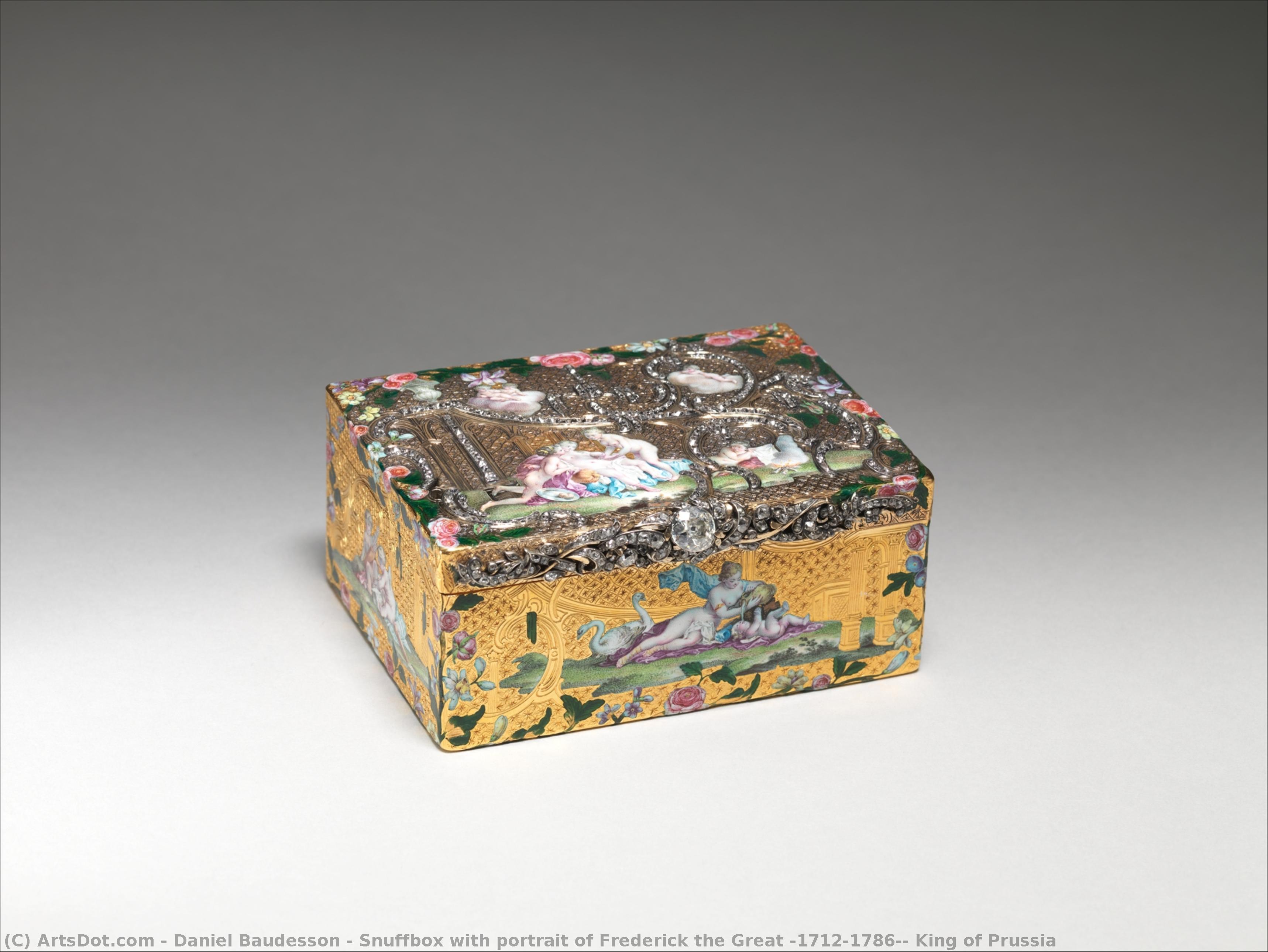
Snuffbox with portrait of Frederick the Great (1712–1786), King of Prussia
 1745
1745 4.0 x 9.0 cm
 Metropolitan Museum of Art
 Read More
Hand Made Oil Reproduction
Hand-painted oil on canvas in your size and frame, made to order by our artists. ( Buy Print Buy Image)




































Pick from our preset sizes that match the artwork's original proportions.

You may enter your own dimensions to fit a specific frame or space. If your selected size does not match the original image's proportions, we will either crop the artwork or extend the painting with additional hand-painted elements. A digital mockup will be sent for your approval before production begins.
Please note that the on-screen preview does not reflect the actual cropping or extension. Only the mockup will accurately show the final composition.
While custom sizes are available, we recommend selecting a dimension from the predefined list to preserve the original proportions.
After order, ArtsDot.com team will email client for instructions and provide a mockup preview
Worldwide Delivery () in 3/4 weeks instead of standard 5 weeks. (24 August). No compromise on quality.

Free Worldwide Express Shipping

High-Quality Linen Canvas

Full Shipping Insurance

Customs Tax Refund Guarantee

True Color Matching Guarantee

60-Day Return Policy (Defects Only)

100% Money-Back Guarantee

Bulk Discount Offer
 Glass option is only available in size under 110 CM

Snuffbox with portrait of Frederick the Great (1712–1786), King of Prussia
Reproduction Medium
Reproduction Size
-


Total Price
$ 263
Related Artworks






Artist Biography
Daniel Baudesson: The Prussian Snuffbox Artist
Daniel Baudesson (1716-1785) stands as a fascinating figure in the annals of French goldsmithing and aristocratic patronage, primarily remembered for his exquisite snuffboxes crafted during the reign of Frederick II, King of Prussia. Born in Metz, France, Baudesson’s artistic journey unfolded against the backdrop of Enlightenment ideals and burgeoning royal commissions—a confluence that cemented his reputation as one of Berlin's most celebrated artisans.- Early Life & Training: Little is known about Baudesson’s formative years beyond confirmation of his birth in Metz, a city renowned for its goldsmithing tradition. He honed his skills under the tutelage of Jean-Baptiste Rousseau, a prominent Parisian jeweler who instilled in him a mastery of technique and an appreciation for classical ornamentation.
- Berlin Years & Patronage: Baudesson’s career truly blossomed when he relocated to Berlin in 1740, accepting the invitation of Frederick II—a visionary monarch captivated by art and culture—to serve as his court jeweler. This association proved pivotal, propelling Baudesson to unparalleled artistic heights.
- Technique & Style: Baudesson’s distinctive style characterized by meticulous detail and refined elegance was rooted in Rococo aesthetics. He skillfully employed techniques like engraving, chasing, and enamel gilding to achieve breathtaking surfaces adorned with intricate floral motifs, portraits of royalty—most notably Frederick II—and symbolic emblems reflecting the grandeur of Prussian rule.
- Notable Commissions & Legacy: Baudesson produced an astonishing array of snuffboxes for Frederick II, many featuring miniature portraits of dignitaries and members of the royal family. These boxes are considered masterpieces of their time, exemplifying the pinnacle of Rococo craftsmanship and demonstrating Baudesson’s ability to capture both visual beauty and psychological nuance.
- Recognition & Influence: Baudesson's work garnered considerable acclaim during his lifetime and continues to inspire admiration today. His contribution to Prussian art history is undeniable, establishing him as a symbol of artistic excellence within the royal court and securing his place among the foremost snuffbox artists of the eighteenth century.
The Snuffbox Form: A Reflection of Taste & Status
The snuffbox itself served as more than just a container for tobacco; it was a statement of social status and artistic sophistication. Baudesson’s creations were meticulously designed to impress, incorporating luxurious materials like gold, ivory, and mother-of-pearl—often embellished with gemstones—to convey wealth and prestige. The miniature portraits embedded within the boxes weren't merely decorative elements but representations of power and authority, reinforcing Frederick II’s image as a benevolent ruler.- Materials & Decoration: Baudesson favored gold leaf overlaid on ivory or ebony panels, creating surfaces that shimmered with brilliance. Floral motifs—particularly roses and lilies—were prevalent, symbolizing purity and nobility—values deeply cherished by the Prussian monarchy.
- Engraving & Chasing Techniques: Baudesson’s mastery extended to engraving and chasing techniques, allowing him to achieve astonishingly smooth surfaces and create subtle textural variations that enhanced the visual impact of his designs.
- Symbolism & Portraiture: The inclusion of portraits—typically of Frederick II or prominent figures from the Prussian court—was a deliberate act of artistic expression, conveying respect for the monarch while simultaneously elevating Baudesson’s work to an elevated level of cultural significance.
Frederick II's Patronage & Baudesson's Artistic Flourishing
Frederick II recognized Baudesson’s talent and generosity, fostering a collaborative relationship that fueled his artistic creativity. The King’s fascination with art—evident in his commissioning of monumental sculptures and sponsoring theatrical productions—created an environment conducive to innovation and excellence. Baudesson capitalized on this patronage, producing an unparalleled volume of snuffboxes that showcased the best of Rococo artistry.- Royal Commissions & Artistic Inspiration: Baudesson’s work was profoundly influenced by Frederick II's intellectual curiosity and his appreciation for classical ideals—a fusion that resulted in designs imbued with both elegance and grandeur.
- Berlin as a Cultural Hub: Berlin during Baudesson’s time was a vibrant center of artistic activity, attracting artists from across Europe. This cosmopolitan atmosphere fostered experimentation and encouraged Baudesson to push the boundaries of his craft.
A Lasting Impression: Baudesson's Contribution to Art History
Daniel Baudesson’s legacy extends far beyond the exquisite snuffboxes he created—though those boxes remain undeniably iconic symbols of eighteenth-century artistic achievement. His work stands as a testament to the power of patronage, the transformative influence of cultural exchange, and the enduring beauty of Rococo aesthetics. Today, Baudesson's creations continue to captivate collectors and scholars alike, ensuring that his name will forever be associated with the pinnacle of snuffbox artistry and the splendor of Prussian royal patronage.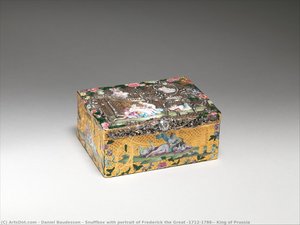
daniel baudesson
1716 - 1785 , France
Quick Facts
- Artistic Movement Or Style: Rococo
- Date Of Birth: 1716
- Full Name: Daniel Baudesson
- Nationality: French
- Notable Artworks: ['Snuffbox with portrait of Frederick the Great']
- Place Of Birth: Metz, France