 Preview
 Send
Send Share
Share
 Details

 Download
 Similars
 X-Ray
X-Ray Diaporama
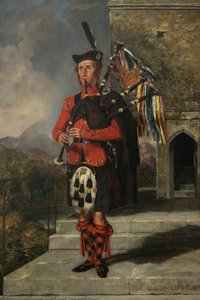
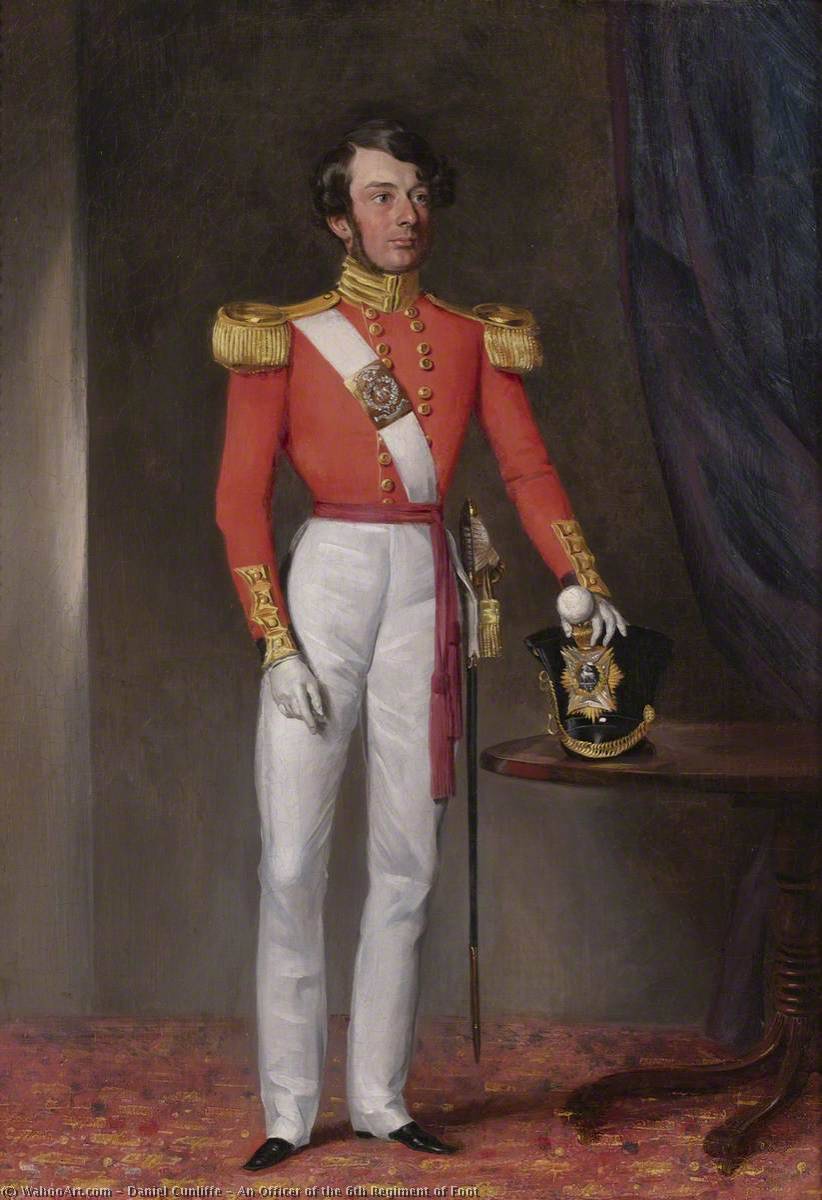
An Officer of the 6th Regiment of Foot
 1843
1843 51.0 x 35.0 cm
 Read More
Giclée / Art Print
Museum-quality giclée or canvas print with fast production and flexible finish options. ( Buy Hand Made Painting Buy Image)




































Pick from our preset sizes that match the artwork's original proportions.

You may enter your own dimensions to fit a specific frame or space. If your selected size does not match the original image's proportions, we will either crop the artwork or extend the image with a mirrored or solid-fill edge. A digital mockup will be sent for your approval before production begins.
Please note that the on-screen preview does not reflect the actual cropping or extension. Only the mockup will accurately show the final composition.
While custom sizes are available, we recommend selecting a dimension from the predefined list to preserve the original proportions.
Worldwide Delivery () in 2 weeks instead of standard 4/5 weeks. (2 September)

Free Worldwide Express Shipping

High-Quality Linen Canvas

Full Shipping Insurance

Customs Tax Refund Guarantee

True Color Matching Guarantee

60-Day Return Policy (Defects Only)

100% Money-Back Guarantee

Bulk Discount Offer
 Glass option is only available in size under 110 CM

An Officer of the 6th Regiment of Foot
Giclée / Art Print
Reproduction Size
-


Total Price
$ 63
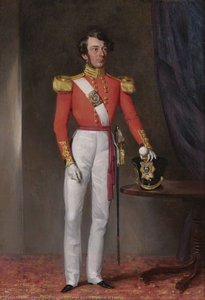
This artwork showcases Cunliffe's exceptional skill in capturing the intricacies of military uniforms and the essence of his subjects. The officer, dressed in the distinctive red and white attire of the 6th Regiment of Foot, stands proudly with his sword in hand, exuding an air of confidence and authority.
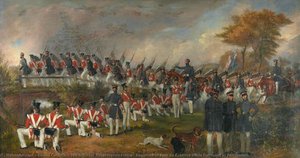
Daniel Cunliffe was a renowned artist known for his portraits of military personnel, and this painting is a testament to his talent. For those interested in learning more about Cunliffe's work, his paintings can be found on ArtsDot.com, including The 6th (1st Royal Warwickshire) Regiment of Foot on Exercise While Stationed at Portsmouth and Colonel (later Major General) Philip McPherson (1790–1864), CB, 17th (The Leicestershire) Regiment of Foot.
The use of tartan patterns in military uniforms is also noteworthy. As explained on Wikipedia, tartan originated in Scotland and was initially associated with specific locales rather than clans. The Dress Act 1746 attempted to ban Highland dress, but it was later repealed, leading to a resurgence of interest in tartan patterns.
Some key points about the painting include:
- The artwork is a prime example of military art from the 19th century.
- Cunliffe's attention to detail in capturing military uniforms is exceptional.
- The use of tartan patterns in military uniforms adds an extra layer of historical significance to the painting.
In conclusion, An Officer of the 6th Regiment of Foot by Daniel Cunliffe is a remarkable painting that showcases the artist's skill and attention to detail. Its historical significance and cultural importance make it a fascinating piece for art enthusiasts and military history buffs alike.
Related Artworks










Artist Biography
The Visionary of the Regiment: The Life and Art of Daniel Cunliffe
In the grand tapestry of British Romanticism, few artists captured the raw, unvarnished pulse of military existence as profoundly as Daniel Cunliffe. Born in 1801 in the historic town of Warwick, Warwickshire, Cunliffe emerged not merely as a painter of scenes, but as a chronicler of duty, discipline, and the heavy atmosphere of nineteenth-century warfare. His artistic journey was deeply rooted in the classical traditions of his era, having received foundational training under the esteemed John Opie. This early mentorship instilled in him a rigorous command of composition and a respect for the landscape tradition, yet Cunliffe would eventually pivot away from purely pastoral vistas to focus on a much more visceral subject: the human element within the machinery of the British military.
Cunliffe’s life was inextricably linked to the very subjects he immortalized on canvas. As an officer himself, his connection to the Royal Warwickshire Regiment provided him with an intimate, firsthand perspective on the realities of service. He did not view the military through a lens of distant romanticism; rather, he understood the grit, the physical exhaustion, and the psychological weight carried by those in uniform. This lived experience allowed him to bypass the idealized, often sanitized depictions favored by many of his contemporaries. Instead, he sought to capture the authentic essence of regimental life, from the rhythmic monotony of drilling exercises to the chaotic, smoke-filled intensity of actual battlefield confrontations.
A Mastery of Realism and Texture
The technical brilliance of Cunliffe’s work lies in his ability to marry meticulous realism with a powerful, tactile energy. He was a master of tonal gradation, using light and shadow to breathe life into the heavy fabrics of uniforms and the rugged terrain of the encampments. One of his most striking technical hallmarks was his use of thick impasto. By applying paint in heavy, textured layers, he achieved a sense of dynamism that made the movement of horses, the billowing of smoke, and the coarse texture of soldierly gear feel almost tangible to the viewer. His palette, often dominated by earthy, somber tones, reflected the somber reality of his subjects, grounding his monumental works in a palpable sense of historical truth.
His approach to portraiture and group compositions was equally sophisticated. In works such as An Officer of the 6th Regiment of Foot, Cunliffe demonstrated an extraordinary eye for detail, capturing the intricate patterns of regimental attire—including the distinctive red and white elements of the 6th Regiment—with such precision that the authority and confidence of the subject are unmistakably conveyed. He possessed a rare talent for rendering the fine details of military insignia and weaponry while never losing sight of the emotional core of the individual, ensuring that every officer and soldier he painted possessed a distinct, commanding presence.
Legacy of a Military Chronicler
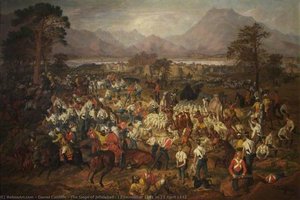
The historical significance of Daniel Cunliffe’s oeuvre cannot be overstated, as his paintings serve as vital visual records of British military history during a period of profound global expansion and conflict. His monumental canvases, such as The Siege of Jellalabad (1851), do more than depict a battle; they encapsulate the drama, the chaos, and the sheer scale of nineteenth-century siege warfare. Through these works, Cunliffe preserved the spirit of the Royal Warwickshire Regiment and other units, ensuring that the triumphs and tribulations of their service remained etched in the collective memory.
Ultimately, Cunliffe’s legacy is defined by his refusal to retreat into sentimentality. By choosing to portray the arduous tasks, the marches, and the physical strain of military duty, he elevated military art from mere illustration to a profound exploration of human endurance. His ability to translate the heavy atmosphere of camp life and the visceral intensity of combat into enduring works of fine art ensures his place as a vital figure in the history of British art, leaving behind a body of work that continues to resonate with its honesty, its strength, and its unwavering dedication to the truth of the soldier's experience.
daniel cunliffe
1801 - 1871
Quick Facts
- Artistic Movement Or Style: Romanticism
- Artists Or Movements Influenced By This Artist: ['George Frederic Handel']
- Artists Who Influenced This Artist: ['William Hayley']
- Date Of Birth: 1801
- Date Of Death: 1871
- Full Name: Daniel Cunliffe
- Nationality: British
- Notable Artworks:
- The Siege of Jellalabad
- 6th Regiment
- Place Of Birth: Warwickshire, England